





In global edible oil refining-encompassing palm oil, soybean oil, sunflower oil, and specialty fats-the filtration stage plays a decisive role in determining final product quality, shelf-life, and color clarity. Processing steps such as bleaching earth separation, hydrogenation catalyst recovery, and low-temperature winterization dewaxing rely heavily on vertical and horizontal pressure leaf filters.
However, food and edible oil filtration imposes far stricter requirements than general chemical processing. Filter leaves must handle abrasive spent earth and sticky waxes while adhering to strict FDA food-safety standards. Standard industrial filter leaves with open seams or loose wire meshes can trap degraded fats, foster rancidity, and allow fine bleaching earth particles to leak into clean oil streams.
This technical article presents an engineering breakdown of Food & Edible Oil Filter Leaves, focusing on sanitary crevice-free frame architecture, fine bleaching earth retention mechanics, winterization dewaxing fluidics, and food-grade CIP protocols.
To explore foundational metallurgy, weave structures, and primary filtration mechanics across our complete product family, visit our core [Stainless Steel Filter Leaf].
Sanitary Crevice-Free Frame Architecture and Food Contamination Control
In industrial edible oil processing, crude oil undergoes bleaching at temperatures typically ranging between 90℃ and 120℃ under vacuum conditions. When crude oil and spent bleaching earth enter a pressure leaf vessel housing substandard filter leaves, small quantities of oil become trapped inside micro-gaps located between the outer frame channels and internal drainage screens.
Thermal Oxidation and Quality Degradation Mechanisms
When organic fats are locked inside non-sanitary frame crevices at elevated temperatures, several chemical degradation pathways are accelerated:
● Thermal Peroxide Generation: Trapped triglyceride molecules react with trace oxygen and moisture, causing rapid peroxide formation. When fresh oil passes over these contaminated frame seams during subsequent batch cycles, peroxide compounds dissolve into the clean filtrate, accelerating color reversion.
● Free Fatty Acid (FFA) Accumulation: Hydrolysis of stagnant fats inside frame micro-crevices increases overall FFA levels, reducing oil stability and requiring additional costly chemical neutralisation downstream.
● Bacterial and Mold Harborage: During plant shutdowns or cool-down cycles, organic residues trapped in open frame joints create ideal breeding environments for microbial growth, violating international HACCP and food hygiene standards.
Sanitary Manufacturing Solutions
To prevent organic accumulation and guarantee complete washability during maintenance cycles, sanitary edible oil filter leaves employ advanced frame manufacturing protocols:
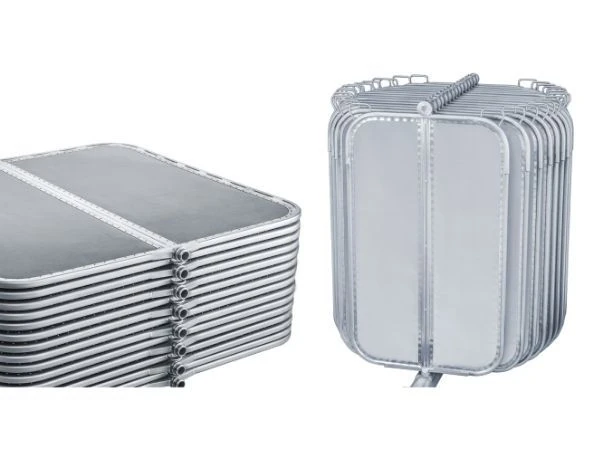
● Continuous Perimeter TIG Seal-Welding: Rather than relying on spot welding or mechanical rivets, the outer C-channel frame, internal drainage matrix, and fine outer filtration screens are joined using continuous, full-penetration Tungsten Inert Gas (TIG) welding.
● Seamless Weld Bead Grinding & Electropolishing: All perimeter weld beads are mechanically ground flush and smooth ($Ra < 0.4μm) to eliminate microscopic surface roughness where fats can adhere. Subsequent electropolishing removes microscopic surface iron contaminants, creating an ultra-passive chromium-rich surface layer.
● FDA SS316L Material Traceability: Every structural component, from the outer channel frame to the finest woven wire mesh, is constructed exclusively from certified Low-Carbon Stainless Steel (316L). This alloy prevents intergranular corrosion caused by organic acids and caustic wash solutions.
Bleaching Earth Retention Mechanics and Hydraulic Permeability
The bleaching process removes unwanted pigments (such as chlorophylls and carotenoids), residual soaps, and trace heavy metals by mixing the oil with acid-activated bleaching earth (diatomaceous or bentonite clay). Particle sizes of spent bleaching earth range from coarse grains down to sub-micron fines (1μm - 45μm).
Establishing High Surface Retention Without Blinding
Capturing these fine clay particles while maintaining high volumetric flow rates requires precise wire mesh selection and high-tension mechanical assembly:
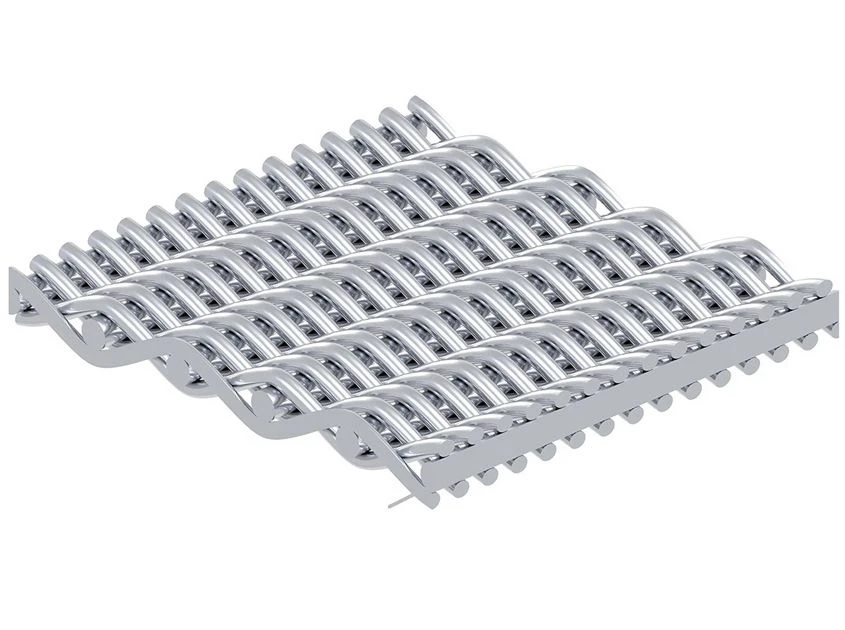
● Plain Dutch Weave (PDW) Screen Matrix: Fine outer filtration screens utilize Plain Dutch Weave wire cloth where heavy warp wires are spaced closely with thinner, tightly driven shute wires. This creates triangular, tortuous fluid passages that establish a sharp particle retention threshold (15μm - 80μm).
● Pre-Coat Cake Layer Mechanics: During initial circulation, fine bleaching earth particles bridge across the Dutch weave apertures, establishing a porous, highly efficient filter cake bed. The taut wire mesh face ensures that this cake bed remains stable and uniform across the entire surface area.
● Pneumatic Screen Stretching: Prior to edge welding, surface screens are mechanically stretched across pneumatic tensioning tables. High planar tension prevents screen "pillowing" under differential pressure, eliminating localized high-velocity channels that could blow out the pre-coat cake and allow clay leakage into clean oil lines.
● High-Permeability Drainage Cores: Beneath the fine filtration screens, heavy-gauge woven square grids (3-layer or 5-layer internal architecture) provide wide, uninhibited internal channels. These channels collect clean filtrate and convey it toward the bottom discharge nozzle with minimal internal backpressure.
Winterization Dewaxing Fluidics and Surface Calendering Dynamics
Certain vegetable oils, particularly sunflower, corn, cottonseed, and rice bran oils, contain naturally occurring high-melting-point waxes. At room temperature, these waxes remain dissolved in the oil; however, when chilled during storage or retail display, they crystallize, causing a cloudy, unappealing appearance.
The winterization (dewaxing) process involves slowly cooling the oil to precipitate wax crystals, followed by pressure leaf filtration at low temperatures (5℃ - 10℃).
Overcoming Wax Blinding Challenges
Cold wax crystals are soft, compressible, and extremely sticky, presenting unique mechanical challenges during separation:
● Surface Calendering Treatment: Fine Dutch weave outer screens undergo secondary precision cold-rolling (calendering). This flattens the top crowns of the woven wire knuckles, creating a smooth, low-friction surface plane that prevents soft wax crystals from embedding deep between wire strands.
● Controlled Cold-Temperature Permeability: Smooth calendered screens allow cold, high-viscosity oil to pass through the mesh apertures while retaining wax flakes on the exterior surface face.
● Dual-O-Ring Spigot Precision: High-viscosity cold oil requires elevated filtration operating pressures (3.5 - 5.0bar). To prevent raw, wax-laden oil from bypassing into clean oil collection manifolds under these pressures, bottom discharge spigots are CNC-machined from solid bar stock and fitted with dual FDA-compliant Viton or EPDM O-rings.

Vibratory Cake Discharge Mechanics and Energy Conduction
Once a bleaching or dewaxing cycle reaches its maximum differential pressure or cake thickness limit, the pressure vessel is drained under gas pressure, and the accumulated filter cake is blown dry using steam or compressed air. The spent cake must then be discharged completely from the leaf array.
In modern automated refineries, cake discharge is achieved by pneumatic vibrators mounted to the top leaf alignment rack or vessel housing, transmitting high-frequency impacts down through the leaf frames.
| Structural Feature | Low-Quality Industrial Replacement | High-Performance Edible Oil Leaf | Operational Impact |
| Frame Energy Conduction | Flexible riveted frame absorbs shock | Monolithic TIG-Welded C-Channel | 100% of vibration energy reaches the cake layer |
| Mesh-to-Frame Bonding | Spot welded at intervals | Continuous Perimeter Fusion | Eliminates mesh tearing under high-frequency shaking |
| Cake Release Speed | Sticky cake adheres to rough mesh | Calendered Smooth Surface Matrix | Complete dry cake drop achieved in 5 to 10 seconds |
| Vessel Turnaround Time | Requires manual wash-down | Fully Automated Vibration Cycle | Maximizes daily processing throughput |
Industrial CIP Sanitation and Maintenance Best Practices
To maintain peak hydraulic flux, ensure complete food safety compliance, and extend component service life, edible oil processing plants must establish rigorous maintenance protocols.
Automated CIP Sanitation Sequences
● Hot Caustic Wash Cycles: Circulate a 2% - 3% sodium hydroxide (NaOH) caustic solution heated to 80℃ - 85℃ through the pressure leaf vessel for 30 to 45 minutes. Hot caustic saponifies residual fats and dissolves polymerized oil films trapped within internal drainage channels.
● Acid Neutralization Rinse: Follow caustic washing with a dilute nitric or citric acid rinse (0.5% - 1.0%) at 60℃ to neutralize residual alkali and restore the protective passive chromium oxide layer on the SS316L alloy.
● Hot Water Flush & Steam Sterilization: Flush the array with demineralized hot water, followed by low-pressure steam injection to sterilize the system before resuming production.
Routine Inspection and Quality Audits
● Spigot Seal O-Ring Replacement: Inspect elastomeric spigot O-rings during every turnaround. Replace hardened, swollen, or heat-degraded seals exclusively with food-grade FDA Viton, EPDM, or Kalrez replacements to prevent raw oil bypass.
● Planar Flatness Checks: Verify that leaf frames remain straight and unwarped. Warped leaves alter spacing within the array, causing uneven cake thickness and potential cake bridging during processing.
Conclusion
Food & Edible Oil Filter Leaves engineered with sanitary crevice-free frames, precision Dutch weave screens, calendered wax-release surfaces, and rigid vibration-transmitting architectures deliver high clarity, zero raw slurry bypass, and rapid cake discharge performance. Upgrading to sanitary, food-grade leaf elements protects product purity, lowers chemical sanitation costs, and maximizes production uptime in high-capacity oil refineries.
To review general vertical pressure leaf designs and bottom spigot fluidics, read our technical article on [Vertical Leaf Filter Elements: Bottom-Discharge Fluidics, Vessel Manifold Sealing, and Array Alignment Stability], or contact our engineering specialists for custom edible oil leaf design support.
Related Articles
1. Bottom-Discharge Fluidics, Vessel Manifold Sealing, and Array Alignment Stability
2. Maximizing Flow Rate vs. Micron Precision: The Core Wire Mesh Dilemma in Pressure Leaf Filters
3. Troubleshooting 5 Common Operational Issues in Vertical Pressure Leaf Filters
4. How to Choose the Right Stainless Steel Filter Leaf for Edible Oil Refining?
5. How to Clean and Maintain Stainless Steel Filter Leaves for Optimal Performance