






In industrial liquid-solid separation, pressure leaf filters are relied upon for high-volume efficiency and precision clarity. However, the performance of the entire system hinges on the condition of its core component: the stainless steel filter leaf. Over time, continuous cycles of cake building, high-pressure filtration, and intense pneumatic or mechanical discharge can lead to mesh blinding, chemical scaling, or structural fatigue.
Implementing a strict, routine maintenance and cleaning protocol is essential to prevent solids bypass, maintain low differential pressure, and maximize the lifespan of your reusable wire mesh elements.
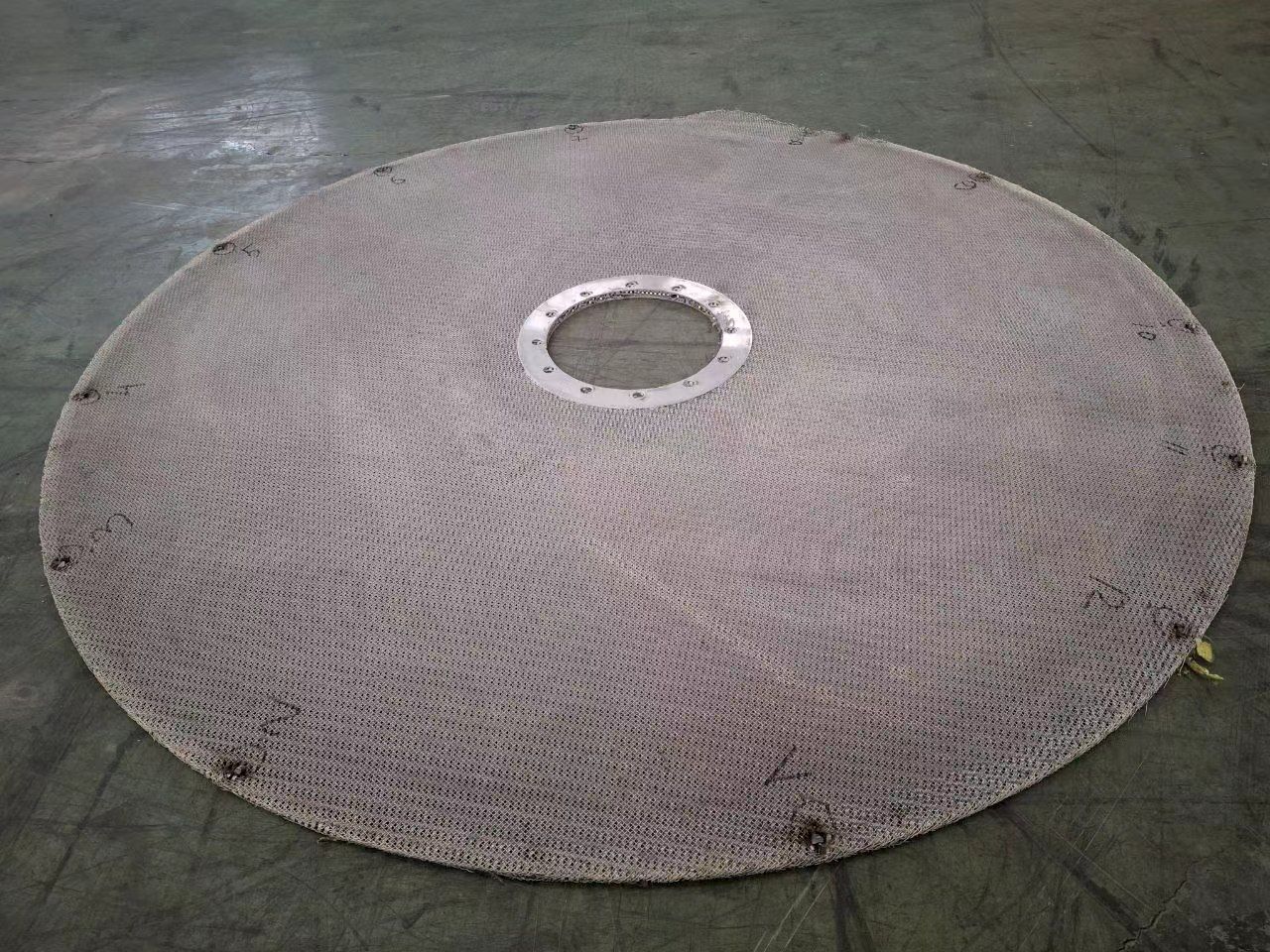
Understanding the Roots of Filter Leaf Degradation
Before diving into cleaning procedures, it is important to understand what causes a decline in filter leaf efficiency. In heavy industrial environments, ignoring the early warning signs of mesh degradation leads to catastrophic failures such as fluid bypassing or structural collapse. The three most common culprits behind filter leaf degradation are:
Mesh Blinding (Physical Fouling): This occurs when sub-micron particles, amorphous sludges, or sticky resins become physically wedged deep within the microscopic pore structures of the outer fine filter layer (such as Plain Dutch or Twill Dutch weaves). It typically happens during edible oil dewaxing, winterization, or catalyst recovery. Once trapped, these fine solids resist standard backflushing, gradually choking the active filtration area and causing pressure spikes. Mechanical scraping must be avoided, as it only pushes these particles deeper into the intermediate binding layers.
Chemical Scaling (Precipitation): This is a chemical phenomenon where dissolved minerals, hard water salts (such as calcium or magnesium compounds), or process-specific chemical complexes precipitate out of the liquid carrier due to severe temperature shifts or localized pressure changes. It forms a rock-hard, crystalline crust across the wire intersections. This scaling not only chokes the fluid drainage channels but also locks the wire cloth in place, rendering the leaf rigid, brittle, and highly susceptible to cracking under pressure.
Mechanical Fatigue & Warping: Operating a leaf filter system with uneven cake accumulation creates severe asymmetrical hydraulic forces across the leaf panel face. During the automated pneumatic vibration or shaking cycle, a warped leaf or unevenly distributed weight causes intense localized stress. This leads to broken spot welds along the frame, permanent buckling of the support core, or premature tearing of the fine wire cloth near the rim rivets.
Deep Dive: Mesh Blinding vs. Chemical Scaling
Understanding the exact nature of the contamination on your filter leaf surface is critical. Treating physical blinding with inappropriate chemical washes, or attempting to physically scrape away chemical scaling, can permanently damage the delicate wire geometry or lock contaminants into the multi-layer weave structure forever.
Physical Blinding Analysis: When handling organic materials, gums, or nickel catalysts, the particulates form a dense, sticky matrix that seals off the openings of the Dutch weave. Because the fine wires are tightly compressed together, standard liquid backwashing merely pushes against the cake but fails to clear the micro-pores. To resolve physical blinding, the cleaning method must rely on energy forces capable of penetrating the overlapping wires without bending them-making ultrasonic cavitation the industry gold standard.
Chemical Scaling Analysis: Crystalline scale deposits bond atomically to the stainless steel wire surfaces, creating an insulated coating. This type of fouling cannot be shaken off by vibration or blasted away by water. It requires targeted chemical dissolution. The cleaning strategy must employ specialized acids that dissolve the mineral matrix completely while remaining completely passive to the underlying chromium oxide film of the stainless steel alloy.
Industry Guidelines: Recommended Cleaning Cycles
The frequency of deep chemical or ultrasonic cleaning varies significantly by industry, fluid viscosity, solids concentration, and operating temperatures. Running a system past its optimal cleaning window results in exponentially higher energy consumption and shortens the lifespan of the filter leaf. Below is an operational benchmark mapping out typical maintenance intervals across major process sectors:
| Industry Application | Primary Contaminant | Suggested Cleaning Method | Deep Cleaning Frequency |
| Crude Edible Oil Refining | Bleaching earth, gums, phospholipids | Warm alkaline soak + Low-pressure rinse | Every 15 to 30 operating days |
| Molten Sulfur Filtration | Ash, organic carbon impurities | Thermal burnout or specialized solvent flush | Every 3 to 6 months (or at shutdown) |
| Biodiesel Processing | Glycerin traces, soap sediments | Alcohol/solvent wash + Ultrasonic bath | Every 45 operating days |
| Industrial Wastewater | Abrasive sludges, metal oxides | Mild acid wash + Backflushing | Weekly or bi-weekly depending on load |
Step-by-Step Guide to Cleaning Stainless Steel Filter Leaves
To restore your filter leaves to their original filtration efficiency without damaging the tight wire geometry or disrupting the weave tension, follow this disciplined, multi-step sequence:
1. Low-Pressure Pre-Rinsing
Immediately upon extracting the leaves from the vertical or horizontal filter vessel, spray down the remaining surface cake using a wide-angle, low-pressure water hose or a gentle spray wash system. The objective is to remove loose, external cake accumulations before they dry and harden on the mesh face.
⚠️ Critical Operational Alert: Never use a concentrated, high-pressure industrial jet wash directly against the face of the leaf at close range. High-velocity water impacts (exceeding 30-40 bar) can easily distort the tensioned wire cloth, warp the weave pattern, alter the nominal micron rating, and create permanent micro-gaps along the frame edge that allow solids to bypass in future runs.
2. Targeted Chemical Steeping (Soaking)
Submerge the filter leaves completely in a temperature-controlled soaking tank. The chemical composition of the cleaning bath must be precisely matched to the chemical nature of the fouling agent:
For Organic Oils, Fats, Gums, and Bio-Resins: Utilize a warm (60°C - 80°C) mild alkaline formulation, such as a 2-5% sodium hydroxide (NaOH) or potassium hydroxide (KOH) solution mixed with industrial surfactants. This saponifies fats, liquefies gums, and loosens organic matrices from the wire surface.
For Inorganic Mineral Scales & Oxides: Utilize a room-temperature or slightly warm bath containing 2-5% citric acid, sulfamic acid, or phosphoric acid. These organic acids efficiently dissolve calcium and mineral scale without attacking the base metal.
The Golden Rule of Stainless Steel: Never, under any circumstances, use Hydrochloric Acid (HCl) or chlorine-based bleaches. Chloride ions rapidly break down the passive chromium oxide layer of SS304 and SS316L, triggering rapid pitting corrosion, stress corrosion cracking, and irreversible structural failure of both the fine mesh and the frame rivets.
3. Industrial Ultrasonic Cavitation (The Ultimate Restorative Step)
For leaves filtering highly viscous liquids, polymers, sub-micron catalysts, or fine active pharmaceutical ingredients, chemical soaking alone cannot completely dislodge particles trapped deep inside the multi-layer mesh matrix. Submerging the leaves in an industrial ultrasonic tank filled with an appropriate cleaning fluid is the ultimate remedy.
The ultrasonic transducers generate high-frequency sound waves that create millions of microscopic cavitation bubbles within the liquid. As these bubbles contact the wire surfaces, they implode forcefully. This micro-scrubbing action generates localized shockwaves that blast out deep-seated contaminants from the tightest corners of the Dutch weave and intermediate binding layers. This process achieves a 99% cleanliness rating without applying any destructive mechanical forces, scrapers, or abrasive friction to the delicate wires.
4. Post-Wash Flushing and Drying
Once the ultrasonic or chemical cycle is complete, rinse the elements thoroughly with soft, demineralized, or clean process water to eliminate any residual cleaning chemicals or loosened particulates. Allow the leaves to dry completely in a well-ventilated, clean, and dust-free environment to prevent atmospheric dust from re-contaminating the wet mesh faces before re-installation.
3 Fatal Cleaning Mistakes to Avoid
Avoiding these common workshop mistakes can prevent thousands of dollars in premature filter leaf replacements and avoid unexpected factory shutdowns:
Mistake 1: Using Metal Wire Brushes or Hard Scraping Tools. Staff often attempt to manually scrape off stubborn filter cakes using steel wire brushes, scrapers, or metal spatulas. This aggressive scraping action scratches the stainless steel wires, strips the smooth finish of the Dutch weave, and micro-deforms the pores. These scratches act as incubation sites for accelerated pitting corrosion and cause even more aggressive cake binding during subsequent cycles. Use nylon or soft-bristle brushes only.
Mistake 2: Thermal Shocking the Leaf Panels. Exposing a hot filter leaf-freshly extracted from a hot oil or chemical process-directly to a cold water rinse causes rapid, violent thermal contraction of the metal. Because the frame and the internal mesh layers have different metal thicknesses, they cool at uneven rates. This thermal shock causes warped frames, warped mesh faces, and broken spot welds along the screen rim. Always allow the leaves to cool gradually to ambient temperatures before washing.
Mistake 3: Neglecting the Outlet Nozzle and O-Rings. Cleaning only the large mesh face while leaving the discharge nozzle uninspected is a critical operational failure. If the internal channel of the nozzle remains fouled with process residue, it will immediately contaminate the clean filtrate stream upon restarting the system. Furthermore, leaving the nozzle gaskets uncleaned leads to premature seal deterioration and bypass leaks.
Essential Pre-Installation Inspection Checklist
Before locking the cleaned filter leaves back into the pressure vessel manifold, operations engineers and maintenance technicians must conduct a rigorous visual and dimensional quality check to guarantee seamless performance:
Mesh Uniformity & Tension: Visually inspect the panel face under bright lighting. Look for any loose wires, sagging areas, wrinkles, or micro-punctures on the outer filtration mesh layer. A loss of mesh tension alters the cake-building dynamics and leads to localized blinding.
Frame Planarity & Flatness: Lay the filter leaf flat on a calibrated inspection table to verify that the rim is completely level. A warped frame alters the critical spacing inside the pressure vessel vessel. This tight spacing can cause "bridge-caking," where adjacent filter cakes touch and fuse together, completely locking the leaves inside the machine and damaging them during automated vibration discharge.
O-Ring Gasket Elasticity & Nozzle Sealing: Thoroughly examine the Viton, PTFE, EPDM, or Silicone gaskets seated on the discharge nozzle. Check for flattening, cracking, swelling, or hardening. Replace gaskets immediately if they show signs of wear, and verify that the nozzle fits tightly into the filtrate manifold to achieve an airtight, leak-proof seal.
Conclusion
Investing in a systematic, structures maintenance regimen for your filtration hardware drastically minimizes operational overhead by extending component lifecycles and maintaining low energy demands across your process plant. By choosing the right mesh specifications and matching them with a disciplined chemical and ultrasonic cleaning protocol, process facilities can achieve uncompromised filtrate purity, steady flow rates, and excellent production uptime.
At our advanced manufacturing facility, we specialize in producing [high-precision stainless steel filter leaves] engineered to withstand demanding pressure cycles, intense vibrations, and aggressive cleaning agents. Whether your facility requires standard rectangular replacement panels or [custom filter leaf configurations] featuring bolted frames for easy on-site mesh replacement, our engineering team is ready to deliver tailored solutions for your plant. Contact us today for a technical consultation, structural evaluations, or a product sample.