





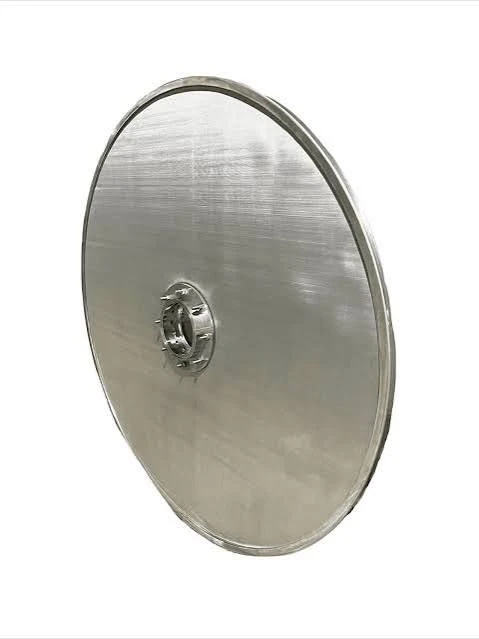
In the vegetable oil refining industry-whether processing soybean, palm, sunflower, corn, or rapeseed oil-achieving flawless filtrate clarity while maintaining a high-throughput production line is a constant balancing act. At the heart of this process sits the pressure leaf filter. While the vessel provides the hydraulic containment, the stainless steel filter leaf acts as the true functional barrier determining your oil's final purity and your plant's operational uptime.
Choosing an incorrect filter leaf configuration leads to frequent production halts, severe mesh blinding, or costly solids bypass. This comprehensive technical guide breaks down the essential factors processing engineers must evaluate when selecting stainless steel filter leaves for edible oil refining.

Understand the Process Stage: Bleaching vs. Dewaxing
Edible oil refining involves distinct stages, each presenting unique structural demands on your filter leaves. You must match the leaf design to the specific characteristics of the slurry at that exact stage:
The Bleaching Stage (Adsorption Filtration)
During bleaching, crude oil is treated with activated bleaching earth (clay) and activated carbon to adsorb pigments, trace metals, and oxidation products. The filter leaf's job is to completely trap these fine, abrasive clay particles.
● The Challenge: Bleaching clay is highly abrasive and can cause rapid wear on low-quality wire cloth. The clay forms a relatively permeable cake, but if the mesh pores are too large, clay slips through, turning the refined oil cloudy.
● The Selection: A robust, rigid frame combined with a tight, high-tension wire cloth is required to handle the abrasive nature of the slurry and the heavy weight of the clay cake.
The Dewaxing & Winterization Stage (Fractionation)
Winterization freezes and crystallizes high-melting-point waxes and saturated triacylglycerols (stearins) so they can be filtered out, ensuring the oil remains crystal clear at refrigerated temperatures.
● The Challenge: Unlike rigid clay particles, crystallized waxes are sticky, gelatinous, and highly deformable. Under hydraulic pressure, these waxes tend to smear across the screen and wedge themselves deep into the wire intersections, causing severe mesh blinding.
● The Selection: The active filtration layer must feature a highly specialized, ultra-smooth weave topology that minimizes mechanical interlocking, allowing the sticky wax cake to slide off cleanly during discharge.
Decode the Mesh Configuration: The 5-Layer Industry Standard
For pressure leaf filters in edible oil plants, a 5-layer synchronized wire mesh matrix represents the absolute industry benchmark for balancing fluid dynamics with structural longevity. However, not all 5-layer screens are built equal. Here is the exact structural blueprint required for edible oil processing:
The Active Filtration Layers (Faces 1 & 5): These outer layers must utilize a 24 x 110 Plain Dutch Weave. This specific weave combines thick warp wires running lengthwise with tightly compacted, fine weft wires driven crosswise. This creates a dense micro-gap layout with a nominal filtration rating of approximately 70 to 80 microns. This structural gap easily holds back bleaching clay or crystallized waxes while presenting a smooth, flat outer topography that facilitates automated cake release.
The Intermediate Binding Layers (Layers 2 & 4): Positioned directly beneath the fine filtration faces, a 20 x 20 plain weave mesh is required. This layer acts as a fluid-permeable cushion. Under high differential pressure, it prevents the delicate outer Dutch weave from sagging or stretching into the large gaps of the central core, preventing localized mesh deformation and blinding.
The Central Structural Drainage Core (Layer 3): The spine of the leaf must be a massive, heavy-gauge 4 x 4 or 8 x 8 square mesh with wire diameters up to $1.60\text{ mm}$. This rigid skeleton prevents the entire panel from buckling under intense pressure spikes (up to 6.0 bar) and functions as a high-flow internal drainage channel, allowing the clarified oil to drop rapidly toward the discharge nozzle.
Metallurgy Selection: SS304 vs. SS316L
While both alloys find uses in food processing, selecting the right stainless steel grade impacts the total cost of ownership (TCO) of your filtration hardware:
Stainless Steel 304: This is the standard choice for general edible oil processing. It provides excellent mechanical strength and sufficient corrosion resistance for standard vegetable oils operating under normal thermal conditions. It offers a highly cost-effective initial capital investment.
Stainless Steel 316L (Low-Carbon): If your refinery processes oils with high Free Fatty Acid (FFA) content, handles aggressive water-washing cycles, or utilizes harsh acidic chemical cleanings (such as citric acid steeps to remove mineral scaling), SS316L is mandatory. The addition of molybdenum in SS316L prevents pitting corrosion and intergranular cracking, ensuring the fine wires do not thin out or break over years of chemical exposure.
Frame Engineering: Riveted vs. Bolted Border Integrity
How the wire mesh layers are secured to the perimeter frame dictates how the filter leaf handles the intense stresses of cake discharge:
Riveted Frames (The Standard Workhorse): In this configuration, the wire cloth layers are uniformly tensioned and permanently locked into a U-shaped perimeter frame using heavy-duty stainless steel rivets. This setup is highly rigid and handles continuous pneumatic shaking or mechanical vibration forces exceptionally well. It is highly reliable but requires complete professional factory remeshing if the outer layer gets punctured.
Bolted / Removable Frames (The Budget Optimizer): A bolted frame allows maintenance technicians to unbolt the outer profile on-site using standard tools. If an outer filtration layer is torn by a scraper or compromised by a pressure surge, your team can replace only the outer mesh panels on the workshop floor, saving the heavy internal drainage core and cutting replacement hardware costs drastically.
Summary Checklist for Oil Refinery Procurement
When submitting your technical specifications to a manufacturer for replacement or custom filter leaves, ensure you specify the following parameters to guarantee perfect field compatibility:
● Vessel Compatibility: Match the exact dimensions and frame profile to your existing filter brand (e.g., Amafilter, Sharplex, Sparkler, Niagara).
● Nozzle Engineering: Ensure the bottom discharge nozzle is CNC-machined from solid bar stock and equipped with dual Viton or PTFE O-rings to ensure a 100% leak-proof bypass seal into the collection manifold.
● Planarity Tolerances: Insist on strict frame flatness; warped frames cause uneven spacing inside the vessel, leading to "bridge-caking" where adjacent cakes lock together and break the leaf panels during vibration.
Choosing a high-quality, technically verified separation element tailored specifically to your refining stage protects your product clarity, maximizes daily oil throughput, and reduces unexpected maintenance shutdowns.
At our manufacturing facility, we provide fully customized engineering solutions for global edible oil refineries. Discover our complete range of industrial sizing on our [Stainless Steel Filter Leaf] , or submit your technical drawings directly through our [Layer Stainless Steel Filter Leaf Panel for Pressure Filters] dedicated detail page to receive a fast sample and factory-direct quote.