





Industrial pressure leaf filtration systems operating in extreme environments-such as high-temperature polymer filtration, caustic chemical clarification, refinery catalyst recovery, and high-pressure hydraulic backwash operations-frequently challenge the structural limits of traditional woven wire mesh packs. Under severe fluid pulsation, reverse flow pressure surges, or high abrasive wear, conventional wire mesh can suffer wire shift, layer delamination, and pore enlargement.
To achieve long-term operational permanence, processing facilities are increasingly transitioning to Sintered Mesh Filter Leaves. By utilizing high-temperature vacuum diffusion bonding to fuse multiple wire mesh layers into a unified metallic matrix, these leaves offer unmatched pore stability, structural rigidity, and reverse backwash durability.
This technical article provides an engineering evaluation of sintered mesh filter leaves, analyzing diffusion bonding physics, multi-layer laminate fluidics, backwashing mechanics, and chemical regeneration protocols.
To review foundational metallurgy, weave styles, and general filter leaf architecture across our complete line, visit our primary [Stainless Steel Filter Leaf].
High-Temperature Diffusion Bonding and Pore Rigidity Mechanics
The key mechanical distinction of sintered mesh lies in the molecular-level fusion of woven wire contact points.
The Vacuum Sintering Process
Traditional multi-layer mesh packs rely on external frame clamping to hold separate wire screens together. Under differential pressure, individual wires slide over one another, altering the interstitial pore size.
● Atomic Diffusion Bonding: Woven stainless steel wire screens are stacked in precise orientations and placed in high-vacuum sintering furnaces. Under temperatures approaching the alloy melting point and controlled mechanical compression, metal atoms diffuse across wire contact points, creating permanent solid joints.
● Pore Geometry Lock-In: Because every wire intersection is fused, the pore apertures remain permanently locked. Differential pressure surges up to 10 bar cannot stretch or enlarge the micron rating channels.
● Elimination of Wire Friction: Preventing relative movement between mesh layers eliminates internal wire abrasion and fretting corrosion, dramatically extending fatigue life under cyclic pressure loads.
Multi-Layer Sintered Laminate Architecture and Hydraulic Permeability
Optimizing a sintered mesh filter leaf requires balancing fine surface filtration with high internal hydraulic permeability.
Engineering the Sintered Layer Stack
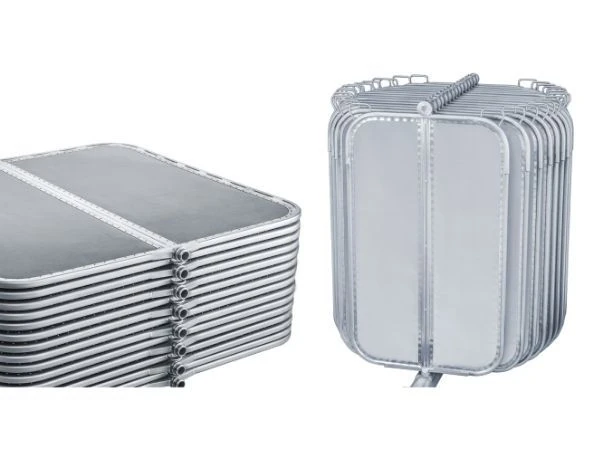
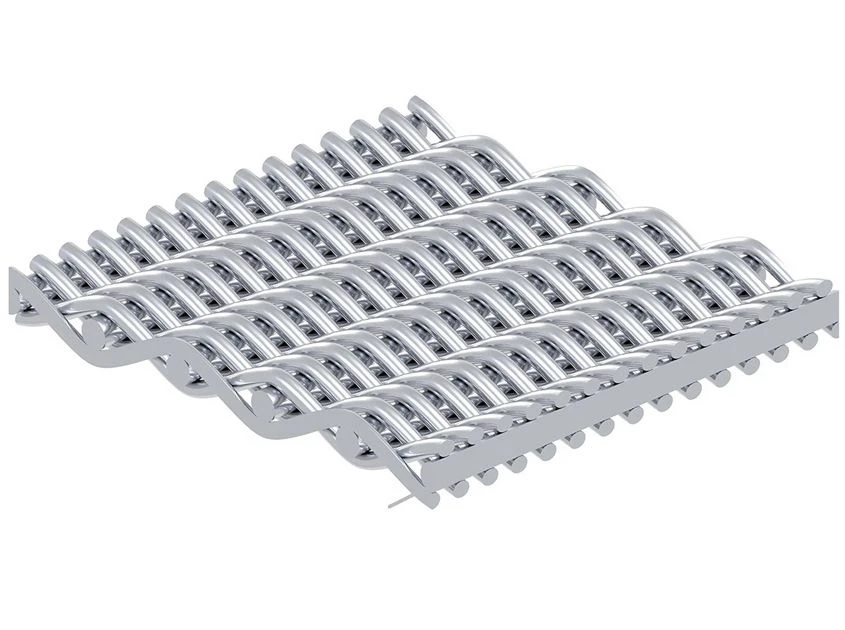
A typical 5-layer or 7-layer sintered leaf laminate integrates functional wire mesh layers into a single monolithic sheet:
Protective Outer Layer: A fine square or Dutch weave mesh shields the main filtration layer from mechanical impact during cake discharge.
Precision Control Layer: A high-precision Dutch weave cloth (1µm to 50µm) establishes the exact particle retention threshold.
Dispersion & Support Layers: Fine-to-medium square meshes distribute fluid flow evenly across the panel face while preventing localized pressure concentration.
Heavy Central Drainage Core: A heavy woven grid creates wide internal channels that convey clean filtrate toward the discharge spigot with minimal hydraulic resistance.
Performance Comparison: Sintered Laminate vs. Conventional Woven Mesh Packs
Evaluating the performance characteristics of sintered wire laminates against traditional loose woven mesh assemblies highlights key engineering advantages:
| Performance Metric | Conventional Loose Mesh Packs | Sintered Mesh Laminates | Engineering Advantage |
| Max Operating Differential Pressure | 3.0 - 5.0bar | >10.0 bar | Prevents structural collapse during high-solids loading |
| Reverse Flow Backwash Limit | 1.5 - 2.0bar | >8.0bar | Enables high-pressure impulse fluid backwashing |
| Media Particle Shedding | Risk of wire end fragment loss | Zero particle release | Protects downstream high-purity process equipment |
| Layer Interstitial Friction | High (Causes micro-wear) | Zero (Atomistically fused) | Eliminates internal media abrasion and fatigue |
High-Pressure Backwashing Dynamics and Media Longevity
In continuous or semi-automated filtration cycles, liquid or gas backwashing is used to reverse fluid flow through the leaf, dislodging accumulated surface cakes or deep bed particulates.
Mechanics of Reverse Pressure Impulse
● Resistance to Hydraulic Delamination: In conventional leaves, high reverse pressure forces the outer mesh away from the drainage core, causing "bagging" and eventual weld failure. Sintered laminates act as a single rigid plate, resisting reverse forces without deformation.
● Uniform Backwash Pressure Distribution: Because all layers are fused, reverse fluid pressure spreads evenly across the entire surface area, eliminating localized low-resistance channels and ensuring complete cake blow-off.
Industrial Application Scenarios and CIP Regeneration Protocols
Sintered mesh filter leaves excel in aggressive operating environments where mechanical durability and cleanability are paramount.
In-Situ Regeneration and Ultrasonic Cleaning
When processing sticky resins, polymers, or fine sub-micron slurries, chemical or ultrasonic cleaning protocols restore full hydraulic flux:
● Aggressive Chemical Resistance: Because sintered leaves contain no soft gaskets, glues, or crimped synthetic binders within the active area, they can withstand immersion in concentrated hot acid (HNO3, HCl) or alkaline (NaOH) cleaning baths.
● Ultrasonic Bath Cleaning: High-density ultrasonic cavitation passes through the solid sintered matrix without loosening wire joints, effectively dislodging trapped sub-micron solids from tortuous internal channels.
Conclusion
Sintered mesh filter leaves represent the highest standard of structural durability and filtration accuracy in pressure leaf separation technology. By fusing wire mesh layers into a monolithic diffusion-bonded panel, these elements resist extreme differential pressure, enable high-pressure backwash cleaning, and deliver long operational lifecycles.
To explore horizontal vessel leaf mechanics and central shaft coupling designs, read our technical article on [Horizontal Leaf Filter Elements: Central Shaft Coupling Mechanics, Torsional Rigidity, and Cake Clearance Dynamics], or contact our engineering specialists for custom sintered leaf design support.
Related Articles
1. How to Specify, Size, and Order Stainless Steel Pressure Leaf Elements
2. The Engineering Behind Precision-Aperture Stability and Zero-Bypass Filter Leaf Construction
3. Why Multi-Layer Mesh Design and Thermal Permeability Rule High-Temperature Pressure Leaf Operations
4. Top/Bottom Discharge Engineering and Heel Recovery
5. Engineering Arc Rigidity, Shell Contouring, and Cake Stability