




Nylon Filter Bags in Agricultural and Aquaculture Applications
In modern industrial agriculture and commercial aquaculture, maximizing harvest yield and survival rates requires isolating valuable biological organisms from direct environmental hazards. For both growing cash crops and fragile aquatic larvae, open exposure to natural ecosystems presents constant risks from predators, destructive pests, biological infections, and volatile weather. Traditional pest control often relies heavily on chemical sprays or aggressive water treatment compounds, which lower organic product value, stress biological entities, and add substantial operational costs.
To deliver a sustainable, non-toxic alternative, advanced mesh engineering has transformed high-performance filter bags into direct biological shields. Instead of serving as mechanical line hardware hidden inside metal piping, these specialized nylon filter bags are deployed as protective sleeves slipped directly over crops, fruits, fish eggs, and larval colonies to defend them against external forces. Achieving optimal biological protection requires selecting the precise mesh geometry, tensile strength, and polymer parameters tailored to each biological threat-ranging from ultra-breathable agricultural crop encapsulation bags to sterile aquaculture larval isolation pouches.


Crop Encapsulation in Agriculture: Deploying Nylon Filter Bags for Direct Plant Defense
Physical Barrier Against Invertebrate Pests and Avian Predators
In high-value fruit orchards, vineyards, and seed-breeding fields, chgmetal's specialized nylon filter bags are slipped directly over fruit clusters, flower heads, or entire target plants to act as an absolute defensive armor. Woven with a precise 40-mesh to 80-mesh monofilament pattern, these protective sleeves create a mechanical barrier that completely blocks destructive birds, fruit flies, wasps, and micro-insects like thrips from contacting the crop.Because the pest is physically barred from touching the plant tissue, farmers can completely eliminate or drastically reduce the application of chemical insecticides. This active crop defense allows agro-businesses to achieve organic certifications, command premium market pricing, and prevent surface scoring or stinging damage that ruins the marketability of premium cash crops.
Balancing Solar Transmission and Micro-Climate Ventilation
Unlike paper or plastic solid agricultural wraps, which trap excessive humidity and cause fungal root-rot or fruit scorching, chgmetal's monofilament polyamide filter mesh optimizes the plant's micro-environment. The single-strand weaving technique provides an exceptionally high open area percentage, typically exceeding 50% for crop protection grades.This open structure guarantees un-hindered airflow, preventing the buildup of trapped heat and condensation inside the bag during peak summer hours. Simultaneously, the ultra-clear nylon fibers allow full solar spectrum transmission, ensuring that the plant continues natural photosynthesis and develops uniform color and sugar coloration without being stifled by its protective shield.
While high-transparency nylon is optimized for open-field crop encapsulation, industrial automotive lines require a complete shift toward chemical solvent-resistant polymer filtration. Review our coatings guide here:
[The Comparative Guide to Paint and Coating Filtration: Optimizing General Industrial and Automotive Topcoat Production].
1.3 High Tensile Resistance to Wind, Hail, and Field Friction
Field-deployed plant protection media faces intense mechanical stress from severe weather, high winds, and unexpected hail storms. Cheap synthetic nettings easily tear or stretch out of shape, exposing the underlying crop to damage.chgmetal's crop protection bags are engineered from premium heavy-gauge polyamide monofilament, which possesses the highest wet and dry tensile strength among standard synthetic fibers. The individual intersections of the grid are thermally locked, preventing the mesh apertures from shifting or widening when buffeted by high winds or scratched by sharp branches, ensuring reliable multi-season plant defense.
Aquaculture Hatcheries: Safeguarding Larval Biosecurity with Nylon Mesh
Micro-Scale Biological Isolation in Seedling Cultivation
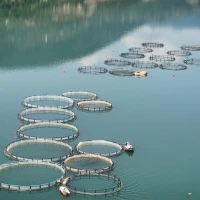
While open-field agriculture uses nylon bags to encapsulate crops against birds and insects, the marine aquaculture sector utilizes the same material for sub-surface micro-biological isolation. The early larval rearing and hatching phases of high-value marine species-such as sea cucumbers, shrimp post-larvae, and delicate fish fry-represent the most vulnerable periods in aquaculture. Having completely un-developed immune systems, these organisms are highly susceptible to physical injuries and biological attacks from wild marine pests. Maintaining an ultra-pure, isolated aquatic environment is mandatory to maximize survival rates.
The Critical Mandate for 200 Mesh Nylon Bags in Seedling Defense
To enforce the high level of biosecurity required for high-value marine species, modern hatcheries rely on a 200-mesh nylon filter bag, constructed from premium nylon monofilament (commercially known as nylon silk or polyamide bolt cloth). A certified 200-mesh layout limits allowable particle passage to approximately 74 microns. This micro-pore structure acts as an absolute barrier against predatory zooplankton, copepods, wild fish eggs, and invasive filamentous algae mats. Simultaneously, it allows single-cell micro-algae to flow freely through the grid, ensuring that the fragile larvae receive their essential nutrient feed within a safe, competition-free environment.
Monofilament Mesh Design and Larval Safety Assurances
chgmetal's aquaculture-grade nylon filter bags are woven strictly from continuous single-strand monofilament fibers that are heat-set to eliminate wire shifting. This ultra-smooth fiber profile is a critical safety feature: it ensures that free-swimming larvae or delicate sea cucumber seedlings are never physically scraped, trapped, or injured by loose fiber ends, which is a major failure point of traditional needle-felt media. Furthermore, our pure polyamide mesh features zero chemical lubricants or additives, guaranteeing that no synthetic toxins leach into the closed marine environment to threaten the seedling crop.
Biological Protection Media Specification Matrix
| Protection Field | Target Organism / Crop | Recommended Media Geometry | Standard Mesh Count | Nominal Opening Size | Primary Threat Overcome |
| Vineyard Protection | Premium Table Grapes | Monofilament Polyamide | 40 Mesh | 400 Microns | Wasps, Large Beetles, Birds / Fruit Puncture |
| Orchard & Seed Breed | Citrus / Specialty Flowers | Monofilament Polyamide | 80 Mesh | 180 Microns | Fruit Flies, Thrips, Light Hail / Micro-Shedding |
| Fish Fry Hatcheries | Marine Water Intake | Fine Monofilament Nylon | 200 Mesh | 74 Microns | Copepods, Wild Fish Eggs / Larval Pathogens |
| Sea Cucumber Breeding | Recirculating Sea Loop | Fine Monofilament Nylon | 200–300 Mesh | 48–74 Microns | Fine Organic Detritus / Larval Physical Injury |
Fabrication Engineering and Mechanical Structural Safety
Drawstring and Ring Closure Systems for Total Security
A biological protection bag is only as effective as its closure mechanism around the biological anchor point. If gaps remain where the crop bag meets the branch, or where the aquaculture pouch connects to the intake valve, pests and predators will bypass the bag entirely.chgmetal manufactures its agricultural and marine defense bags with integrated drawstring closure systems utilizing rot-resistant nylon or polyester cords. When cinched tight around a plant vine or an underwater framing rig, it establishes a flush, zero-bypass mechanical seal that external environmental threats cannot penetrate.
Ultrasonic Edge Welding vs. Chemical Adhesives
In both open-field agriculture and closed aquaculture environments, traditional sewn seams present severe operational risks. In field applications, standard sewing threads rot rapidly under constant sun and rain, causing the crop bag to split open mid-season. In marine hatcheries, chemical glues or adhesives can leach toxic compounds into the seawater, harming fragile larvae.Advanced filter bags manufactured by chgmetal utilize proprietary ultrasonic welding technology, using localized friction to melt the edge strands of the fabric directly together into a permanent bond. This seamless design completely eliminates thread rot and prevents chemical leaching, ensuring complete material purity.
Beyond open-field plant defense and aquaculture biosecurity, maintaining seamless edge purity and high tensile strength is an absolute requirement when processing high-pressure liquid medications. Explore our cleanroom production standards:
[Specialized Applications of Nylon Filter Bags in Pharmaceutical Manufacturing: Precision Filtration for Oral Liquids].
Hydrophilic Dynamics and Quick Drying Capabilities
Nylon possesses a natural affinity for water due to the presence of hydrophilic amide groups within its molecular backbone. When a sudden heavy rainstorm hits an orchard, chgmetal's nylon crop protection bags allow water to instantly wet and pass through the mesh grids rather than accumulation inside or weighing down the plant branch.Once the storm passes, the smooth monofilament fibers exhibit superior quick-drying properties under natural wind convection, rapidly restoring optimal air breathing dynamics and preventing the development of mold or localized fruit rot.
Cleaning, Reusability, and Multi-Season Lifecycle Management
Validated Wash Cycles for Multi-Season Agricultural Use
One of the primary economic advantages of utilizing chgmetal's heavy-duty nylon filter bags for crop protection is their excellent durability and reusability over multiple harvest seasons. After fruit harvest, the bags can be collected, shaken out to remove dry organic material, and washed using a standard fresh-water spray line. The smooth surface finish of our monofilament nylon allows stuck mud, bird droppings, and plant sap to release easily, restoring the mesh's original baseline open area and solar transparency for the next growing cycle.
Storage Protocols for Biosecurity and Pest Defense
Following cleaning and drying, the agricultural protection bags and aquaculture filtration sleeves must be stored correctly to maintain biological safety between seasons. The dried bags should be packed into tightly sealed plastic storage containers or heavy-duty bins to prevent contamination from warehouse dust, rodents, or opportunistic nesting insects. Storing the equipment in a dark, dry environment away from direct UV exposure preserves the polymer's structural elasticity, guaranteeing that the nylon remains strong and ready to defend the next generation of crops or larval seedlings.Choosing between different polymer filter structures for specialized processing requires a detailed look at alternative media behaviors under long-term stress. Read our material selection matrix here:
[Nylon vs Polyethylene: Selecting the Correct Filter Bag Material for Coating Production].
Conclusion
In summary, the strategic implementation of advanced filter bag technology serves as an essential pillar of success for both open-field crop protection and marine larval biosecurity. For commercial farmers seeking to secure high-value fruit clusters and flower crops against devastating insect punctures, avian attacks, and severe weather, chgmetal's crop encapsulation nylon bags deliver a highly durable, transparent, and breathable mechanical shield. Simultaneously, for aquaculture hatchery managers, adapting these same precision monofilament nylon bags as suspended larval protection pouches provides an absolute barrier against devastating aquatic predators and parasites.
By shifting the engineering focus from traditional pipeline filtration to direct biological shielding, growers and hatchery managers can successfully eliminate hazardous chemical pesticides and treatments while maximizing their harvest yields. Investing in premium monofilament nylon weaves, utilizing advanced ultrasonic construction, and adhering to proper multi-season cleaning protocols ensures long-term operational sustainability and profitability, helping agro-businesses deliver clean, premium organic products to the global market.