





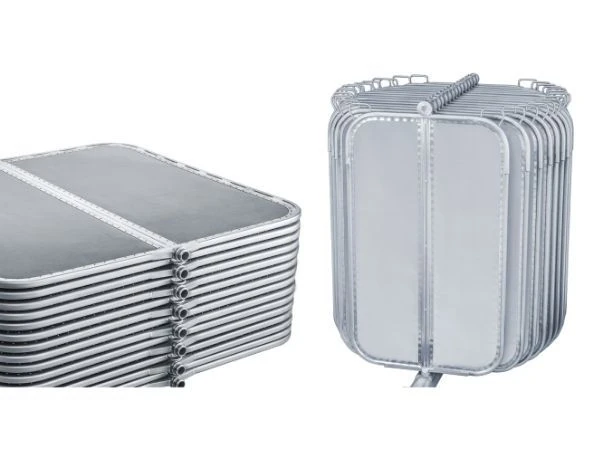
In critical liquid-solid separation processes across pharmaceutical, specialty chemical, food, and high-purity industrial sectors, overall plant productivity relies on the precision and durability of internal vessel internals. Working inside horizontal and vertical pressure vessels, each filter leaf element acts as a high-precision separation barrier-supporting pre-coat beds, capturing fine suspended solids, and channeling clarified liquid into the primary manifold header.
When operating under demanding conditions-such as acidic slurries, elevated process temperatures, or strict sanitary cleaning protocols-standard commercial filter panels degrade rapidly. Poor alloy purity, loose wire mesh tensioning, and rough surface finishes lead to severe pitting corrosion, particle bypass, and sticky cake buildup.
To eliminate unscheduled downtime and maintain complete fluid purity, leading process engineers rely on Precision-Engineered Stainless Steel Leaf Filter Element assemblies.
This technical article provides an in-depth engineering analysis of precision stainless steel leaf elements, focusing on advanced metallurgy selection (SS316L, 321, 310S, 904L), surface electropolishing thermodynamics, fluidic manifold seating, and sanitary CIP maintenance protocols.
To explore foundational metallurgy, weave structures, and primary filtration mechanics across our complete product family, visit our core [Stainless Steel Filter Leaf].
Metallurgical Selection Matrix for Extreme Process Conditions
Selecting the optimal stainless steel grade for your filter leaf element is essential to preventing premature mechanical failure and localized chemical attack.
Alloy Application Hierarchy
● SS 304: General industrial liquid-solid separation, water clarification, and non-corrosive chemical filtration.
● SS 316L: Edible oil bleaching, sugar syrups, pharmaceuticals, and organic acid recovery.
● SS 321: Thermal shock environments and moderate heat cycling where titanium stabilization prevents intergranular weld decay.
● SS 310S: High-temperature processing up to $800^\circ\text{C}$, including molten sulfur recovery and hot petro-chemical gas/liquid streams.
● SS 904L: Harsh chemical wash, high chloride exposure, brackish water, and dilute sulfuric acid streams.
Corrosion and Temperature Performance Guide
| Stainless Alloy | Metallurgical Key Feature | Recommended Operational Environment |
| SS 304 | 18/8 Cr-Ni Standard Stainless | Mild wash water, non-corrosive industrial slurries |
| SS 316L | Low-Carbon with $2-3\%$ Molybdenum | Edible oils, general pharmaceuticals, organic solvents |
| SS 321 | Titanium Stabilized ($5\times \text{C\%}$) | Resists intergranular corrosion in thermal cycling |
| SS 310S | High Nickel ($19-22\%$) & Chromium ($24-26\%$) | Molten sulfur recovery, high-temperature gas/liquid |
| SS 904L | High Moly ($4.5\%$) & Copper Additions | Sulfuric acid streams, brackish water, high chlorides |
Electropolishing Thermodynamics and Smooth Surface Kinetics
In sanitary food and pharmaceutical applications, as well as sticky resin filtration, the micro-topography of the filter leaf outer screen directly impacts process cleanability and cake release.
Unlike standard mechanical mill finishes that leave tiny microscopic wire burrs and ridges that trap fine particulates and cause cake adhesion, an electropolished finish creates a smooth, non-porous surface micro-profile.
Key Benefits of Surface Electropolishing
When a finished stainless steel filter leaf element undergoes electro-chemical polishing, selective anodic dissolution removes micro-peaks from wire surfaces:
Enhanced Passive Chromium Oxide Layer: The process enriches the surface with Chromium, increasing pitting resistance (PREN values) significantly and preventing iron contamination.
100% Dry Filter Cake Release: By removing microscopic wire burrs, sticky filter cake (such as spent bleaching earth, resin residues, or pharmaceutical cake) drops off completely during pneumatic vibration cycles.
Sanitary CIP Compliance: Smooth, non-porous surfaces prevent bacterial biofilm accumulation and allow complete cleaning during automated Clean-in-Place (CIP) rinse cycles.
Multi-Layer Structural Mechanics and Pressure-Drop Optimization
A high-performance filter leaf element is a structural hydraulic pressure vessel component built to endure severe differential pressure ($\Delta P$) fluctuations. Its internal architecture balances structural rigidity with high-velocity internal fluid flow.
5-Layer Precision Screen Pack Breakdown
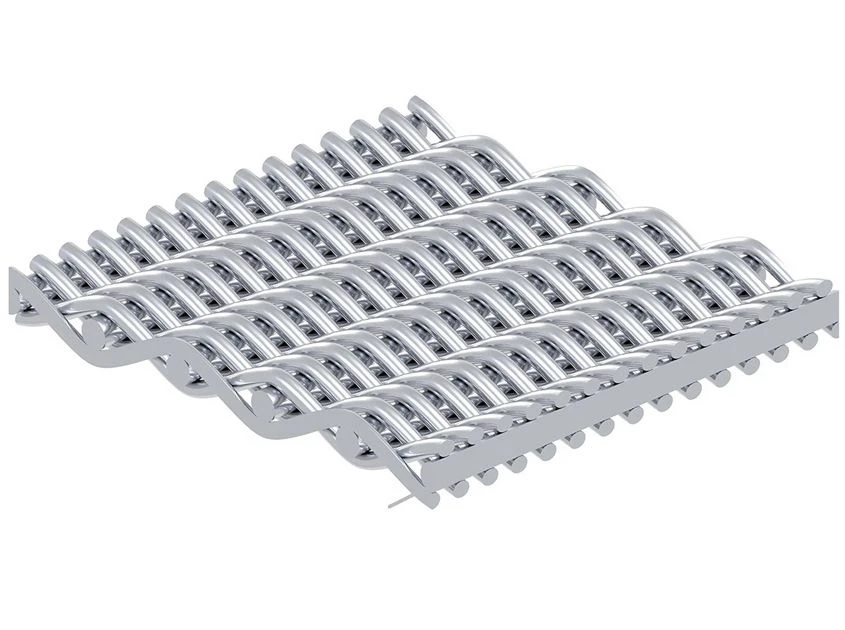
Layer 1 (Top Outer Filtration Mesh): Fine Plain Dutch or Twill Dutch weave engineered for accurate surface particle retention and uniform pre-coat deposition.
Layer 2 (Upper Intermediate Screen): Medium-mesh support layer that prevents the fine outer mesh from sagging into the central drainage channels under high pressure.
Layer 3 (Heavy Internal Drainage Core): High-gauge crimped wire or corrugated mesh acting as the central structural backbone. It provides robust anti-collapse strength while creating wide open flow paths for filtrate discharge.
Layer 4 (Lower Intermediate Screen): Mirror support screen protecting the lower fine filtration mesh against mechanical deformation.
Layer 5 (Bottom Outer Filtration Mesh): Matching high-precision outer filtration screen ensuring dual-sided separation efficiency.
Mechanical Integrity and Tensioning Controls
● Heavy Internal Drainage Grid: Serves as the central structural backbone, preventing screen collapse during differential pressure surges while creating wide hydraulic channels for low-resistance filtrate collection.
● Pneumatic Mesh Tensioning & Laser Edge Welding: During assembly, outer mesh sheets are held under multi-directional pneumatic tension before being laser-welded into the outer perimeter frame. This eliminates micro-bagging, guarantees an absolutely flat filtration plane, and ensures a uniform pre-coat layer across the entire leaf face.
Hydraulic Manifold Sealing and Spigot Precision Engineering
Clarified liquid collected across the surface of the leaf element drains downward through the internal core toward the bottom outlet connection.
CNC Solid-Bar Machined Spigots: Rather than using welded tubing, our outlet spigots are milled from solid stainless steel bar stock. This guarantees micro-inch surface tolerances that hold elastomeric O-rings (Viton, EPDM, PTFE-encapsulated) perfectly tight against the manifold socket, completely eliminating slurry bypass into the clear filtrate header.
Integral Alignment Collar Mechanics: A precision-machined shoulder collar locks the leaf panel into a true perpendicular orientation relative to the collector header. This prevents leaf tilting, maintains precise inter-leaf pitch distance across the vessel array, and prevents adjacent cake beds from touching or bridging during operating cycles.
Maintenance and Field Washing Best Practices
To ensure multi-year operational service life from your precision stainless steel filter leaf elements:
Enforce Proper CIP Fluid Velocity: Maintain a minimum fluid velocity of $1.5 - 2.0\text{ m/s}$ during CIP back-washing to ensure full scouring action across internal drainage grids.
Avoid Hydrochloric Acid Cleaners: Never use hydrochloric acid or bleach cleaners on 304/316L filter elements, as chlorides cause rapid stress corrosion cracking along tensioned mesh wires. Use nitric/citric acid passivation solutions instead.
Inspect Spigot Alignment Annually: Verify that outlet spigots remain straight and un-damaged during re-tubing or panel maintenance to preserve absolute zero-bypass performance inside the vessel header.
Conclusion
The Precision-Engineered Stainless Steel Leaf Filter Element provides the highest standard of separation reliability, structural integrity, and hygienic safety for modern process industries. Featuring certified high-grade stainless alloys, precision CNC spigot machining, pneumatically pre-tensioned Dutch weave mesh, and optional electropolished finishes, these filter leaf elements guarantee zero fluid bypass, extended operating cycles, and rapid filter cake discharge.
To review general vertical pressure leaf designs and bottom spigot fluidics, read our technical article on [Vertical Leaf Filter Elements: Bottom-Discharge Fluidics, Vessel Manifold Sealing, and Array Alignment Stability], or contact our technical sales department for custom stainless steel leaf drawings, alloy samples, and engineering quotes.