






Products Description
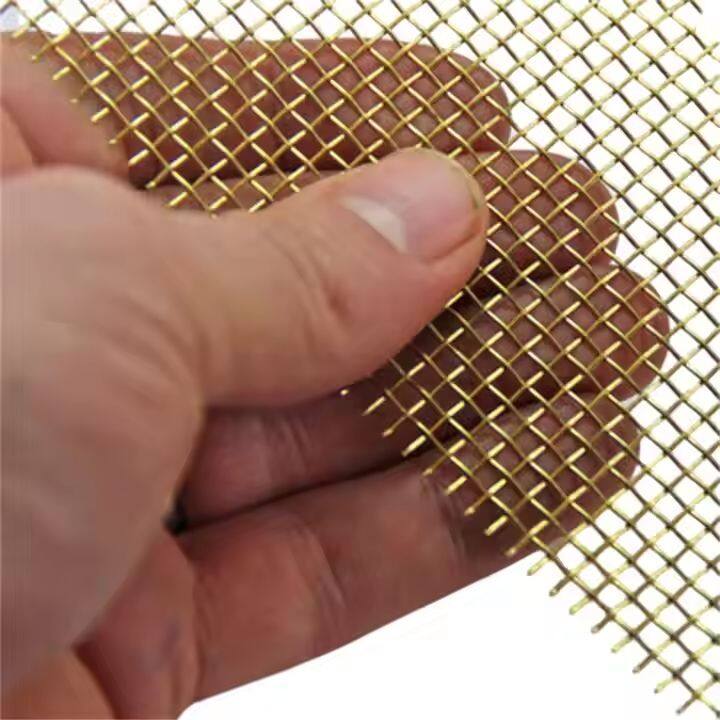
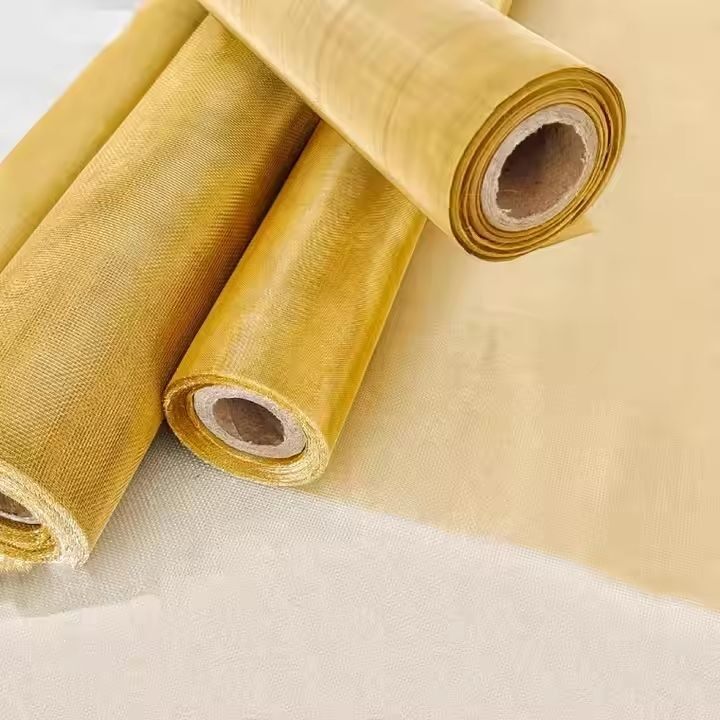
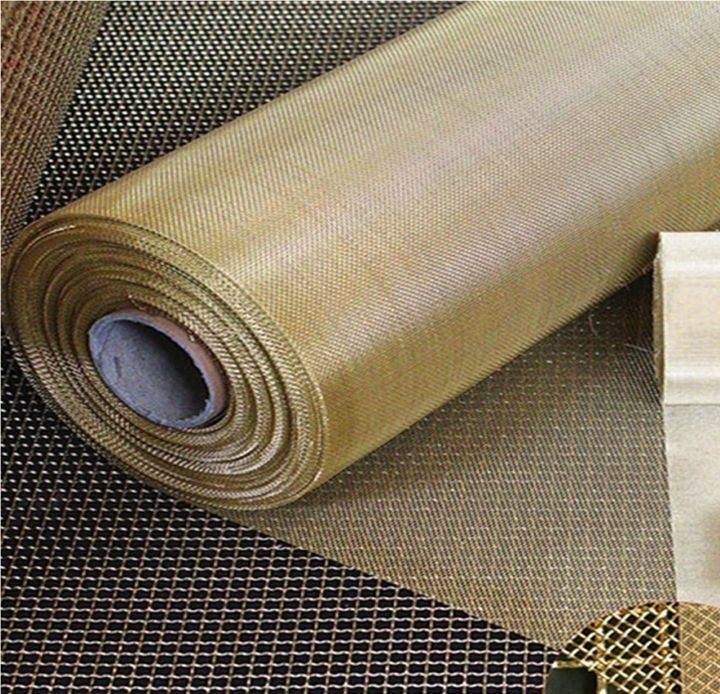
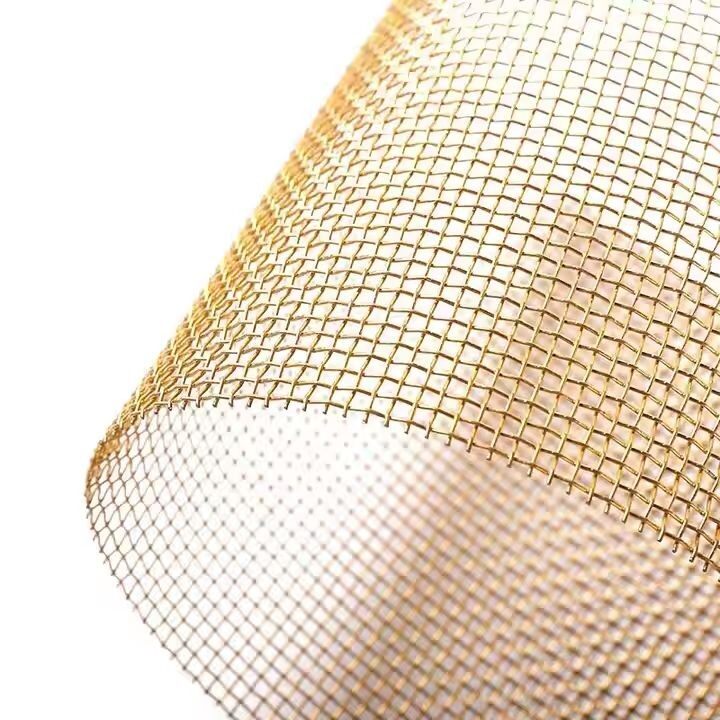
Brass mesh is a premium-quality woven material crafted from brass alloy wire, available in various grades such as 65 brass, 70 brass, and 80 brass. Typically, the warp and weft wires have equal diameters, ensuring a consistent, durable structure. Compared to copper mesh, brass mesh offers superior abrasion and corrosion resistance, along with enhanced tensile strength. It also features lower electrical and thermal conductivity, making it suitable for a wider range of applications. Brass mesh is commonly employed for sieving and filtering particles, powders, china clay, glass, and ceramic printing materials. Additionally, it serves as an effective filter for liquids and gases, while also being utilized in decorative applications due to its elegant appearance.


Types of Brass Wire Mesh:
Brass wire mesh comes in a variety of weave patterns and thicknesses, depending on its intended application. Common types include:
1.Plain Weave:
The most basic weave pattern, where wires cross each other in a regular, square arrangement. This pattern is ideal for general-purpose filtration and screening.

2.Twill Weave:
In this weave, two or more wires pass over and under multiple wires at once, providing a tighter, more durable structure. It's typically used in applications where fine filtration or a stronger mesh is required.

3.Dutch Weave:
A specialized weave pattern where fine wires are woven over thicker wires, providing a dense mesh with enhanced filtration properties. Dutch weave is often used in industries requiring high precision in particle separation.

4.Reverse Dutch weave:
In contrast to the plain Dutch weave, the reverse Dutch weave features a distinct arrangement: the warp wire consists of fine mesh (typically made from mesh wire or woven wire mesh), while the weft wire is composed of thicker mesh. Additionally, the number of wires used in the weave is comparatively smaller.

|
Brass mesh and brass wire cloth specification |
|||||
|
Product code |
Mesh/inch |
Wire diameter |
Opening |
Open area |
|
|
mm |
inch |
mm |
|||
|
BMCS-214 |
2 |
2.030 |
0.800 |
10.67 |
70 |
|
BMCS-215 |
2 |
1.800 |
0.072 |
10.90 |
73 |
|
BMCS-216 |
2 |
1.600 |
0.063 |
11.10 |
76 |
|
BMCS-316 |
3 |
1.600 |
0.063 |
6.87 |
65 |
|
BMCS-418 |
4 |
1.194 |
0.047 |
5.16 |
66 |
|
BMCS-520 |
5 |
0.910 |
0.035 |
4.17 |
67 |
|
BMCS-822 |
8 |
0.711 |
0.028 |
2.46 |
60 |
|
BMCS-621 |
6 |
0.800 |
0.032 |
3.43 |
66 |
|
BMCS-622 |
6 |
0.711 |
0.028 |
3.52 |
69 |
|
BMCS-823 |
8 |
0.610 |
0.024 |
2.57 |
65 |
|
BMCS-824 |
8 |
0.559 |
0.022 |
2.62 |
68 |
|
BMCS-1023 |
10 |
0.635 |
0.025 |
1.90 |
56 |
|
BMCS-1024 |
10 |
0.559 |
0.022 |
1.98 |
61 |
|
BMCS-1025 |
10 |
0.508 |
0.020 |
2.03 |
64 |
|
BMCS-1224 |
12 |
0.584 |
0.023 |
1.47 |
52 |
|
BMCS-1226 |
12 |
0.457 |
0.018 |
1.66 |
61 |
|
BMCS-1425 |
14 |
0.500 |
0.020 |
1.31 |
52 |
|
BMCS-1426 |
14 |
0.457 |
0.018 |
1.36 |
56 |
|
BMCS-1427 |
14 |
0.417 |
0.016 |
1.40 |
59 |
|
BMCS-1626 |
16 |
0.457 |
0.018 |
1.12 |
50 |
|
BMCS-1629 |
16 |
0.345 |
0.014 |
1.24 |
61 |
|
BMCS-1630 |
16 |
0.315 |
0.012 |
1.27 |
64 |
|
BMCS-1826 |
18 |
0.45 |
0.018 |
0.96 |
46 |
|
BMCS-1827 |
18 |
0.432 |
0.017 |
0.97 |
48 |
|
BMCS-1830 |
18 |
0.315 |
0.012 |
1.10 |
60 |
|
BMCS-2030 |
20 |
0.315 |
0.012 |
0.96 |
56 |
|
BMCS-2032 |
20 |
0.247 |
0.011 |
0.88 |
61 |
|
BMCS-2230 |
22 |
0.315 |
0.012 |
0.84 |
53 |
|
BMCS-2430 |
24 |
0.315 |
0.012 |
0.74 |
49 |
|
BMCS-2631 |
26 |
0.295 |
0.012 |
0.68 |
49 |
|
BMCS-2831 |
28 |
0.295 |
0.012 |
0.61 |
45 |
|
BMCS-3027 |
20 |
0.407 |
0.016 |
0.86 |
46 |
|
BMCS-3030 |
30 |
0.305 |
0.012 |
0.53 |
40 |
|
BMCS-3032 |
30 |
0.247 |
0.011 |
0.57 |
49 |
|
BMCS-3034 |
30 |
0.234 |
0.009 |
0.61 |
52 |
|
BMCS-3233 |
32 |
0.254 |
0.010 |
0.54 |
46 |
|
BMCS-3434 |
34 |
0.234 |
0.009 |
0.51 |
47 |
|
BMCS-3634 |
36 |
0.234 |
0.009 |
0.47 |
45 |
|
BMCS-3835 |
38 |
0.213 |
0.008 |
0.46 |
46 |
|
BMCS-4031 |
40 |
0.254 |
0.010 |
0.38 |
36 |
|
BMCS-4036 |
40 |
0.193 |
0.008 |
0.44 |
48 |
|
BMCS-4038 |
40 |
0.152 |
0.006 |
0.46 |
58 |
|
BMCS-4236 |
42 |
0.193 |
0.008 |
0.41 |
46 |
|
BMCS-4437 |
44 |
0.173 |
0.007 |
0.40 |
49 |
|
BMCS-4637 |
46 |
0.173 |
0.007 |
0.38 |
47 |
|
BMCS-4837 |
48 |
0.173 |
0.007 |
0.38 |
47 |
|
BMCS-5032 |
50 |
0.230 |
0.009 |
0.28 |
30 |
|
BMCS-5037 |
50 |
0.173 |
0.007 |
0.34 |
43 |
|
BMCS-5039 |
50 |
0.132 |
0.005 |
0.38 |
55 |
|
BMCS-6036 |
60 × 50 |
0.193 |
0.008 |
- |
- |
|
BMCS-6037a |
60 × 50 |
0.173 |
0.007 |
- |
- |
|
BMCS-6034 |
60 |
0.190 |
0.008 |
0.23 |
30 |
|
BMCS-6037b |
60 |
0.173 |
0.007 |
0.25 |
35 |
|
BMCS-6040 |
60 |
0.122 |
0.005 |
1.30 |
83 |
|
BMCS-7039 |
70 |
0.132 |
0.005 |
0.23 |
40 |
|
BMCS-7041 |
70 |
0.112 |
0.004 |
0.25 |
48 |
|
BMCS-8035 |
80 |
0.140 |
0.006 |
0.18 |
31 |
|
BMCS-8040 |
80 |
0.122 |
0.005 |
0.20 |
38 |
|
BMCS-8042 |
80 |
0.102 |
0.004 |
0.22 |
46 |
|
BMCS-9041 |
90 |
0.112 |
0.004 |
0.17 |
36 |
|
BMCS-9043 |
90 |
0.091 |
0.004 |
0.19 |
46 |
|
BMCS-10036 |
100 |
0.114 |
0.005 |
0.14 |
30 |
|
BMCS-10042 |
100 |
0.102 |
0.004 |
0.15 |
36 |
|
BMCS-10043 |
100 |
0.091 |
0.004 |
0.16 |
41 |
|
BMCS-12043 |
120 × 108 |
0.091 |
0.004 |
- |
- |
|
BMCS-12044 |
120 |
0.081 |
0.003 |
0.13 |
38 |
|
BMCS-12045 |
120 |
0.071 |
0.003 |
0.14 |
44 |
|
BMCS-14045 |
140 |
0.071 |
0.003 |
0.11 |
37 |
|
BMCS-14046 |
140 |
0.061 |
0.002 |
0.12 |
44 |
|
BMCS-15046 |
150 |
0.061 |
0.002 |
0.11 |
41 |
|
BMCS-16046 |
160 |
0.061 |
0.002 |
0.10 |
38 |
|
BMCS-18046 |
180 |
0.061 |
0.002 |
0.08 |
32 |
|
BMCS-18047 |
180 |
0.051 |
0.002 |
0.09 |
41 |
|
BMCS-20047 |
200 |
0.051 |
0.002 |
0.08 |
36 |
|
* Mesh size and wire diameter can be customized according to special needs. |
|||||
Applications of Brass Wire Mesh:


Brass wire mesh is used in a wide range of industries and applications:
- Filtration: Brass wire mesh is widely used for liquid and gas filtration, especially in the food and beverage industry, oil and gas production, chemical processing, and water treatment plants. Its ability to trap particles while allowing flow makes it ideal for precision filtering.
- Screening and Sifting: Used in various industries such as mining, agriculture, and construction for sieving, sifting, and screening materials such as sand, gravel, flour, and other granular products.
- Decorative Applications: Brass wire mesh is often used in architecture and interior design. It can be incorporated into furniture, lighting fixtures, partitions, railings, and decorative panels to create a luxurious and modern look.
- Industrial & Commercial Use: In industrial settings, brass mesh is used for reinforcing purposes, as protective covers, or in machinery parts to prevent debris or contamination from affecting processes. It is commonly used in the manufacturing of equipment in automotive, aerospace, and machinery industries.
- Electrical Applications: Due to its good conductivity, brass mesh is sometimes used for grounding applications or as shielding in electrical equipment.
Key Features of Brass Wire Mesh:
Corrosion Resistance
Brass has excellent resistance to corrosion, especially in environments that are exposed to air and moisture. The copper in brass helps the mesh withstand oxidation and tarnishing, which means it retains its appearance and functionality over long periods of time.
High Strength and Durability
Brass is stronger than many other metals, and brass wire mesh is no exception. It is highly durable, offering robust protection for a variety of applications, from heavy-duty industrial use to fine, detailed filtering tasks.
Aesthetic Appeal
The natural golden hue of brass gives the mesh an attractive, polished appearance. This makes it an ideal choice for decorative purposes, such as in architecture or art installations.
Malleability and Flexibility
Despite its strength, brass is a malleable material, meaning that brass wire mesh can be easily shaped or bent without compromising its integrity. This flexibility makes it suitable for custom-made applications.
High Thermal and Electrical Conductivity
Brass has a relatively high thermal and electrical conductivity, making it useful in certain electrical applications where heat dissipation is important.
Non-magnetic
Brass is a non-magnetic material, which is advantageous in some specialized applications, such as electronics or where magnetic interference is a concern.


