





Products Description
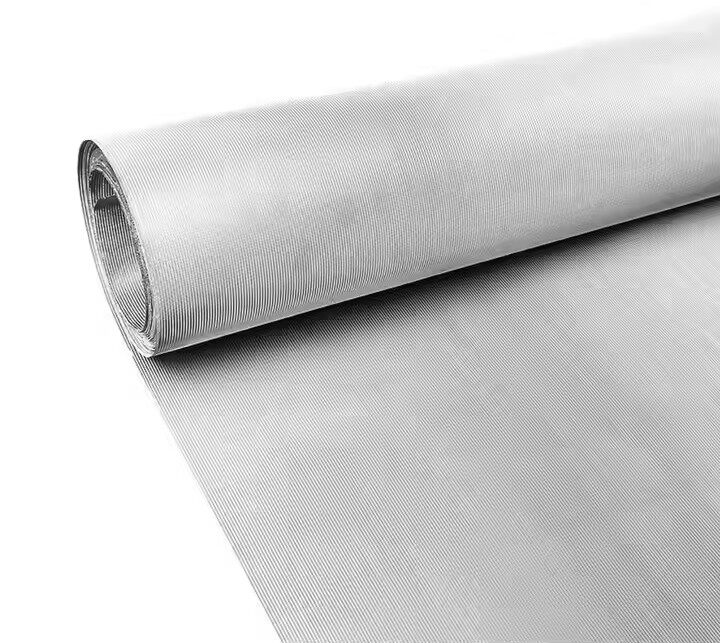
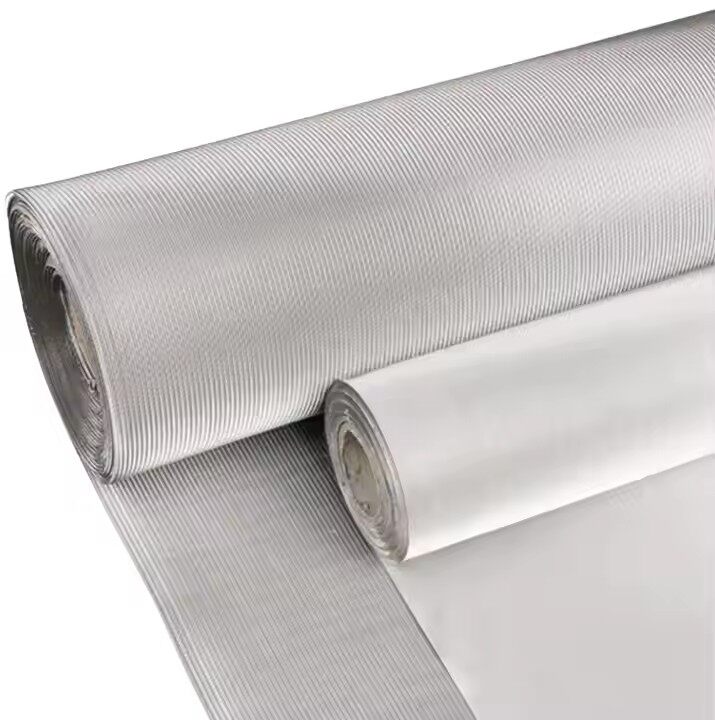
Stainless steel wire mesh plays a vital role in the filtration process of palm oil production. Palm oil is one of the most widely used vegetable oils and it requires effective filtration to remove impurities such as solids, fibers and dust that may affect the quality, safety and shelf life of the final product. Stainless steel wire mesh provides an optimal solution. Stainless steel filter mesh is characterized by corrosion resistance, light weight, easy assembly and fine mesh. And it can accurately separate unwanted particles from palm oil, providing you with the finished oil you desire.

Types of Stainless Steel Wire Mesh for Palm Oil Filtration:
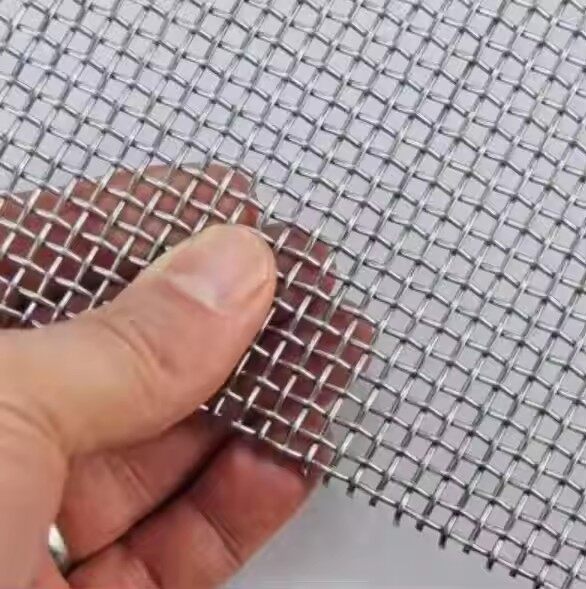
1· Plain Weave Stainless Steel Mesh
This is the most common type of wire mesh used for general filtration purposes. It offers a balanced combination of strength, durability, and effective filtration. Plain weave stainless steel mesh is used in many stages of palm oil filtration, including crude oil and refining filtration.
|
Table-1: Specification of Plain Weave |
|||||
|
Material |
Mesh Count/inch |
Wire diameter (mm) |
Wire diameter (mm) |
Open Area |
Weight (kg/m2) |
|
AISI 304/316L |
3 |
1.6 |
6.867 |
66% |
3.82 |
|
AISI 304/316L |
3 |
1.4 |
7.067 |
70% |
2.92 |
|
AISI 304/316L |
4 |
1.6 |
4.75 |
56% |
5.09 |
|
AISI 304/316L |
4 |
1.4 |
4.95 |
61% |
3.89 |
|
AISI 304/316L |
5 |
1.2 |
3.83 |
57% |
3.88 |
|
AISI 304/316L |
5 |
1 |
4.08 |
65% |
2.48 |
|
AISI 304/316L |
6 |
1.4 |
2.833 |
45% |
5.84 |
|
AISI 304/316L |
8 |
0.8 |
2.375 |
56% |
2.54 |
|
AISI 304/316L |
8 |
0.71 |
2.465 |
60% |
2 |
|
AISI 304/316L |
10 |
0.9 |
1.64 |
42% |
4.02 |
|
AISI 304/316L |
12 |
0.8 |
1.317 |
39% |
3.82 |
|
AISI 304/316L |
12 |
0.71 |
1.407 |
44% |
3.01 |
|
AISI 304/316L |
16 |
0.63 |
0.958 |
36% |
3.15 |
|
AISI 304/316L |
20 |
0.5 |
0.77 |
37% |
2.48 |
|
AISI 304/316L |
20 |
0.45 |
0.82 |
42% |
2.01 |
|
AISI 304/316L |
24 |
0.45 |
0.608 |
33% |
2.41 |
|
AISI 304/316L |
24 |
0.355 |
0.703 |
44% |
1.5 |
|
AISI 304/316L |
28 |
0.355 |
0.552 |
37% |
1.75 |
|
AISI 304/316L |
60 |
0.185 |
0.243 |
33% |
0.97 |
|
AISI 304/316L |
60 |
0.16 |
0.263 |
39% |
0.76 |
2· Plain Dutch Weave Stainless Steel Mesh
Plain Dutch Weave Wire Mesh is constructed by using shute and warp wires of different diameters, with the shute wire being thinner than the warp wire. The thinner shute wire is tightly woven with the larger diameter warp wire, creating a high-strength mesh that ensures smooth flow while maintaining structural integrity. The tightly woven smaller wires form a dense mesh ideal for filtration, while the larger wires provide additional strength and durability.
|
Table-1: Specification of Plain Dutch Weave |
||||||
|
Mesh |
Wire diameter (mm) |
Absolute microns |
Nominal microns |
Weight kg/m2 |
||
|
Count/inch |
warp |
weft |
||||
|
AISI 304/316L |
12 × 64 |
0.58 |
0.40 |
270–285 |
200-205 |
3.64 |
|
AISI 304/316L |
14 × 88 |
0.50 |
0.33 |
225–245 |
150-155 |
3.27 |
|
AISI 304/316L |
24 × 110 |
0.36 |
0.25 |
115–125 |
80-85 |
2.70 |
|
AISI 304/316L |
30 × 150 |
0.23 |
0.18 |
95–100 |
65-70 |
1.60 |
|
AISI 304/316L |
40 × 200 |
0.18 |
0.14 |
65–70 |
55-60 |
1.30 |
|
AISI 304/316L |
50 × 250 |
0.14 |
0.11 |
55–60 |
40-45 |
1.00 |
|
AISI 304/316L |
80 × 400 |
0.125 |
0.071 |
43–48 |
35-40 |
0.81 |
3· Reverse Dutch Weave Stainless Steel Mesh
Reverse Dutch Weave Wire Mesh is crafted using a plain weave technique, but with shute wires of a larger diameter than the warp wires. This unique construction produces an exceptionally strong mesh, featuring a higher warp mesh count than shute mesh count. The Reverse Dutch Weave offers enhanced tensile strength in both directions, along with smaller apertures and a higher opening count per unit area compared to the standard Dutch weave. Aperture sizes range from 200 microns to 14 microns.
|
Table-2: Specification of Reverse Dutch Weave |
|||||
|
Material |
Mesh Count/inch |
Wire diameter (mm) |
Absolute microns |
Nominal microns |
Porosity (%) |
|
AISI 304/316L |
128/36 |
0.202/0.400 |
95-105 |
80 |
55 |
|
AISI 304/316L |
170/50 |
0.150/0.300 |
82-90 |
60 |
54 |
|
AISI 304/316L |
290/75 |
0.090/0.200 |
50-55 |
40 |
53 |
|
AISI 304/316L |
625/125 |
0.040/0.130 |
25-32 |
17 |
55 |
|
AISI 304/316L |
132/16 |
0.355/0.457 |
210-260 |
250 |
45 |
|
AISI 304/316L |
260/40 |
0.150/0.220 |
80-95 |
125 |
53 |
|
AISI 304/316L |
325/40 |
0.150/0.300 |
45-75 |
55 |
43 |
|
AISI 304/316L |
400/125 |
0.065/0.100 |
60-70 |
60 |
61 |
Key Benefits of Stainless Steel Wire Mesh in Palm Oil Filtration:
Durability and Longevity: Stainless steel is highly resistant to corrosion, rust, and staining, making it ideal for use in the often harsh environment of oil filtration. It is capable of withstanding high temperatures, which is especially important in the palm oil industry where heat is involved in processing.
Effective Filtration: Stainless steel wire mesh is available in various mesh sizes and weave patterns, allowing for precise filtration. It efficiently filters out unwanted solid particles such as fiber, husks, and other contaminants from palm oil, ensuring a cleaner and more refined product.
Corrosion Resistance: Palm oil filtration involves exposure to oils, acids, and other chemicals. Stainless steel wire mesh resists oxidation and corrosion, even in high-moisture and high-temperature environments. This resistance ensures the mesh remains functional and retains its strength over extended periods of use.
Hygienic and Food-Safe: Stainless steel is non-toxic and does not react with palm oil or leach harmful substances, ensuring that the final palm oil product remains safe for consumption. Its smooth surface also makes it easy to clean, ensuring that contaminants do not accumulate and cross-contaminate batches.
Customization and Flexibility: Stainless steel wire mesh can be customized in terms of mesh count, wire diameter, and weave pattern to suit specific filtration requirements. Whether it's a coarse mesh for initial filtration or a finer mesh for the final stages of oil purification, stainless steel wire mesh provides flexibility to meet various filtration needs in the palm oil industry.
Reusability and Cost-Effectiveness: Stainless steel wire mesh is durable and can be cleaned and reused multiple times. This reusability makes it a cost-effective option for palm oil producers looking for an economical filtration solution with long-term performance.
Applications of Stainless Steel Wire Mesh in Palm Oil Filtration:


Crude Palm Oil Filtration: After palm fruits are harvested and processed, crude palm oil is extracted. This oil typically contains solid impurities such as fruit fibers, dirt, and leaves. Stainless steel wire mesh is used in the initial filtration stages to remove these larger particles, producing a cleaner oil ready for further refinement.
Refining and Purification: In the refining process, palm oil undergoes several stages including degumming, deacidification, decolorization, and deodorization. Stainless steel wire mesh is used at various stages to remove residual solids, which helps in producing a high-quality and refined palm oil product. The mesh ensures that the oil is free from particulate contamination that could degrade its quality.
Palm Oil Dewatering: In the production of palm oil, water is often present and must be separated. Stainless steel wire mesh is used in dewatering systems to remove excess water, ensuring the palm oil is ready for storage and transportation.
Edible Oil Processing: Palm oil is commonly used in cooking and food products. Filtration using stainless steel wire mesh ensures that the final edible oil is pure, clear, and free from any unwanted particles or impurities, meeting food safety standards.
Waste and By-Product Filtration: During palm oil extraction and refining, various by-products, such as oil cakes and sludge, are generated. Stainless steel wire mesh is also used to filter and separate these by-products, enabling efficient waste management and recovery of usable oil.
Conclusion:
Stainless steel wire mesh is a vital component in the palm oil filtration process, providing an efficient, reliable, and cost-effective solution for removing impurities and ensuring the production of high-quality palm oil. Its durability, versatility, and resistance to corrosion make it an indispensable tool for palm oil manufacturers, offering long-term value and performance in both small-scale and large-scale operations.


