





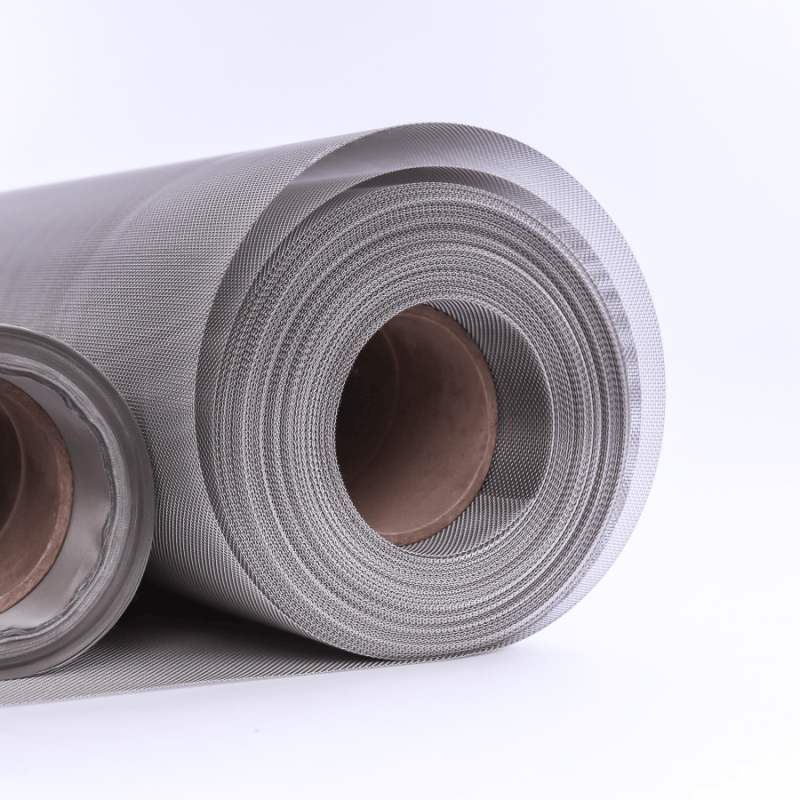
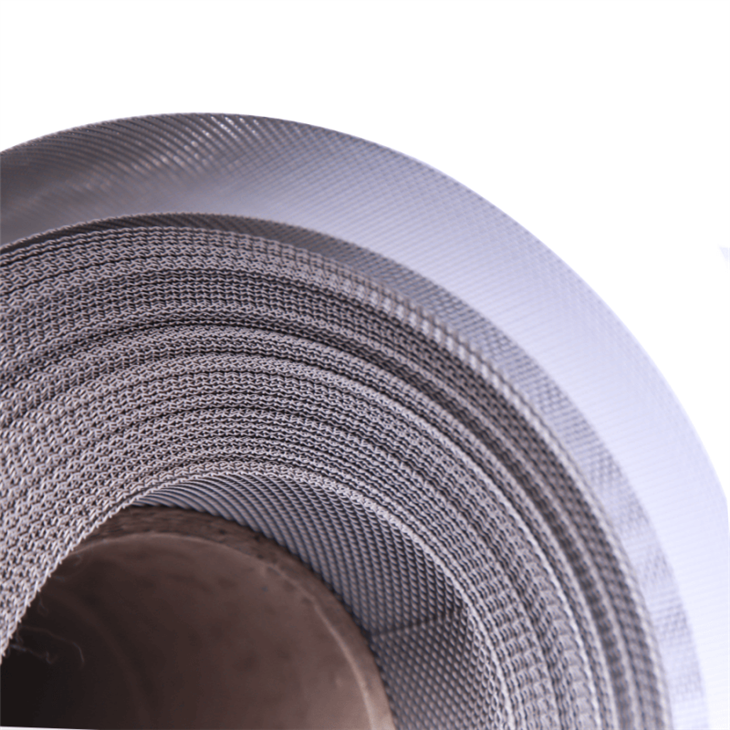
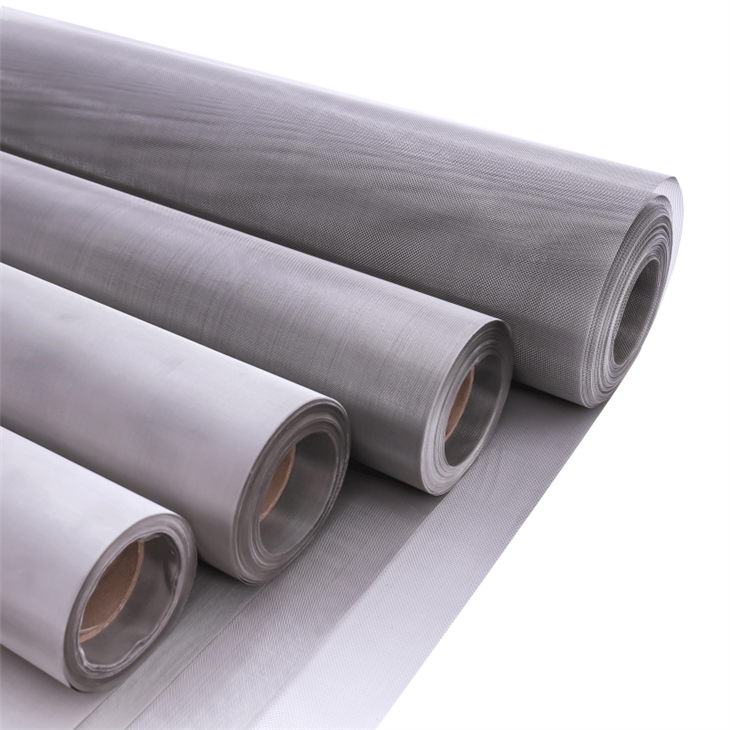
Products Description
304L is the low-carbon version of 304. Carbon is normally held at 0.03% maximum, with chromium around 18–20% and nickel around 8–12%. The alloy system remains close to 304, but the lower carbon level reduces the risk associated with chromium carbide precipitation after welding.
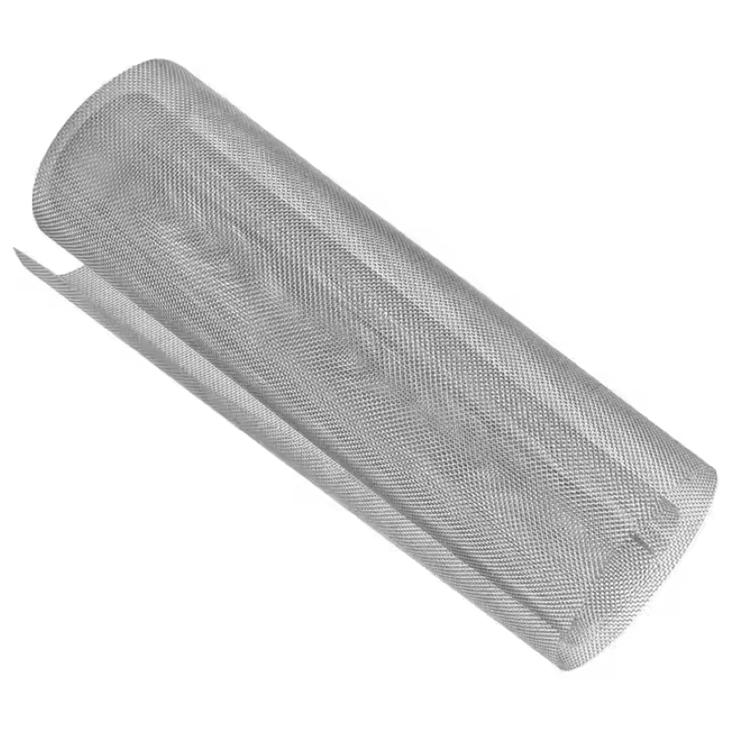
CHG Metal manufactures 304L woven mesh in plain, twill and Dutch weave, with mesh count, wire diameter, aperture, width and edge finish made to the filtration, screening or welded assembly. 304L is not a replacement for 316L; its main value is low-carbon fabrication and weldability within the 304 family.

Product Technical Parameters
Material Composition:
304L stainless steel wire mesh contains between 18% to 20% chromium and 8% to 12% nickel, with a carbon content of up to 0.03% to ensure excellent corrosion resistance and low intergranular corrosion tendency.
Physical Properties:
The density of 304L stainless steel is approximately 8.0 g/cm³ (0.289 lb/in³), with a melting point around 1398 °C (2555 °F). It has a coefficient of thermal expansion of 17.5 μm/m °C (20 – 100 °C) or 9.7 x 10^-6 in/in °F (70 – 212 °F), and a modulus of elasticity of 187.5 kN/mm² or 27195 ksi.
Mechanical Requirements:
The tensile strength of 304L stainless steel wire mesh is typically between 485 MPa to 170 MPa, with an elongation of 40% and a reduction of area of at least 50%.
Weave Styles:
Common weave styles include plain weave, twill weave, and Dutch weave, which offer different levels of filtration precision and strength.
Wire Diameter and Mesh Size:
Wire diameters range from 0.025mm to 2.03mm (0.001 inches to 0.08 inches), and mesh sizes range from 0.0254mm to 23.37mm (0.001 inches to 0.92 inches), allowing for customization to fit specific filtration needs.
Surface Finish:
The wire mesh can come with various surface finishes, including bright annealed, which provides a clean and smooth surface for applications requiring high clean line.
Product Features
Carbon: 0.03% maximum, compared with 0.08% maximum for standard 304.
Best fit: welded mesh parts and assemblies where weld-zone corrosion resistance matters.
Typical fabrication: filter baskets, cylinders, frames, flanged screens and custom panels.
Inquiry data: medium, chloride level, temperature, welding method, post-weld treatment and target aperture.
|
Item |
304 |
304L |
Purchasing decision |
|
Carbon |
0.08% max |
0.03% max |
304L is preferred for welded and sensitisation-sensitive parts |
|
Cr / Ni |
18–20% / 8–12% |
18–20% / 8–12% |
Similar base corrosion system |
|
Strength |
Standard grade range |
Low-carbon grade; depends on condition |
Design against the actual certificate and design code |
|
Typical use |
General screening, filtration, guards |
Welded assemblies, chemical process, food equipment |
Separate by duty and welding intensity |
|
Cost |
Usually lower |
Usually higher |
Pay for weld reliability, not for an automatic upgrade to 316 |

What Low Carbon Solves
During welding or prolonged exposure at sensitising temperatures, carbon can combine with chromium at grain boundaries and reduce local corrosion resistance. 304L limits carbon to lower that risk, making it useful where welds are dense and full solution treatment is not practical.
Low carbon does not make the mesh immune to corrosion. Chlorides, acids, temperature and crevices still control service life. In aggressive chloride or acid service, 304L should give way to 316L, 904L or another alloy.
When Not to Use 304L
304L does not solve a base-alloy corrosion limitation in seawater, chloride solutions, strong acids or severe high-temperature service. Compare 316L, 904L, duplex or another grade instead.
For general screening or guards with little or no welding, standard 304 is often more economical. Select by duty and fabrication method, not by the longer grade name.
A 304L stainless steel wire mesh roll for welded parts should include the weld drawing. For low carbon 304 wire mesh and 304L filter mesh, state whether the finished component will be welded or simply cut and formed.
FAQ
Q: Is 304L always more corrosion resistant than 304?
A: It is generally more resistant after welding or sensitisation. In non-welded general service, performance is close and depends on the actual medium.
Q: Can 304L replace 316L?
A: No. 304L does not contain the molybdenum addition used in 316L and should not be substituted in chloride or acid service without review.
Q: Can you manufacture welded filter baskets?
A: Yes. Provide the basket dimensions, mesh layers, support, weld details and connection drawing.
Request a Quote
Send the 304L mesh count or aperture, wire diameter, welded structure, medium, temperature, dimensions and quantity to CHG Metal for a fabrication quotation.


