





Filters and strainers are essential components in fluid processing systems, yet many users confuse their roles. While both remove contaminants, they operate on different principles, target different particle sizes, and serve different purposes. Understanding their differences helps engineers, manufacturers, and end-users select the right equipment and ensure optimal performance, efficiency, and product quality.
What Are Strainers and How Do They Work?
Designed for Removing Large Solid Particles
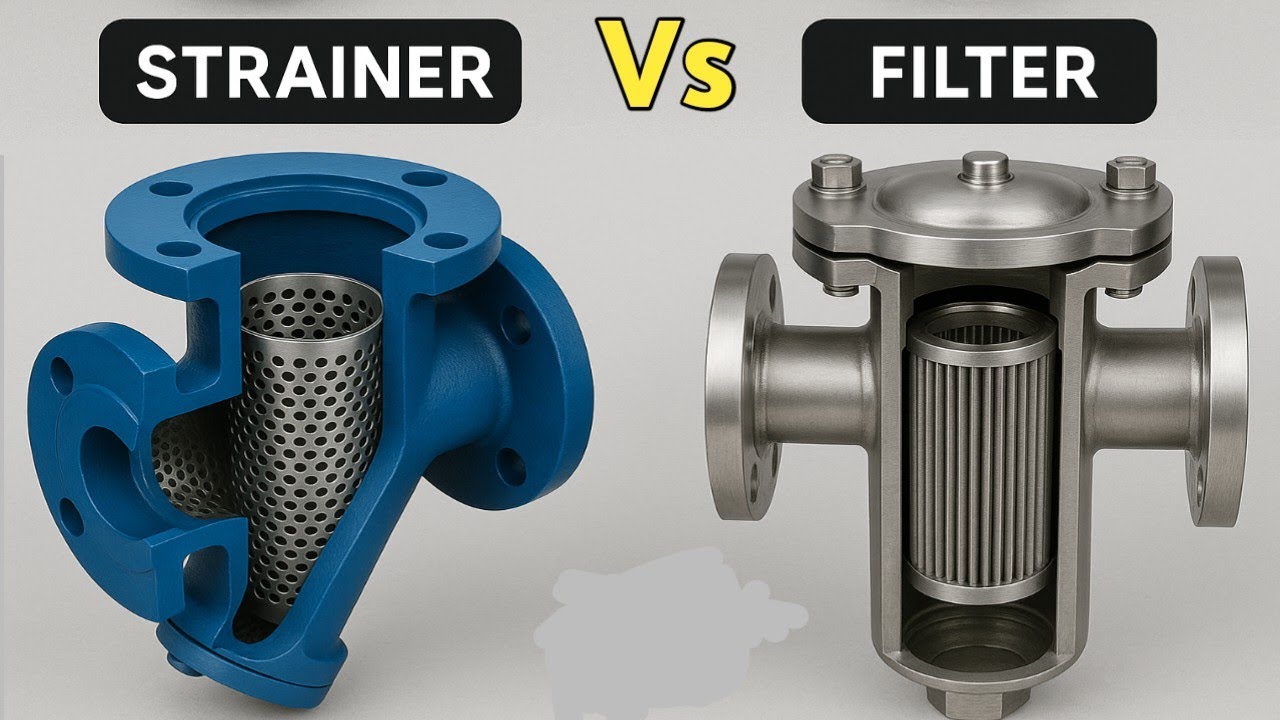
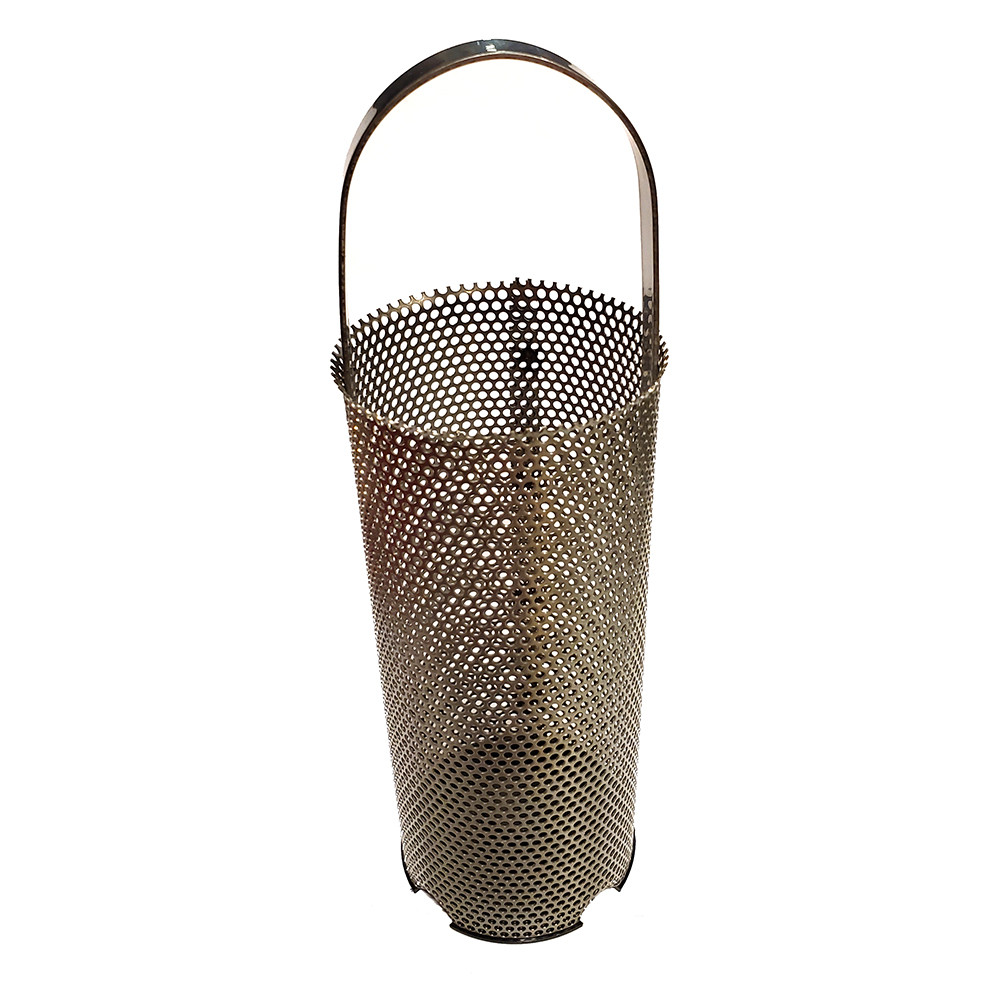
Strainers are primarily built to capture larger debris such as rust flakes, fibers, plastic fragments, and solid impurities. They act as the first line of defense in a system, preventing oversized contaminants from damaging pumps, valves, and meters. Because strainers deal with coarse solids, they typically use perforated metal screens or mesh with openings ranging from 20 to 1000 microns. Their function is protective rather than precision-based, ensuring equipment longevity and stable flow.
Operate with Low Flow Resistance
One key advantage of strainers is their ability to maintain high flow rates with minimal pressure drop. Their wide openings allow liquid to pass through easily, making them suitable for high-viscosity fluids, slurries, adhesives, and industrial liquids containing large solids. This low restriction characteristic makes strainers ideal for upstream protection and applications requiring continuous throughput without frequent maintenance interruptions.
Ideal for Pre-Filtration in Multi-Stage Systems
In many industrial setups, strainers serve as pre-filters before finer filtration stages. By capturing coarse particles early, they reduce the load on downstream bag filters, cartridge filters, or membrane systems. This staged approach extends filter life, lowers operational costs, and stabilizes system pressure. Industries such as chemicals, food processing, and wastewater treatment rely on strainers to prepare liquids for further purification.
Common Types: Basket, Y-Type, and Duplex Strainers
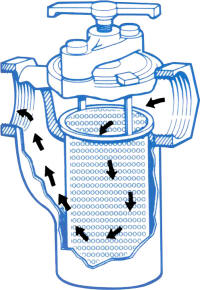
Strainers come in several configurations to meet different operational conditions. Basket strainers provide large filtration areas for heavy solids, Y-strainers offer compact installation for pipelines, and duplex strainers allow uninterrupted flow during cleaning. Selecting the right type depends on flow rate, particle load, cleaning frequency, and system layout.
What Are Filters and How Do They Work?
Designed for Fine Particle Removal
Filters target much smaller contaminants, often down to 1–100 microns-or even submicron in advanced systems. They use multilayer filter media such as felt, woven mesh, melt-blown fibers, or membranes to capture fine particulate matter. Filters play a crucial role in achieving high purity, especially in applications requiring product consistency, clarity, or contamination control.
Higher Filtration Accuracy
Unlike strainers, filters provide controlled micron ratings that determine the level of precision. Whether in coatings, pharmaceuticals, beverages, fuels, or electronics production, filters ensure the removal of fine solids that affect product quality. Their accuracy makes them indispensable in processes demanding consistent particle control and surface-clean product outcomes.
Gradual Pressure Increase Due to Particle Loading
As filters remove fine particles, their pores gradually become blocked, causing differential pressure to rise. Operators must monitor pressure to determine when cleaning or replacement is needed. This predictable blockage pattern helps users plan maintenance schedules and avoid unexpected shutdowns.
Common Types: Bag, Cartridge, and Membrane Filters
Each filter type serves specific needs. Bag filters handle high flow and large dirt-holding capacity, cartridge filters offer precision and consistency, and membrane filters deliver ultra-fine filtration for high-purity applications. Selecting the right filter ensures efficiency, product quality, and cost control.
Key Differences Between Filters and Strainers
Particle Size and Filtration Purpose
Strainers are used for coarse particle removal, generally above 75 microns, while filters are used for fine contaminants. Strainers protect equipment, whereas filters refine product quality. Understanding this distinction helps users design multi-stage systems that improve performance and reduce long-term cost.
Materials and Construction
Strainers usually use stainless steel perforated plates or wire mesh. Filters require engineered media such as felt, melt-blown fibers, or membranes. Their construction reflects the level of precision required.
Maintenance Frequency and Cleaning
Strainers are easier to clean and can often be reused multiple times. Filters typically require replacement after their dirt-holding capacity is reached. This impacts maintenance planning and cost.
System Impact and Performance Characteristics
Strainers introduce minimal pressure drop, while filters gradually increase pressure during use. Strainers ensure flow stability; filters ensure product purity.
Key Technical Comparisons
| Parameter | Strainers | Filters |
|---|---|---|
| Target Particle Size | Large solids (>75 µm) | Fine to ultra-fine particles (1–100 µm) |
| Primary Function | Equipment protection | Product purification |
| Pressure Drop | Very low | Moderate to high over time |
| Maintenance | Easy & reusable | Requires periodic replacement |
| Typical Media | Metal mesh or perforated plate | Felt, fiber, mesh, membrane |
Choosing the correct mesh size is essential for ensuring that a strainer performs as intended-protecting downstream equipment while maintaining smooth system flow. If you want a more detailed framework on how to select the most appropriate mesh size for different industrial liquids, we recommend reading our in-depth guide:
"How to Select the Right Strainer Mesh Size for Industrial Liquids."
When to Choose Strainers vs Filters
For Systems Requiring Heavy Solid Removal
Choose strainers when dealing with high solid loads or when preventing mechanical damage is the priority. They are ideal for pumps, piping protection, and upstream solid capture.
For Applications Requiring High Purity
Choose filters for final product refining, contamination control, or when the presence of small particles affects quality or performance.
For Multi-Stage Filtration Systems
Using both strainers and filters creates a balanced system where large particles are removed early, and fine particles are removed later.
Considering Operational Cost and Efficiency
Strainers reduce the load on filters and lower operational cost. Filters ensure precision and consistency. Each plays a distinct economic role.
Industry Use Examples
| Industry | Strainer Role | Filter Role |
|---|---|---|
| Coatings & Paints | Remove lumps & pigments | Ensure smooth, impurity-free coating |
| Food & Beverage | Capture seeds, pulp, fibers | Final clarity and hygiene filtration |
| Chemicals | Protect pumps and valves | Achieve micron-level purity |
| Wastewater | Remove solids & sludge chunks | Polishing and discharge compliance |
To further understand how a well-designed filtration setup can enhance performance, you may also explore our in-depth guide:
"Why Multi-Stage Filtration Systems Improve Efficiency and Reduce Costs."
This article explains how using multiple filtration stages-such as coarse, medium, and fine mesh-helps manufacturers reduce downtime, extend equipment life, and lower operating expenses.
Common Misunderstandings Between Filters and Strainers
Misbelief That Strainers Can Replace Filters
Strainers cannot achieve the precision required for product-quality filtration. Using them alone compromises purity.
Assuming Filters Don't Need Pre-Filtration
Skipping strainers increases filter loading and shortens filter life.
Confusing Micron Ratings with Mesh Numbers
Mesh describes opening count, while micron describes actual particle size retention.
Thinking Finer Filtration Is Always Better
Over-filtration increases resistance and cost unnecessarily.

To further understand how to prevent common strainer issues and maintain smooth system operation, explore our detailed guide on
Common Strainer Problems and How to Prevent System Blockages."
How Filtration Goals Influence the Choice Between Filters and Strainers
Determining Required Particle Size Removal
The required particle retention level is one of the most critical factors in choosing between filters and strainers. When a process demands removal of smaller contaminants, typically in the 1–100 micron range, filters become essential because they provide controlled precision and consistent filtration accuracy. On the other hand, strainers are suitable when the goal is not purity, but rather removing larger debris that threatens pumps, valves, and pipelines. Clearly defining the expected final cleanliness level helps avoid under-filtration, over-filtration, and unnecessary operating costs. Engineers should evaluate fluid characteristics, system sensitivity, and quality standards to determine how much particle control is needed. This assessment ensures that the selected equipment aligns with both production requirements and regulatory expectations.
Understanding System Sensitivity and Equipment Protection Needs
Different equipment tolerates contamination differently, and understanding this tolerance is essential when selecting filtration components. Pumps, spray nozzles, valves, meters, and heat exchangers are particularly vulnerable to damage from larger solids. In these cases, strainers play a protective role by capturing coarse debris before it reaches sensitive components. Precision systems-such as dosing lines, filling machines, or membrane filtration units-require finer particle control, which only filters can provide. Evaluating the vulnerability of downstream equipment helps determine whether filtration or straining should take priority, or whether a multi-stage solution is needed.
Matching Filtration Method to Final Product Requirements
In industries where product quality directly depends on clarity or purity-such as food & beverage, coatings, and pharmaceuticals-filters are indispensable. They remove fine residues, gels, pigments, and other contaminants that negatively impact product consistency. In contrast, industries where solids only pose mechanical risks but do not affect final product appearance or quality-such as mining, wastewater, and bulk chemicals-may rely more on strainers. By aligning filtration equipment with end-product expectations, operators maintain cost efficiency without sacrificing performance or safety.
Comparing Operational Costs of Filters and Strainers
Replacement Frequency and Long-Term Cost Impact
Filters generally require more frequent replacement because fine particles rapidly accumulate within their media, eventually causing pressure rise and performance decline. This replacement frequency contributes significantly to long-term operational cost, especially in applications with high solid loads. Strainers, conversely, are designed for repeated cleaning and reuse, making them more cost-effective over extended operation. However, failing to integrate strainers upstream can dramatically increase filter consumption. Comparing maintenance intervals and consumption rates helps operators properly budget and optimize system cost.
Labor Requirements for Cleaning and Maintenance
Operational cost is also influenced by labor needs. Strainers typically require periodic cleaning, which may involve manual removal of accumulated solids or flushing procedures. Although this requires labor, the cost is generally lower than purchasing new filters. Filters, while easier to replace, require ongoing spending, especially in critical purity applications. Understanding the balance between cleaning time and replacement cost allows facilities to choose the most economical configuration for their specific processes.
Energy Consumption and Pressure Drop Management
Energy costs are closely tied to system pressure drop. Strainers typically introduce very low resistance, keeping pump energy consumption minimal. Filters, especially when nearing the end of their life, create higher differential pressure, increasing pump workload and energy usage. Monitoring pressure changes helps operators make informed decisions about replacement timing and energy optimization. Incorporating appropriate straining equipment upstream also minimizes stress on pumps, reducing electricity consumption over the system's lifespan.
Installation Considerations for Filters and Strainers
Placement Within the Process Line
Proper placement is critical for ensuring filtration efficiency and long-term durability. Strainers should be positioned upstream of pumps and mechanical components to protect them from large debris. Filters are typically placed downstream, close to points requiring purity control, such as filling machines, reactors, and polishing systems. The pipeline layout must support easy access for cleaning or replacement. Poor positioning leads to premature clogging, unnecessary downtime, and inconsistent fluid quality.
Selecting the Right Housing and Orientation
The correct housing design, material, and orientation have major impacts on filtration performance. Vertical installations support gravity-assisted solids removal, while horizontal designs may be suitable for low-clearance areas. Strainer housings require robust construction to withstand repeated cleaning, whereas filter housings must be compatible with selected filter media and pressure levels. Proper sealing and seat alignment ensure contaminants do not bypass the filter or screen. Taking system layout and maintenance access into account prevents leakage and operational inefficiencies.
Ensuring Compatibility With Pressure and Temperature Conditions
Every filtration component must be compatible with operating temperature and pressure limits. Strainers made from stainless steel can withstand high temperatures and pressures, making them ideal for demanding industries. Filters, especially those using felt or melt-blown materials, may require similar compatibility checks to avoid media deformation or failure. Evaluating fluid temperature, viscosity, and chemical composition ensures that both strainer and filter components maintain structural integrity across operating conditions.
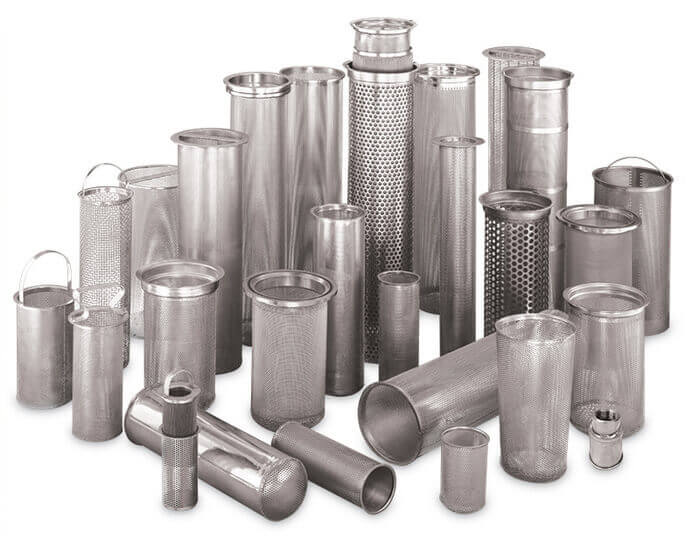
How Filters and Strainers Work Together in Multi-Stage Systems
Benefits of Using Strainers as the First Line of Defense
In multi-stage systems, strainers act as the initial protective barrier, capturing coarse debris before it reaches fine filters. This early removal of solids protects downstream components and reduces filter loading. By preventing premature clogging, strainers extend filter lifespan, improve overall system stability, and reduce operational cost. Using strainers as a preliminary step ensures the main filter can focus on fine particle removal rather than handling heavy solids.
Enhancing Filter Performance Through Controlled Particle Load
When filters receive a stable and reduced particle load, their performance becomes more predictable. With fewer large particles reaching the filter media, pressure increases gradually rather than abruptly. This predictable loading allows operators to schedule maintenance efficiently and avoid sudden shutdowns. Multi-stage systems also help maintain consistent product quality by ensuring liquids arrive at the fine filtration stage in a more controlled condition.
Achieving Higher Efficiency and Lower Cost With Layered Filtration
Layered filtration systems, which combine strainers, bag filters, and sometimes cartridge filters, allow industries to achieve both high throughput and high purity. Each stage removes contaminants of specific sizes, forming a progressive filtration path that optimizes overall performance. This approach reduces energy consumption, lowers filter replacement frequency, and enhances quality consistency. When correctly implemented, multi-stage filtration becomes the most economical and reliable strategy for complex industrial processes.
Choosing the Right Option for Your Application
When to Use Filters for Fine Particle Removal
Filters are the ideal choice when a process requires the removal of very small particles-often down to microns or even sub-microns-without interrupting fluid flow. They are commonly used in food processing, pharmaceuticals, chemicals, coatings, and water treatment where product purity is critical. Filters can capture sediments, rust, fine debris, gels, pigments, and other contaminants that strainers cannot effectively remove. In operations with strict quality control requirements, maintaining low contaminant levels is essential for preventing defects, maintaining consistency, and meeting industry certifications. Filters are also necessary when the process involves delicate downstream equipment such as pumps, membranes, injectors, or dosing systems that could be damaged by small abrasive particles. Because they provide high filtration precision, filters typically require scheduled replacement or cleaning to maintain proper efficiency. Selecting the right filter depends on factors such as micron rating, material compatibility, operating temperature, pressure, and the desired flow rate.
When Strainers Provide the Most Cost-Effective Solution
Strainers are best suited for applications where large particles, debris, or solids need to be removed to protect equipment from blockage or damage. Unlike filters, strainers are designed for coarse filtration-usually 50 microns and above-making them ideal for utilities, pipelines, cooling water, irrigation, and industries where the fluid has a high concentration of particulates. Because strainers are reusable and easy to clean, they offer a cost-effective alternative in systems with heavy or continuous contamination. They help reduce maintenance costs by preventing pump cavitation, valve wear, and clogging of downstream filters. Strainers also maintain higher flow rates compared to filters, making them suitable for processes that cannot tolerate flow restrictions. Materials such as stainless steel, duplex, and brass provide durability in various industrial environments. For many operations, using a strainer as the first line of defense significantly prolongs the life of finer filters installed downstream, reducing the overall filtration cost.
How to Decide Based on Fluid Characteristics and Process Requirements
Choosing between a filter and a strainer requires understanding the fluid being processed-its viscosity, cleanliness level, temperature, corrosiveness, and the type of contaminants present. For example, high-viscosity liquids may clog fine filters quickly, making strainers a more practical starting point. Fluids containing gritty or fibrous solids also benefit from strainer-based protection, whereas processes with strict purity requirements, such as pharmaceutical or microelectronics, demand fine filters from the start. Another key factor is flow rate: filters generally introduce more pressure drop than strainers, which might be unacceptable in certain systems. The decision also depends on maintenance capabilities. If a facility can perform regular cleaning, reusable strainers may be preferable; if not, disposable filters offer convenience. Evaluating the total cost of ownership-initial investment, replacement frequency, downtime, and energy consumption-helps determine the optimal choice. In many cases, a combination of both provides the best performance.
Conclusion
Filters and strainers play essential but distinct roles in fluid management systems, and understanding their differences helps ensure smoother operations and better product quality. Filters excel at removing fine contaminants that could compromise sensitive processes or equipment, making them indispensable in industries where precision and purity matter most. Strainers, on the other hand, provide a durable and cost-efficient solution for capturing larger debris and preventing equipment damage. By aligning each device's capabilities with specific process requirements, manufacturers, engineers, and operators can prevent unnecessary downtime, extend equipment lifespan, and maintain consistent performance across a wide range of industrial applications. The key is recognizing that filters and strainers are not interchangeable but complementary tools designed to solve different problems.
When evaluating which option to choose, it's important to consider the fluid characteristics, contamination levels, maintenance resources, and long-term operational goals. In many cases, a combined approach-using strainers for primary protection and filters for fine purification-delivers the most effective balance between efficiency and cost. Investing time in proper selection also reduces unexpected failures, optimizes flow performance, and improves overall system reliability. Whether you are designing a new filtration line or upgrading an existing one, understanding how filters and strainers contribute to system integrity empowers you to make informed decisions that support stable production, reduced maintenance burden, and better end-product quality.