






Introduction
As urban development, construction, and land-disturbing activities increase, managing stormwater runoff and sediment transport becomes essential to protect water quality and comply with environmental regulations. One effective, flexible, and relatively low-cost tool in the stormwater and sediment-control toolbox is the "filter sock" - also known as a "silt sock," "compost filter sock," or simply "sock filter."
Filter socks have gained widespread adoption as a Best Management Practice (BMP) for sediment control, erosion prevention, inlet protection, runoff filtration, and even pollutant capture. Their versatility makes them suitable for construction sites, slopes, drain inlets, urban runoff, agricultural sites, and many other disturbed-land applications. In this article, we explore in depth:
1.What filter socks are, how they are constructed, and their working principle
2.Typical materials, media types, and design variations
3.Core applications and use-cases in sediment control and stormwater management
4.Advantages and limitations compared to other BMPs (e.g. silt fences, straw wattles)
5.Best practices for installation, maintenance, and inspection
6.Design considerations (sizing, placement, slope, flow, drainage area) summarized in tables
7.Pollutant-removal and enhanced filter-sock technologies (e.g. for hydrocarbons, heavy metals)
8.Long-term performance, lifecycle, sustainability, and disposal / vegetative conversion
1. What Are Filter Socks & How Do They Work
1.1 Definition and Basic Structure
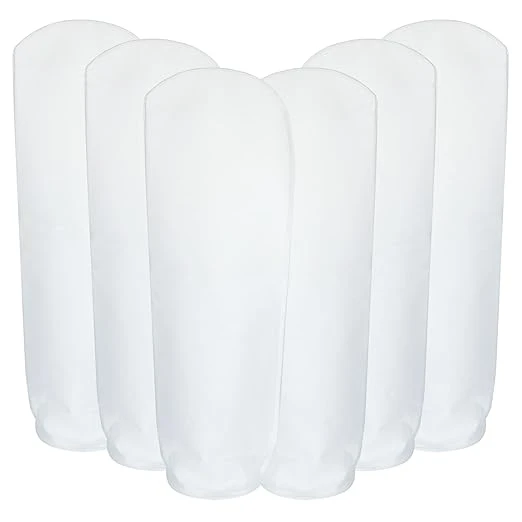
A filter sock is a tubular mesh (geotextile) sleeve filled with a filter medium, commonly composted organic material, wood chips, or engineered media. The sock acts as a permeable barrier: as stormwater runoff or sheet flow passes through or is ponded against the sock, sediment, debris, and (in some media variants) pollutants are trapped in the interior fill, while cleaned water seeps through the mesh and is released downstream or into storm drains.
Because of the flexible, tubular form, filter socks adapt well to uneven terrain - slopes, compacted soils, paved surfaces - and can be laid on top of the ground without trenching. This makes them practical for a wide variety of sites, including construction zones, regrading slopes, driveways, parking lots, and urban runoff areas.
Some filter socks use biodegradable media (e.g. compost, wood chips, switchgrass), making them environmentally friendly and, in some cases, eligible for post-construction vegetative stabilization (e.g. seeding for grass).
1.2 How Filter Socks Work - Filtration + Ponding
Filter socks perform two complementary physical processes:
Filtration: As water passes through the sock fabric and porous fill media, suspended solids (soil, sediments, particulates) are trapped in the internal matrix. The porous media provides 3-D filtration rather than the 2-D filtering of a silt fence.
Ponding & Sediment Settlement: The sock impedes flow, causing water to pond or accumulate behind it temporarily. The reduced velocity allows larger particles to settle out before water is slowly released.
This dual mechanism often results in higher sediment retention efficiency compared to simple barrier-based BMPs.
1.3 Common Terminology & Variants
Because of their flexible design and multiple use-cases, filter socks go by many names:
Compost Filter Socks (CFS) / Silt Socks / Filter Socks / SiltSoxx / FilterSoxx / DiversionSoxx / RockSoxx / etc.
They may be pre-filled (ready to deploy) or delivered as empty mesh sleeves to be filled on-site.
Media inside can vary: compost/wood chips, engineered media (e.g. biochar, activated carbon, special absorbent blends) for pollutant removal, or even gravel/stone for heavy-duty flow control.
Because their internal media can be tailored, filter socks are more than just sediment-trapping devices - they can function as infiltration BMPs, pollutant-removing filters, vegetative stabilization features, or even temporary holding devices for dewatering.
READ MORE:Performance Evaluation and Long-Term Maintenance of Filter Socks in Sediment Control and Stormwater Management
2. Materials & Media Types: Choices and Impacts
The performance of a filter sock depends heavily on what goes inside the mesh - the media - as well as the mesh fabric itself. Here are common materials and their implications:
2.1 Compost / Organic-Matter Media
Compost (wood chips, leaf compost, yard waste, biosolids-derived, municipal organics, etc.) - widely used because it is inexpensive, biodegradable, and provides effective physical filtration.
Media particle size typically ranges from about 3/8 inch to 2 inches (or as specified by design guidelines) to achieve proper filtration and flow characteristics.
Benefits: good porosity, effective sediment capture, potential for nutrient binding, and possibility to seed for vegetation (permanent stabilization).
Limitations: compost can degrade over time, leach nutrients, or decompose unevenly - may require maintenance or replacement. Also, compost media may have variable quality depending on source (weeds, contaminants).
2.2 Engineered / Synthetic Media
To deal with pollutants beyond sediment (e.g., hydrocarbons, heavy metals, nutrients), filter socks may incorporate engineered media:
Biochar-based media: effective in adsorbing heavy metals, hydrocarbons, and other pollutants.
Activated carbon or specialized absorbent media inside geotextile socks (e.g., "Ultra-Filter Sock, Carbon") - used for chemical & hydrocarbon removal, often in industrial runoff, vehicle-wash stations, spill management, or drain-inlet protection.
Gravel / rock media: for higher flow or heavier loading zones (e.g., inlet protection, urban runoff, or where sock must withstand vehicular traffic) - some variants (e.g., "RockSoxx") are specifically designed for durability and reusability.
2.3 Sock Fabric / Mesh & Sleeve Characteristics
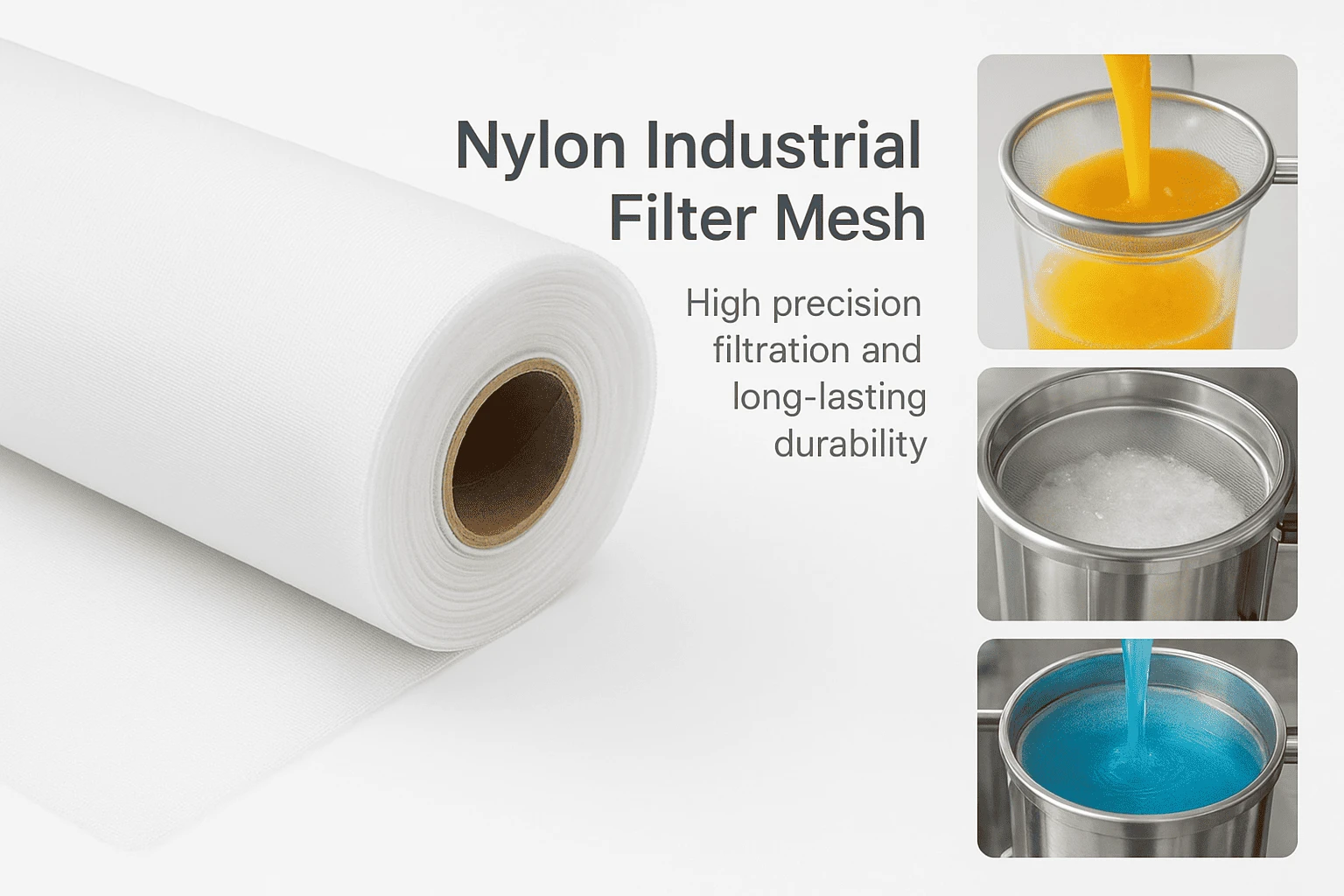
Usually, the sock is a woven or knitted geotextile mesh or netting (commonly HDPE or polypropylene), designed to be UV-resistant if exposed, and durable enough for several months of service life.
Diameters vary - common are 8 inch for small-scale inlet protection or sheet-flow sediment capture, but 12, 18, or 24 inch diameters are also used depending on flow volume and sediment load.
Pretied or looped ends, or stakes / anchors may be used to secure socks in place - especially important around inlets, curbs, or on slopes.
3. Core Applications & Use Cases
Filter socks are used in a surprisingly wide array of environments. Below is a breakdown of primary applications and how socks are configured for each:
|
Application / Use Case |
Purpose / Function |
Typical Sock Type / Configuration |
|
Construction site perimeter control |
Capture runoff from disturbed soils, prevent off-site sediment transport |
Compost filter socks (e.g. 8–12″ dia), laid across slope contours or site boundary |
|
Slope stabilization & slope length reduction |
Slow sheet flow down slopes, prevent rill/gully formation |
Multiple socks placed perpendicular to flow, spaced down slope - 12–18″ dia for heavy flow, possibly vegetated |
|
Inlet protection / curb inlets / storm-drain protection |
Prevent sediment or pollutants entering storm drains / stormwater systems |
Short socks, often pre-filled, laid around or in front of inlets; gravel- or engineered media for high flow |
|
Swales, ditches, channels, bioswales |
Filter sheet/runoff flow, possibly convert to vegetated stable corridor |
Compost / vegetated filter socks; may serve as temporary or semi-permanent BMPs |
|
Urban runoff, parking lots, pavement drainage, vehicle-wash / spill zones |
Capture sediment, hydrocarbons, pollutants before discharge |
Engineered-media socks (e.g. carbon, biochar), possibly part of a "treatment train" for multiple contaminants |
|
Temporary dewatering / pond drainage |
Filter suspended solids during dewatering before discharge |
Heavy-duty filter socks placed at outlet; may require gravel/rock fill or metal support frame to resist flow pressures |
|
Post-construction / long-term vegetative stabilization |
Once site is stable, compost socks may be seeded to grow vegetation; sock may be left to decompose or removed |
Vegetated filter socks (pre-seeded), sometimes integrated into final landscaping - low-impact development (LID) / green infrastructure |
4. Why Filter Socks are Often Preferred - Advantages Over Other BMPs
Filter socks offer several advantages compared to traditional sediment-control measures like silt fences, straw wattles, or gravel berms:
Ease and speed of installation: no trenching required; lightweight; can be installed on rock, pavement, frozen ground, or compacted soil.
Flexible terrain adaptability: mesh tube conforms to uneven ground and slopes; effective even on slopes or surfaces where trenching is impractical.
Better filtration performance: 3-D media provides more surface area to trap sediment, absorb water pollutants (nutrients, hydrocarbons), and reduce runoff turbidity.
Dual sediment + pollutant control: with engineered fill media (e.g., biochar, activated carbon), socks can remove hydrocarbons, metals, nutrients, etc. - not just sediments.
Lower maintenance / disposal (especially biodegradable versions): compost-filled socks may be left in place and allowed to decompose or be seeded for vegetation; no need for full removal/disposal like silt fences.
Versatility across numerous applications: from construction to agriculture, to industrial runoff, to storm-drain inlet protection, to low-impact development / habitat restoration.
Potential for long-term stabilization: vegetated filter socks can turn into "living" erosion/stormwater control features (e.g., living retaining walls, vegetated swales).
Because of these advantages, many modern stormwater management plans, SWPPP (Storm Water Pollution Prevention Plan) documents, and regulatory permits accept (or even prefer) filter socks as part of BMP suites.
5. Limitations and Situations Where Filter Socks Are Not Ideal
Despite their many strengths, filter socks are not a panacea. They have known limitations and should be used appropriately, often in combination with other BMPs. Some key drawbacks:
Not suitable for high-concentrated flow / channel flow / culvert discharge: Filter socks perform best in sheet flow or low to moderate flow; concentrated flow can overwhelm them or dislodge them.
Sediment storage capacity is limited: Once roughly half-full (or a defined threshold), their efficiency declines and they must be cleaned or replaced.
Potential undercutting or bypass: On uneven terrain or where ground contact is poor, water can flow underneath sock, bypassing the filter. Proper anchoring and ground preparation are critical.
Durability concerns under heavy traffic or abrasion: Light-weight compost socks can be damaged by heavy equipment; may require gravel/rock-filled alternatives or more robust socks (e.g. "RockSoxx").
Medium degradation (for compost media): Over time, compost can decompose, compact, or lose porosity - reducing filter efficiency or requiring replacement.
Unsuitability for deep dewatering with high sediment loads: If dewatering a deep pond with very fine sediment, filter socks alone may become clogged; other filter bags or bespoke dewatering solutions might be required.
Dependence on regular inspection and maintenance: Without routine inspection after rain events, socks can become ineffective - sediment accumulation, displacement, or damage often go unnoticed.
Because of these limitations, filter socks are often best used as part of a BMP "treatment train" - combined with other erosion control, ponding, sediment basins, diversion structures, inlet protection, or vegetative stabilization.
READ MORE:Engineering Filter Socks for High-Performance Stormwater Management: Materials, Designs, and Field Optimization
6. Best Practices for Installation, Maintenance & Inspection
To maximize filter sock performance and minimize failure risk, the following best practices are recommended.
6.1 Placement & Site Design
Perpendicular to sheet-flow direction: Socks should be laid across the flow path to intercept runoff evenly.
On level grade where possible: Avoid placement on steep slopes if possible; if slope is unavoidable, place multiple socks spaced down the slope at appropriate intervals.
Allow ponding / sediment storage area: Position socks such that water can pond behind them, enabling sediment to settle before filtered flow continues.
Anchor / stake inlets or high-flow zones: To prevent displacement, especially around inlets or paved surfaces.
Combine with other BMPs: For steeper slopes or high runoff, combine socks with erosion control blankets, vegetative cover, diversion berms, or sediment basins.
6.2 Sizing and Dimensioning Guidance
Proper sizing depends on expected runoff volume, drainage area, slope grade, and sediment load. Examples:
Sock diameter: 8″ for low-flow / small runoff areas; 12-18″ for moderate flow; 18–24″ or more for heavy flow or larger drainage areas.
Spacing on slopes: Install multiple socks at regular vertical intervals down slope; interval depends on slope grade and drainage area.
Runoff area per sock (for inlet protection): Some guidelines recommend limiting drainage area to a certain acreage per length of sock - e.g. no more than ¼ acre per 100 ft of sock in some contexts (or as defined in local SWPPP / regulations).
(Exact sizing should follow local regulatory BMP manuals or site-specific hydrological analysis.)
6.3 Inspection & Maintenance Frequency
Inspect after every significant rainfall event - check for displacement, overtopping, bypass flow, damage, or clogging.
Sediment removal / sock maintenance - when sediment reaches ~⅓ to ½ of sock height, sediment should be removed or sock replaced; do not allow sock to be overtopped.
For compost socks used as vegetative BMPs - seed at installation (or soon after), maintain until vegetation is established, ensure media remains effective.
Replace or repair damaged socks promptly - tears, holes, UV degradation, or damage from equipment render them ineffective.
6.4 End-of-Use / Removal / Conversion
For temporary use, remove sock once site is stabilized; compost media can often be spread as mulch or soil amendment, mesh disposed or recycled.
For permanent BMPs, leave biodegradeable socks in place; vegetate if pre-seeded; or replace media as necessary to maintain filtration performance.

7. Pollutant Removal & Advanced Filter Socks
Beyond sediment, modern filter socks are increasingly used to treat pollutants in stormwater: hydrocarbons, heavy metals, nutrients (nitrogen / phosphorus), oils, and other contaminants.
7.1 Engineered Media Socks
Biochar-based filter socks: Studies and commercial products show these media can reduce heavy metals (e.g., zinc, copper), hydrocarbons, and other runoff pollutants - while still providing turbidity and TSS (total suspended solids) reduction.
Carbon / activated carbon filter socks: Designed to adsorb hydrocarbons, oils, odors, and some chemical contaminants - useful in vehicle-wash stations, industrial sites, or areas with potential spill/runoff events.
Gravel or stone-filled rocking filter socks ("RockSoxx" etc.): Used where flow rates are high or where vehicles may travel - such socks sacrifice some pollutant filtration but excel at robust sediment capture and flow handling.
Because media is customizable, filter socks can be part of a treatment train, where different socks (or filtering stages) are used in series to gradually remove sediment first, then pollutants, then finer particulates - achieving higher overall water treatment quality.
7.2 Use in Sensitive Areas - Wetlands, Eco-Restoration & LID
Filter socks offer advantages in environmentally sensitive sites:
Minimal ground disturbance (no trenching) - less risk to root zones or soil structure.
Possible to combine with vegetative stabilization (pre-seeded vegetated socks) - after establishment, socks can become part of permanent green infrastructure (swales, buffers).
Reduced impact on wildlife movement compared to hard barriers or fences.
Therefore, in low-impact development (LID), green infrastructure, and ecological restoration projects, filter socks are increasingly preferred over more intrusive BMPs.
8. Design & Specification Guidelines: What Engineers & Project Managers Should Know
When specifying filter socks in plans, SWPPP, or erosion-control designs, engineers should include clear criteria. Below is a summary table of critical specification parameters and recommended guidelines.
Table 1: Specification Parameters for Filter Socks
|
Parameter |
Recommended Guideline / Value |
Rationale / Purpose |
|
Sock Diameter |
8″ for small/inlet, 12–18″ for moderate, 18–24″ for heavy flow |
Ensures adequate hydraulic capacity & sediment storage |
|
Media Type |
Compost / wood-chip / biochar / engineered media / gravel - depending on use |
Determines filtration vs pollutant removal vs flow resistance |
|
Media Particle Size |
3/8" to 2" for compost media (unless otherwise specified) |
Balance porosity & filtration capacity |
|
Mesh Fabric |
UV-resistant geotextile (HDPE/PP), continuous tubular knit or weave |
Durability under sun, weather, and prolonged water exposure |
|
Placement Orientation |
Perpendicular to flow, contour-aligned on slopes, across sheet flow |
To intercept runoff evenly, prevent bypass / undercutting |
|
Sock Spacing on Slope |
Multiple socks at regular intervals depending on slope grade / drainage area |
Reduces slope length, slows velocity, prevents rilling/gully formation |
|
Anchoring / Stakes |
Stakes every 5–8 ft, looped ends or hog-rings for heavy-duty socks |
Prevent displacement under flow or on paved / compacted surfaces |
|
Maintenance Threshold |
Replace or clean when sediment reaches ~⅓–½ sock height |
Ensures continued filtration effectiveness, prevents overtopping / bypass |
|
Post-Use Plan |
For compost socks: remove mesh or let decompose; for vegetated socks: seed & leave in place |
Minimizes waste; possibly convert to permanent BMP / landscape feature |
These guidelines reflect common BMP manuals, technical bulletins, and best-practice standards for sediment control.
9. Case Studies & Real-World Performance
Case Study 1: Construction Site Perimeter Protection
A mid-sized residential development in a hilly area implemented filter socks along the entire perimeter of the disturbed lot. Compost-filled 12″ socks were laid on slope contours before significant grading began. During the first major rain event, visible runoff with silt was captured; downstream water entering nearby streams remained clear. Post-construction, the compost media was spread over bare soils and seeded. The developer reported compliance with local stormwater discharge regulations without expensive trenching or silt-fence installation.
Key takeaways: easy installation, low labour, effective sediment control, and reduced disposal costs.
Case Study 2: Inlet Protection at Municipal Storm Drain
At a city roadway maintenance project, inlets along a new curb line were protected using pre-filled 9 ft "Ultra-Filter Socks" with engineered media designed to trap hydrocarbons and fine sediment. The socks were looped and staked, and after several rainfall events, runoff sampling showed dramatically reduced total suspended solids (TSS) and lower hydrocarbon concentrations compared to unprotected inlets nearby. The socks were easily removed afterward and reused elsewhere.
Key takeaways: effective inlet protection, pollutant removal, reusable medium, minimal impact on flow when properly sized.

Case Study 3: Slope Stabilization & Post-Construction Green Infrastructure
On a site with moderate slopes, vegetated filter socks (pre-seeded) were installed after grading, with compost media inside. Over several months, grass established through the sock and stabilised the slope. Erosion was minimal during subsequent rains, and the filter socks effectively served as a living vegetative buffer - performing both sediment control and landscaping function.
Key takeaways: dual benefit of erosion control and landscape establishment, minimal maintenance once vegetation established, converting BMP into a permanent feature.
Case Study 4: Industrial Site Vehicle-Wash Runoff / Spill Control
An industrial facility used a series of engineered-media filter socks downstream of a vehicle wash-down pad to capture oils, heavy metals, sediment, and other pollutants before entering storm drains. A "treatment train" of multiple socks (sediment first, then pollutant-media sock) achieved substantial reductions in turbidity (TSS) and measurable decreases in hydrocarbon concentration. The socks' high-UV, woven-polymer casing allowed outdoor exposure for months. After saturation, the media was replaced with minimal downtime.
10. Sustainability, Lifecycle, and Environmental Considerations
Beyond their immediate performance, filter socks align well with sustainable and low-impact development (LID) goals, especially when using biodegradable or natural-fill media and integrating vegetative stabilization.
10.1 Biodegradable / Compost Media & Vegetative Conversion
Compost-based socks reduce need for synthetic materials, and when seeded, can transition into vegetated buffers or swales that serve as permanent erosion control and habitat corridors.
Once vegetation is established, the original mesh may be removed (if non-biodegradable), or left to degrade if biodegradable - reducing waste and disposal costs.
10.2 Reusable / Modular Socks for Industrial Use
For industrial, urban, or pollutant-control applications, socks using durable synthetic mesh and engineered media can be reused multiple times. Modular "RockSoxx" or "Ultra-Filter Socks" are designed for repeated handling, transport, and deployment.
10.3 Cost-Benefit & Lifecycle Approach
When compared to permanent infrastructure (concrete curbs, inlets, culverts, underground chambers), filter socks offer:
Low upfront cost
Quick deployment
Adaptability (reconfigure as needed)
Lower environmental footprint (especially if biodegradable)
Reduced maintenance with vegetative conversion
Thus, for many temporary or dynamic sites (construction, redevelopment, phased projects), they represent a cost-effective, flexible, and sustainable BMP.
11. Integration with Regulatory & Permit Requirements
Because of their demonstrated effectiveness, filter socks are widely accepted by environmental agencies, stormwater permit authorities, and regional BMP guidelines - often as valid alternatives to silt fences or straw wattles, or as part of a larger BMP suite.
When integrating filter socks into SWPPP (Storm Water Pollution Prevention Plan), consider:
Specifying sock type, media, diameter, and staking plan
Including maintenance schedule (inspection after rain, cleaning/replacement threshold)
Defining removal or conversion plan (vegetation, compost reuse, disposal)
Documenting performance monitoring (TSS, turbidity, pollutant levels) - especially when using engineered-media for pollutant removal
Proper documentation helps ensure compliance with EPA, state, or local stormwater regulations, and supports permit approval.
12. Summary of Pros, Cons & Key Considerations
12.1 Pros
Easy, fast installation - no trenching
Flexible terrain adaptability: slopes, rocky ground, pavement, compacted soil
Effective sediment filtration and pollutant removal (if engineered media used)
Lower labor and disposal costs, especially if biodegradable / vegetative
Reusable and modular designs for industrial / urban applications
Suitable for temporary, long-term, or permanent BMPs depending on configuration
12.2 Cons / Limitations
Not suitable for concentrated flow or high-volume channel flows
Limited sediment storage capacity - requires maintenance / replacement after certain sediment load
Performance declines if bypass, undercutting, or poor contact occur
Compost media degrades or compacts over time; engineered media may require replacement or regeneration
Vulnerable to damage from heavy equipment, vehicular traffic, or abrasion (unless heavy-duty design used)
Not a "set-and-forget" solution - requires regular inspection, maintenance, and proper end-of-use disposition
12.3 Key Considerations Before Specifying Filter Socks
Drainage area & expected flow volume - properly size sock diameter and number
Slope, terrain, and flow conditions - avoid concentrated flows or design with multiple socks + complementary BMPs
Media selection based on pollutants expected - e.g. sediment-only vs. hydrocarbons/heavy metals vs. vegetative stabilization
Maintenance plan and lifespan expectations - who inspects, when, how often, and how to manage sediment/media disposal
Regulatory compliance and documentation - ensure your use meets local/regional BMP standards or permit requirements
Long-term site goals - temporary protection vs. permanent green infrastructure / vegetative stabilization
Conclusion
Filter socks - though simple in concept - are a powerful, flexible, and increasingly essential component of modern sediment control and stormwater-management strategies. By combining filtration, ponding, pollutant capture, ease of installation, and adaptability to terrain, they offer significant advantages over traditional BMPs in many situations.
When properly specified, installed, maintained, and (if desired) converted to vegetative or permanent systems, filter socks can:
dramatically reduce sediment transport and turbidity
prevent pollutants (nutrients, hydrocarbons, heavy metals) from reaching water bodies
satisfy regulatory requirements for erosion and stormwater control
reduce labor, cost, and environmental impact compared to more permanent infrastructure
provide flexibility for construction, redevelopment, or phased land-disturbing activities
That said, they're not a universal solution: planning, design, inspection, and maintenance are critical to ensure effectiveness. For concentrated flows, large drainage areas, or heavy-duty industrial runoff, additional or alternative BMPs may be needed.
Overall, filter socks exemplify a pragmatic-and often sustainable-approach to sediment and stormwater management. For contractors, environmental managers, civil-engineering professionals, and land developers, understanding their function, strengths, and limitations is key to building responsible, compliant, and resilient infrastructure.