






While standard vertical and horizontal pressure leaf filters traditionally utilize a bottom collection manifold, demanding industrial processes frequently require non-standard vessel configurations. Specialty applications-such as hazardous chemical clarification, high-purity active pharmaceutical ingredient (API) recovery, viscous polymer polishing, and catalyst recovery-often feature top-discharge headers, side-exiting collection ports, or dual-manifold liquid collection systems.
Operating non-standard vessel architectures presents unique engineering challenges. Liquid flow paths inside the leaf must overcome gravitational head during top discharge, process heel liquid must be purged completely prior to dry cake drop, and custom nozzle interfaces must maintain leak-proof seals under cyclic thermal and vibratory stress.
This technical guide provides an engineering analysis of specialized filter leaf design, examining top-discharge fluid dynamics, internal gas-blow evacuation mechanics, dual-port hydraulic balancing, and custom manifold integration for the industrial filter leaf.
To explore foundational alloy selections, weave mechanics, and baseline panel specifications across our complete product family, review our foundational [Stainless Steel Filter Leaf].
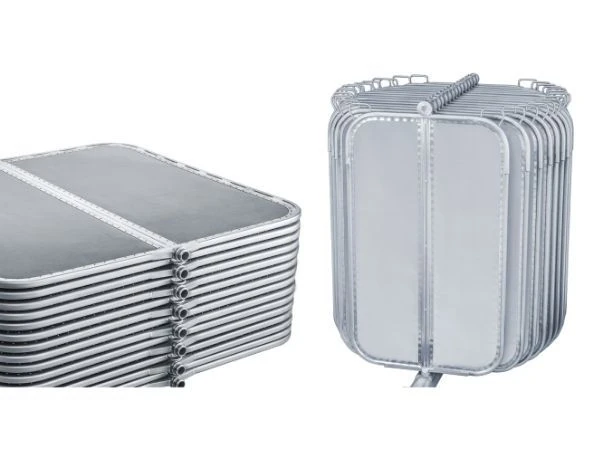
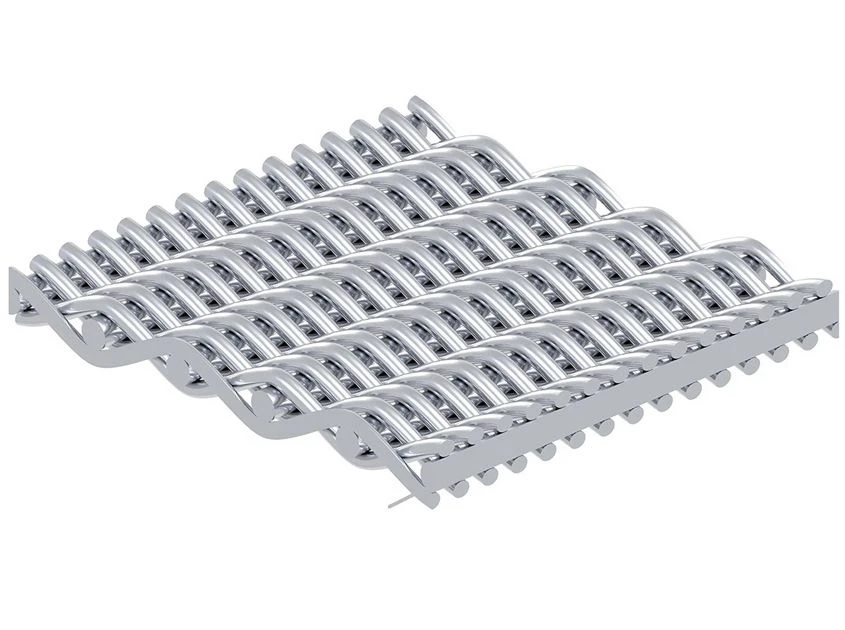
Top-Discharge Fluid Dynamics & Gas-Blow Heel Evacuation
In top-discharge pressure leaf systems, clean filtrate flows upward through the internal drainage core to exit via a top-mounted manifold header. While this configuration isolates seals from bottom-settling slurry, it requires specific internal fluidics to prevent un-filtered liquid from remaining trapped inside the leaf at the end of a cycle.
Internal Dip-Tube & Drainage Mechanics
During normal filtration, differential pressure drives fluid upward through the core matrix. However, when the vessel is drained prior to cake discharge, gravity tends to pull remaining filtrate to the bottom of the leaf panel.
Internal Siphon Channels: Specialized top-discharge leaves incorporate internal siphon channels or bottom-fed drainage tubes. When gas pressure (air or nitrogen) is applied to the vessel shell, the gas forces trapped liquid down to the bottom of the core and up through the internal siphon tube to the top exit port.
Zero Heel Product Recovery: Complete liquid evacuation is critical in high-value or toxic chemical applications. By eliminating heel volume inside the leaf panel, operators prevent product loss, avoid cross-contamination between batches, and ensure the filter cake is thoroughly dried during gas-blow cycles.
Dual-Port Outlets & Viscous Slurry Hydraulic Balancing
When filtering highly viscous fluids such as heavy resins, concentrated syrups, or low-temperature polymers, internal fluid friction within the drainage core creates significant backpressure.
Mitigating Internal Resistance via Dual Discharge
Single-outlet leaves force all collected filtrate to travel across the entire length or height of the internal core to reach the exit neck. In large-surface-area leaves processing viscous media, this creates a pressure gradient across the panel face.
● Shorter Flow Path: Implementing dual discharge nozzles (e.g., top and bottom outlets or dual bottom ports) cuts the maximum fluid travel distance within the core matrix in half.
● Balanced Cake Growth: Reducing internal hydraulic friction ensures that differential pressure remains uniform across the entire active wire cloth face. This prevents preferential flow near the outlet neck, promoting balanced cake thickness and preventing localized blinding.
Custom Nozzle Integration & Alignment in Specialty Vessels
Specialized vessels often feature proprietary connection interfaces, requiring custom-machined discharge components to ensure reliable sealing under dynamic operational conditions.
| Connection Geometry | Engineering Application | Sealing & Structural Mechanism |
| Top-Mount Flange / Nozzle | Toxic or volatile chemical loops | Precision CNC-machined neck with dual Viton/Kalrez O-rings |
| Dual Bottom Sockets | High-viscosity or high-flux systems | Parallel machined ports with synchronized manifold alignment |
| Side-Exit Manifold Stub | Horizontal specialized housings | Rigid side-discharge stubs with heavy C-channel frame support |
| Slop-Drain Bottom Port | High-solids slurry recovery | Low-point drain fitting for rapid complete liquid purge |
Products Description
Manufacturing replacement or upgrade leaves for special vessels requires strict dimensional and structural quality protocols:
● 3D CAD Model Verification: Custom leaf designs are fully modeled and verified against customer vessel drawings to confirm internal clearances, nozzle alignment, and active filtration area.
● Pressure & Leak Testing: Completed panels undergo pneumatic bubble testing and hydraulic pressure testing to verify weld integrity, seam tightness, and zero-bypass seal fitment.
● Surface Passivation & Finish: All custom components undergo chemical passivation and ultrasonic cleaning to guarantee chemical resistance and eliminate foreign particulates prior to deployment.
Conclusion
Custom top and bottom discharge filter leaves enable efficient liquid-solid separation in specialized, non-standard pressure leaf vessels. By engineering internal fluidics for complete heel recovery, optimizing discharge ports for high-viscosity flow, and manufacturing precision-matched nozzles, plant operators can maximize product yield and maintain reliable clarification in complex processing environments.
To review field-serviceable options for abrasive or high-wear systems, read our guide on [Engineering Micro-Clarification: Mechanical Fastening, On-Site Re-Meshing, and Maintenance Lifecycle Optimization in Pressure Filter Leaf] or contact our engineering team to discuss custom leaf designs for your specialized vessel.
Related Articles
1. How to Choose the Right Stainless Steel Filter Leaf for Edible Oil Refining?
2. How to Clean and Maintain Stainless Steel Filter Leaves for Optimal Performance
3. Nylon Mesh Encapsulation for Premium Orchards: Optimizing Aperture, Sunlight, and Micro-Climates
4. How to Choose Micron Filter Bag