





How to Solve Orchard Fruit Fly and Insect Problems Without Chemical Pesticides Using Industrial-Grade Nylon Netting Bags
In the global cultivation of high-value cash crops, commercial vineyards, and organic fruit orchards, maximizing market-ready yield requires a shift toward reliable chemical-free physical defense systems. Traditional open-sky agricultural practices expose developing fruits to a constant barrage of external biological threats, including devastating insect stings, avian predators, and opportunistic fungal pathogens. For decades, the primary response has been the intensive application of synthetic chemical insecticides. However, modern global markets place strict legal restrictions on pesticide residues, while international consumers increasingly command premium pricing for certified residue-free organic produce.
Furthermore, traditional crop packaging alternatives-such as multi-layer paper bags or solid non-woven plastic wraps-often introduce secondary agricultural failures. These enclosed environments trap critical moisture, stifle air circulation, and block the natural solar spectrum, causing severe issues like fruit scorching, uneven coloration, and localized fungal rot.
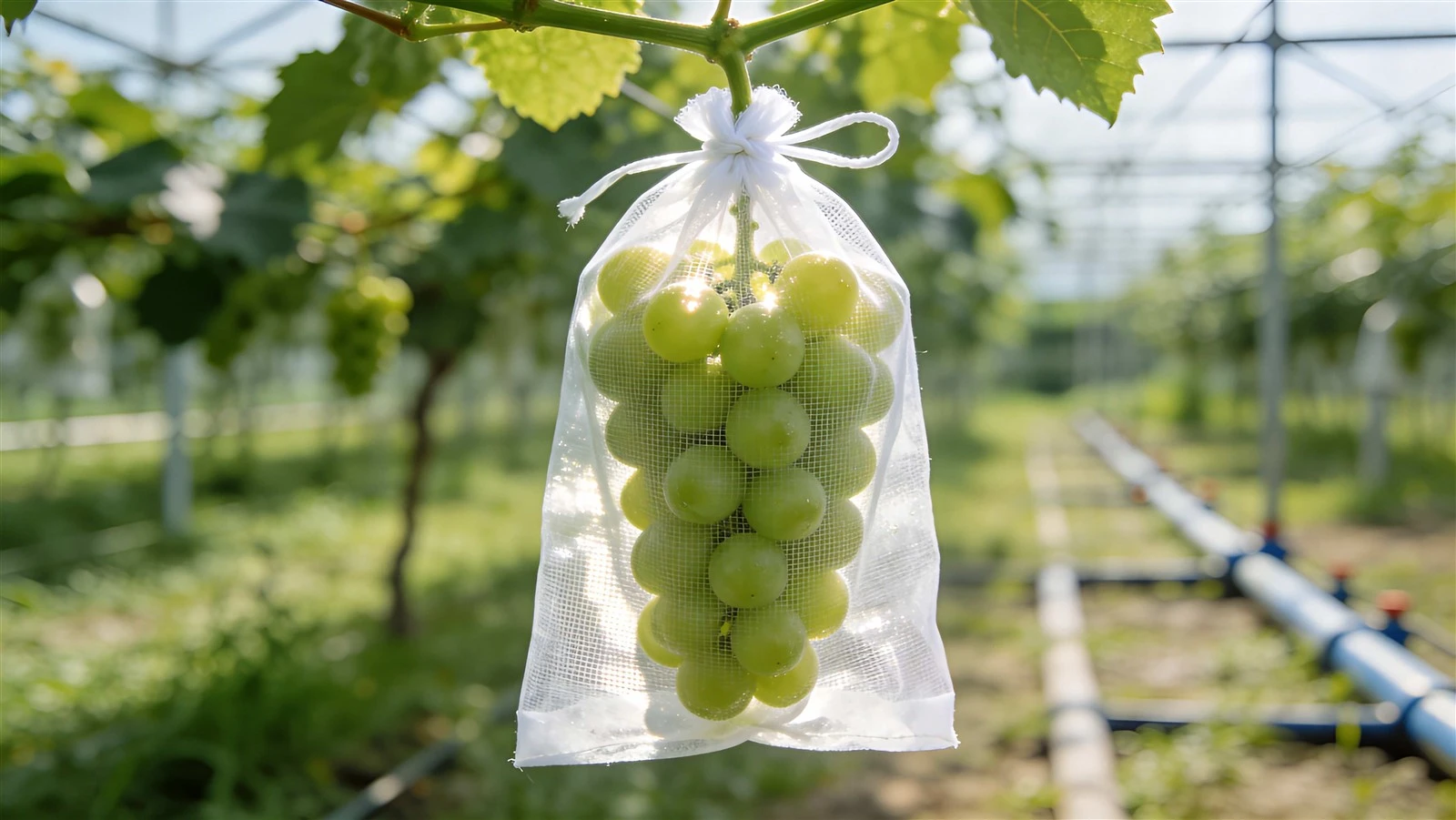
To overcome these environmental bottlenecks, advanced mesh engineering has adapted industrial-grade nylon filter bags for direct plant and fruit encapsulation. Slipping a precision-woven polyamide monofilament sleeve directly over developing fruit clusters creates a high-durability, breathable mechanical shield. This guide details the structural dynamics, material physics, and micro-climate engineering required to implement nylon encapsulation for optimal crop defense and orchard profitability.


Geometric Defenses: Choosing the Correct Mesh Count for Targeted Insect Exclusion
The Micro-Aperture Matrix of Monofilament Nylon
The fundamental capability of a nylon crop protection bag relies on the mechanical accuracy of its woven aperture size. Unlike traditional molded plastic bird nets that feature irregular, loose gaps, industrial-grade nylon filter mesh is woven with square grid geometries held to precise micron ratings. When selecting a defense sleeve for orchards, growers must match the mesh opening size to the morphology of the localized pest population.
40-Mesh vs. 80-Mesh Allocation for Fruit Defense
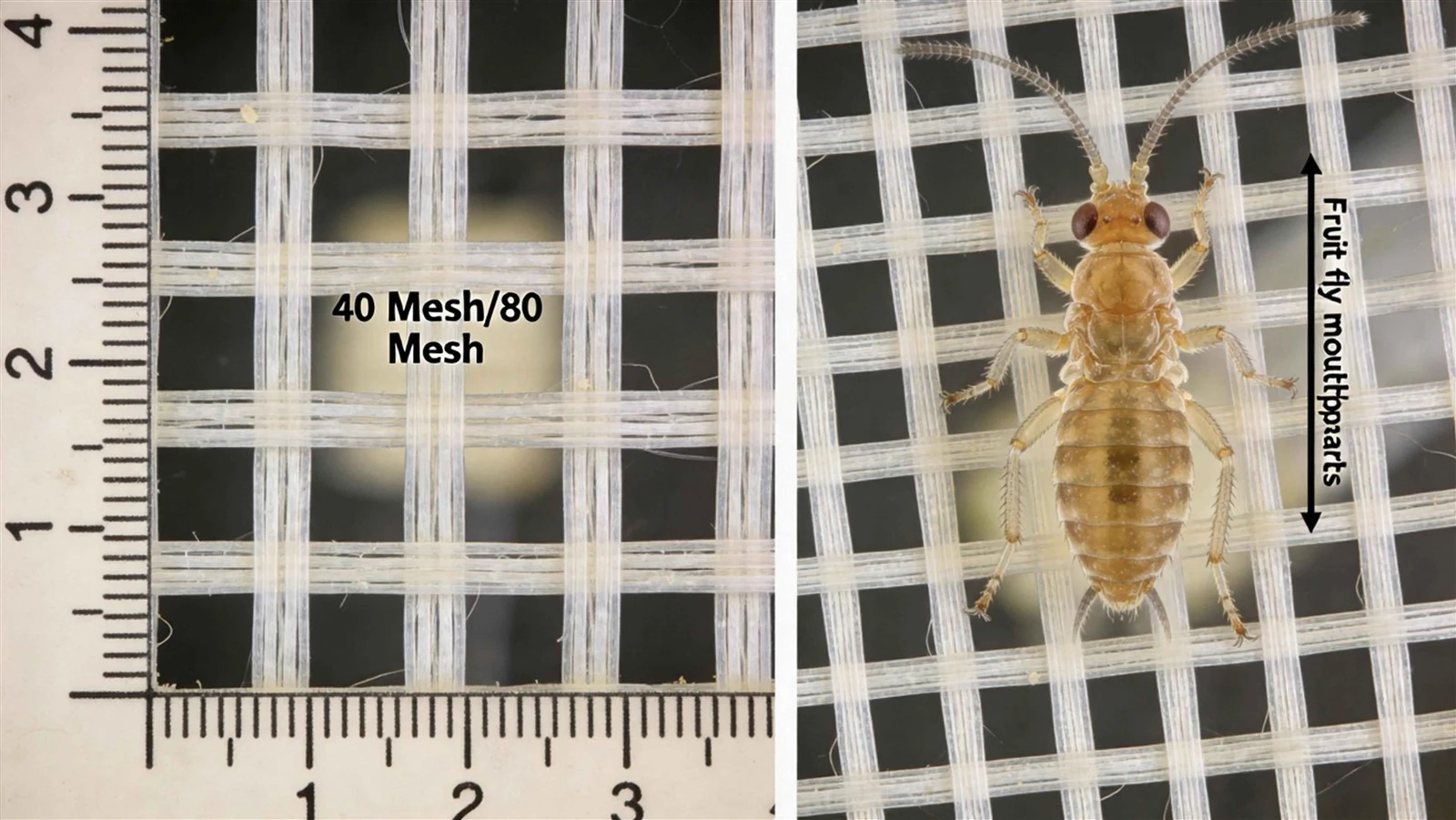
40-Mesh Monofilament Polyamide (Aperture: ~400 Microns): This specification is optimized for large-scale fruit clusters such as premium table grapes, pomegranates, and apples. A 40-mesh structure provides a robust physical shield against larger invertebrate pests, including wasps, hornets, and beetles, while completely eliminating losses from avian predators (birds) and bats. It delivers the maximum possible open area for ventilation.
80-Mesh Monofilament Polyamide (Aperture: ~180 Microns): This finer weave configuration is mandatory for orchards facing intense micro-insect pressure. An 180-micron barrier effectively isolates crops from microscopic threats such as thrips, aphids, fruit flies (Drosophila melanogaster), and specialized citrus psyllids. This level of defense prevents these vectors from puncturing the fruit skin to deposit eggs, eliminating worm infestations inside the harvest.
Pore Uniformity and Structural Integrity Under Tension
A critical flaw in standard agricultural netting is "pore drift"-the widening of mesh spaces when the fabric is pulled or snagged by wind and heavy branches. chgmetal's nylon monofilament filters undergo a precise thermal-setting process during weaving. This locks every single intersection of the longitude and latitude fibers into a fixed, rigid position. Even when the bag expands to accommodate fast-growing fruit clusters, or when it experiences friction against tree bark, the apertures maintain their exact factory-calibrated micron rating, ensuring no micro-pests can slip through distorted gaps.
Micro-Climate Thermodynamics: Balancing Solar Transmission and Air Ventilation
Preserving the Photosynthetic Spectrum
Fruit sugar accumulation, aromatic compound development, and uniform skin coloration depend completely on un-hindered access to natural sunlight. Standard solid agricultural bags severely attenuate solar energy, resulting in pale, lower-grade fruit that commands reduced market wholesale prices.
chgmetal's protective nylon bags utilize extruded, high-transparency polyamide single strands. The resulting mesh fabric behaves like a crystal-clear optical grid, allowing full-spectrum solar transmission to reach the fruit surface. This continuous exposure ensures that photosynthetic pathways remain active within the fruit tissue, encouraging natural brix (sugar) development and ensuring the vibrant coloration required for premium market grades.
Eliminating the "Greenhouse Effect" via Open Area Ventilation
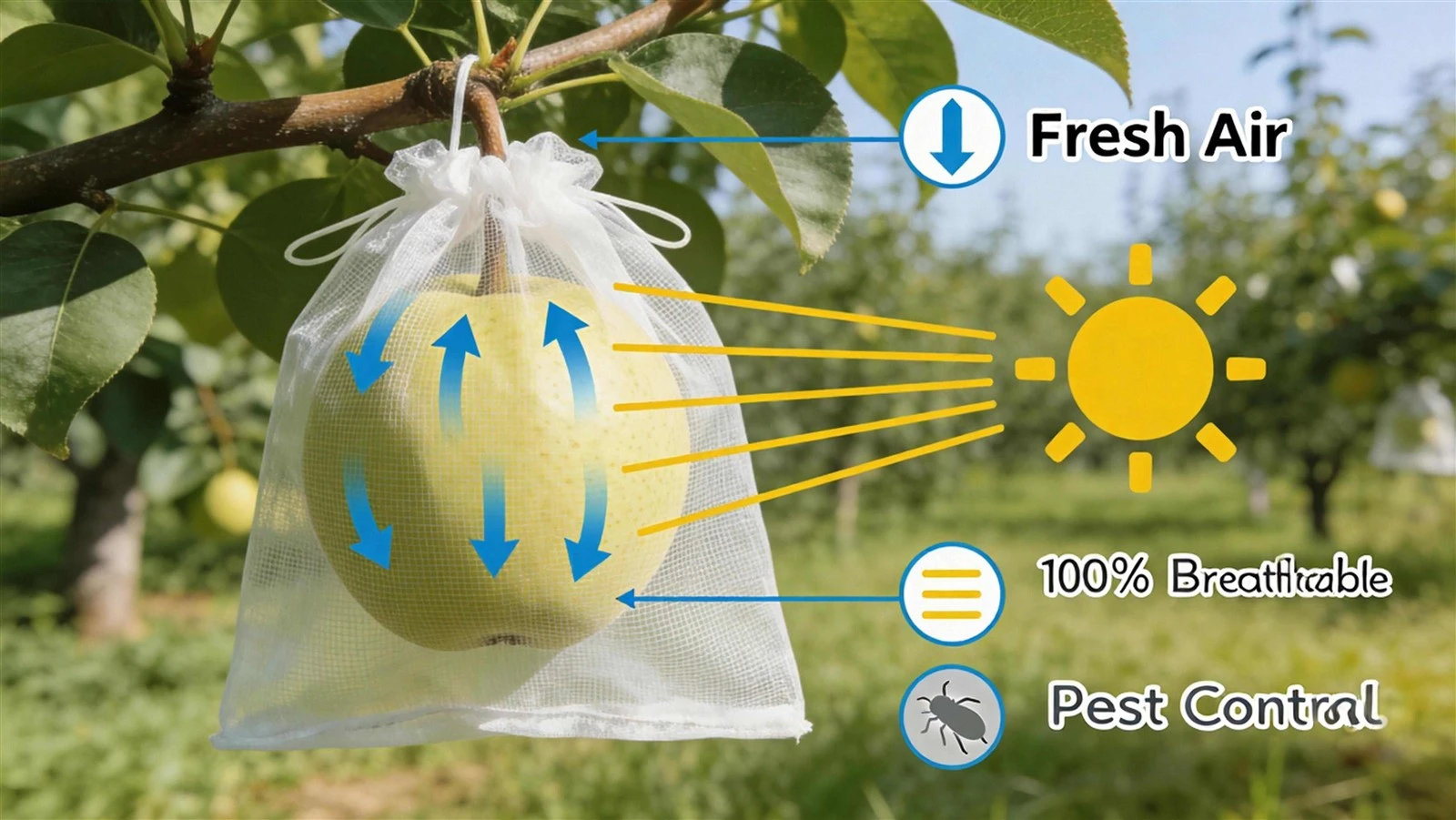
Solid plastic wraps act as localized thermal traps under direct summer sun, raising internal temperatures to critical thresholds that cause heat-scorch and cellular death in developing fruits. Nylon monofilament filter mesh features an open area profile that typically exceeds 50% to 60% of the total fabric surface.
This open matrix permits unrestricted air convection driven by natural field winds. Hot air and plant transpiration gases escape continuously from inside the encapsulation sleeve, maintaining an internal temperature profile that matches ambient orchard conditions and preventing thermal stress or premature fruit drop.
Managing Ethylene Gas and Humidity Accumulation
During the ripening phase, fruits naturally exude ethylene gas-a plant hormone that accelerates ripening and senescence. In non-vented paper or solid plastic wraps, accumulated ethylene triggers premature localized rotting and weakens the stem attachment, causing fruits to drop early. By deploying chgmetal's high-open-area nylon bags, volatile gases and excess localized humidity are instantly dispersed by ambient airflow. This micro-climate regulation stabilizes the natural ripening timeline, extends the hanging window on the tree, and drastically improves post-harvest shelf life.
Hydrological Dynamics: Hydrophilic Fabric Behavior and Quick-Drying Protection
The Danger of Internal Moisture Retention
When a rainstorm or heavy morning dew hits an orchard, traditional paper or cloth protection bags absorb and hold water like a sponge. This trapped, stagnant moisture creates a highly destructive micro-environment. High humidity inside an encapsulation sleeve promotes the rapid proliferation of opportunistic fungal spores, leading to catastrophic outbreaks of black rot, powdery mildew, and sour rot directly on the fruit skin.
Hydrophilic Fluid Evacuation and Air-Drying Speed
Nylon (polyamide) possesses a balanced molecular structure containing hydrophilic amide groups. When exposed to heavy precipitation, chgmetal's nylon crop protection bags allow water to instantly wet the fibers and pass through the mesh apertures, rather than pooling inside the bag or weighing down fragile plant limbs.
Once the rain passes, the smooth, non-absorbent profile of the individual monofilament strands enables rapid water shedding. Under natural wind convection, the mesh dries completely within minutes, restoring normal gas exchange and keeping the fruit skin dry and healthy, which suppresses fungal development without requiring synthetic chemical fungicides.
Mitigating Water-Weight Shear on Fragile Branches
When traditional paper or canvas agricultural covers absorb rainwater, their physical weight triples within minutes. On high-yield fruit trees where branches are already strained under the weight of ripening crops, this added water weight causes catastrophic branch breakage, splitting limbs and destroying years of orchard development. Because chgmetal's nylon monofilament mesh has extremely low moisture retention and sheds water instantly, it adds virtually zero dynamic weight load during severe downpours, preserving the physical structural integrity of the orchard canopy.
Structural Engineering: Tensile Toughness and Total Enclosure Security
Resisting Wind, Hail, and Mechanical Field Friction
Open-field crop protection media faces constant mechanical stress from severe weather events, sudden high winds, and unexpected summer hail storms. Cheap agricultural netting materials easily stretch out of shape or tear, creating entry points for opportunistic pests.
chgmetal's industrial-strength nylon filter bags are engineered from heavy-gauge polyamide fibers boasting excellent dry and wet tensile strength. The individual fiber intersections are set using a precise heat-locking process that prevents the mesh apertures from shifting or widening under tension. This structural memory ensures the bag maintains its certified micron rating even when repeatedly scraped by sharp orchard thorns or buffeted by heavy winds.
| Fabric Material Base | Wet Tensile Strength Retention | UV Degradation Resistance | Reusability Lifespan | Moisture-Induced Rot Risk |
| Premium Monofilament Nylon | Excellent (85%–90%) | High (UV Stabilized) | 3–5 Growing Seasons | Zero Rot Risk |
| Standard Agricultural Paper | Extremely Poor (0%–5%) | Non-Applicable | Single-Use Only | Catastrophic Rot Risk |
| Non-Woven Polypropylene | Fair (60%–70%) | Moderate to Poor | 1 Season Maximum | Low Risk |
Integrated Drawstring Closures for Zero-Bypass Protection
A plant protection bag is only as secure as its closure mechanism around the plant branch or vine stem. If gaps or loose openings remain at the rim, crawling insects, ants, and larvae will bypass the mesh completely to reach the fruit cluster.
To prevent this failure point, chgmetal manufactures its crop encapsulation bags with integrated, dual-pull drawstring systems using weather-stabilized braided cords. When cinched tight around a woody vine or stem, the flexible collar compresses smoothly to form a tight, zero-bypass mechanical seal that climbing insects cannot penetrate.
Beyond open-sky crop encapsulation and plant defense, maintaining absolute seam integrity, zero fiber shedding, and high mechanical stability is a critical mandate when operating high-pressure pharmaceutical filtration equipment. Review our industrial purity standards here:
[Specialized Applications of Nylon Filter Bags in Pharmaceutical Manufacturing: Precision Filtration for Oral Liquids].
Cleaning, Sanitation, and Multi-Season Lifecycle Management
Validated Wash Cycles for Maximizing ROI
While paper bags and low-grade plastics represent an ongoing annual expense due to single-use disposal, chgmetal's industrial nylon mesh bags provide an excellent multi-season lifecycle, lasting between 3 to 5 growing seasons depending on environmental exposure.
Following harvest, the used fruit protection sleeves can be collected systematically and prepared for storage. The slick surface energy of monofilament polyamide prevents aggressive adhesion from organic matter. The bags can be quickly cleared of accumulated field dust, bird droppings, and residual plant sap using a standard low-pressure fresh-water spray line, restoring the mesh's original solar transparency and airflow dynamics.
Storage Protocols for Farm Biosecurity
To enforce strict farm-wide biosecurity and prevent the cross-contamination of overwintering fungal spores or microscopic insect eggs between harvest cycles, washed nylon bags should undergo a brief disinfection routine. Soaking the cleaned mesh in a mild, non-corrosive agricultural sanitizing solution effectively neutralizes dormant pathogens without degrading the underlying polyamide polymers.
Once thoroughly air-dried, the bags should be packed into tightly sealed plastic storage bins and kept in a dark, climate-controlled warehouse away from rodent risks and direct sunlight. This simple maintenance loop preserves fabric elasticity and ensures the mesh remains strong and ready for deployment in the next growing season.
Conclusion
In summary, adapting industrial monofilament nylon filter bag technology for direct crop encapsulation represents a major advancement in premium plant protection. By replacing toxic chemical spray regimes and fragile traditional alternatives with an ultra-durable, breathable mechanical shield, commercial growers can confidently secure their crops against insect punctures, bird damage, and destructive weather events. chgmetal's precision-engineered 40-mesh and 80-mesh nylon sleeves deliver the optimal balance of high solar transmission, rapid water drainage, structural uniformity, and continuous ventilation required to cultivate premium organic fruits that command top market pricing.
Shifting orchard operations away from single-use alternative wraps toward reusable, heat-set polyamide enclosures dramatically lowers annual operational material costs, eliminates the risk of water-weight branch breakage, and optimizes the vineyard micro-climate. Ultimately, investing in high-integrity physical filtration barriers helps modern agro-businesses achieve global organic compliance, maintain orchard biosecurity, and maximize long-term agricultural sustainability and profitability.