






What Does Micron Mean in Filtration?
Complete Guide to Micron Ratings in Industrial Filtration
In industrial filtration systems, the term "micron" is one of the most important factors when selecting a filter bag or filtration mesh. Whether in water treatment, food processing, paint filtration, or chemical manufacturing, choosing the correct micron rating directly affects filtration efficiency, product quality, and equipment protection.
Many industrial buyers understand that micron ratings are related to particle size, but they are often unsure how micron filtration actually works or which micron filter bag is suitable for their application.
In simple terms, micron ratings determine the approximate size of particles that a filter can capture during the filtration process. Lower micron ratings provide finer filtration, while higher micron ratings are designed for larger particles and higher flow rates.
This guide explains what micron means in filtration, how micron ratings work, common micron sizes, and how to choose the right nylon filter bag for industrial liquid filtration applications.
What Is a Micron?
A micron, also called a micrometer (μm), is a unit used to measure extremely small particles. In industrial filtration, micron ratings are used to indicate the approximate particle size a filter can remove from liquids or gases.
One micron equals:
● 0.001 millimeters
● 0.000039 inches
Because particles in industrial liquids are often extremely small, micron measurements help filtration engineers and buyers select the correct filtration system for their process requirements.
To better understand micron size, here are several common examples:
● Human hair diameter: approximately 70 microns
● Fine dust particles: around 1–10 microns
● Pollen particles: around 10–100 microns
● Sand particles: usually larger than 100 microns
Micron ratings are widely used in industrial filtration industries such as:
● Water treatment
● Food and beverage processing
● Chemical manufacturing
● Paint and coating filtration
● Pharmaceutical production
● Industrial wastewater treatment
Understanding micron size is critical because selecting the wrong micron filter bag may lead to poor filtration performance, excessive pressure drop, equipment contamination, or unnecessary operating costs.
Explore our full range of Nylon Filter Bags for industrial liquid filtration applications.
Nylon Filter Bags
How Do Micron Ratings Work in Filtration?
Micron ratings describe the approximate size of particles a filter can capture during filtration.
In general:
● Lower micron ratings capture smaller particles
● Higher micron ratings remove larger particles
For example:
● A 1 micron filter bag captures extremely fine particles
● A 100 micron filter bag removes larger suspended solids and debris
The choice of micron rating directly affects several important filtration factors.
Filtration Efficiency
Smaller micron filters provide more precise filtration and can remove fine contaminants from industrial liquids. This is especially important in pharmaceutical processing, beverage production, and fine chemical filtration.
01
Flow Rate
Larger micron filters typically allow higher liquid flow rates because the openings in the filter media are larger. This reduces resistance during filtration and improves system throughput.
02
Pressure Drop
Very fine micron filters may increase pressure drop because smaller openings restrict liquid flow more heavily. In high-flow industrial systems, this must be carefully balanced.
03
Filter Lifespan
Fine micron filters may clog faster when filtering heavily contaminated liquids. Larger micron filters are often used as pre-filters to extend the service life of finer filtration stages.
04
Many industrial filtration systems use multi-stage filtration, such as:
● 200 micron pre-filtration
● 50 micron intermediate filtration
● 5 micron final filtration
This layered approach improves filtration efficiency while reducing maintenance costs and extending equipment life.
Common Micron Sizes and Their Applications
Different micron ratings are used for different industrial filtration requirements. Selecting the correct micron size depends on particle size, liquid type, filtration goals, and system design.

1 Micron Filter Bags
1 micron filter bags are used for precision filtration applications where extremely fine particles must be removed. They are commonly used in:
● Pharmaceutical filtration
● Fine chemical processing
● High-purity liquid filtration
● Sensitive manufacturing processes

5 Micron Filter Bags
5 micron filter bags are widely used in:
● Water treatment systems
● Beverage filtration
● Fine paint filtration
● Industrial liquid polishing
These filters provide relatively fine filtration while maintaining stable flow performance.

25 Micron Filter Bags
25 micron filtration is commonly used for:
● Chemical processing
● Lubricant filtration
● Resin filtration
● Intermediate filtration systems
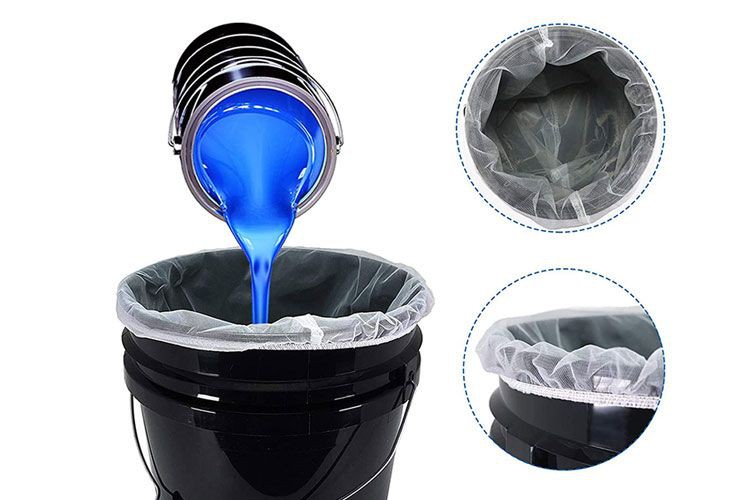
50 Micron Filter Bags
50 micron filter bags are popular in industrial filtration because they balance filtration efficiency and flow rate. Common applications include:
● Paint filtration
● Wastewater treatment
● Ink filtration
● Industrial liquid clarification

100 Micron Filter Bags
100 micron filters are often used for coarse filtration and high-flow applications such as:
● Water filtration
● Debris removal
● Pre-filtration systems
● Industrial process filtration

200 Micron Filter Bags
200 micron filter bags are typically used in:
● Large particle removal
● Industrial wastewater systems
● Heavy debris filtration
● Irrigation and industrial pre-filtration
Choosing the right micron rating helps optimize filtration efficiency while reducing system maintenance and operational costs.
How to Choose the Right Micron Filter Bag
Selecting the correct micron filter bag depends on several important factors. Industrial buyers should evaluate filtration requirements carefully before choosing a filtration solution.
Particle Size Requirements
The first consideration is the size of particles that must be removed. Smaller particles require lower micron ratings for effective filtration.
Flow Rate Requirements
High-flow systems may require larger micron ratings to maintain stable liquid flow and reduce pressure loss.
Liquid Characteristics
The viscosity, chemical composition, and contamination level of the liquid all affect micron selection.
Filtration Goals
Different industrial processes require different filtration precision levels:
● Fine filtration systems typically use 1–25 micron bags
● Medium filtration systems often use 25–50 micron bags
● Coarse filtration systems commonly use 100–200 micron bags
Multi-Stage Filtration Systems
In many industrial systems, multiple micron stages are combined to improve overall filtration performance and extend filter lifespan.
For example:
● 200 micron pre-filter
● 50 micron intermediate filter
● 5 micron final filter
This approach helps improve efficiency while reducing replacement frequency and operating costs.
Why Nylon Filter Bags Are Widely Used in Industrial Filtration
Nylon filter bags are widely used in industrial liquid filtration because they provide excellent durability, stable filtration efficiency, and strong chemical resistance.
Compared with some other filtration materials, nylon monofilament mesh offers several important advantages.
High Tensile Strength
Nylon mesh has excellent mechanical strength, making it suitable for industrial continuous operation.
Reusable Performance
Many nylon filter bags can be cleaned and reused multiple times, reducing operating costs.
Stable Micron Accuracy
Monofilament nylon mesh provides relatively accurate and consistent filtration openings.
Excellent Chemical Resistance
Nylon materials perform well in many chemical filtration applications.
Why Are Micron Ratings Important?
Micron ratings directly affect filtration performance, operating efficiency, and equipment protection.
Choosing the correct micron filter bag helps:
● Improve product quality
● Protect pumps and valves
● Reduce contamination risks
● Extend equipment lifespan
● Improve filtration efficiency
● Reduce maintenance costs
● Optimize production performance
Incorrect micron selection may cause:
● Poor filtration results
● Excessive pressure drop
● Frequent filter replacement
● Reduced flow performance
● Equipment damage
For this reason, understanding micron ratings is essential for industrial filtration system design and operation.
Conclusion
Understanding micron ratings is essential for selecting the correct industrial filtration solution. Different micron filter bags are designed for different particle sizes, flow rates, and industrial applications.
Whether you need precision filtration or coarse particle removal, choosing the proper micron filter bag helps improve filtration efficiency, reduce maintenance costs, and protect industrial equipment.
As industrial filtration systems become more advanced, proper micron selection continues to play a critical role in achieving stable and efficient filtration performance.
Explore Our Nylon Filter Bag Solutions
CHG METAL offers high-quality nylon filter bags in multiple micron ratings for industrial liquid filtration applications.
Contact us today for customized filtration solutions, technical support, and OEM manufacturing services.