





In pressure leaf filtration systems, the outer Leaf Filter Screens serve as the critical interface between raw slurry, the pre-coat filter aid, and the clarified filtrate output. Whether filtering edible oils, organic solvents, or heavy chemical brines, these precision wire cloth layers must maintain dimensional stability, precise pore geometry, and smooth surface characteristics under cyclic hydraulic pressure and dynamic vibratory stress.
Premature blinding, wire slippage, and surface abrasion on the filter screen directly impair production throughput, increase pre-coat consumption, and cause slurry bypass.
This technical article provides an engineering evaluation of leaf filter screen selection, covering Dutch weave mechanics, surface calendering treatments, particle retention dynamics, and edge preparation protocols for re-meshing operations.
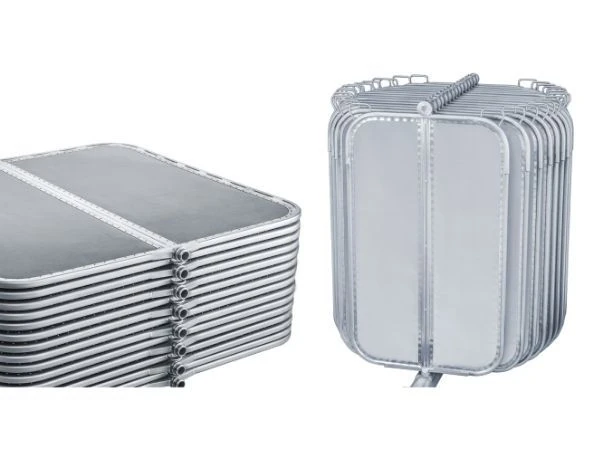
To explore full structural frame options, internal drainage core designs, and alloy choices across our complete product lineup, visit our primary [Stainless Steel Filter Leaf].
Weave Architecture and Micron Retention Dynamics
The choice of wire cloth weave governs both fluid permeability and solid particle capture efficiency on the screen face.
Comparative Mechanics of Filter Weaves
● Standard square mesh is rarely used as a primary filtration layer because its straight-through openings easily clog and lack mechanical strength under pressure. Instead, specialized Dutch weaves are utilized:
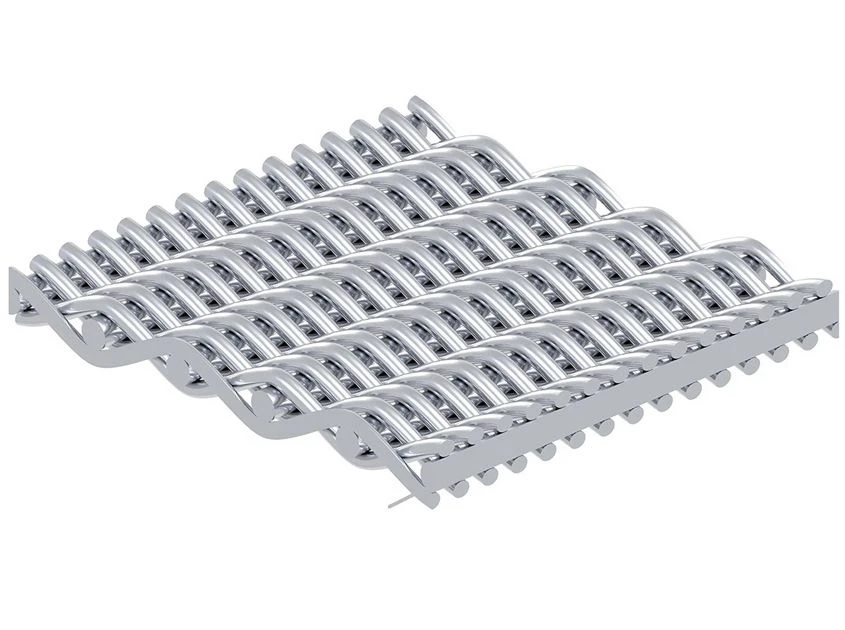
● Plain Dutch Weave (PDW): Woven with larger warp wires and smaller, tightly packed shute wires. PDW provides high mechanical strength, open surface porosity, and low hydraulic resistance, making it the preferred choice for standard pre-coat filtration.
● Twill Dutch Weave (TDW): Features shute wires passing over and under two warp wires, allowing a denser wire packing ratio. This structure achieves fine micron retention (down to 5µm) suitable for direct micro-clarification without heavy pre-coat layers.
● Reverse Dutch Weave (RDW): Swaps the traditional wire diameters by using fine warp wires and heavy shute wires. RDW delivers superior tensile strength in the longitudinal direction, ideal for high-pressure backwashing applications.
Surface Calendering Mechanics and Cake Release Dynamics
Un-calendered wire cloth possesses prominent wire knuckles at every intersection point. During filtration, fine solids and pre-coat particles settle into these microscopic valleys, interlocking with the mesh.
The Engineering Purpose of Calendering
Calendering is a precision post-weaving cold-rolling process that applies controlled mechanical pressure across the wire cloth surface:
● Flattening Weave Knuckles: Calendering flattens the raised wire crowns, transforming a textured surface into a smooth, semi-planar face.
● Preventing Particle Entrapment: Eliminating deep knuckle valleys prevents filter aid particles from keying into the mesh, reducing permanent media blinding.
● Enhancing Cake Discharge: During vibratory or gas-blow discharge cycles, filter cakes release instantly from calendered screens, leaving a clean, open surface for the next pre-coat cycle.
Screen Layer Interaction in Multi-Layer Leaf Packs
A filter screen does not operate in isolation; it functions as part of a multi-layer mesh pack within the leaf frame profile:
| Layer Position | Mesh Configuration | Primary Engineering Function |
| Layer 1 & 5 (Outer Face) | Calendered Dutch Weave Mesh | Primary filtration surface & filter aid support |
| Layer 2 & 4 (Buffer Zone) | Medium Square Support Mesh | Prevents fine face mesh from sinking into core gaps |
| Layer 3 (Central Core) | Heavy Crimped Drainage Grid | Creates open internal channel for filtrate drainage |
Edge Preparation Protocols for Re-Meshing and Frame Fitting
When refurbishing or re-meshing existing filter leaf frames, improper edge preparation of the replacement screen sheets can lead to wire fraying, uneven tensioning, and perimeter fluid bypass.
Laser Cutting and Ultrasonic Edge Sealing
Conventional mechanical shearing deforms wire ends and creates loose wire fragments that can migrate into clean filtrate streams:
CNC Laser Edge Fusing: Cutting replacement screen packs with a CNC laser melts and fuses the wire ends along the cut perimeter, permanently locking the warp and shute wires together.
Uniform Mechanical Tensioning: Fused edges allow screen sheets to be pulled evenly across re-meshing jigs without edge fraying, ensuring uniform tension and eliminating localized sagging across the leaf face.
Screen Lifecycle Maintenance and Ultrasonic Regeneration
Over prolonged filtration campaigns, stubborn organic polymers, fine sub-micron fines, or mineral scale can gradually accumulate within the tortuous flow paths of Dutch weave screens.
Restoring Screen Permeability
When chemical CIP flushes no longer reduce operating differential pressure, mechanical and ultrasonic regeneration protocols should be applied:
● Ultrasonic Bath Cleaning: Immersing screen panels in heated ultrasonic cleaning tanks uses high-frequency cavitation bubbles to dislodge embedded sub-micron particulates from deep within the weave intersections without damaging fine wires.
● Optical Pore Inspection: Regenerated screen packs are inspected under digital optical microscopes to verify open area restoration and confirm zero wire displacement prior to re-installation.
Conclusion
Precision leaf filter screens manufactured with calendered Dutch weave patterns, fused laser edges, and high-tensile stainless alloys provide the foundation for efficient, long-life pressure leaf filtration. By optimizing weave selection and surface finish, plant operators achieve higher fluid flux, cleaner cake discharge, and lower overall re-meshing costs.
To review complete element assemblies and multi-layer structural frames, explore our guide on [Pressure Leaf Filter Elements: Structural Integrity, Pre-Coat Filtration Mechanics, and Cycle Optimization], or contact our technical team to request custom screen samples for your re-meshing projects.
Related Articles
1. Maximizing Flow Rate vs. Micron Precision: The Core Wire Mesh Dilemma in Pressure Leaf Filters
5. Why Multi-Layer Mesh Design and Thermal Permeability Rule High-Temperature Pressure Leaf Operations