






In the demanding realm of high-capacity industrial liquid clarification-whether you are separating spent bleaching earth from crude vegetable oils in a large-scale refining plant, recovering expensive precious-metal catalyst fines in a continuous chemical synthesis loop, or polishing highly concentrated sugar syrups in a confectionery refinery-operational uptime is heavily dependent on the mechanical endurance of your replacement hardware. When a single filter leaf panel fails inside a pressurized vessel, allowing raw solids to leak into the clarified filtrate stream, it triggers a costly and disruptive chain reaction that affects the entire production facility. This failure leads to immediate product contamination, unscheduled system shutdowns, emergency manual vessel cleanouts, and urgent maintenance turnarounds that rapidly erase your processing profit margins.
When investigating these sudden failure modes, plant engineers and maintenance supervisors frequently look for chemical or thermal causes first, blaming pitting corrosion from aggressive process acids, halogen attacks, or thermal breakdown from high operating temperatures. However, forensic metallurgical analysis of retired and failed elements reveals a much more aggressive and common culprit: Vibratory Fatigue Failure.
Pressure leaf filtration elements are not static components; they are dynamic structures subjected to a brutal combination of continuous fluid dynamic pulsing from positive-displacement feed pumps and high-impact mechanical shaking during the cleaning cycle. If the fully fabricated replacement element lacks high structural rigidity and proper wire mesh tension, it will rapidly experience mechanical breakdown long before chemical corrosion can even set in. Before diving into the deep structural physics of mechanical stress accumulation and boundary failure modes, you can benchmark our complete manufacturing engineering standards, structural frame tolerances, and raw material mill certifications on our primary [Stainless Steel Filter Leaf] pillar page.
The Brutal Mechanics of Cake Discharge Vibration and Dynamic Loading
To fully appreciate the necessity of absolute structural rigidity in replacement filter elements, one must analyze the physical and mechanical events that take place inside the enclosed pressure vessel at the end of every standard batch filtration cycle. As the slurry feed pump drives raw liquid through the leaf panel, a thick, dense, and tightly compacted mass of solid particulates accumulates across the wide, flat faces of the woven wire cloth. By the end of a standard production run, this accumulated filter cake can weigh dozens of kilograms per individual leaf panel, completely filling the gaps between adjacent elements inside the pressure vessel manifold.
To discharge this heavy mass of accumulated solids without requiring operators to break the vessel seals for manual scraping, industrial pressure leaf machinery relies on top-mounted pneumatic vibrator shakers or high-torque centrifugal spinning systems. When the cleaning cycle is engaged, the pneumatic vibrator delivers a rapid, violent succession of high-impact energy pulses (often powered by a 4.0 to 5.0 bar compressed air supply) straight down through the hanging rails or central rotating shaft. This kinetic energy is intended to do one thing: shake the entire leaf assembly violently so that the heavy, brittle filter cake breaks its mechanical grip on the smooth wire cloth and drops cleanly into the bottom discharge hopper.
However, this intense kinetic energy does not just affect the external cake; it travels directly through every individual micron-scale wire within the woven mesh matrix. If the replacement element is built with weak, thin-gauge outer frames or loosely clamped screens, the frame boundary itself will flex, twist, and warp under the impact. This constant structural flexing causes the fine outer filtration wires to experience intense, localized cyclical bending stresses. Over a short period, this dynamic loading leads to rapid work-hardening, wire embrittlement, and sudden catastrophic tearing along the boundary welds or perimeter clamping channels, rendering the element useless and leaking.

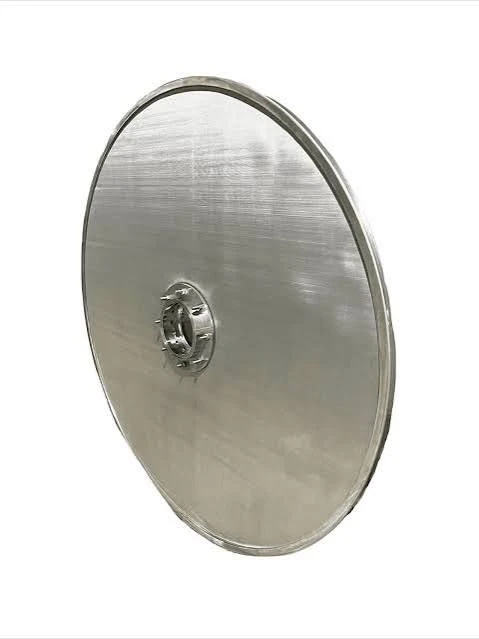
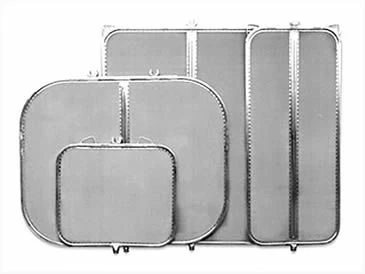
Technical Parameter Matrix: High-Rigidity Engineering Benchmarks
To quantify what constitutes a high-fatigue-resistance rigid element versus an economy alternative, procurement and engineering teams must evaluate specific metallurgical and structural metrics. The following table outlines the minimum engineering parameters required to ensure long-term structural integrity under severe vibration loads:
| Mechanical & Structural Parameter | Economy / Light-Duty Elements | Our High-Fatigue Rigid Elements | Test / Verification Method |
| Outer Frame Profile Gauge | 1.2mm-1.5mm (Formed sheet) | 2.0mm-3mm Heavy U-Channel | Vernier Caliper Inspection |
| Internal Drainage Wire Diameter | 0.8mm-1mm Expanded sheet | 1.5mm- 1.7mm Crimped Grid | Direct Micrometer Measurement |
| Mesh Pre-Tensioning Force | Variable / Hand-stretched | Automated Hydraulic (≧ 15 N/mm) | Electronic Tension Gauge |
| Allowable Face Deflection | ≧0.5mm at 4.5 Bar delta P | ≦1.0mm under full terminal load | Hydrostatic Pressure Deflection Test |
| Max Vibratory G-Force Rating | Up to 3.5 G impulses | Engineered for ≧8.0 G air-shocks | Accelerometer Sensor Mapping |
| Perimeter Boundary Integrity | Spot-welded / Light mechanical crimp | Automated TIG Fusion / High-Tonnage Rivets | Dye Penetrant Integrity Testing |
| Operating Temperature Limit | Under 90℃ (Prone to warpage) | Continuous up to 220℃ without twisting | Thermal Expansion Oven Testing |
The Pre-Tensioning Solution: Protecting the Micro-Pore Network
The ultimate engineering defense against vibratory fatigue failure is the implementation of precise, uniform high-rigidity engineering across the entire face of the element. This requires moving away from economy replacement leaves-where wire mesh sheets are simply unrolled from a spool, hand-clamped over a frame, and spot-welded down-and upgrading to computerized, hydraulically pre-tensioned architectures. If your plant is suffering from chronic leakage issues, sudden solid bypass, or premature tearing along the frame borders despite utilizing premium outer mesh fabric, explore our full engineering specifications on our dedicated [High-Fatigue-Resistance Rigid Pressure Leaf Filter Elements] page to see how computerized tensioning solves this critical operational bottleneck.
During our advanced fabrication process, before the outer metal frame is permanently locked into place, the entire multi-layer mesh sandwich (including the active 24x110 Plain Dutch Weave skin, the intermediate backing grids, and the core mesh) is placed onto specialized automated tensioning tables. Industrial hydraulic cylinders pull the longitudinal warp wires taut, matching a strict mechanical yield profile calculated based on the specific alloy used. This pre-tensioning provides two critical mechanical advantages that directly extend the element's operating lifespan:
● Elimination of Micro-Fretting Friction: When wire cloth is loose or poorly tensioned, the individual warp and weft wires rub against one another at high speeds during the pneumatic shaking cycle. This microscopic rubbing-known in structural engineering as fretting-acts like tiny saw blades, slowly wearing away the thin stainless steel wires from the inside out. Pre-tensioning locks the interlocked wires tightly against one another under continuous load, completely eliminating internal friction movement and ensuring the micron-scale pore structure remains perfectly stable under heavy vibration.
● Optimized Shockwave Dissipation: A tightly tensioned mesh face behaves like a drumhead. When the pneumatic shaker strikes the top bracket, the resulting shockwave travels smoothly and instantaneously across the entire flat surface area of the panel rather than getting trapped in loose, sagging pockets. This even energy distribution allows the filter cake to detach instantly in one clean sheet, while minimizing localized stress concentrations that cause premature boundary weld cracking.
The Structural Core: Heavy-Gauge Crimp Grids vs. Thin Materials
A pre-tensioned active filtration skin can only maintain its long-term flatness if it is backed by an unyielding, high-density internal skeleton. In our high-fatigue-resistance elements, the central drainage core is constructed using an ultra-heavy, high-tensile 4x4 or 3x3 crimped stainless steel wire grid featuring a massive wire diameter up to 1.6mm . This heavy core serves as the ultimate mechanical foundation for the entire assembly.
Many budget suppliers replace this heavy, expensive crimped grid with thin, cheap expanded metal sheets or lightweight plastic spacers to save on production costs and reduce shipping weight. Under a 4.5 bar pumping load, these thin sheets flex and bow inward under the weight of the developing cake. This structural deflection ruins the pre-tensioning of the outer filtration mesh, causing it to go slack and rapidly accelerate fatigue failure. By utilizing an unyielding, thick-gauge crimped core grid, our replacement leaves maintain absolute panel planarity under extreme process pressures. The frame remains straight, the mesh remains taut, and the internal drainage channels stay completely open, securing high fluid flow velocity and rapid cake release cycle after cycle.
The Role of Precision Calendering in Fatigue Mitigation
Beyond tensioning and core selection, the surface finish of the wire cloth itself plays an unexpected role in mitigating mechanical fatigue. Uncalendered wire cloth features raised knuckles where the warp and weft wires cross. These raised points create high surface roughness (Ra) and increase the mechanical grip of the filter cake on the screen face.
When the filter cake locks into these knuckles, the pneumatic vibrator must deliver much higher impact forces to break the cake free. This high interface shear stress requires longer shaking cycles and higher air pressures on the vibrator, which pumps more destructive harmonic energy into the metal frame.
Our rigid elements utilize wire cloth that has undergone precision calendering through high-tonnage rolling mills. This process flattens the raised knuckles of the wire intersections, creating an ultra-smooth, low-friction surface topography (Ra≦0.8μm). This mirror-flat finish minimizes the cake's mechanical grip, allowing the brittle filter cake to slide off cleanly in a single sheet during the very first vibration pulse. By reducing the duration and intensity of the required shaking cycle, calendering dramatically decreases the total cumulative vibratory stress experienced by the element over its lifespan, preventing early weld crystallization and edge failures.
Technical Audit Checklist for Plant Procurement Teams
To ensure your next batch of replacement filter leaves or circular discs does not suffer from early edge failure, ensure your technical requisition orders specify these boundary benchmarks:
● Anti-Migration Edge Seal: Require a micro-fused perimeter track on all cut mesh borders to prevent individual loose wires from escaping into the clarified filtrate stream.
● Expansion Allowance: Verify that the frame U-channel depth includes a calibrated thermal gap to accommodate differential expansion between thin mesh wires and heavy frame channels at high operating temperatures up to 140°C.
● Rivet/Weld Consistency: Insist on automated, machine-controlled boundary fabrication to eliminate human errors like manual weld burn-throughs that weaken the thin outer wires.
● Core Grid Verification: Mandate a minimum wire diameter of 1.2mm for the internal drainage skeleton to guarantee the assembly can withstand terminal differential pressures without structural deflection.
Conclusion
Operational longevity in a pressure leaf filter system is not achieved by chance; it is secured through deliberate, high-rigidity structural engineering. Settling for low-cost replacement filter leaves built with loose screens, thin expanded metal cores, and flexible frames is a guaranteed recipe for recurring wire tears, sudden solid bypass leaks, and high maintenance costs that kill plant profitability. By investing in fully fabricated elements where computerized hydraulic pre-tensioning, precision-calendered Dutch weaves, and heavy-gauge crimped drainage skeletons work together, your processing plant can eliminate vibration bottlenecks, secure fast cake discharge, and drastically extend the service life of your filtration assets.
If your technical team is currently troubleshooting a sudden loss of flow capacity, dealing with warped frames, or looking to prevent permanent pore clogging caused by mechanical deformation, review our long-term prevention strategies on our dedicated [Why Is Your Stainless Steel Filter Leaf Mesh Blinding So Fast?] maintenance analysis page, or contact our engineering team directly to submit your equipment drawings for a custom technical quote.