





Filter bags are indispensable components in liquid filtration processes across industries such as food & beverage, pharmaceuticals, chemicals, coatings, mining, and water treatment. The choice of filter bag material significantly affects filtration accuracy, chemical resistance, operating cost, and overall production stability. This guide provides an in-depth analysis of commonly used filter bag materials, their properties, compatible applications, and how to select the most appropriate material based on operating conditions.
Understanding the Most Common Filter Bag Materials
Polypropylene (PP) Filter Bags
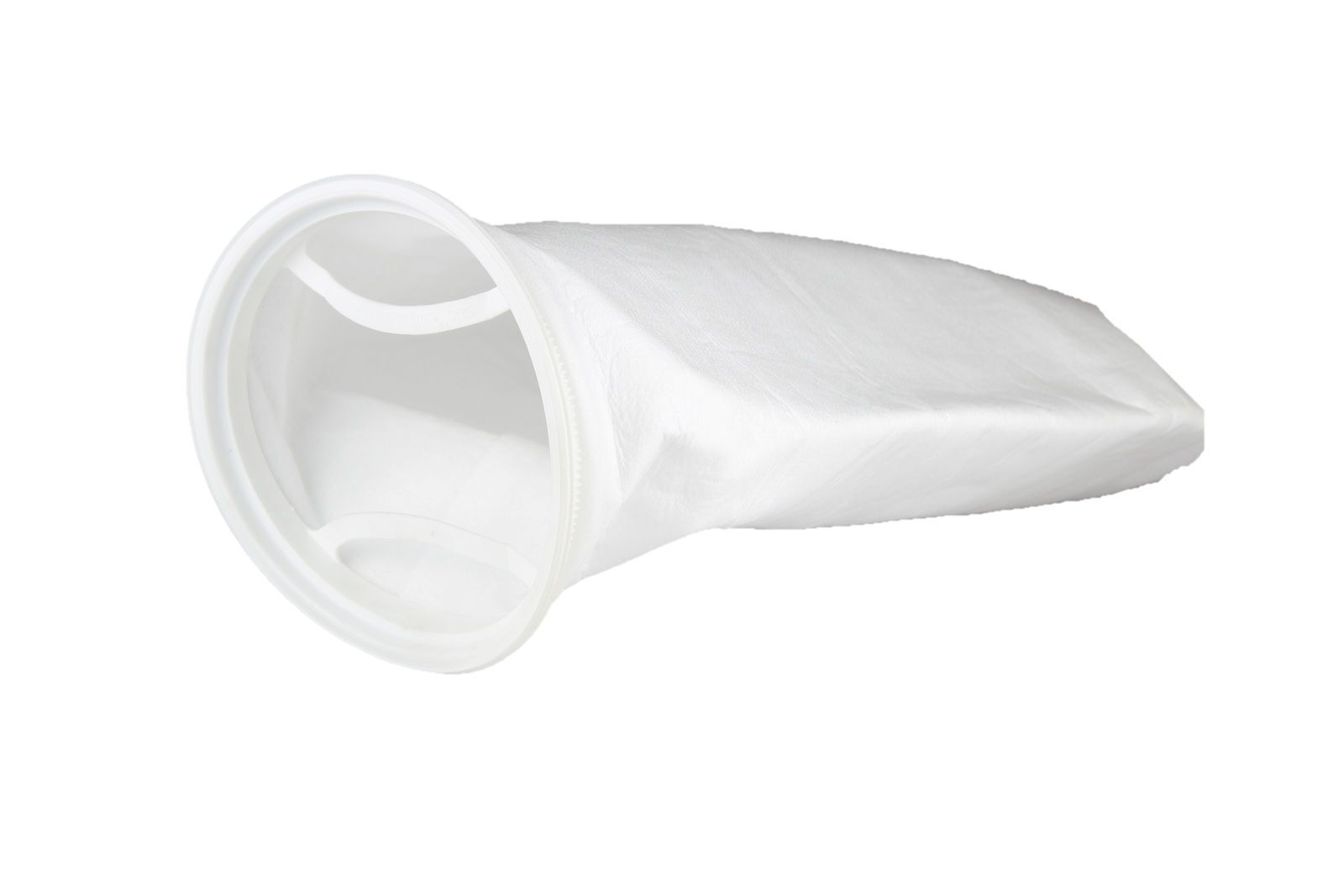
Polypropylene is the most widely used filter bag material due to its excellent chemical resistance, lightweight structure, and cost-effectiveness. It is well-suited for acidic liquids, alkaline solutions, and general industrial processing. PP filter bags maintain good dimensional stability and can withstand temperatures up to 90–100°C. Their depth filtration structure effectively traps fine particles, making them ideal for coatings, food oils, and wastewater applications. However, PP is not suitable for high-temperature or solvent-rich environments.
Polyester (PE) Filter Bags
Polyester filter bags provide strong mechanical strength and exceptional temperature resistance up to 130–150°C. They perform well in applications involving organic solvents, aromatic chemicals, and process fluids requiring stable filtration under thermal stress. PE also has better abrasion resistance than PP, extending service life in high-solids environments. However, polyester is not resistant to strong alkalis, and selecting it for highly caustic processes may accelerate media degradation.
.jpg "info-1-1")
Nylon / Polyamide Filter Bags
Nylon filter bags are popular for high-strength and high-flexibility applications. Their monofilament mesh structure provides precise surface filtration with consistent pore size, making them suitable for food processing, paint filtration, and applications requiring accurate particle separation. Nylon can handle temperatures up to 120°C but has limited resistance to acids. It is best used when clarity and cleanability are priorities.
Stainless Steel Mesh Filter Bags
Stainless steel mesh offers unmatched durability, chemical resistance, and temperature tolerance. Stainless steel bags are reusable and withstand temperatures above 260°C, depending on the grade. Their rigid structure makes them ideal for harsh environments such as petrochemicals, high-viscosity resins, and high-pressure filtration. Although initial costs are higher, long-term value is excellent due to repeated use, stable pore size, and resistance to media fatigue.
How Material Structure Influences Filtration Performance
Different materials-felt, mesh, or metal weave-deliver filtration differently. Felt materials such as PP and PE rely on depth filtration, where particles penetrate multiple fiber layers before being trapped. This structure provides excellent dirt-holding capacity but can lead to faster clogging in high-solids processes. Mesh materials like nylon or stainless steel rely on precise surface filtration, allowing predictable particle retention and easier cleaning. Understanding whether your system benefits more from depth or surface filtration directly impacts the stability, clarity, and overall efficiency of filtration cycles.
Balancing Cost, Durability, and Process Requirements
The right filter bag material is not just about chemical compatibility or temperature-it is also about cost control and operational goals. Disposable materials such as PP and PE offer low upfront cost and quick replacement, ideal for large-volume or low-margin operations. In contrast, stainless steel mesh provides exceptional durability and reusability, reducing long-term waste and downtime. Considering maintenance frequency, cleaning capability, and expected service life helps you balance both budget and performance when selecting a material.
Key Performance Factors to Consider When Selecting Filter Bag Materials
Chemical Compatibility Requirements
Chemical compatibility is the primary factor when selecting filter bag materials. PP is suitable for acids and alkalis, while PE excels with solvents and higher temperatures. Nylon performs well in neutral pH fluids but degrades quickly in strong acids. Stainless steel is typically chosen for aggressive chemicals and corrosive solvents. Choosing incompatible materials can lead to swelling, brittleness, tearing, and chemical breakdown, directly compromising filtration efficiency.
Temperature Tolerance and Thermal Stability
Process temperature influences media performance significantly. Operating too close to a material's maximum temperature leads to deformation, shrinkage, or reduced micron accuracy. For high-temperature processes such as hot oils, petrochemical liquids, or thermal adhesives, stainless steel or high-temperature polyester bags are preferred. For general filtration under 100°C, polypropylene is more than sufficient.
Particle Size and Filtration Requirements
Finer particle retention requires stable pore structures and depth filtration capabilities. PP and PE felt bags capture fine contaminants effectively due to their multi-layer fiber network. Nylon mesh provides precise surface-level filtration for applications requiring stable micron ratings without depth penetration. Stainless steel mesh ensures structural integrity for repeated filtration cycles without clogging or fiber shift.
Mechanical Strength and Abrasion Resistance
Processes involving high solid loads, abrasive particles, or strong turbulence require materials with enhanced mechanical durability. PE and stainless steel provide excellent abrasion resistance. PP is sufficient for light to medium solids but may deform under extreme pressure. Ensuring strong mechanical strength prevents media tearing, bag collapse, and particle bypass.
Understanding Long-Term Media Fatigue
Filtration media undergo continuous stress from pressure, flow turbulence, and particle impact. Over time, polymer materials may fatigue, leading to pore expansion or fiber deformation. This results in inconsistent micron ratings and potential risk of contaminant bypass. Stainless steel offers stability under prolonged stress but may require regular inspection for mechanical deformation. Assessing the long-term fatigue behavior of each material ensures you choose a bag capable of maintaining consistent filtration quality throughout its service life.
Impact of Cleaning and Replacement Cycles on Performance
Some materials respond well to repeated cleaning, while others degrade after a few cycles. For example, nylon and stainless steel mesh can be washed and reused multiple times without significant structural change. PP and PE felt bags, however, lose efficiency quickly after cleaning due to fiber compression and pore blockage. Understanding the balance between disposability and reusability helps companies choose a material that supports both operational efficiency and long-term cost control.
To systematically determine whether a filter bag can continue to be used, please refer to our inspection and testing checklist:
How to Inspect and Test Filter Bags: A Practical Checklist
Comparison of Filter Bag Materials in Industrial Applications
| Material | Max Temperature | Chemical Resistance | Strength | Typical Applications |
|---|---|---|---|---|
| Polypropylene (PP) | 90–100°C | Excellent for acids/alkalis | Medium | Chemicals, wastewater, food oils |
| Polyester (PE) | 130–150°C | Good solvent resistance | High | Coatings, solvents, hot oils |
| Nylon | 120°C | Limited acid resistance | Medium–High | Paint, food processing, precision filtration |
| Stainless Steel Mesh | 260–500°C | Excellent | Very High | Petrochemicals, resins, high-pressure systems |
Applications Requiring PP Filter Bags
PP bags are ideal for food oils, coatings, alkaline fluids, and wastewater treatment. Their depth filtration and low cost make them suitable for large-volume operations.
Why PP Is Effective for Large-Volume Continuous Filtration
PP offers a balanced combination of durability, cost-effectiveness, and chemical resistance, making it suitable for processes requiring uninterrupted filtration. Its depth filtration profile captures variable particle sizes, making it ideal for dynamic systems where contaminant composition changes over time. The ability to maintain stable performance across long production cycles helps minimize replacement frequency and reduce operating costs.
Limitations of PP in Extreme or Specialized Applications
Despite its versatility, PP has limitations such as poor resistance to high temperatures and solvent-rich fluids. When exposed to aggressive chemicals beyond its compatibility range, PP may swell, crack, or lose its micron accuracy. Knowing when PP is insufficient-such as in high-temperature coatings or solvent extraction-ensures better decision-making and prevents unexpected process failures.

Applications Requiring PE Filter Bags
PE offers superior performance for solvent filtration, ink production, and high-temperature processes in industrial coatings or adhesives. Its dimensional stability ensures consistent micron accuracy.
Advantages of PE in Thermal and Solvent-Intensive Environments
PE's ability to maintain structural stability at elevated temperatures makes it ideal for solvent filtration, ink manufacturing, and hot oil processing. Its consistent fiber configuration ensures accurate particle retention even when exposed to thermal fluctuations. This reliability supports production environments requiring stable filtration quality across extended cycles and high operating temperatures.
Where PE Might Not Be the Ideal Choice
Although PE performs well with solvents, it is not suitable for applications with strong alkaline exposure. In highly caustic environments, PE fibers lose flexibility and strength, reducing service life. Understanding these limitations helps engineers avoid mismatched materials that could lead to premature bag failure and contamination risks.

Applications Requiring Nylon Filter Bags
Nylon is best used in food production, beverage clarification, paint manufacturing, and electronics cleaning where cleanability and precision are essential.
Precision Filtration Benefits in High-Clarity Applications
Nylon mesh provides highly accurate surface filtration with uniform pore sizes, making it ideal for industries requiring clarity and purity. Whether used in beverage clarification or paint filtration, nylon prevents fiber shedding and ensures consistent product quality. Its monofilament structure withstands repetitive cleaning cycles, reducing overall filtration cost and supporting sustainable operations.
Considerations for Chemical Compatibility and System Design
While nylon offers excellent strength and precision, its limited acid resistance must be considered carefully. In acidic environments or systems with volatile pH swings, nylon may weaken and lose stability. Matching nylon bags with systems that maintain neutral or slightly alkaline conditions ensures longevity and stable performance.
Applications Requiring Stainless Steel Mesh Bags
Steel mesh bags are used for catalyst recovery, petrochemical filtration, viscous polymer processing, and any environment requiring extreme durability.
Exceptional Durability in Harsh Industrial Conditions
Stainless steel mesh bags deliver unmatched resistance to pressure, heat, and chemical corrosion. They are essential in petrochemicals, catalyst recovery, and heavy-duty polymer processing, where disposable polymer bags may fail prematurely. Their rigid structure prevents pore collapse, ensuring stable micron accuracy under extreme stress and high-flow conditions.
Economic Advantages in Long-Term or Reusable Filtration Systems
Although stainless steel bags require higher initial investment, their long service life and reusability result in significant long-term savings. They minimize waste, reduce downtime, and can be regenerated multiple times through cleaning or backflushing. Their high ROI makes them ideal for plants aiming to optimize operational efficiency and sustainability.
Performance Variation Under High-Solid or Abrasive Environments
Applications involving abrasive particles, mineral fines, or resin-based materials can rapidly wear down polymer-based bags. Polyester performs better than polypropylene due to its higher tensile strength, but stainless steel mesh remains the top choice where media erosion is a concern. In high-solid environments, the filtration media must withstand internal abrasion without shedding fibers or deforming. Understanding how each material performs under abrasive conditions ensures reliable system uptime and consistent filtration cycles.
Suitability for Clean-in-Place (CIP) or Sanitization Procedures
Industries such as food production, pharmaceuticals, and beverage processing require materials compatible with CIP systems. Nylon mesh and stainless steel withstand repeated exposure to sanitizing chemicals and hot water, maintaining pore stability and hygiene standards. PP and PE may deform or degrade when exposed to aggressive cleaning processes. Choosing CIP-compatible materials helps facilities reduce downtime, maintain strict standards, and extend the lifespan of their filtration system.
Operational Conditions Affecting Your Material Choice
Fluid Viscosity and Solid Loading
High viscosity fluids (resins, slurries, adhesives) require stronger materials such as PE or stainless steel to avoid collapse. Depth media like PP is ideal for medium viscosity fluids but may clog faster under extreme loads.
To minimize bag loading and prolong service life, see our prefiltration strategy guide:
Pre-filtration Strategies to Protect youBag Filters
Pressure Fluctuation and System Stability
Bag filters that operate under fluctuating pressure cycles need materials with strong tensile properties. Stainless steel and nylon mesh maintain shape under stress, while PP may compress or deform if pressure is excessive.
System Temperature Variation
Frequent thermal cycling can weaken polymers and reduce filtration accuracy. PE and stainless steel remain stable, whereas PP should be used in environments with consistent temperature ranges.
Environmental Humidity and Microbial Risk
In food & beverage applications, humidity and microbial growth must be considered. Nylon and PP absorb moisture, whereas stainless steel eliminates microbial retention risks. Proper material selection significantly impacts hygiene and product quality.
Why PP Is Effective for Large-Volume Continuous Filtration
PP offers a balanced combination of durability, cost-effectiveness, and chemical resistance, making it suitable for processes requiring uninterrupted filtration. Its depth filtration profile captures variable particle sizes, making it ideal for dynamic systems where contaminant composition changes over time. The ability to maintain stable performance across long production cycles helps minimize replacement frequency and reduce operating costs.
Limitations of PP in Extreme or Specialized Applications
Despite its versatility, PP has limitations such as poor resistance to high temperatures and solvent-rich fluids. When exposed to aggressive chemicals beyond its compatibility range, PP may swell, crack, or lose its micron accuracy. Knowing when PP is insufficient-such as in high-temperature coatings or solvent extraction-ensures better decision-making and prevents unexpected process failures.
Filtration Behavior Under Variable Flow Rates
Different materials respond differently to fluctuating flow conditions. PP may compress under high flow, reducing effective micron performance, while stainless steel maintains structural rigidity. Understanding how each material interacts with turbulence, surge flow, or start-up pressure spikes is essential for systems operating in dynamic industrial environments.
Moisture Absorption, Swelling, and Dimensional Stability
Some polymer materials absorb moisture, which affects pore size stability and overall filtration consistency. Nylon, for instance, absorbs water and may temporarily alter its micron rating, whereas stainless steel remains dimensionally stable. Considering environmental humidity and fluid characteristics ensures precise and predictable filtration results.
Practical Guide for Choosing the Right Material
Step 1: Evaluate Chemical Exposure
Understanding chemical composition is essential. Cross-check with compatibility charts to avoid swelling, softening, or media failure.
Step 2: Determine Required Micron Accuracy
Mesh materials (nylon, stainless steel) provide highly stable pore sizes, while felt materials (PP, PE) offer depth filtration but less micron precision.
Step 3: Analyze Operating Temperature
Always choose materials with at least a 20°C safety margin above actual operating temperature.
Step 4: Consider Total Cost of Ownership
Stainless steel may have higher upfront cost but offers long-term savings through reusability. PP offers the lowest cost for disposable applications.
Aligning Material Selection With Production Goals
Beyond technical requirements, material choice should match overall production goals such as output volume, clarity standards, product purity, and maintenance strategy. High-purity applications requiring zero fiber contamination may lean toward stainless steel or nylon, while large industrial operations prioritize low-cost disposable filters like PP and PE. This alignment ensures optimal efficiency across the entire production workflow.
Planning for Scalability and Future System Upgrades
Choosing a filter bag material with scalability in mind reduces the need for redesigns as production demands grow. Systems anticipating higher temperatures, greater flow volumes, or chemical variations benefit from investing in more robust materials early on. Forward planning ensures long-term stability and lowers retrofit costs.
Advanced Considerations for Optimizing Filter Bag Performance
Integrating Pre-Filtration and Multi-Stage Filtration Systems
In many industrial applications, a single filtration stage is not enough to handle fluctuating contamination loads or large volumes of mixed particle sizes. Introducing a pre-filtration stage-such as basket strainers, metal mesh cylinders, or coarse micron filters-significantly reduces the stress imposed on filter bags. This approach prolongs bag life, reduces clogging frequency, and helps maintain consistent differential pressure. Multi-stage filtration also allows facilities to separate large particles early, ensuring that fine filtration stages operate under stable conditions. Selecting the most suitable combination of materials across these stages ensures each layer functions optimally and contributes to a more efficient, resilient filtration system.
Using Filtration Data and Monitoring Tools to Improve Material Selection
Modern filtration systems increasingly rely on data monitoring tools such as differential pressure sensors, flow meters, turbidity analyzers, and temperature loggers. By analyzing these data points over time, operators can identify patterns such as early clogging, media fatigue, inconsistent micron retention, or chemical-related degradation. This information is invaluable when selecting the right material because it provides clear evidence of how each media performs under real operating conditions. Using recorded performance trends allows engineers to refine material choices, adjust replacement intervals, and enhance overall process stability. Data-backed material selection ensures reliability and provides long-term cost savings.
Conclusion
Selecting the most suitable filter bag material requires a thorough understanding of process conditions, chemical properties, and long-term operational goals. Each material-PP, PE, nylon, and stainless steel-offers different advantages in terms of filtration precision, durability, temperature resistance, and total cost of ownership. The ideal choice depends on how these characteristics align with the fluid's chemical nature, operating temperature, viscosity, and filtration demands. Considering factors such as mechanical wear, solid loading, and compatibility with cleaning processes also ensures stable performance throughout the filtration cycle. By examining each material's strengths and limitations, engineers can make informed decisions that enhance system reliability and maintain high product quality.
Looking forward, filtration systems are trending toward increased efficiency, lower environmental impact, and extended media lifespan. Selecting materials that support sustainability-such as reusable stainless steel or long-lasting nylon-can reduce waste and operational cost while improving production stability. As industries move toward more automation and tighter purity standards, choosing the right filter bag material becomes even more critical. A well-matched filtration solution not only minimizes downtime and replacement frequency but also ensures that the entire process remains compliant, consistent, and optimized for long-term success.