





Chemical process industries-encompassing wet corn milling, phosphoric acid production, chlor-alkali brine processing, molten sulfur refining, and pharmaceutical synthesis-rely heavily on pressure leaf filtration for solid-liquid separation. In these aggressive processing environments, Filter Leaves function as the central workhorse, operating under intense hydraulic pressures while exposed to elevated temperatures and highly corrosive chemical media.
Selecting the incorrect alloy for filter leaf construction leads to rapid failure modes, including localized pitting, crevice corrosion between multi-layer wire mesh contacts, chloride-induced stress corrosion cracking (SCC), and catastrophic weld joint failure. While standard SS 304 and SS 316L perform adequately in mild organic or food-grade applications, harsh chemical media demand advanced metallurgical engineering.
This technical guide analyzes the key corrosion mechanisms encountered in pressure leaf operations, evaluates high-performance alloy selections (SS 904L, Hastelloy C276, Monel 400, and Titanium), and examines component fabrication practices required for extreme chemical service.
To explore baseline panel specifications, standard structural frames, and core weave mechanics across our entire product line, visit our foundational [Stainless Steel Filter Leaf].
Primary Corrosion Mechanisms in Pressure Leaf Filtration
Inside a pressure leaf vessel, the combination of mechanical stress, fluid velocity, high temperatures, and chemical reactivity creates severe corrosive conditions.
Pitting & Crevice Corrosion
When halogen ions (specifically chloride $Cl^-$ or fluoride $F^-$) penetrate the protective chromium oxide layer of stainless steel, micro-pitting occurs. In multi-layer filter leaves-where fine surface mesh rests directly against intermediate support wires-tight contact points create stationary fluid zones. Chlorine ions concentrate in these crevices, accelerating localized oxygen depletion and causing deep pitting that tears fine mesh wires apart.
Chloride-Induced Stress Corrosion Cracking (SCC)
Standard austenitic steels (like SS 304 and SS 316L) subjected to tensile mechanical stress-such as pneumatic vibration during cake discharge-in chloride-bearing solutions above 60°C suffer from rapid SCC. Transgranular cracks propagate through the metal matrix, causing sudden structural frame fracture without visible advance warning.
Intergranular Carbide Precipitation
During high-temperature welding or continuous operation above 400°C (e.g., molten sulfur filtration), chromium carbides precipitate along grain boundaries, depleting chromium in adjacent zones. This renders the weld seams highly susceptible to rapid localized corrosive attack.
Advanced Metallurgy Selection Matrix for Extreme Media
To prevent structural failure and guarantee process purity, custom filter leaves are fabricated from high-performance alloys tailored to specific chemical environments:
| Corrosion-Resistant Alloy | Key Chemical Composition | Primary Metallurgical Protection | Ideal Application Profile |
| SS 904L (UNS N08904) | 20% Cr, 25% Ni, 4.5%Mo, 1.5%Cu | High Copper & Nickel content provides immunity to warm sulfuric and organic acids. | Phosphoric acid purification, fertilizer production, wet corn milling. |
| Hastelloy C276 (UNS N10276) | 57% Ni, 16% Cr, 16%Mo, 4%W | High Molybdenum & Tungsten content provides ultimate resistance to wet $Cl_2$, ferric chloride, and oxidizing acids. | PTA plant sludge recovery, toxic chemical processing, acidic catalyst recovery. |
| Monel 400 (UNS N04400) | 67%Ni, 30% Cu | Solid-solution alloy with exceptional resistance to hydrofluoric acid, alkalis, and non-oxidizing salts. | Caustic soda filtration, marine brine clarification, hydrofluoric acid alkylation. |
| Titanium (Grade 2) | Pure Unalloyed Titanium | Forms an immediate, highly stable dioxide film resistant to hot chlorides and wet chlorine. | Chlor-alkali plant brine purification, seawater desalination pretreatment. |
Structural Integrity & Monometallic Fabrication Discipline
A high-performance specialty alloy filter leaf requires absolute metallurgical consistency across every single component. Joining dissimilar metals within the same leaf panel introduces galvanic coupling, where the less noble alloy corrodes rapidly as an anode.
Engineering Best Practices in Specialty Alloy Assembly:
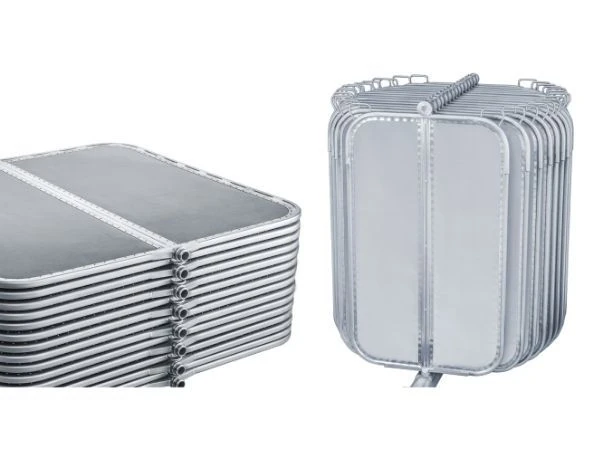
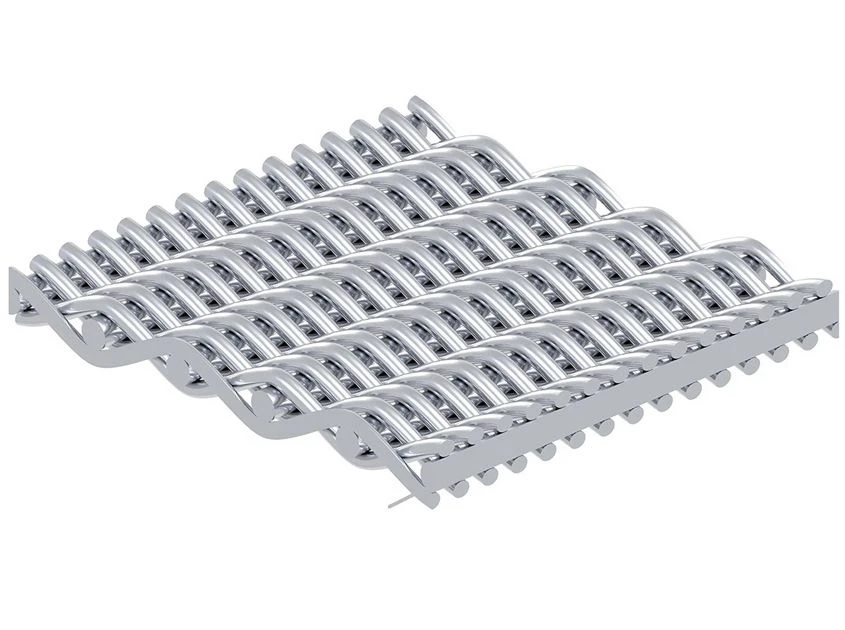
100% Monometallic Construction: The heavy C-channel outer rim, inner 5-layer drainage grid, fine Dutch weave outer cloth, rivets, and discharge necks must be manufactured from the exact same heat-certified alloy batch.
Purged Gas Inert Welding: Structural welding of Hastelloy or SS 904L components requires continuous high-purity argon shielding on both the face and root of the weld to prevent oxide formation ("sugar-coating") and maintain full corrosion resistance across the heat-affected zone (HAZ).
Technical Procurement Audit Checklist
When sourcing specialized high-temperature or corrosion-resistant filter leaves for critical process vessels, verify that your manufacturer satisfies the following quality criteria:
Positive Material Identification (PMI): 100% PMI spectral testing on all wire mesh, frame channels, and discharge necks to verify heat chemistry prior to assembly.
Full Weld Joint Passivation: Post-weld chemical cleaning and passivation treatment to restore protective oxide layers along high-stress heat-affected zones.
Dimensional Alignment & Jigging: Inspection on master alignment jigs ensuring leaf bottom outlets, double O-ring grooves, and top guide pins strictly match vessel manifold tolerances within $\pm 0.5\text{ mm}$.
Ultrasonic Solvent Degreasing: Multi-stage ultrasonic cleaning ensuring zero residual drawing grease or iron contaminants remain on active wire cloth surfaces.
Conclusion
Engineering filter leaves for extreme chemical processes requires deep alignment between mechanical design and metallurgical science. By matching advanced specialty alloys-such as Hastelloy C276, Monel 400, SS 904L, or Titanium-to specific chemical exposure parameters, industrial plants can eliminate premature frame failure, prevent product contamination, and achieve extended operational uptime.
To review additional structural frame options and high-durability reinforced leaf panels, explore our technical breakdown on [Engineering Micro-Clarification: Mechanical Stress Mitigation and Frame Architecture in Pressure Filter Leaves] or consult our engineering team to select the ideal alloy for your application.
Related Articles:
● The Ultimate Procurement Blueprint: Configuring Custom- Engineered Pressure Leaf Filter Elements Across Edible Oils, Chemicals, and Catalyst Loops
● The Engineering Behind Precision-Aperture Stability and Zero- Bypass Filter Leaf Construction
● Why Multi-Layer Mesh Design and Thermal Permeability Rule High- Temperature Pressure Leaf Operations
● Overcoming Hydraulic Resistance: How Multi-Layer Matrix Design and Internal Permeability Determine Pressure Leaf Throughput