






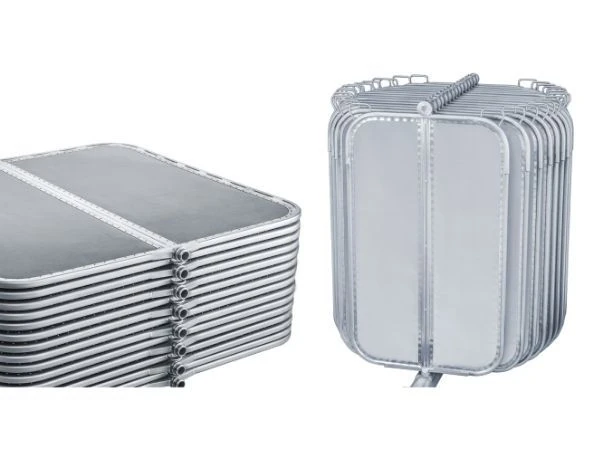
Pressure leaf filtration systems-whether vertical or horizontal configurations-serve as foundational clarification assets in high-tonnage industrial processing. Operating in demanding sectors such as edible oil refining, wet corn milling, green liquor recovery, and chemical synthesis, these vessels house dense stacks of parallel Filter Leaves that process massive slurry volumes under dynamic hydraulic pressure.
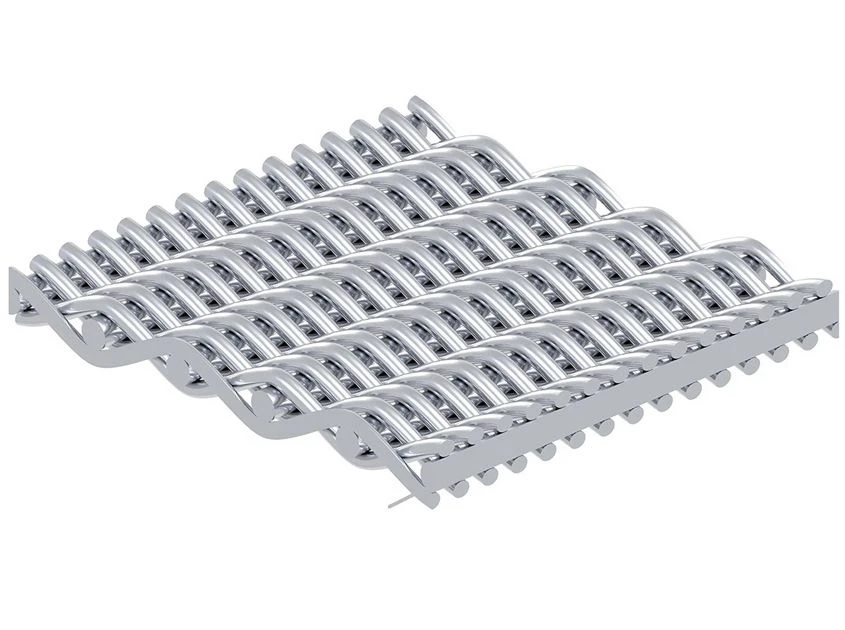
However, extended operational campaigns inevitably take a toll on internal hardware. Beyond standard wire cloth blinding, years of cyclic hydraulic pulsing, aggressive chemical exposure, and high-frequency vibratory cake discharge cause mechanical wear across bottom manifold headers, top spacer tracks, and leaf discharge sockets. Attempting to maintain production through piecemeal replacement of individual leaves often results in severe cake bridging, misaligned leaf stacks, and high-pressure slurry bypass at the collection manifold.
This technical guide provides an engineering analysis of complete vessel refurbishment, focusing on manifold sealing mechanics, hydraulic flow distribution across multi-leaf stacks, cake bridging prevention, and retrofit procurement protocols for the industrial filter leaf.
To explore foundational alloy selections, weave mechanics, and baseline panel specifications across our complete product family, review our foundational [Stainless Steel Filter Leaf].
Manifold Sealing Mechanics & Bypass Prevention
The bottom collection manifold is the central arterial drain of a pressure leaf vessel. Clean filtrate passing through the active surface mesh travels down the internal drainage core of each leaf, exiting through the bottom discharge neck directly into the manifold socket.
Critical Sealing Failure Points in Aged Vessels
● O-Ring Groove Erosion: Worn or pitted O-ring grooves on discharge necks allow high-pressure unfiltered slurry to bypass the double O-ring seal, contaminating the clarified liquid stream.
● Socket Ovality: Continuous vibratory stress during cake discharge can deform the circular internal profile of bottom manifold sockets. Once a socket loses concentricity, new O-rings cannot establish uniform radial compression.
● Precision Machined Neck Solution: Utilizing precision CNC-machined SS 316L discharge necks fitted with dual Viton or EPDM O-rings ensures positive elastomeric compression. The neck locks firmly into the collection header, isolating the clean filtrate loop from raw vessel slurry up to 25 Bar differential pressure.
Hydraulic Flow Distribution & Cake Bridging Prevention
For a multi-leaf pressure vessel to achieve maximum throughput and dry cake discharge, hydraulic flow must distribute evenly across every individual filter leaf in the vessel stack.
Hydraulic Flow Resistance Balance
The total pressure drop across a pressure leaf filtration system is directly governed by liquid viscosity, filtration velocity, and the combined resistance of both the clean leaf assembly and the accumulating filter cake layer.
If old, partially blinded filter leaves are mixed with new high-flux replacement leaves, the clean medium resistance varies drastically across the vessel stack. High-flux new leaves draw excess slurry velocity, causing rapid cake accumulation on specific panels while adjacent older leaves remain under-utilized.
Mechanics of Cake Bridging
When specific leaves accumulate cake much faster than designed, the expanding cake layers on adjacent leaves touch and interlock-a catastrophic failure known as cake bridging.
● Structural Damage: Interlocked cake prevents free gravity falling during pneumatic vibration. The trapped cake exerts immense lateral mechanical forces, causing permanent frame warping and mesh tearing.
● Full-Set Replacement Protection: Installing a complete set of uniformly manufactured replacement filter leaves ensures identical clean medium resistance and precise pitch spacing across all positions, guaranteeing uniform cake growth and effortless cake drop.
Retrofit Protocol for Legacy & OEM Vessels
Refurbishing legacy pressure leaf vessels with new replacement filter leaves requires rigorous pre-installation auditing to guarantee zero-fitment issues during vessel turnaround.
| Technical Parameter | Field Audit Requirement | Engineering Retrofit Action |
| Centerline Pitch Spacing | Measure center-to-center distance between manifold sockets | Fabricate custom top spacer guide clips to lock exact leaf spacing |
| Vessel Shell Curvature | Map internal vessel contour for center vs. wing leaves | Custom-cut leaf profiles (Teardrop/Short wing) for max active area |
| Discharge Neck Profile | Verify neck diameter, length, and O-ring groove depth | CNC machine exact matching replacement necks for zero-leak seating |
| Hold-Down Bar Height | Check clearance between top locating pin and vessel hold-down | Precision-weld top alignment pins to match vessel hold-down bar |
Technical Audit Checklist for Vessel Refurbishment Procurement
When sourcing replacement filter leaves for plant turnaround projects, confirm that your manufacturer provides the following quality assurances:
● 100% Dimensional Jig Pre-Assembly: Full factory dry-fit on master alignment jigs replicating OEM vessel manifold centerline and shell dimensions within ±0.5mm.
● Certified Welded Seam Passivation: 100% continuous TIG welding on C-channel frames, passivated to eliminate oxidation and preserve corrosion resistance across heat-affected zones.
● Positive Material Identification (PMI): Spectral material verification confirming exact alloy composition (SS 316L, SS 904L, or Hastelloy C276) across all frame channels, mesh layers, and discharge necks.
● Cleanroom Degreasing & Packaging: Multi-stage ultrasonic solvent cleaning ensuring zero drawing lubricants or metal swarf remain on active wire cloth faces prior to sealed shipment.
Conclusion
Refurbishing pressure leaf vessels with precision-engineered replacement filter leaves restores optimal hydraulic balance, prevents catastrophic cake bridging, and guarantees leak-proof filtrate clarity. By updating worn leaf stacks with high-precision components, plant operators eliminate chronic maintenance delays and safeguard production uptime across demanding industrial processing lines.
To explore specialized metallurgical options for severe acid or high-temperature processing, review our guide on [Engineering Micro-Clarification: Metallurgical Selection and Corrosion Mechanisms in Chemical Pressure Leaf Filtration] or contact our engineering team to schedule a vessel retrofit audit.
Related Articles:
● Maximizing Flow Rate vs. Micron Precision: The Core Wire Mesh Dilemma in Pressure Leaf Filters
● Troubleshooting 5 Common Operational Issues in Vertical Pressure Leaf Filters
● The Structural Engineering Behind Filter Leaves: How Rim Closing Styles Affect Lifespan
● Handling Extreme Conditions: Selecting Filter Leaves for Molten Sulfur & Sulfuric Acid Plants
● How to Choose the Right Stainless Steel Filter Leaf for Edible Oil Refining?