






The functional success of a mesh screen is deeply tethered to the chemical and physical properties of its constituent material. While the geometry of the weave determines "what" can pass through, the material science behind the strands determines "how long" the screen will survive the rigors of its environment. In modern engineering, the spectrum of mesh materials has expanded far beyond basic steel, encompassing everything from high-performance polymers used in medical biosensors to exotic nickel-based superalloys designed for the infernos of jet engines and deep-sea oil extraction.
Selecting the right material is a balancing act between initial procurement costs and the long-term total cost of ownership. A misplaced choice-such as using standard stainless steel in a high-chloride marine environment-can lead to catastrophic structural failure within months due to pitting or stress-corrosion cracking. This guide provides an exhaustive technical analysis of the materials used in mesh production, categorized by their chemical resilience, thermal stability, and mechanical strength. By understanding the metallurgical and polymeric foundations of these screens, engineers can ensure their systems achieve maximum operational uptime and safety.


The Dominance of Stainless Steel Alloys
Grade 304: The Versatile Industrial Baseline
Grade 304 stainless steel is the most frequently specified material in the mesh world, containing 18% chromium and 8% nickel. Its popularity stems from its excellent "passivity"-the ability to form a self-healing chromium oxide layer that protects the underlying metal from oxidation. In standard atmospheric conditions and mild chemical environments, 304 mesh provides a robust, cost-effective solution for everything from architectural panels to food processing sieves. It maintains high tensile strength and is easily formed, making it the ideal baseline for general industrial screening where extreme corrosion is not a primary concern.
Grade 316: The Shield Against Chloride Attack
Often referred to as "marine-grade" stainless steel, Grade 316 is the mandatory upgrade when chlorides are present. The critical addition of 2% to 3% molybdenum fundamentally changes the alloy's resistance to localized pitting. In coastal environments or wastewater treatment plants, salt and chemical ions can bridge the protective oxide layer of 304 steel, leading to microscopic holes. Grade 316 mesh resists this "pitting" and "crevice corrosion," ensuring that the structural integrity of a filter or security screen remains uncompromised over decades of exposure to saline or acidic conditions.
Low-Carbon Variations (304L and 316L)
In applications where the mesh must be welded, the "L" or Low-Carbon grades are essential. Standard grades can suffer from "carbide precipitation" during the high-heat welding process, which leaves the grain boundaries vulnerable to corrosion. By limiting carbon content to 0.03% or less, 304L and 316L mesh ensure that the welded intersections remain as corrosion-resistant as the rest of the wire. This is a critical requirement for heavy-duty welded screens and sintered filter elements used in the pharmaceutical and nuclear industries, where weld-point failure could lead to system-wide contamination.
Magnetic vs. Non-Magnetic Characteristics
A common misconception is that all stainless steel mesh is non-magnetic. While austenitic grades (300 series) are non-magnetic in their annealed state, the cold-working process of drawing the wire and weaving the mesh can introduce a slight magnetic pull. For most applications, this is irrelevant, but in sensitive electronic environments or MRI rooms, it is a deal-breaker. Conversely, ferritic grades like Grade 430 are intentionally magnetic. These are used in the food industry for "magnetic detection"-if a piece of mesh breaks off and falls into the food line, magnetic separators can catch it immediately, preventing consumer injury.
Stainless Steel Grade Comparison Matrix
| Metric | Grade 304 | Grade 316 | Grade 304L/316L | Grade 430 |
| Pitting Resistance | Moderate | High | High | Low |
| Weldability | Good | Good | Excellent | Fair |
| Magnetic Pull | Slight (after work) | Very Slight | Very Slight | Strong |
| Max Temp (°C) | 870 | 925 | 800 | 815 |
| Primary Use | General Industry | Marine / Chemical | Welded Structures | Food Detection |
High-Performance Synthetic and Polymer Meshes
Nylon: The King of Abrasion Resistance
Nylon (Polyamide) mesh is the premier choice when flexibility and wear resistance are prioritized over temperature. Nylon strands are incredibly tough and can withstand significant mechanical rubbing, making them ideal for sifting abrasive powders in the mining or flour industries. Furthermore, Nylon is "hydrophilic," meaning it absorbs a small amount of water, which can be an advantage in certain liquid-separation processes. Because it is non-toxic and non-shedding, Nylon mesh is widely used in medical blood filtration and laboratory diagnostic kits where metallic ions would interfere with sensitive tests.
Polyester: Dimensional Stability in Wet Environments
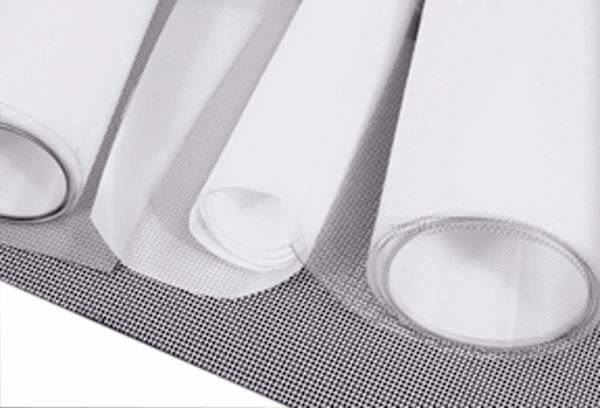
Unlike Nylon, Polyester mesh is "hydrophobic"-it repels water and maintains its tension and dimensions even when fully submerged. This makes it the superior choice for high-precision screen printing and outdoor filtration where "sagging" must be avoided. Polyester has excellent resistance to UV light and most organic acids, making it a durable alternative to metal for wastewater treatment "filter belts." Its smooth surface also allows for easy "cake discharge" in industrial sludge dewatering, reducing the downtime needed for cleaning and regeneration.
Polypropylene: The Chemical Specialist
Polypropylene mesh is prized for its near-total immunity to most acids and alkalis. It is exceptionally lightweight and has one of the lowest moisture absorption rates of any polymer. This makes it a staple in the chemical battery industry (as separators) and in specialized laboratory equipment. However, Polypropylene has a relatively low melting point (approx. 160°C) and is sensitive to UV degradation unless treated. It is a "niche" material that excels in extreme pH environments where even high-grade stainless steel would eventually corrode.
PEEK and Advanced Fluoropolymers
For the most demanding medical and aerospace polymer applications, materials like PEEK (Polyetheretherketone) or PTFE (Teflon) are used. PEEK mesh can withstand continuous temperatures up to 250°C and is biocompatible, making it suitable for long-term surgical implants. PTFE mesh is essentially inert, resisting almost all known chemicals while providing a "non-stick" surface that prevents the most stubborn particles from blinding the screen. These materials represent the "elite" of the polymer mesh world, offering a combination of chemical and thermal properties that bridge the gap between plastics and metals.
Exotic Alloys and Non-Ferrous Metals
Copper, Brass, and Bronze: Conductivity and Shielding
Non-ferrous metal meshes are selected for their electrical and aesthetic properties. Copper mesh is the industry standard for EMI/RFI shielding; its high conductivity allows it to dissipate electromagnetic interference, protecting sensitive electronics in hospital MRI rooms and government data centers. Brass mesh (a copper-zinc alloy) and Bronze mesh (copper-tin) are stiffer and more resistant to abrasion. Beyond their technical uses, these materials are beloved by architects for their "living finish"-they patina over time, changing from a bright gold to a deep earthy brown, adding a unique aesthetic to building facades.
Monel and Inconel: The Superalloys
When standard stainless steel reaches its breaking point, Nickel-based superalloys take over. Monel (Nickel-Copper) is specifically used for its resistance to hydrofluoric acid and seawater, making it a staple in petrochemical refineries. Inconel (Nickel-Chromium) is engineered for the "extremes"-it maintains its tensile strength at temperatures where steel would become soft and flow like taffy. Inconel mesh is found in the exhaust systems of high-performance vehicles and the heat shields of spacecraft. These materials are difficult to weave due to their hardness, but they are irreplaceable in high-heat, high-pressure environments.
Titanium: The Weight-to-Strength Champion
Titanium mesh offers the corrosion resistance of Grade 316 stainless steel but at nearly half the weight. It is also completely biocompatible, which is why it is used for cranial and dental implants where the mesh acts as a scaffold for bone growth. In the aerospace sector, Titanium mesh is used in engine nacelles and air intake screens to protect against bird strikes and debris while keeping aircraft weight to a minimum. Its ability to withstand high temperatures and resist salt-water corrosion makes it an elite choice for specialized desalination equipment and military naval components.
Specialty Alloys: Hastelloy and Duplex
For the absolute most aggressive chemical environments, Hastelloy mesh provides a level of protection that is virtually unmatched, particularly against wet chlorine gas and strong oxidizing salts. Meanwhile, Duplex Stainless Steel mesh (such as Grade 2205) combines the best features of austenitic and ferritic steels. It offers twice the yield strength of Grade 316 and superior resistance to stress-corrosion cracking. Duplex mesh is increasingly used in massive structural filtration units for the mining and desalination industries, where reducing the weight of the mesh panel (by using thinner, stronger wires) can save millions in supporting infrastructure costs.
Environmental Compatibility Matrix
| Material | Strong Acids | Salt Water | High Heat (>500°C) | EMI Shielding |
| Stainless 316 | Fair | Excellent | Good | Poor |
| Copper | Poor | Fair | Poor | Excellent |
| Inconel | Good | Excellent | Superior | Fair |
| Nylon | Poor | Excellent | Poor | Poor |
| Hastelloy | Superior | Superior | Excellent | Poor |

Factors Influencing Material Selection
Thermal Expansion and Creep
In high-temperature applications, the "Coefficient of Thermal Expansion" (CTE) is vital. If a mesh screen expands at a different rate than its support frame, it will buckle or tear. Furthermore, materials under constant load at high temperatures suffer from "Creep"-a slow, permanent deformation. Engineers must select alloys like Inconel or specialized 310S stainless steel that have high creep resistance to ensure the mesh maintains its tension and opening size throughout its operating life in a furnace or engine.
Biocompatibility and Sanitization
In the pharmaceutical and food industries, the material must be "inert"-it cannot leach chemicals or metallic ions into the product. Stainless steel 316L and certain polymers like PEEK are the gold standards here. Additionally, the material must withstand "CIP" (Clean-In-Place) protocols, which involve high-pressure steam and aggressive caustic cleaners. Choosing a material that can survive these daily chemical "shocks" without losing its surface smoothness is essential for preventing the bacterial growth that can occur in pitted or corroded wire intersections.
Weight vs. Structural Stability
For mobile applications-from portable filtration units to aerospace components-weight is a primary constraint. While metal mesh is generally heavier, its structural stability means it often requires less supporting framework than a polymer mesh. However, if the environment allows, a Titanium or Aluminum mesh can provide the necessary rigidity at a fraction of the weight of steel. The "Specific Strength" (strength-to-weight ratio) of the material is the key metric used by engineers to minimize mass while ensuring the screen can withstand wind loads or fluid pressure.
Galvanic Corrosion and Dissimilar Metals
A critical mistake in material selection is ignoring "Galvanic Corrosion." This occurs when two different metals (e.g., an Aluminum frame and a Stainless Steel mesh) are in contact in a moist environment. The "less noble" metal (Aluminum) will corrode at an accelerated rate. To prevent this, engineers must ensure the mesh and its mounting hardware are either the same material or are separated by a non-conductive gasket. Understanding the galvanic series is essential for the long-term health of any outdoor or marine mesh installation.
Conclusion
The "right" material for a mesh screen is rarely the cheapest or the strongest in isolation; it is the one that achieves the perfect equilibrium between environmental resistance and mechanical function. From the cost-effective versatility of Grade 304 stainless steel to the extreme-performance capabilities of Inconel and PEEK, the diversity of mesh materials allows for solutions in every corner of modern industry.
Ultimately, material selection should be driven by a thorough "Environmental Audit"-identifying the peak temperatures, the exact chemical concentrations, and the mechanical loads the screen will face. By investing in the correct metallurgy or polymer from the outset, you prevent the astronomical costs associated with premature failure, environmental contamination, and unscheduled downtime. In the world of mesh screens, the material is the foundation upon which all other performance metrics are built.
To see how these materials are woven into specific geometries and construction styles, return to the main article:
[What is a Mesh Screen: All You Need to Know]