






The structural integrity and functional efficiency of a mesh screen are fundamentally determined by its construction method. While the material alloy (such as Stainless Steel 304 or 316) provides the chemical resistance, the way the individual wires are joined-either through weaving or welding-defines the mechanical behavior of the finished product. Woven mesh, a technique with roots in ancient textile production, relies on the complex interlacing of wires to create a flexible yet stable lattice. In contrast, welded mesh is a product of modern industrial automation, using electrical resistance to fuse every wire intersection into a single, monolithic grid.
Choosing between these two constructions is not merely a matter of cost; it is a critical engineering decision that affects filtration precision, load-bearing capacity, and longevity. A woven mesh offers unparalleled accuracy for fine particle separation, whereas a welded mesh provides the rigid stability required for heavy-duty safety barriers and structural reinforcement. This guide provides a comprehensive technical comparison of woven and welded mesh, examining the manufacturing nuances, physical properties, and application-specific advantages of each. By understanding these two distinct "structural languages," engineers and procurement specialists can specify the construction that best aligns with their project's mechanical demands.


The Mechanics of Woven Mesh Construction
The Interlacing Process: Warp and Shute
Woven wire mesh is manufactured on high-speed industrial looms that follow a logic similar to fabric weaving. The "warp" wires run the length of the roll, while the "shute" (or weft) wires are interlaced across them. The strength of woven mesh is derived from the "crimp"-the slight indentation formed where the wires cross over and under one another. This crimp acts as a mechanical lock, holding the wires in place without the need for heat or adhesives. Because the wires are not fused, they retain their original metallurgical properties, making woven mesh exceptionally resistant to vibration and fatigue, as there are no "heat-affected zones" that could serve as brittle failure points.
Plain, Twill, and Dutch Weave Variations
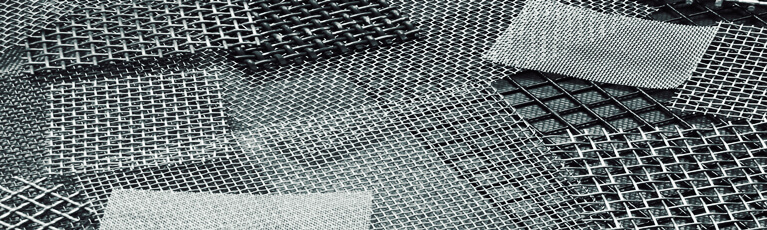
One of the greatest advantages of woven mesh is its versatility in weave patterns. The "Plain Weave" is the most common, where each shute wire passes over and under one warp wire. However, for finer filtration, "Twill Weaves" allow for heavier wires in a fine mesh count by passing wires over two and under two. For the most demanding high-pressure filtration, "Dutch Weaves" use different wire diameters for the warp and shute to create a dense, "tortuous path" for fluids. This geometric flexibility allows woven mesh to achieve micron ratings as low as 1 micron, a level of precision that is physically impossible to achieve with welded construction.
Precision and Dimensional Tolerances
Woven mesh is the gold standard for applications requiring high precision. Because the loom can be adjusted with extreme accuracy, the opening sizes (apertures) in woven mesh are incredibly consistent. This is why woven mesh is the only construction used for laboratory testing sieves and high-end pharmaceutical filters. Standards like ASTM E11 dictate strict tolerances for woven mesh to ensure that particle grading is accurate. The ability to control the tension of each individual wire during the weaving process ensures that the finished cloth is flat and uniform, which is essential for automated cutting and pleating processes.
Flexibility and Formability in Design
Because woven wires are held together by friction and tension rather than rigid welds, the mesh retains a degree of flexibility. This makes it ideal for applications where the mesh must be shaped, wrapped, or pleated. For example, in cylindrical oil filters or conical strainers, woven mesh can be bent into tight radii without the risk of the intersections snapping. This "forgiveness" in the material also allows it to absorb impacts; instead of a weld breaking, the wires can slightly shift or stretch, dissipating the energy. This characteristic is highly valued in architectural designs where the mesh must drape over a structure or follow complex curves.

The Engineering of Welded Mesh Construction
Electrical Resistance Welding (ERW)
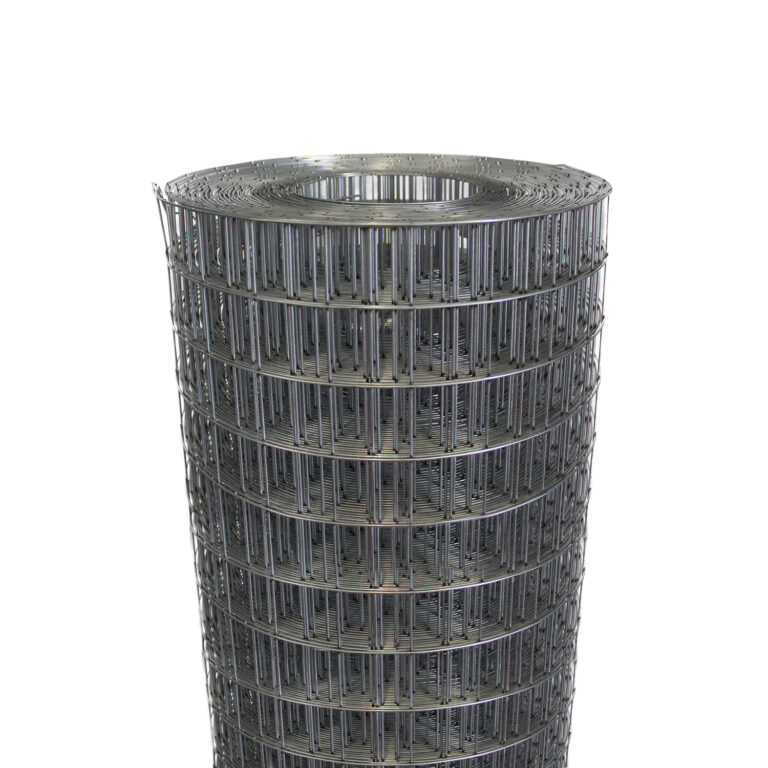
Welded wire mesh is produced through a process of electrical resistance welding. Longitudinal and transverse wires are fed into a machine where they overlap. At the point of intersection, a high-voltage current is passed through the wires while they are under mechanical pressure. This causes the metal to melt and fuse together, creating a permanent bond. This construction method creates a "monolithic" structure where the wires function as a single unit. The primary benefit is that the mesh will not unravel or lose its shape even if it is cut into irregular pieces, making it the most stable construction for large-scale panels.
Intersection Strength and Shear Resistance
The "Weld Shear Strength" is a critical metric for welded mesh. In high-quality production, the weld is often stronger than the wire itself. This rigid connection provides immense shear resistance, which is why welded mesh is preferred for security fencing and safety guards. Unlike woven mesh, where a single wire could theoretically be pulled out of the lattice, welded intersections are fixed. This makes it extremely difficult for an intruder to create a gap in the mesh using hand tools. Standards like ASTM A1064 govern the quality of these welds to ensure they can withstand the mechanical loads expected in construction and security environments.
Geometric Stability and Flatness
One of the most frustrating challenges with woven mesh can be "wire migration," where wires shift under stress, changing the opening size. Welded mesh eliminates this problem entirely. Because every intersection is fused, the openings are geometrically locked. This makes welded mesh the ideal choice for applications where the screen must remain perfectly flat and square, such as in suspended ceiling panels or animal enclosures. The rigidity of the welded grid allows it to be used in "self-supporting" spans that would require a complex tensioning frame if woven mesh were used, significantly reducing installation costs for architectural projects.
Scalability and Material Efficiency
Welded mesh is highly efficient for large-opening applications. While weaving becomes difficult and expensive as wire diameters increase and openings get larger, welding remains cost-effective. This makes welded mesh the standard for "heavy-duty" applications, such as concrete reinforcement (WWR), gabion baskets, and large-scale industrial shelving. Because the process is highly automated and faster than weaving, welded mesh is generally the more economical choice for projects where fine micron precision is not required. It allows for the use of very heavy gauge wires (up to 1/2 inch or more) that would be impossible to process on a standard loom.
Mechanical Comparison: Woven vs. Welded Construction
Feature |
Woven Wire Mesh |
Welded Wire Mesh |
Joining Method |
Mechanical Interlacing (Crimp) |
Electrical Resistance Welding |
Structural Behavior |
Flexible / Formable |
Rigid / Monolithic |
Precision |
Very High (up to 1 micron) |
Moderate (typical > 0.5 inch) |
Stability |
Depends on Tension/Crimp |
High (Wires cannot shift) |
Unraveling |
Can unravel if not framed |
Will not unravel when cut |
Heat-Affected Zone |
None (Preserves Ductility) |
Present at every intersection |
Application-Specific Performance Benchmarks
Fine Filtration and Sifting
When the primary goal is the separation of particles by size, woven mesh is the only viable choice. Its ability to create microscopic openings (as fine as 20 microns or less) while maintaining a high "open area" percentage is unmatched. In industries like flour milling, chemical refining, and waste-water treatment, the accuracy of the woven aperture ensures that the product meets quality standards. Welded mesh simply cannot be manufactured with the density required for these tasks, as the heat from the welding process would melt the fine wires and distort the microscopic grid.
Security, Fencing, and Safety Guards
For physical protection, the rigidity of welded mesh is a significant advantage. In a security fence, the fused intersections prevent an intruder from using a crowbar to "spread" the wires. Similarly, for machine guards, welded mesh provides a solid barrier that can withstand the impact of a failing component without deforming into the moving parts of the machine. The ability to cut welded mesh to fit around pipes or brackets without the edges fraying makes it much easier to customize on-site compared to woven mesh, which requires immediate framing once cut.
Architectural Aesthetics and Light Diffusion
In architecture, the choice often depends on the desired "look and feel." Woven mesh has a "fabric-like" quality; it reflects light in multiple directions due to the crimp in the wires, creating a shimmering effect. It is often used for decorative curtains and interior partitions. Welded mesh, with its clean, straight lines, provides a more "industrial" and modern aesthetic. It is frequently used for exterior facades, sunshades, and balustrade infill panels. Because welded mesh is stiffer, it can be mounted with simpler hardware, whereas woven architectural mesh often requires heavy-duty springs and tensioning bars to stay taut.
Load-Bearing and Structural Reinforcement
When mesh is integrated into other materials, such as concrete or composites, welded mesh is the standard. The fused intersections provide a mechanical "anchor" within the matrix, helping to distribute loads and prevent cracks. In the construction industry, Welded Wire Reinforcement (WWR) is used in slabs and walls to provide tensile strength. Woven mesh would not be effective in this role because the wires would simply slide past each other under the pressure of the expanding concrete. For any application involving "point loads" or structural stress, the fused nature of the welded grid is essential for safety and performance.
Comparative Durability and Environmental Resistance
Corrosion in the Heat-Affected Zone (HAZ)
A critical technical consideration for welded mesh is the "Heat-Affected Zone" (HAZ) created at every intersection. During welding, the extreme heat can slightly alter the grain structure of the stainless steel, sometimes reducing its corrosion resistance at that specific point. This can lead to "intergranular corrosion" if the mesh is used in harsh chemical environments. Woven mesh does not have this issue, as no heat is applied during construction. However, high-quality welded mesh is often "annealed" or "passivated" after welding to restore its corrosion resistance, making it suitable for most industrial uses.
Fatigue Life and Vibration Resistance
Woven mesh generally has a superior "fatigue life" in high-vibration environments. Because the wires are free to move slightly within their crimps, they can absorb vibrations without cracking. Welded mesh, being rigid, is more susceptible to "stress cracking" at the weld points if subjected to constant, high-frequency vibration. This is why woven mesh is almost always used for vibrating sieves in mining and aggregate processing. If welded mesh were used, the welds would eventually crystallize and snap under the repetitive stress, leading to a total failure of the screen.
Maintenance and Surface Cleaning
Welded mesh is generally easier to clean in heavy-industrial settings. Because the intersections are fused, there are no "crevices" where dirt or bacteria can hide. This makes it a popular choice for animal cages and industrial shelving. Woven mesh, especially in fine counts, has thousands of tiny "nooks" where the wires overlap. In food or pharmaceutical applications, this requires specialized ultrasonic cleaning or high-pressure steaming to ensure hygiene. However, for filtration, the "depth" provided by the woven structure is actually an advantage, as it allows for better particle capture than a flat welded grid.
Total Cost of Ownership (TCO)
While welded mesh is often cheaper to purchase for large-scale applications, the "Total Cost of Ownership" depends on the installation and service life. Woven mesh requires more complex framing and tensioning, which increases labor costs. However, its resistance to vibration may mean it lasts significantly longer in a processing plant, reducing the cost of replacements. For a simple security fence, welded mesh is the clear winner in TCO. For a high-precision chemical filter, the precision of woven mesh is the only way to avoid the astronomical costs of product contamination or equipment failure.
Construction Selection Matrix
| Application | Recommended Construction | Key Reason |
| Fine Liquid Filtration | Woven (Dutch Weave) | Precision micron rating |
| Perimeter Security Fence | Welded | Rigidity and cut resistance |
| Acoustic Damping | Woven (Plain) | Energy absorption/Flexibility |
| Concrete Reinforcement | Welded | Load distribution at joints |
| Decorative Room Divider | Woven (Twill) | Aesthetic light reflection |
| Machine Guarding | Welded | Geometric stability and airflow |
Conclusion
In summary, the choice between woven and welded mesh is a balance of precision, rigidity, and cost. Woven mesh remains the indispensable choice for high-precision filtration, formable components, and vibration-resistant screens. Its ability to achieve microscopic tolerances makes it the heart of the separation industry. On the other hand, welded mesh is the powerhouse of structural stability, providing an unyielding grid for security, reinforcement, and architectural panels.
Ultimately, the decision should be guided by the "primary stressor" of the application: if the mesh must catch a specific particle size, go with Woven; if it must stay flat and resist being pushed or cut, go with Welded. By matching the construction method to the mechanical demands of the environment, engineers can ensure that their mesh screen provides the highest level of performance and the longest possible service life.
For a broader overview of mesh terminology and other material options, return to our master article:
[What is a Mesh Screen: All You Need to Know]