






As a supplier of Nickle Wire Mesh, I've witnessed firsthand the diverse applications and unique properties of this remarkable material. One of the most crucial aspects that often comes under scrutiny is its impact resistance. In this blog, we'll delve into the impact resistance of Nickle Wire Mesh, exploring its underlying mechanisms, influencing factors, and real - world implications.
Understanding Impact Resistance
Impact resistance refers to a material's ability to withstand sudden and intense forces without significant deformation or failure. When a force is applied to a material in a short period, it creates stress waves that propagate through the material. A material with high impact resistance can absorb and dissipate these stress waves effectively, preventing cracks and fractures.

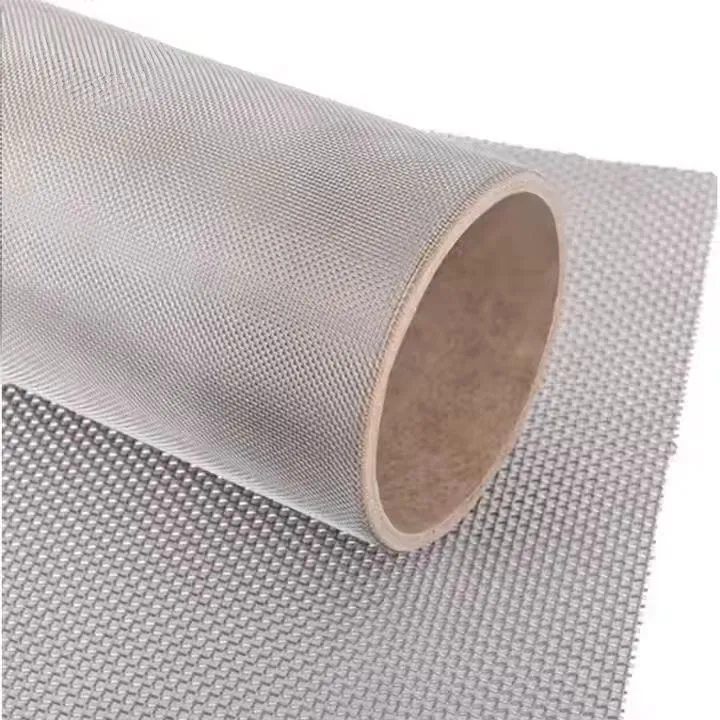
Nickle Wire Mesh is a woven or welded structure made from nickel wires. Its structure gives it unique mechanical properties, including impact resistance. The wire mesh can distribute the impact force over a larger area due to its interconnected structure. When an object strikes the mesh, the force is transferred along the wires, and the mesh can flex and deform slightly to absorb the energy.
Mechanisms of Impact Resistance in Nickle Wire Mesh
The impact resistance of Nickle Wire Mesh is mainly attributed to two key mechanisms: energy absorption and force distribution.
Energy Absorption
Nickel, as a base metal, has good ductility. Ductility allows the nickel wires in the mesh to deform plastically under impact. When a force is applied, the wires can stretch and bend, converting the kinetic energy of the impact into strain energy. This plastic deformation process effectively absorbs a large amount of energy, reducing the likelihood of the mesh breaking.
For example, in a situation where a small projectile hits the Nickle Wire Mesh, the wires around the impact point will start to deform. The deformation can be in the form of elongation or bending. As the wires deform, they absorb the energy of the projectile, slowing it down and preventing it from passing through the mesh.
Force Distribution
The interconnected structure of the wire mesh is another important factor for its impact resistance. When an impact occurs at a single point on the mesh, the force is not concentrated at that point but is distributed along the wires to a larger area. This distribution of force reduces the stress at the impact point, preventing local failure.
Imagine a mesh with a large number of small - sized cells. When a force hits one cell, the wires in that cell transfer the force to the adjacent cells. The more cells there are, the more effectively the force can be distributed. This is similar to how a net distributes the weight of a fish over its entire surface, rather than concentrating it at a single point.
Factors Affecting the Impact Resistance of Nickle Wire Mesh
Several factors can influence the impact resistance of Nickle Wire Mesh. Understanding these factors can help us optimize the mesh design for different applications.
Wire Diameter
The diameter of the nickel wires used in the mesh plays a significant role in its impact resistance. Thicker wires generally have higher impact resistance because they can withstand greater forces without breaking. A thicker wire has more material to absorb the energy of an impact, and it is also more resistant to plastic deformation.
However, increasing the wire diameter also has some drawbacks. It can make the mesh heavier and more expensive. So, a balance needs to be struck between the desired impact resistance and other practical considerations such as weight and cost.
Mesh Opening Size
The size of the openings in the mesh, also known as the mesh aperture, affects how the force is distributed. A smaller mesh opening size means that there are more wires per unit area, which can distribute the impact force more effectively.
On the other hand, a larger mesh opening size may allow a projectile to pass through more easily if the projectile is small enough to fit through the opening. So, for applications where small - sized projectiles need to be stopped, a mesh with a smaller opening size is usually preferred.
Welding or Weaving Method
The way the nickel wires are joined together, either by welding or weaving, can also influence the impact resistance. Welded wire mesh has strong joints, which can provide better structural integrity under impact. The welded joints can prevent the wires from separating easily, ensuring that the force is distributed throughout the mesh.
Woven wire mesh, on the other hand, has a more flexible structure. The interlacing wires can move slightly relative to each other, which can absorb some of the impact energy through friction between the wires. Each method has its own advantages, and the choice depends on the specific application requirements.
Real - World Applications and the Importance of Impact Resistance
Nickle Wire Mesh has a wide range of applications where impact resistance is crucial.

Industrial Filtration
In industrial filtration processes, the mesh is often exposed to high - velocity fluids or solid particles. For example, in a chemical plant, the mesh may be used to filter out solid impurities from a liquid stream. The impact of the flowing fluid and the particles can cause significant stress on the mesh. A mesh with high impact resistance can withstand these forces without breaking, ensuring the continuous and efficient operation of the filtration system.

Security and Protection
Nickle Wire Mesh is also used in security applications, such as in fencing or barriers. In areas where there is a risk of vandalism or accidental impact, the mesh needs to be able to withstand the force of a collision. A mesh with good impact resistance can prevent unauthorized entry and protect valuable assets.
Automotive and Aerospace Industries
In the automotive and aerospace industries, Nickle Wire Mesh can be used in components that need to withstand impact. For example, it can be used in air filters or as a reinforcement material in composite structures. In these applications, the impact resistance of the mesh is essential for the safety and performance of the vehicles or aircraft.
Comparison with Other Wire Meshes
When considering impact resistance, it's also useful to compare Nickle Wire Mesh with other types of wire meshes, such as 304L Stainless Steel Wire Mesh and Copper Wire Mesh.
304L Stainless Steel Wire Mesh
304L stainless steel is a popular material for wire meshes due to its corrosion resistance and good mechanical properties. However, compared to Nickle Wire Mesh, it may have different impact resistance characteristics. Stainless steel is generally harder and more brittle than nickel. While it can withstand high - static loads, it may be more prone to cracking under sudden impact.
Nickle Wire Mesh, with its ductility, can absorb more energy through plastic deformation, making it more suitable for applications where impact resistance is a primary concern.
Copper Wire Mesh
Copper is a soft and malleable metal. Copper Wire Mesh is highly conductive and has good corrosion resistance in some environments. However, its impact resistance is relatively lower compared to Nickle Wire Mesh. Copper wires are more likely to deform permanently under impact, and the mesh may lose its structural integrity more easily.
Conclusion and Call to Action
In conclusion, the impact resistance of Nickle Wire Mesh is a complex property that is influenced by factors such as wire diameter, mesh opening size, and the joining method. Its unique combination of energy absorption and force distribution mechanisms makes it suitable for a wide range of applications where impact resistance is crucial.
Whether you're in the industrial filtration, security, automotive, or aerospace industries, our Nickle Wire Mesh can provide the impact resistance you need. We are committed to providing high - quality products tailored to your specific requirements. If you're interested in learning more about our Nickle Wire Mesh or would like to discuss a potential purchase, please feel free to reach out to us. We look forward to working with you to find the perfect solution for your needs.
References
- Callister, W. D., & Rethwisch, D. G. (2017). Materials Science and Engineering: An Introduction. Wiley.
- Ashby, M. F., & Jones, D. R. H. (2012). Engineering Materials 1: An Introduction to Properties, Applications and Design. Butterworth - Heinemann.
- Dieter, G. E. (1986). Mechanical Metallurgy. McGraw - Hill.