





Stainless steel mesh is widely used in filtration, drainage, construction, chemical processing, and outdoor applications due to its strength, durability, and corrosion resistance. However, a common and critical question from engineers, buyers, and installers is: Will stainless steel mesh rust?
The short answer is yes-under certain conditions, stainless steel mesh can rust or corrode. The long answer is more nuanced and depends on material grade, environment, surface condition, fabrication methods, and post-processing. Misunderstanding these factors often leads to premature failure, unnecessary replacements, or incorrect material selection.
This article provides a comprehensive, engineering-focused explanation of why stainless steel mesh may rust, what types of corrosion can occur, how different grades behave, and how proper selection and handling can dramatically extend service life.

Why Stainless Steel Is Corrosion Resistant - But Not Rust-Proof
The Role of Chromium and Passive Film Formation
Stainless steel derives its corrosion resistance primarily from chromium, typically at levels above 10.5%. When exposed to oxygen, chromium reacts to form an ultra-thin, invisible oxide layer known as a passive film. This layer acts as a self-healing barrier that prevents oxygen and moisture from reaching the underlying metal.
However, this protection depends on environmental stability. If the passive layer is damaged mechanically or chemically-and oxygen is not present to reform it-the underlying steel becomes vulnerable. Stainless steel mesh, due to its high surface area and exposed wire intersections, is more susceptible to passive film disruption than solid plate.
In woven and welded mesh, cut edges, weld points, and friction contact zones are especially prone to passive layer breakdown. Understanding that stainless steel resists corrosion rather than being immune to it is essential when specifying mesh for aggressive environments.
How Surface Area and Wire Geometry Increase Corrosion Risk
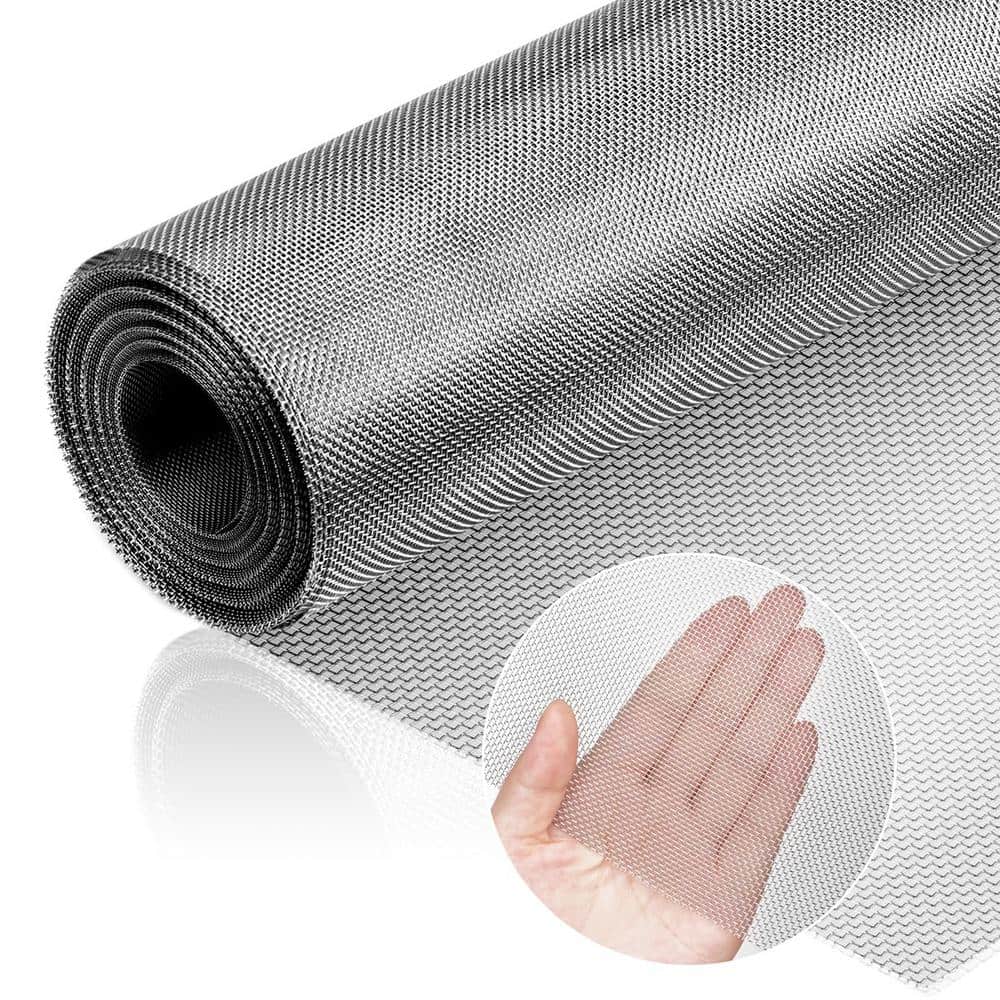
Compared to stainless steel sheets or bars, mesh products expose far more surface area per unit weight. Each wire intersection, weave crossover, and cut end creates a micro-environment where moisture, chlorides, or contaminants can accumulate.
In woven mesh, capillary action can trap liquids between warp and weft wires, delaying drying and increasing corrosion potential. Welded mesh introduces heat-affected zones where chromium distribution may be uneven, reducing corrosion resistance locally.
This geometry-driven exposure explains why stainless steel mesh may rust in applications where stainless steel plates perform well. Designers must account for this increased exposure when selecting grades and finishes.
Why "Stainless" Does Not Mean "Corrosion-Proof"
The term "stainless" is often misunderstood as "will never rust." In reality, stainless steels are corrosion-resistant alloys, not corrosion-proof materials. Under sufficient chloride concentration, acidic exposure, mechanical damage, or stagnant moisture conditions, even high-grade stainless steel can corrode.
Mesh products magnify these risks due to thin wire diameters and high exposure ratios. Recognizing this limitation early allows engineers to design systems with proper drainage, ventilation, and material safety margins.
Common Misconceptions in Stainless Steel Mesh Applications
A frequent misconception is that upgrading wire diameter alone improves corrosion resistance. While thicker wire may last longer structurally, corrosion behavior depends more on alloy chemistry and environment than wire size.
Another mistake is assuming indoor-rated stainless steel mesh will perform equally well outdoors. Humidity cycles, airborne chlorides, and pollution dramatically change corrosion dynamics. Clear differentiation between mechanical strength and corrosion resistance is essential.
Types of Corrosion That Affect Stainless Steel Mesh
Surface Rust vs. Structural Corrosion
Not all rust indicates structural failure. Surface discoloration, often called "tea staining," is common in stainless steel mesh exposed to coastal or industrial environments. This cosmetic rust forms when iron particles or contaminants settle on the surface and oxidize.
Structural corrosion, by contrast, involves metal loss, pitting, or wire thinning that compromises strength and filtration accuracy. Differentiating between these two forms is critical for maintenance decisions and replacement planning.
Pitting Corrosion in Chloride-Rich Environments
Pitting corrosion is one of the most dangerous forms affecting stainless steel mesh. Chloride ions-found in seawater, de-icing salts, and industrial chemicals-can penetrate the passive film and initiate localized attack.
Because mesh wires are thin, even small pits can significantly reduce load capacity or alter aperture size. Grades like 304 are especially vulnerable, while molybdenum-bearing grades such as 316 perform significantly better.
Crevice Corrosion at Wire Intersections
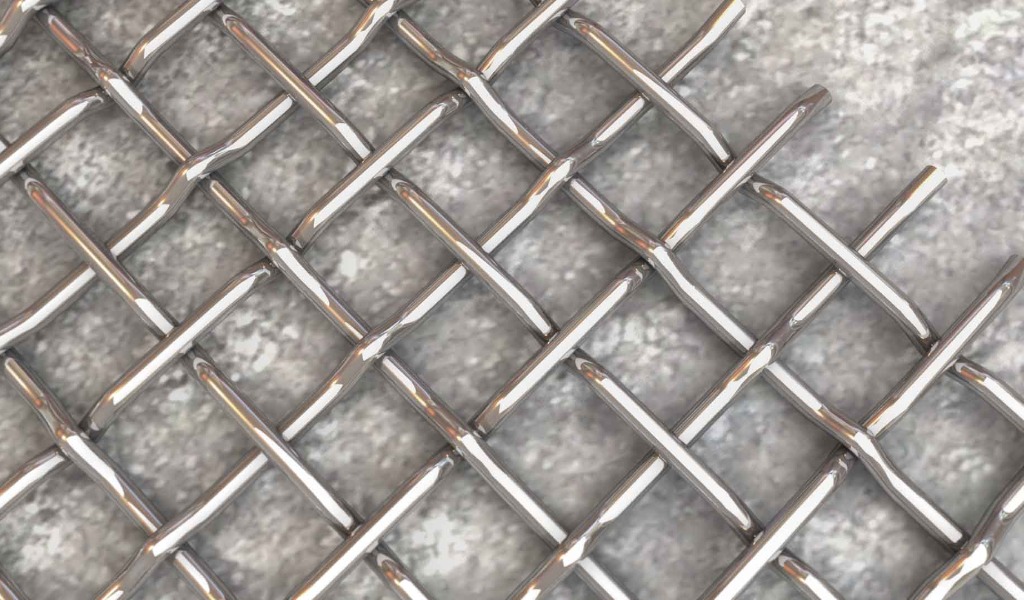
Crevice corrosion occurs in tight gaps where oxygen exchange is limited. In woven mesh, this commonly happens at wire crossover points; in welded mesh, at weld interfaces and contact zones.
These oxygen-depleted crevices prevent passive film regeneration, allowing corrosion to progress unseen. Over time, this can lead to unexpected wire failure even when the external surface appears intact.
Galvanic Corrosion from Mixed Metals
When stainless steel mesh contacts dissimilar metals such as carbon steel, aluminum, or copper in the presence of an electrolyte, galvanic corrosion can occur. The less noble metal corrodes preferentially, but under certain conditions, stainless steel may also suffer localized attack.
This is especially relevant in framed mesh panels, drainage systems, and filtration housings. Proper material pairing and insulation are essential to prevent electrochemical corrosion.
How Stainless Steel Grade Affects Rust Resistance
Why 304 Stainless Steel Mesh Can Rust
304 stainless steel mesh offers good general corrosion resistance but lacks molybdenum, making it vulnerable to chlorides. In outdoor, coastal, or chemical environments, 304 mesh often develops tea staining or pitting.
It performs well in dry indoor filtration, food processing, and general industrial screening but should be avoided in marine or high-salinity environments unless frequent cleaning is possible.
Superior Corrosion Resistance of 316 Stainless Steel Mesh
316 stainless steel mesh contains molybdenum, which significantly improves resistance to chlorides and acidic environments. This makes it the preferred choice for marine, chemical, and outdoor drainage applications.
Although more expensive, 316 mesh offers longer service life and reduced maintenance costs in aggressive conditions, often making it more economical over time.
316L Stainless Steel Mesh and Weld Corrosion Control
316L has lower carbon content than standard 316, reducing carbide precipitation during welding. This improves corrosion resistance at weld points, making 316L ideal for welded mesh panels and fabricated assemblies.
For applications involving frequent welding or high-temperature exposure, 316L mesh provides superior long-term stability.
Limitations of Ferritic Grades Like 430
430 stainless steel mesh is ferritic and offers moderate corrosion resistance in dry or indoor environments. However, it performs poorly in humid or chloride-rich conditions and is more prone to surface rust.
Its advantage lies in cost-effectiveness and magnetic properties rather than corrosion resistance, making it unsuitable for outdoor or chemical exposure.


Environmental Factors That Cause Stainless Steel Mesh to Rust
Chloride Exposure in Coastal and Marine Environments
Chloride exposure is one of the most aggressive and common causes of corrosion in stainless steel mesh, particularly in coastal, offshore, and marine environments. Chloride ions are present in seawater, sea spray, coastal air, and even de-icing salts used in infrastructure. These ions have the ability to penetrate and locally break down the passive chromium oxide film that protects stainless steel surfaces. Once this passive layer is compromised, localized corrosion such as pitting or crevice corrosion can initiate rapidly.
Stainless steel mesh is especially vulnerable because of its high surface area, open structure, and numerous wire intersections. Salt-laden moisture can easily accumulate at wire junctions, overlaps, or contact points with frames and fasteners. In these micro-environments, oxygen depletion and chloride concentration accelerate corrosion mechanisms. Even stainless steel grades commonly considered "rust-resistant," such as 304, can experience visible rust staining and deep pitting when exposed to continuous chloride attack.
The risk increases in applications such as coastal drainage systems, seawater filtration, ventilation screens, and marine exhaust guards, where mesh is constantly exposed to salt aerosols. Without regular rinsing or proper grade selection, corrosion may appear within months rather than years. In such environments, higher-alloy grades like 316 or duplex stainless steel are typically recommended due to their molybdenum content, which significantly improves resistance to chloride-induced corrosion. Understanding chloride exposure is essential when evaluating why stainless steel mesh rusts prematurely in outdoor or marine conditions.
Industrial Pollution and Chemical Atmospheres
Industrial environments introduce a different but equally severe corrosion risk to stainless steel mesh. Airborne pollutants such as sulfur dioxide (SO₂), nitrogen oxides (NOₓ), acidic vapors, and fine particulate matter can settle on mesh surfaces and combine with moisture to form corrosive films. These contaminants are common in chemical plants, refineries, power stations, waste treatment facilities, and heavy manufacturing zones.
Unlike uniform exposure, industrial pollution often causes uneven corrosion patterns. Acidic condensation can accumulate at low points of the mesh, behind mounting brackets, or within crevices formed by overlapping wires. Over time, these acidic deposits attack the passive oxide layer, especially on lower-alloy stainless steels. Repeated wet-dry cycles intensify the corrosion process, as contaminants become more concentrated during evaporation phases.
Stainless steel mesh used for filtration, ventilation, or protective screening in industrial settings must withstand both chemical attack and mechanical stress. For example, mesh exposed to sulfur-rich exhaust gases may develop surface discoloration, followed by pitting or intergranular corrosion if improper grades are selected. Even 316 stainless steel can suffer accelerated degradation if chemical concentrations exceed its resistance threshold.
Preventive measures such as proper material selection, surface passivation, regular cleaning, and protective coatings are critical in polluted environments. Ignoring industrial atmospheric factors often leads to unexpected rusting, reduced service life, and increased maintenance costs for stainless steel mesh installations.
High Humidity, Condensation, and Poor Ventilation
High humidity and condensation are often underestimated contributors to stainless steel mesh corrosion. While stainless steel requires oxygen to maintain its protective passive layer, prolonged moisture retention combined with limited airflow can create conditions that favor corrosion rather than protection. This is especially relevant for indoor installations, enclosed drainage systems, covered outdoor structures, and shaded areas where evaporation is slow.
Condensation forms when temperature differences cause moisture to deposit on metal surfaces. In stainless steel mesh, condensed water can remain trapped at wire intersections, under accumulated debris, or between the mesh and supporting structures. Over time, this stagnant moisture becomes oxygen-depleted, weakening the passive layer and enabling localized corrosion. This process is particularly problematic in humid climates, underground installations, and poorly ventilated enclosures.
In filtration and screening applications, humidity-driven corrosion often appears as surface staining first, which may be mistaken for harmless discoloration. However, beneath these stains, micro-pitting can develop and expand, eventually compromising mechanical strength. The issue is exacerbated when humidity combines with airborne contaminants such as chlorides or industrial pollutants.
Ensuring proper drainage, ventilation, and periodic drying is essential to minimize corrosion risks. Selecting mesh with appropriate wire diameter, surface finish, and stainless steel grade can further reduce susceptibility. High humidity alone may not cause immediate rusting, but when combined with poor ventilation, it significantly shortens the service life of stainless steel mesh.
Temperature Fluctuations and Thermal Cycling
Temperature fluctuations play a subtle but important role in the corrosion behavior of stainless steel mesh. Repeated thermal cycling-heating and cooling-causes expansion and contraction of metal wires, which can stress the passive oxide layer. Over time, this stress may lead to micro-cracks or weakened areas in the protective film, making the underlying metal more vulnerable to corrosion.
Outdoor installations are particularly exposed to thermal cycling due to daily temperature changes, seasonal variations, and direct sunlight exposure. Stainless steel mesh used in drainage covers, fencing, or ventilation systems may heat up significantly during the day and cool rapidly at night. These cycles promote condensation formation, especially when warm air contacts cooler metal surfaces, further increasing corrosion risk.
In industrial applications, thermal cycling can be even more severe. Mesh used near exhaust systems, furnaces, or heated process lines may experience rapid temperature swings combined with corrosive atmospheres. Such conditions accelerate oxidation, scaling, and localized corrosion if the stainless steel grade is not properly matched to the operating environment.
While stainless steel generally performs well under temperature variation, improper grade selection or poor design can magnify corrosion risks. Allowing for thermal expansion, minimizing crevices, and selecting heat-resistant alloys help maintain the integrity of the passive layer. Understanding how temperature fluctuations interact with moisture and contaminants is essential when evaluating why stainless steel mesh rusts in certain environments.
Environmental Factors That Cause Stainless Steel Mesh to Rust
Chloride Exposure in Marine and Coastal Environments
Chloride exposure is one of the most aggressive and well-documented causes of corrosion in stainless steel mesh, particularly in marine and coastal environments. Chloride ions are present in seawater, sea spray, salt fog, and even coastal air, and they have a unique ability to penetrate the passive chromium oxide layer that normally protects stainless steel. Once this passive layer is locally broken down, corrosion can initiate in the form of pitting or crevice corrosion, which is especially dangerous because it often progresses beneath the surface before becoming visible.
Stainless steel mesh used in coastal drainage systems, offshore platforms, marine filtration units, or shoreline protection structures is continuously exposed to chlorides. Fine woven mesh is particularly vulnerable because its high surface area and tight crevices between wires allow salt deposits to accumulate. During wet-dry cycles, salt concentration increases as moisture evaporates, intensifying chloride attack. Over time, this can lead to localized rust spots, loss of mechanical strength, and eventual mesh failure.
Grade selection plays a critical role in mitigating chloride-induced corrosion. While 304 stainless steel mesh may perform adequately in low-chloride urban environments, it is generally unsuitable for long-term exposure near the ocean. Grades containing molybdenum, such as 316 or 316L stainless steel mesh, provide significantly improved resistance to chloride pitting. However, even 316 mesh can corrode if chloride concentration is high enough and maintenance is neglected. Proper design, drainage, regular cleaning, and correct material selection are essential to minimize chloride-related rusting in stainless steel mesh applications.
High Humidity and Condensation Cycles
High humidity and repeated condensation cycles are major contributors to corrosion in stainless steel mesh, especially in outdoor, industrial, and poorly ventilated environments. While stainless steel is often described as "rust-resistant," this resistance depends on the continuous presence of oxygen to maintain its passive oxide layer. In humid environments where moisture lingers on the mesh surface for extended periods, oxygen availability can be reduced, weakening the protective layer and allowing corrosion to initiate.
Condensation is particularly problematic in applications such as outdoor drainage systems, cooling towers, wastewater treatment plants, and enclosed filtration housings. When warm, moist air contacts cooler stainless steel mesh surfaces, water droplets form and remain trapped within the mesh openings and wire intersections. These micro-environments create ideal conditions for crevice corrosion, especially when contaminants such as dust, salts, or industrial residues are present.
Woven stainless steel mesh is more susceptible to humidity-related corrosion than welded mesh because of its overlapping wire structure. Moisture can remain trapped between warp and weft wires, prolonging wet conditions. Over time, this can lead to surface discoloration, tea staining, or localized rusting, even in higher-grade stainless steels. Effective mitigation strategies include ensuring proper airflow, minimizing moisture retention through design, and selecting surface finishes that reduce water adhesion. Regular inspection and cleaning are also critical to prevent humidity-driven corrosion from progressing into structural damage.
Industrial Pollutants and Chemical Contaminants
Industrial pollutants and airborne chemical contaminants significantly increase the risk of corrosion in stainless steel mesh. In manufacturing zones, chemical plants, refineries, and urban-industrial areas, stainless steel mesh may be exposed to sulfur compounds, nitrogen oxides, acidic vapors, and particulate matter. These contaminants can settle on the mesh surface and react with moisture to form corrosive films that attack the passive layer.
Sulfur-containing pollutants are particularly harmful. When combined with moisture, sulfur dioxide can form sulfurous or sulfuric acid, creating acidic conditions that accelerate corrosion. Stainless steel mesh used in flue gas filtration, ventilation screens, or industrial drainage systems is especially vulnerable if regular cleaning is not performed. Even low concentrations of industrial pollutants can cause long-term damage when exposure is continuous.
Chemical splashes, process residues, and cleaning agents can also compromise corrosion resistance. For example, exposure to strong acids, chlorinated cleaners, or alkaline solutions without proper rinsing may strip the passive layer and initiate corrosion. This is a common issue in food processing plants, chemical handling facilities, and pharmaceutical environments. Selecting the appropriate stainless steel grade, implementing proper washing procedures, and avoiding incompatible chemicals are essential steps to reduce pollutant-induced rusting in stainless steel mesh.
Crevice Conditions Created by Installation and Design
Crevice corrosion is a localized form of corrosion that often occurs not because of the stainless steel material itself, but due to poor installation or design practices. Stainless steel mesh is frequently installed using frames, clamps, gaskets, or fasteners that create narrow gaps where moisture and contaminants can accumulate. These crevices restrict oxygen flow, preventing the passive layer from regenerating and allowing corrosion to initiate beneath the surface.
In drainage, filtration, and architectural applications, stainless steel mesh may be sandwiched between plates or embedded in concrete or soil. If these interfaces are not properly sealed or drained, stagnant moisture can remain in contact with the mesh for extended periods. Over time, this leads to localized rusting that is difficult to detect until significant damage has occurred. Crevice corrosion is particularly dangerous because it progresses rapidly once initiated and can undermine structural integrity without obvious surface warning signs.
Design considerations are critical to preventing crevice-related rust. Allowing for drainage, avoiding tight overlaps, using compatible materials, and selecting appropriate fasteners all reduce risk. In aggressive environments, higher alloy grades such as 316L or surface treatments like electropolishing can further improve resistance. Thoughtful installation and design are just as important as material selection in ensuring long-term corrosion resistance of stainless steel mesh.
Conclusion
Stainless steel mesh does not rust easily, but it is not completely immune to corrosion. Its resistance to rust depends on a complex interaction between material grade, surface condition, environmental exposure, and operational practices. Factors such as chloride concentration, humidity, temperature fluctuations, mechanical damage, and inadequate cleaning can all compromise the protective passive layer on stainless steel. Once this layer is disrupted, localized corrosion such as pitting, crevice corrosion, or tea staining may occur-even on high-quality stainless steel mesh. Understanding these mechanisms is essential for engineers, fabricators, and end users who rely on stainless steel mesh in filtration, drainage, architectural, and industrial systems.
Preventing rust in stainless steel mesh is ultimately a matter of correct selection, proper processing, and responsible maintenance. Choosing the appropriate grade (such as 316 or 316L for aggressive outdoor or marine environments), using suitable cutting and finishing methods, and applying post-fabrication treatments like passivation or electropolishing can significantly extend service life. Equally important are installation design and routine maintenance practices, including proper drainage, avoidance of galvanic contact, and periodic cleaning to remove contaminants. When these factors are addressed holistically, stainless steel mesh can deliver long-term corrosion resistance, structural reliability, and consistent performance-even in demanding environments.