






Introduction
Nylon is one of the most widely used synthetic polymers in the world, valued for its strength, durability, flexibility, and versatility across industries such as textiles, filtration, automotive, aerospace, and industrial manufacturing. One of the most frequently asked questions by engineers, designers, and end-users alike is:
Is nylon water resistant?
The answer is not a simple yes or no. Nylon exhibits partial water resistance, but its interaction with water depends heavily on its chemical structure, fiber type, fabric construction, surface treatment, and environmental conditions. To fully understand nylon's water resistance, we must explore the science behind its molecular makeup and how water interacts with it.
This article takes a deep technical dive into:
The chemical structure of nylon
How water interacts with nylon fibers
Differences between water resistance, water repellency, and waterproofing
Variations among nylon types
Practical implications for industrial and textile applications
1. What Is Nylon? A Polymer Science Overview
1.1 Definition of Nylon
Nylon is a synthetic thermoplastic polymer belonging to the polyamide family. It is produced through a condensation polymerization process involving diamines and dicarboxylic acids (or lactams).
Common nylon types include:
Nylon 6
Nylon 6,6
Nylon 11
Nylon 12
All nylon variants share one defining feature: amide groups (–CONH–) along their polymer chains.
1.2 Chemical Structure of Nylon
The amide groups in nylon play a critical role in its interaction with water.
Key molecular characteristics:
Polar amide groups
Strong hydrogen bonding between polymer chains
Semi-crystalline structure (amorphous + crystalline regions)
These characteristics give nylon excellent mechanical strength but also make it hydrophilic to a certain extent, meaning it can absorb moisture.
Simplified Structural Insight
|
Feature |
Effect |
|
Amide groups (–CONH–) |
Attract water molecules |
|
Hydrogen bonding |
Increases moisture absorption |
|
Crystalline regions |
Resist water penetration |
|
Amorphous regions |
Allow moisture absorption |
2. Water Resistance vs Water Absorption: Key Definitions
Before assessing nylon's performance, it's essential to distinguish commonly confused terms.
2.1 Water Resistance
Water resistance refers to a material's ability to resist penetration by liquid water under limited exposure (light rain, splashes, humidity).
Nylon qualifies as water resistant, not waterproof.
2.2 Water Repellency
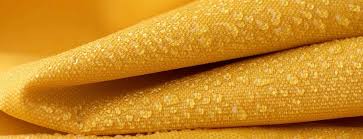
Water repellency is a surface property, often achieved through coatings or finishes, causing water to bead and roll off.
Untreated nylon:
❌ Not water repellent
✔️ Can become water repellent with treatment
2.3 Waterproofing
Waterproof materials:
Completely block water penetration
Usually require membranes, laminates, or coatings
Nylon alone is not waterproof.
2.4 Comparison Table
|
Property |
Nylon (Untreated) |
Nylon (Treated) |
Waterproof Membrane |
|
Water resistant |
Yes |
Yes |
Yes |
|
Water repellent |
No |
Yes |
Yes |
|
Waterproof |
No |
No (unless laminated) |
Yes |
|
Moisture absorption |
Moderate |
Reduced |
Minimal |
3. How Nylon Interacts with Water at the Molecular Level
3.1 Moisture Absorption Mechanism
Water molecules penetrate nylon through:
Amorphous polymer regions
Hydrogen bonding with amide groups
This process is called hygroscopic absorption.
Typical moisture absorption rates:
Nylon 6: ~2.5–3.0%
Nylon 6,6: ~2.0–2.5%
(Percentage by weight at standard conditions)

3.2 Effects of Moisture Absorption
Water absorption affects nylon's properties in several ways:
|
Property |
Effect of Water |
|
Tensile strength |
Slight decrease |
|
Flexibility |
Increases |
|
Dimensional stability |
Reduced |
|
Electrical insulation |
Decreases |
|
Impact resistance |
Improves |
This is why nylon performs differently in dry vs humid environments.
3.3 Why Nylon Still Feels "Water Resistant"
Despite absorbing moisture internally, nylon:
Has tight polymer packing
Does not allow rapid water penetration
Dries relatively quickly compared to natural fibers
This gives nylon its reputation for water resistance in practical use.
read more:How Coatings and Treatments Enhance Nylon's Water Resistance
4. Differences Among Nylon Types and Water Resistance
Not all nylons behave the same when exposed to water.
4.1 Nylon 6 vs Nylon 6,6
|
Property |
Nylon 6 |
Nylon 6,6 |
|
Moisture absorption |
Higher |
Lower |
|
Water resistance |
Moderate |
Better |
|
Dimensional stability |
Lower |
Higher |
|
Industrial use |
Textiles, filtration |
Automotive, engineering |
4.2 Bio-Based Nylons (Nylon 11 & 12)
Long-chain nylons have fewer amide groups per unit length.
|
Nylon Type |
Moisture Absorption |
Water Resistance |
|
Nylon 11 |
~0.9% |
High |
|
Nylon 12 |
~0.8% |
Very high |
These are often chosen for:
Fuel lines
Medical devices
High-humidity industrial environments
5. Fabric Construction and Its Role in Water Resistance
Water resistance in nylon fabrics is influenced heavily by physical construction, not just chemistry.
5.1 Fiber Diameter and Density
Finer fibers → tighter weave → better water resistance
High denier fabrics allow less water penetration
5.2 Weaving Methods
|
Weave Type |
Water Resistance |
|
Plain weave |
Moderate |
|
Twill weave |
Better |
|
Ripstop nylon |
High |
|
Nonwoven nylon |
Variable |
5.3 Filtration Fabrics
In industrial filter bags and filter cloth:
Nylon mesh structure controls flow rate
Water passes through pores, not fibers
Resistance applies to fibers, not filtration function
6. Environmental Factors That Affect Nylon's Water Resistance
6.1 Temperature
Higher temperatures:
Increase water diffusion
Accelerate moisture absorption
6.2 pH and Chemical Exposure
Nylon is:
Resistant to alkalis
Vulnerable to strong acids
Water containing chemicals can alter nylon's surface properties.
6.3 Long-Term Humidity Exposure
Extended exposure leads to:
Equilibrium moisture content
Stable but altered mechanical behavior
This is crucial for outdoor and industrial applications.
7. Nylon vs Other Fibers: Water Resistance Comparison
7.1 Synthetic vs Natural Fibers
|
Fiber |
Moisture Absorption |
Water Resistance |
|
Nylon |
Low–Moderate |
Good |
|
Polyester |
Very low |
Excellent |
|
Cotton |
High |
Poor |
|
Wool |
Very high |
Poor |
7.2 Nylon vs Polyester
Polyester absorbs less water than nylon, but nylon:
Is stronger
Has better abrasion resistance
Performs better in dynamic applications
8. Practical Applications Where Nylon's Water Resistance Matters
8.1 Industrial Filtration
Nylon filter bags:
Handle wet filtration
Maintain strength when damp
Dry faster than natural fibers
8.2 Outdoor and Technical Textiles
Used in:
Tents
Backpacks
Protective covers
Often combined with coatings to enhance water repellency.
8.3 Engineering and Automotive Parts
Water resistance ensures:
Dimensional reliability
Reduced corrosion risk in assemblies
9. Common Myths About Nylon and Water
Myth 1: Nylon Is Waterproof
❌ False – Nylon absorbs moisture.
Myth 2: Nylon Absorbs as Much Water as Cotton
❌ False – Nylon absorbs far less.
Myth 3: All Nylon Fabrics Behave the Same
❌ False – Type, weave, and treatment matter.
10. Summary: Is Nylon Water Resistant?
Scientifically speaking:
Nylon is inherently water resistant
It is not waterproof
It absorbs limited moisture due to its amide groups
Key Takeaways
Water resistance depends on nylon type
Long-chain nylons resist water better
Fabric construction and treatments are decisive
Nylon performs reliably in wet environments when properly selected