





In selecting stainless steel wire mesh for critical applications - be it filtration, reinforcement, screening, or food-processing infrastructure - one of the fundamental decisions is the alloy grade. Two of the most common options are Grade 304 (SS304) and Grade 316 (SS316) stainless steels. Although they appear similar at a glance, they differ significantly in composition, corrosion-resistance, cost, fabrication behavior, and suitability for certain environments. This article dives deeply into these differences and guides decision-making for specifying wire mesh.
Specifically, we will explore:
Material Composition & Metallurgical Differences – detailing the internal chemistry, how it affects performance, and what it means for wire mesh production.
Corrosion Resistance & Environmental Durability – examining how 304 and 316 behave under various exposures and why one may outperform the other.
Cost, Fabrication, Application Fit & Lifecycle Considerations – how cost and fabrication trade-offs factor in, plus best practice guidance for choosing the right grade for your use-case.
Each sub-section is expanded to provide thorough technical insight, backed by tables and references.


Introduction
When evaluating stainless steel wire mesh for filtration, screening, reinforcement, or architectural applications, the most important technical variable is the alloy grade. Although SS304 and SS316 are often described as similar (both austenitic stainless steels), their small chemical differences create meaningful real-world performance differences.
This chapter explains, in depth:
Alloy chemistry and elemental effects
Microstructural behavior during wire drawing
Mechanical property differences
Weldability and heat-affected zone (HAZ) behavior
Effects on woven vs welded mesh
Passivation, finishing, and surface chemistry
Metallurgical changes under thermal or corrosive stress
This provides engineers, designers, and buyers a fundamental understanding of why SS304 and SS316 behave differently.
1. Material Composition & Metallurgical Differences
Understanding What's Inside SS304 and SS316 Wire Mesh
1.1 Basic Definitions and Alloying Elements
Both SS304 and SS316 are austenitic stainless steel grades, meaning their crystal structure is face-centred cubic (FCC), providing good formability, toughness and corrosion resistance. The key difference lies in their alloying elements:
SS304: Typically contains ~18 % chromium (Cr) and ~8 % nickel (Ni). It is the classic "18/8" stainless steel.
SS316: In addition to Cr and Ni, it contains ~2-3 % molybdenum (Mo), which enhances resistance to pitting and chlorides.
Below is a summary composition table:
|
Grade |
Chromium (Cr) |
Nickel (Ni) |
Molybdenum (Mo) |
Typical Carbon (C) |
Notes |
|
SS304 |
~18–20% |
~8–10% |
- |
≤ 0.08% |
General purpose austenitic stainless |
|
SS316 |
~16–18% |
~10–14% |
~2–3% |
≤ 0.08% |
Superior pitting/chloride resistance |
For wire mesh specifically, low-carbon variants (304L, 316L) are often used for improved weldability and to reduce carbide precipitation at weld joints.
1.2 Metallurgical Effects on Wire Mesh Production
When manufacturing wire mesh - whether woven or welded - the alloy characteristics influence how the wire can be drawn, welded, finished, and used. Some key implications:
Formability & Drawing: Both 304 and 316 are well suited for wire drawing and mesh production. However, the addition of Mo in 316 slightly increases cost and may require slightly more force in drawing operations.
Weldability: Because wire mesh often involves welding (especially for welded mesh), the alloy's response to welding heat, potential for sensitisation (grain boundary carbide precipitation) and the extent of required post-weld treatment matter. Lower carbon grades (304L or 316L) are preferred in high-weld situations.
Surface Finish: For mesh used in harsh environments or requiring high hygiene, finishing methods (electropolish, pickling, passivation) help restore the passive layer after fabrication. SS316 benefits slightly more due to its robust alloy.
Mechanical Strength & Durability: While both grades have high toughness and strength, the presence of Mo in 316 gives slight advantages in long-term durability under aggressive conditions (though the base mechanical strength is quite similar in many standard wire sizes).
1.3 Key Mechanical Properties for Wire Mesh
While wire mesh selection rarely hinges on yield strengths of the wire alone (opening size, wire diameter, mesh count dominate), the base alloy properties still matter.
|
Property |
SS304 (Typical) |
SS316 (Typical) |
Implication for Mesh |
|
Tensile strength |
~515 MPa (varies by form) |
~515 MPa or slightly higher |
Similar strength for standard mesh |
|
Yield strength |
~205 MPa |
~205 MPa or slightly higher |
Comparable in many cases |
|
Corrosion fatigue |
Good, moderate |
Superior in chloride or marine |
Mesh in harsh env benefit from 316 |
|
Temperature stability |
Up to ~400-500 °C (typical) |
Slightly better high T res |
For high-temp ovens etc., 316 may be chosen |
1.4 Practical Summary – What Does This Mean for Mesh Specification?
When you specify wire mesh and choose between SS304 and SS316, the key take-aways are:
If your environment is moderate, with low chloride exposure, mild acids, and standard cleaning, SS304 is often sufficient and offers cost savings.
If your environment involves high chloride, salt-spray, brine, marine exposure, aggressive acids, or if the mesh is critical to longevity with minimal maintenance, SS316 offers better safety margin.
Recognize that cost difference exists (often 10-30% more for 316) but may be justified by lifecycle savings.
Ensure finishing and fabrication maintain the alloy's advantages (e.g., proper passivation after welding), because the base alloy only matters if fabrication doesn't degrade the film.


learn more:Corrosion Resistance & Environmental Durability of SS304 vs SS316 Stainless Steel Wire Mesh
2. Corrosion Resistance & Environmental Durability
Why SS316 Often Outperforms SS304 Under Harsh Conditions
2.1 The Corrosion Challenge for Stainless Steel Wire Mesh
Wire mesh used in industrial, architectural, food-processing or marine settings faces several corrosion mechanisms:
Pitting and crevice corrosion, especially under chloride-rich conditions (salt, brine, seawater)
General corrosion from acid or alkali exposure (food acids, cleaning detergents)
Stress-corrosion cracking (SCC) under tensile stress and corrosive environment
High-temperature oxidation under ovens or heaters
Abrasion + corrosion synergy, where mechanical wear exposes vulnerable metal
The alloy choice is a key factor in resisting these.
2.2 Performance Comparison: SS304 vs SS316
2.2.1 Role of Each Alloying Element
Chromium (Cr)
Reacts with oxygen to form Cr₂O₃ passive film
More chromium → stronger passive film → improved corrosion resistance
SS304 has slightly higher chromium but Mo addition in SS316 makes the passive film far more stable
Nickel (Ni)
Stabilizes austenite structure
Enhances toughness, ductility, and weldability
SS316 has slightly higher nickel → better resistance to acid attack
Molybdenum (Mo) - the major differentiator
Improves chloride pitting resistance (PREN value)
Increases resistance to crevice corrosion
Lowers corrosion rate under acidic media
Improves high-temperature creep resistance
This single element accounts for >90% of real-world performance difference between 304 and 316 in harsh environments.
Carbon (C)
Lower carbon (in 304L and 316L) minimizes carbide precipitation during welding
Standard grades can sensitize along grain boundaries if improperly welded
For welded mesh, L-grades are strongly preferred


|
Environment/Exposure |
SS304 Performance |
SS316 Performance |
|
Marine / chlorine exposure |
Prone to pitting, needs thick cross-section |
High resistance to pitting and chloride attack |
|
Food acid/citrus processing (pH ~3–6) |
Generally good, but require careful cleaning |
Excellent resistance, safer option |
|
Brine or salt spray |
Risk of localised corrosion over time |
Highly recommended for brine/salt environments |
|
High-temperature, low oxygen |
Acceptable up to ~400-500 °C |
Slightly higher maximum useful temperature |
|
High cleaning frequency (alkali/acid washes) |
Good, but surface must be maintained |
Superior, less risk of surface degradation |
As noted in multiple sources, the inclusion of molybdenum in SS316 provides "increased corrosion resistance … particularly against chlorides and chlorinated solutions."
2.3 Filtration, Screening & Wire Mesh Specifics
In many wire mesh applications - say filters, sieves, wastewater screens, desalination or food-processing - the mesh is exposed to humid, salty or chemical environments. For these:
SS316 mesh produces fewer maintenance incidents due to corrosion.
Welded mesh intersections are less likely to degrade in SS316, so long-term dimensional stability is better.
In environments with chloride content > 50 ppm, many fabricators and engineers default to SS316 as best practice.
For architectural façades in coastal zones, SS316 or better is strongly recommended; the same logic applies to heavy duty mesh in harsh food-processing zones.
2.4 Cost vs Risk – A Lifecycle View
While SS316 costs more, the avoided costs (downtime, replacement, sanitation issues, contamination risk) may make it the more economical choice over the system's lifetime. For example:
|
Metric |
SS304 |
SS316 |
|
Initial material cost |
Lower |
Higher (≈10-30%+) |
|
Maintenance frequency |
Higher risk |
Lower risk |
|
Replacement intervals |
Shorter |
Longer |
|
Downtime / sanitation risk |
Elevated |
Reduced |
|
Total cost of ownership (10 yrs) |
Higher |
Lower when harsh env |
2.5 Practical Guidelines for Mesh in Harsh Environments
If mesh will see salt, brine, coastal climate, default to SS316.
If mesh is installed inside, with mild detergents, no salt exposure, SS304 is acceptable.
Always evaluate cleaning chemicals, temperature, mechanical stress.
Seek supplier certifications to confirm correct grade and finishing.
In very aggressive environments (acid processing, offshore, petrochemical), even more exotic alloys (904L, Duplex) may warrant consideration.


3. Cost, Fabrication, Application Fit & Lifecycle Considerations
Making the Right Decision: Not Just Material, But Fit & Return
3.1 Cost Influence & Budgeting
When budgeting for wire mesh, alloy choice is often driven by price. Important factors:
SS304 is more common, easier to fabricate, lower cost per kg, widely stocked.
SS316 raw material costs more due to Mo and Ni content.
For welded mesh, fabrication (welding, finishing, passivation) tends to be similar cost in both grades - the raw material difference dominates.
But specification should look at total cost, not just initial price: fabrication, installation, downtime, maintenance, replacement.
3.2 Fabrication and Finish Considerations
Fabricators must treat mesh correctly to preserve alloy performance:
Welding: Use proper parameters, ensure minimal heat-affected zone; use low carbon variants for heavy welding (304L, 316L).
Finishing: For food, filtration or architectural use, finish matters (electropolish, pickling). This step restores passive film after welding.
Mechanical working: Drawing, bending, cutting must avoid contaminating the mesh with carbon steel or abrasive residues.
Traceability: Suppliers should provide grade certification, heat number, finish specification (e.g., ASTM A580 for wire, A182 for welding).
Inspection: Verify chemical composition, corrosion resistance tests, weld integrity, dimensional tolerances.
3.3 Application Fit – Choosing Between 304 and 316
The decision flow may look like:
Environment moderate, non-salt, indoor, mild cleaning → SS304
Environment includes salt, brine, acids, coastal air, heavy cleaning, high cost of downtime → SS316
Budget limited & environment mild → SS304 may suffice - but ensure future risks are accepted
Critical application where failure not acceptable (food contamination, offshore, high humidity) → lean toward SS316
3.4 Lifecycle & Return on Investment
Life expectancy of mesh in harsh environments significantly differs by grade. For example:
SS304 mesh in a salty seafood wash-down area may need replacement every 3-5 years
SS316 mesh in the same area might last 10-15 years
Thus, replacement cost × downtime × sanitation cost = major savings.

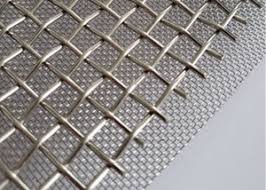
3.5 Comparison Table: SS304 vs SS316 for Wire Mesh
|
Factor |
SS304 |
SS316 |
|
Raw material cost |
Lower |
Higher |
|
Corrosion resistance (chloride) |
Acceptable, limited |
Excellent |
|
Fabrication ease (welding) |
Good |
Good, slightly higher cost |
|
Suitable for coastal/marine use |
Cautious use |
Standard choice |
|
Service life in aggressive env |
Shorter |
Significantly longer |
|
Cleaning/maintenance frequency |
Higher |
Lower |
|
Total cost of ownership (10 yrs) |
Higher in harsh env |
Lower in harsh env |
3.6 Recommended Best Practices
Identify the worst-case environment early (chlorides, acids, temps).
Document the grade, finish, manufacturer for future traceability.
Use hygienic and corrosion-resistant finishing (electropolish) for food, medical, or critical mesh.
For critical mesh under salt / brine / coastal air, default to SS316 unless cost is prohibitive.
Model the lifecycle cost, not just upfront cost.
Partner with a supplier experienced in wire mesh fabrication and finishing to ensure correct implementation.

4. Conclusion
Choosing between SS304 and SS316 stainless steel wire mesh is not simply about cost or material availability-it's about aligning material capabilities with application demands. When used appropriately:
SS304 offers excellent performance in moderate environments and remains cost-effective.
SS316 extends performance: better corrosion resistance, longer life in harsh conditions, less maintenance.
In wire mesh applications-whether filtration, architectural, food-processing or structural-the right alloy decision up front ensures reliability, hygiene, longevity and cost-effectiveness over the system's life.