






1. Introduction
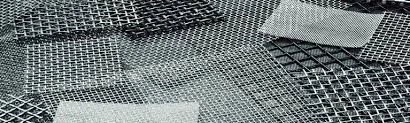
Woven wire mesh is one of the most versatile and technically sophisticated mesh forms used today. Its design is rooted in a deceptively simple concept-interlacing longitudinal and transverse wires at controlled intervals-but beneath that simplicity lies a system capable of serving in hundreds of demanding roles. From filtration to architectural façades, from aerospace applications to food processing screens, woven wire mesh remains indispensable because of its ability to achieve precise, repeatable apertures and highly predictable flow, separation, strength, and surface characteristics.
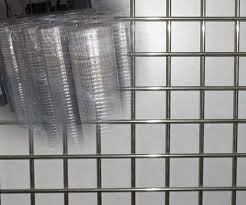
Unlike welded wire mesh-which relies on fused intersection points-woven mesh is held together strictly through its weave pattern, which defines not only its geometry but also its mechanical behavior. The result is a mesh type that behaves almost like a technical fabric: it can be extremely fine, flexible, and delicate, or coarse, heavy, and robust.
This chapter covers:
How woven mesh is manufactured
Different weave patterns and how they affect performance
Mechanical properties and engineering considerations
Application suitability across industries
Selection tools and comparison tables
The emphasis is on giving engineers, buyers, and project developers the knowledge they need to specify woven mesh accurately and confidently.
2. How Woven Wire Mesh Is Manufactured
2.1 Woven Like Fabric, Engineered Like Metal
Woven mesh is produced on looms similar in concept to textile weaving machinery. The wires running longitudinally are called warp wires, and the wires inserted transversely are weft wires. The controlling elements-tension, wire diameter, weave pattern, and mesh count-determine the resulting aperture size and mechanical properties.
2.2 Key Parameters in Woven Mesh Manufacturing
|
Parameter |
Description |
Typical Ranges |
|
Mesh Count |
Number of openings per inch (warp × weft) |
1–635 mesh |
|
Aperture Size |
Opening between wires |
0.02 mm to 25 mm |
|
Wire Diameter |
Thickness of individual wires |
0.02 mm to 4 mm |
|
Open Area |
% of open surface space |
5%–85% |
|
Weave Type |
Structure (plain, twill, Dutch, etc.) |
8+ common types |
|
Material |
Stainless steel, brass, copper, alloys |
SS304, SS316 most common |
Manufacturers tune each parameter to meet mechanical load needs, separation precision, and corrosion resistance.
3. Common Weave Patterns and Their Performance Impact
Weave patterns dramatically influence mesh behavior, especially in filtration and mechanical loading.
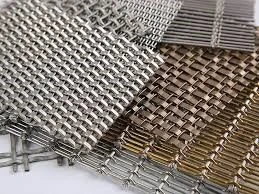
3.1 Plain Weave
Each warp wire alternates over/under each weft wire
Most common for general screening
Uniform, stable openings
3.2 Twill Weave
Wire alternation pattern repeated every two wires
Allows thicker wire in same mesh count
Stronger and more durable
3.3 Dutch Weave (Plain Dutch / Twill Dutch)
Warp wires thinner, weft wires thicker (or vice versa)
Aperture becomes extremely fine
Ideal for micron-level filtration
3.4 Reverse Dutch Weave
Reverse arrangement to increase flow rate
Used in high-pressure filtration systems
3.5 Weave Pattern Comparison Table
|
Weave Type |
Opening Precision |
Strength |
Flexibility |
Best For |
|
Plain Weave |
★★★★ |
★★★ |
★★★★ |
General screening, sorting |
|
Twill Weave |
★★★★ |
★★★★★ |
★★★ |
High-strength filtration |
|
Plain Dutch |
★★★★★ |
★★★★ |
★★ |
Fine filtration (micron level) |
|
Twill Dutch |
★★★★★ |
★★★★★ |
★★ |
High-pressure filtration |
|
Reverse Dutch |
★★★★ |
★★★★ |
★★ |
High flow + fine separation |
Weave type selection is one of the most important early decisions in specifying woven wire mesh.
4. Mechanical Behavior and Engineering Considerations
4.1 Flexibility & Formability
Woven mesh bends gradually because wires are not fused. This provides:
Ability to wrap around curves
Better shock absorption
Easier handling in rolls
However, flexibility varies with:
Wire diameter
Mesh count
Weave type
Fine mesh (≥200 mesh) can be extremely flexible, almost cloth-like.
4.2 Aperture Precision
Woven mesh is unrivaled in achieving consistent, repeatable apertures. This is critical in:
Particle size classification
Airflow and liquid flow control
Precision filtration
Laboratory sieving
The weaving process allows tolerances that welded mesh cannot match at small scales.
4.3 Tensile Strength & Load Capacity
Woven mesh strength depends heavily on the wire diameter, material, and weave pattern.
General strength trends:
|
Mesh Type |
Tensile Strength |
Load Behavior |
|
Coarse woven |
High |
Resist bending, moderate flex |
|
Fine woven |
Low–moderate |
Highly flexible |
|
Twill |
High |
Handles vibration and cyclic loads |
|
Dutch weave |
Moderate |
Designed more for filtration than load |
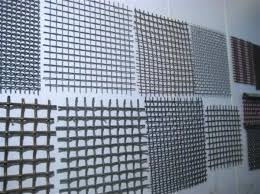
4.4 Edge Stability & Unraveling
One disadvantage of woven mesh:
Cutting can cause edge unraveling (wires slip out of weave)
Proper selvage, framing, or edge welding is required
Modern edge-welding technologies (laser, TIG) reduce this issue but increase cost.
5. Materials Used for Woven Mesh
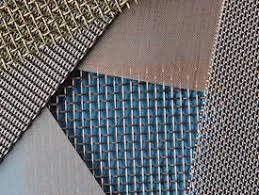
Woven mesh can be manufactured using numerous alloys, each offering distinct properties.
5.1 Most Common Materials
|
Material |
Corrosion Resistance |
Cost |
Applications |
|
SS304 |
Good |
$$ |
General industrial use |
|
SS316 |
Excellent |
$$$ |
Chemical, marine, food processing |
|
Brass |
Moderate |
$$ |
Decorative, low-stress filtration |
|
Copper |
Low |
$$$ |
EMI shielding, conductivity |
|
Monel |
Very High |
$$$$ |
Marine, chemical tanks |
|
Inconel |
Extremely High |
$$$$ |
High temp, aerospace |
Stainless steel remains the dominant choice due to corrosion resistance and cost-performance ratio.
6. Woven Mesh vs. Welded Mesh: Core Differences
Although this chapter focuses on woven mesh alone, it is important to highlight key differences relative to welded mesh (expanded in later chapters).
6.1 Performance Comparison Table
|
Feature |
Woven Mesh |
Welded Mesh |
|
Aperture Accuracy |
High |
Moderate |
|
Strength & Rigidity |
Medium |
High |
|
Flexibility |
High |
Low |
|
Maximum Fineness |
Very high (micron) |
Limited |
|
Unraveling Risk |
Yes |
No |
|
Panel Flatness |
Low |
Excellent |
|
Best For |
Filtration, precision screening |
Structural, fencing, guards |
7. Application Areas of Woven Mesh
Woven mesh serves a remarkably wide range of industries.
7.1 Industrial Filtration
Woven mesh excels in:
Hydraulic filters
Oil & gas separation
Air filtration
Chemical filtration
High-pressure filtration (Dutch weaves)
Because of its precise apertures, woven mesh ensures repeatable filtration performance.
7.2 Sieving & Particle Classification
Woven mesh is the global standard for:
Laboratory sieves
Food particle classification
Mining separation equipment
Pharmaceutical powders
Aperture consistency is essential for standardized sieve testing (ASTM, ISO).

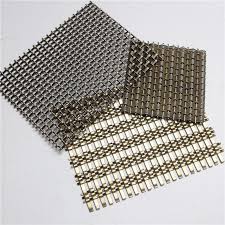
7.3 Architecture & Design
Architects use woven mesh for:
Facades
Balustrades
Ceiling panels
Decorative screens
Sunshade systems
It offers a visually appealing metallic texture with excellent airflow.
7.4 Safety Screens & Guards
Woven mesh can be used in:
Machinery guards
Conveyor protection
Window guards
Animal enclosures (small species)
Although not as strong as welded mesh, woven mesh is excellent for smaller openings and animal-proof structures.
7.5 Food Processing & Agriculture
Applications include:
Sifting flour and grains
Drying screens
Food basket liners
Filtering liquids
Sorting seeds
SS316 woven mesh is often used due to acid and salt resistance.
7.6 Aerospace & Defense
High-temperature woven mesh alloys like Inconel serve in:
Thermal shielding
Exhaust filtration
EMI shielding
Turbine protection
Missile component filtration
The ability to use specialty alloys gives woven mesh unique value.
7.7 Electronics & EMI Shielding
Copper, brass, and stainless woven meshes:
Block electromagnetic interference
Serve as Faraday cages
Provide ventilation while shielding signals
Fine mesh counts are essential.
8. Advantages & Disadvantages Summary
8.1 Advantages of Woven Wire Mesh
✅ Extremely accurate aperture sizes
✅ High flexibility (wraps around shapes)
✅ Wide variety of weaves
✅ Micron-level filtration possible
✅ Available in many alloys
✅ Excellent for flow-through applications
✅ Lightweight yet strong
✅ Rolled format easy to transport
8.2 Disadvantages of Woven Wire Mesh
❌ Unraveling risk when cut
❌ Not as rigid as welded mesh
❌ Not ideal for very large panels without reinforcement
❌ Limited structural load capacity
❌ More sensitive to deformation

9. Choosing Woven Mesh: Engineering Guidelines
To specify woven mesh correctly, engineers must define:
9.1 Filtration Criteria
Required micron rating
Flow rate
Pressure drop
Particle shape
9.2 Mechanical Requirements
Tensile load
Bending resistance
Impact resistance
Required flatness
9.3 Environmental Factors
Chemical exposure
Temperature
Humidity
Abrasion
9.4 Fabrication Considerations
Cutting method (laser, shear, plasma)
Edge finishing (framed, welded, rolled edge)
Mounting requirements
10. Woven Mesh Selection Matrix
|
Requirement |
Recommended Action |
|
Aperture accuracy needed |
Choose finer mesh or Dutch weave |
|
High strength required |
Twill weaves preferred |
|
Chemical exposure |
Choose SS316 or Monel |
|
Wrap around surface |
Choose plain woven |
|
Structural stability |
Use framed or edge-welded mesh |
|
High-pressure filtration |
Use Dutch/Twill Dutch |
|
Decorative project |
Consider stainless, brass, or copper weaves |
11. Case Studies
Case Study 1: Food Powder Sieving
A food processor required a mesh that could sieve flour to <250 microns:
Required fine but durable mesh
Chose SS316 twill weave 60×60 mesh
Result: Zero wire breakage after six months of continuous use
Case Study 2: Chemical Plant Filtration
A chemical plant needed filters resistant to acid fumes:
SS304 clogged and corroded
Replaced with SS316 plain Dutch weave
Result: Lifespan increased 4×
Case Study 3: Architectural Facade
Architect needed a flexible, modern metallic facade:
Chose stainless steel decorative woven mesh
Result: Flexible installation on curved surfaces; high airflow
learn more:
12. Conclusion
Woven wire mesh remains one of the most versatile engineered materials available today. Its ability to provide precise apertures, fine filtration, and geometric adaptability makes it ideal for a long list of applications including filtration, separation, architecture, food processing, aerospace, and more.
Woven mesh is the right choice when:
Precision apertures are needed
Flexibility matters
Filtratn performance is critical
Curved mounting is required
Light-to-moderate loads are expected
This first chapter provides the foundation for choosing woven mesh intelligently. The next chapters will compare welded mesh and then offer an in-depth head-to-head comparison to help you select the right option for your project.