






Introduction
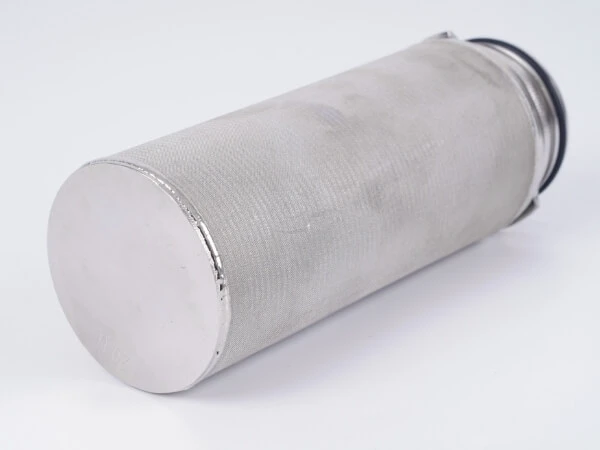
Multi-layer sintered stainless steel filter mesh has become one of the most trusted engineered filtration materials across industries such as chemical processing, petrochemicals, aerospace, pharmaceuticals, water treatment, and energy systems. Its unique characteristics-stemming from a precisely controlled sintering process-give it mechanical strength, structural stability, and filtration accuracy far superior to conventional woven wire mesh, fiber filters, polymer filter media, and powder sintered elements.
This sub-article provides an in-depth exploration of the performance characteristics, engineering properties, and operational advantages that define multi-layer sintered stainless steel filter mesh as a high-performance filtration medium. It covers mechanical, chemical, thermal, and functional performance metrics supported by engineering explanations, real-world use-cases, comparative tables, and design considerations.

1. Core Performance Characteristics of Multi-Layer Sintered Stainless Steel Filter Mesh
1.1 Structural Stability Across the Full Temperature Range
One of the most important qualities of multi-layer sintered stainless steel mesh is its exceptional stability at both high and low temperatures. Because the layers are metallurgically bonded during sintering, the mesh does not shift, warp, fray, or experience pore size deformation-even under:
High thermal gradients
Rapid temperature cycling
Continuous exposure to temperatures between –200°C and 600°C
Extreme pressure fluctuations
Compared to polymer filters (limited to <120°C), or woven mesh alone (subject to pore deformation), sintered mesh remains dimensionally and structurally stable.
Why?
During sintering, the diffusion bonding creates "necks" at contact points between wires or layers. These fused joints significantly increase:
Wire rigidity
Layer-to-layer cohesion
Resistance to creep and thermal expansion stress
This is essential in applications like steam filtration, high-temperature gas purification, and aerospace fuel systems.
1.2 High Mechanical Strength and Load-Bearing Capacity
The multi-layer construction greatly enhances mechanical performance:
High compressive strength
High tensile strength
Resistance to deformation under pressure
Excellent anti-burst properties
In comparison, single-layer woven mesh can fail under high pressure because the wires can shift, deform, or break under load.
Contributing factors:
1.Rigid Support Layer (Thick Mesh or Perforated Plate)
The thick supporting layer reinforces the entire structure and distributes mechanical loads.
2.Diffusion Bonding
Eliminates wire movement, preventing mesh distortion.
3.Multi-layer Load Distribution
Pressure is shared across several layers, minimizing localized stress points.
This strength makes the material suitable for high-pressure gas filtration, hydraulic systems, and heavy-duty industrial process filters.
1.3 Precise and Consistent Filtration Accuracy
Unlike woven wire mesh-which may shift during use and cause variation in pore size-sintered mesh delivers:
Accurate micro-filtration ratings (0.5–200 μm)
Stable pore geometry
Consistent flow and permeability
Predictable pressure drop
The sintering process locks the filtration layer permanently in place.
Impact on filtration quality:
No change in micron rating over time
Predictable clogging behavior
High repeatability and optimal filtration efficiency
Excellent backwashing performance due to uniform pores
This is why sintered mesh is the material of choice for pharmaceutical-grade filtration, catalyst recovery, and precise gas regulation systems.
1.4 Superior Corrosion, Oxidation, and Chemical Resistance
Because it usually uses 316L stainless steel, the multi-layer sintered structure provides outstanding resistance to:
Acids
Alkaline solutions
Organic solvents
Chlorides
Saltwater environments
Oxidizing gases
Why 316L is preferred:
Its low carbon content reduces carbide precipitation, enhancing corrosion resistance, especially in:
High-temperature environments
Chlorinated liquids
Chemical process reactors
Food and pharmaceutical systems
In contrast, polymer filters, brass mesh, and aluminum filters cannot withstand such environments without degrading.
1.5 Excellent Backwash and Reusability Characteristics
Multi-layer sintered stainless steel mesh is designed for long-term reusability.
Its metallic structure enables:
Ultrasonic cleaning
Chemical cleaning
Back-flushing
High-pressure air or water reversal
Thermal regeneration
The uniform pore structure ensures contaminants detach effectively during cleaning, giving it an extremely long lifespan-often lasting 5–20 years depending on use.
1.6 High Permeability and Optimized Flow Distribution
Despite being a high-strength medium, sintered mesh maintains:
Efficient fluid flow
Low flow resistance
Optimized Darcy permeability
Uniform pressure distribution across the surface
The reason is the engineered combination of:
A thin filter layer
One or multiple distributing layers
A rigid support layer
Together, they create channels that promote laminar flow and reduce turbulence.
This makes the material ideal for:
Gas distribution plates
Flow equalization screens
Fluidization plates
Sparging systems
2. Engineering Advantages Derived from Multi-Layer Sintering Technology
2.1 Multi-Layer Construction: Function of Each Layer
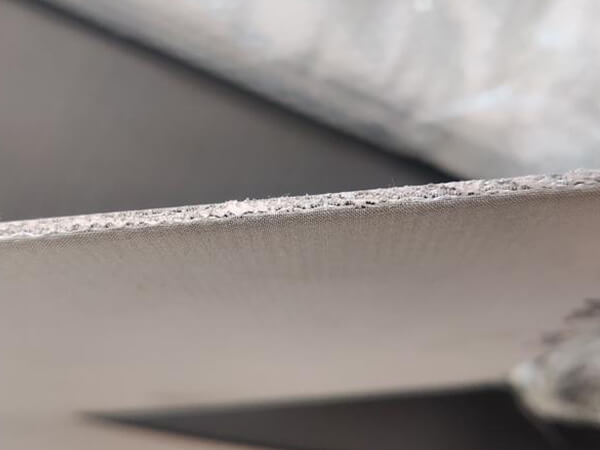
A typical 5-layer arrangement (or more) is engineered to maximize performance. Below is the standard structure:
|
Layer |
Function |
Description |
|
1 |
Protective Layer |
Guards the filter layer from abrasion or high-velocity particles. |
|
2 |
Filtration Layer |
Provides the micron rating and determines filtration accuracy. |
|
3 |
Diffusion Layer |
Distributes load and stabilizes filtration layer pores. |
|
4 |
Support Layer |
Provides mechanical strength and prevents collapse. |
|
5 |
Reinforcement Layer |
Adds rigidity and shock resistance. |
The engineered combination ensures the best balance between:
Filtration precision
Strength
Flow efficiency
Durability
2.2 Diffusion Bonding and Metallurgical Fusion
Sintering is not simply "heating the mesh."
It is a metallurgical diffusion bonding process in which atoms interdiffuse at material contact points, fusing layers into a single solid piece.
Key engineering outcomes:
Elimination of wire movement
Permanent pore stability
No need for adhesives or solder joints, which can degrade
Superior high-temperature performance
Reliable long-term structural integrity
2.3 Resistance to Fatigue, Vibration, and Dynamic Stress
Many filters fail because of:
Thermal fatigue
Mechanical fatigue
Constant vibration
Pressure pulsation
Sintered mesh withstands all these due to its rigid, continuous structure.
Industries that benefit:
Aerospace hydraulic lines
Oil drilling equipment
High-speed compressors
Gas turbines
Automotive fuel injection systems
The vibration resistance is a major reason it is used in safety-critical applications.
2.4 Pore Uniformity and Controlled Porosity Distribution
Unlike random fiber sintered filters, sintered mesh has a geometric pore arrangement that is:
Calculated
Predictable
Reproducible
Engineers can design specific porous structures by selecting:
Mesh sizes
Layer combinations
Sintering parameters
Surface finish treatments
This makes the material suitable for advanced engineering tasks such as:
Precision gas diffusion
Controlled fluidization
Catalyst retention
Heat exchange with filtration
2.5 Wide Compatibility with Manufacturing Processes
Due to its strength and metallic nature, sintered mesh can be:
Welded
Laser-cut
Stamped
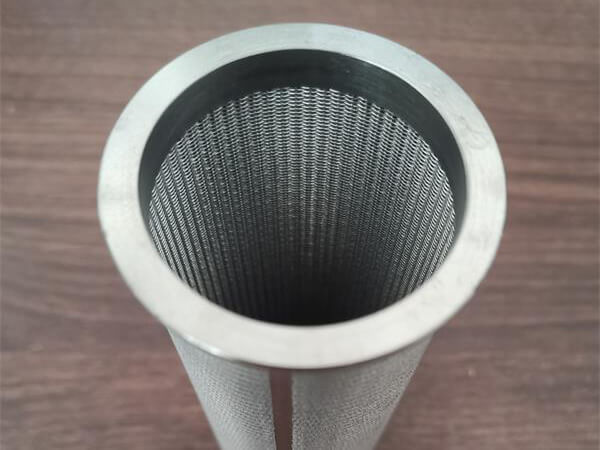
Formed into cylinders or cones
Rolled
Machined
Flanged
Threaded
This manufacturability allows engineers to design custom components:
Filter cartridges
Sparger tubes
Porous metal plates
Vacuum filters
Fluidization beds
Disc filters
3. Operational Advantages in Industrial Applications
3.1 Long Service Life and Low Lifecycle Cost
Compared to disposable filter elements, sintered mesh offers:
Reusability
Long installed lifetime
Low maintenance cost
Predictable performance
Low risk of failure
Even though initial cost may be higher, total operational cost is significantly lower.
Example lifecycle comparison:
|
Filter Type |
Expected Lifespan |
Maintenance Frequency |
Total Cost Over Time |
|
Polymer filter cartridge |
1–6 months |
Frequent replacement |
High |
|
Woven stainless steel mesh |
1–2 years |
Occasional repairs |
Medium |
|
Sintered stainless steel mesh |
5–20 years |
Minimal maintenance |
Very Low |
3.2 High Dirt-Holding Capacity
The multi-layer design creates three-dimensional pathways that hold contaminants efficiently without rapid clogging.
Benefits:
Longer run time
Fewer shutdowns
Stable pressure drop
High filtration efficiency
3.3 Safety Performance in Hazardous Environments
Because it is metallic and strongly bonded, sintered mesh resists:
Fire
Explosive environments
Sparks and ignition
Chemical attack
It is ideal for:
Hydrogen filtration
Oxygen systems
High-pressure gas filtration
Explosive atmospheres
3.4 Compatibility with Sterilization and Sanitation Processes
Multi-layer sintered stainless steel mesh can withstand:
High-pressure steam (autoclave sterilization)
UV sterilization
Ozone sanitation
Chemical sterilants
Acid/alkali washing
This makes it perfect for:
Pharmaceutical production
Food-grade processing
Biotechnology
Medical filtration
3.5 Superior Environmental Resistance
Key environmental resistances:
Saltwater corrosion
Acid rain
Outdoor oxidation
Humidity and condensation
Organic solvent exposure
This makes sintered mesh suitable for marine, offshore, and outdoor industrial settings.
4. Comparison Tables for Engineering Evaluation
4.1 Sintered Mesh vs. Traditional Woven Mesh
|
Feature |
Woven Mesh |
Sintered Mesh |
|
Pore Stability |
Low |
Excellent |
|
Mechanical Strength |
Moderate |
Very High |
|
Backwash Capability |
Limited |
Excellent |
|
Thermal Resistance |
Good |
Superior |
|
Chemical Resistance |
Good |
Excellent |
|
Expected Lifespan |
1–2 years |
5–20 years |
4.2 Sintered Mesh vs. Powder Sintered Metal
|
Feature |
Powder Sintered |
Multi-Layer Sintered Mesh |
|
Filtration Accuracy |
Limited (5–100 μm) |
High (0.5–200 μm) |
|
Mechanical Strength |
High |
Very High |
|
Flow Rate |
Moderate |
High |
|
Pore Uniformity |
Low |
Excellent |
|
Cleaning Ability |
Moderate |
Excellent |
4.3 Sintered Mesh vs. Polymer Filters
|
Feature |
Polymer Filter |
Sintered Stainless Steel Mesh |
|
Heat Resistance |
Low |
Very High |
|
Chemical Resistance |
Limited |
Excellent |
|
Mechanical Strength |
Low |
High |
|
Lifespan |
Very Short |
Very Long |
|
Reusability |
No |
Yes |
5. Engineering Considerations When Selecting Sintered Mesh
When engineers specify multi-layer sintered stainless steel mesh, they must evaluate:
A. Operating Conditions
Pressure (static and dynamic)
Temperature range
Flow rate
Chemical environment
B. Filtration Requirements
Micron rating
Particle size distribution
Target filtration efficiency
Allowable pressure drop
C. Mechanical Needs
Burst pressure
Structural rigidity
Vibration resistance
D. Cleaning Method Compatibility
Chemical wash
Ultrasonic cleaning
Back-flushing
Autoclave sterilization
E. Material Compatibility
304, 316L, 310, 904L stainless steel
Duplex stainless steels
Special alloys (Hastelloy, Monel, Inconel)
6. Applications Demonstrating Performance Advantages
6.1 Petrochemical Industry
Polymer filtration
Catalyst retention
High-temperature gas purification
6.2 Chemical Processing
Acid and solvent filtration
Hydrogen and oxygen systems
Corrosive reactant purification
6.3 Water Treatment
Membrane protection
Ultrafiltration pre-filtration
6.4 Food & Beverage
Sanitary-grade filtration
Steam filtration
6.5 Aerospace & Defense
Hydraulic fluid filtration
Fuel system filtration
Gas diffusion systems
6.6 Pharmaceutical & Biotechnology
Sterile filtration
Fermentation process gas control

READ MORE:The Engineering Science Behind Multi-Layer Sintered Stainless Steel Filter Mesh
Conclusion
Multi-layer sintered stainless steel filter mesh is a high-performance engineering material that offers unmatched advantages in strength, pore stability, thermal resistance, corrosion protection, and long-term economic value. Its multi-layer construction, diffusion bonding technology, and robust stainless steel composition make it suitable for the most demanding industrial applications.
By combining mechanical robustness with precise and consistent filtration characteristics, it stands as a superior choice compared to woven mesh, powder sintered elements, polymer filter cartridges, and many other filtration media.