






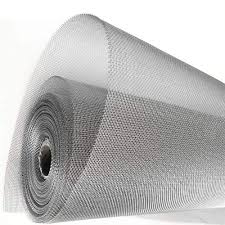
Woven wire mesh is a versatile and highly engineered material widely used in industrial, commercial, and residential applications. Despite its apparent simplicity-a sheet of interlaced wires-woven wire mesh offers unique performance characteristics that make it superior to alternative materials like perforated metal, expanded metal, or plastic screens. Its applications range from filtration, sieving, and separation, to spark arrestors, protective guards, and architectural facades.
This article explores the material properties, weave patterns, and manufacturing principles behind woven wire mesh, offering an in-depth understanding for engineers, architects, and industrial designers seeking reliable performance in their applications.
1. Introduction to Woven Wire Mesh
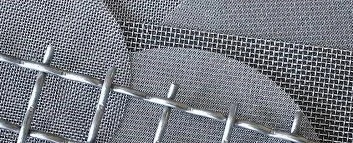
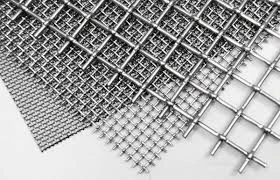
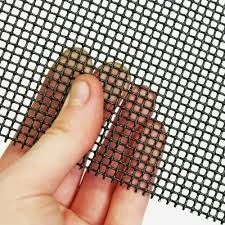
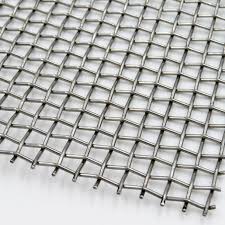
Woven wire mesh, also called wire cloth or wire fabric, consists of metallic wires interlaced in a predetermined pattern to form a sheet of metal cloth. Unlike perforated plates that rely on punched holes, woven wire mesh achieves precision, uniformity, and open area consistency through the weaving process.
Key advantages of woven wire mesh include:
High tensile strength
Dimensional stability
Heat and corrosion resistance
Precise openings for filtration or spark arresting
Flexibility for forming into various shapes
The choice of alloy, wire diameter, weave pattern, and finishing process determines the mesh's performance in real-world applications
2. Material Properties of Woven Wire Mesh
2.1 Alloy Selection
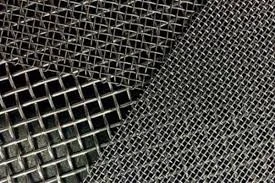
Material choice is foundational to the mesh's performance. Common materials include:
|
Material |
Key Properties |
Typical Applications |
|
Excellent corrosion resistance, moderate heat resistance, ductile |
General filtration, spark arrestors, outdoor use |
|
|
316 Stainless Steel |
Superior corrosion resistance, high chloride resistance |
Marine environments, chemical processing |
|
Carbon Steel |
High strength, lower corrosion resistance, cost-effective |
Indoor applications, non-corrosive environments |
|
Brass/Copper |
Conductive, corrosion-resistant, aesthetically appealing |
Decorative, electrical, low-load filtration |
|
Aluminum |
Lightweight, corrosion-resistant, soft |
Architectural, lightweight protection |
Key considerations in alloy selection:
Corrosion resistance: Especially critical in outdoor or chemical-exposed environments.
Heat resistance: Required for spark arrestors, exhaust systems, and industrial ovens.
Mechanical strength: Determines durability under vibration, wind, or load.
Formability: Mesh must withstand bending, stamping, or deep drawing without damage.
2.2 Wire Diameter and Tensile Strength
Wire diameter directly influences:
Mesh strength
Open area percentage
Durability under mechanical stress
|
Wire Diameter |
Approx. Tensile Strength (Stainless Steel 304) |
Notes |
|
0.25 mm |
400 MPa |
Suitable for fine filtration |
|
0.5 mm |
500 MPa |
Moderate mechanical load |
|
1.0 mm |
600 MPa |
High load or spark arrestor |
|
1.5 mm |
700 MPa |
Heavy-duty industrial use |
Thicker wires increase durability but reduce open area. Thin wires maximize airflow and particle passage control but may be mechanically weaker.
2.3 Thermal Properties
Woven wire mesh often operates in high-temperature environments:
Stainless steel 304: Up to ~870°C
Stainless steel 316: Up to ~925°C
High-temperature performance prevents deformation or warping in applications like chimney spark arrestors, exhaust systems, or industrial filtration.
2.4 Corrosion Resistance
Corrosion is a critical factor in outdoor or chemical environments. Stainless steel alloys offer:
Passive chromium oxide layer
Resistance to oxidation and staining
Durability in acidic or alkaline conditions
Maintenance and longevity of the mesh are directly tied to the corrosion resistance of the chosen material.
3. Weave Patterns and Their Functional Impacts
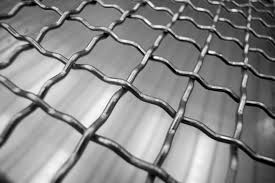
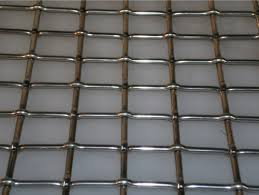
The weave pattern defines:
Open area
Strength
Flexibility
Filtration or containment capability
Common weave types include:
|
Weave Type |
Description |
Advantages |
|
Plain Weave |
Each warp wire passes over one weft wire alternately |
Maximum open area, uniform filtration, simplest pattern |
|
Twill Weave |
Each warp passes over two or more weft wires |
Higher strength, better wear resistance |
|
Dutch Weave |
Warp wires thicker than weft wires |
Fine filtration, high flow rates, minimal clogging |
|
Reverse Dutch |
Weft wires thicker than warp wires |
Very high-strength filtration, precise particle retention |
3.1 Open Area and Mesh Count
Mesh count: Number of openings per linear inch (or cm)
Pore size: Actual space between wires
Open area (%): Determines airflow, gas passage, and particle passage
|
Mesh Count |
Wire Diameter (mm) |
Opening Size (mm) |
Open Area (%) |
|
10×10 |
0.5 |
2.0 |
45 |
|
20×20 |
0.5 |
1.0 |
40 |
|
30×30 |
0.25 |
0.5 |
50 |
|
40×40 |
0.25 |
0.35 |
48 |
Key takeaway: Higher mesh count = finer openings, but potential airflow reduction.
3.2 Mechanical Performance
The interlaced wires distribute loads, creating:
Resistance to tearing
Dimensional stability
Fatigue resistance under repeated vibration or wind load
For example, chimney spark arrestors in windy locations must resist deformation while maintaining spark containment.
4. Manufacturing Principles
4.1 Wire Drawing
Wires are drawn to precise diameters
Controlled surface smoothness for consistent interlacing
4.2 Weaving Process
Uses precision looms
Warp and weft wires interlaced according to chosen weave pattern
Ensures uniform openings and dimensional accuracy
4.3 Post-Processing
Annealing: Relieves internal stress, improves ductility
Cleaning: Removes mill scale and debris
Passivation: Enhances corrosion resistance
Cutting an shaping: Formed into caps, baskets, or panels
4.4 Quality Control
Dimensional checks for mesh count and opening
Tensile strength and mechanical testing
Corrosion and heat resistance validation
5. Case Applications Demonstrating Material & Weave Impact
5.1 Chimney Spark Arrestors
Requirements:
Allow smoke to escape
Trap sparks
Resist outdoor exposure
Easy installation
Mesh Design: Stainless steel, plain weave, 10×10 mesh count, 0.5 mm wire diameter, 45% open area.
Performance: Prevents roof fires, maintains draft efficiency, long lifespan (>10 years).
5.2 Industrial Filtration
Requirements:
Capture particles of specific size
High flow rate
Heat and chemical resistance
Mesh Design: Dutch weave, 30×30 mesh, 0.25 mm wires. Fine filtration, minimal clogging.
5.3 Architectural Applications
Decorative panels or sunshades
Twill weave for higher strength, unique texture
Stainless steel ensures outdoor durability
Open area allows airflow while providing protection and aesthetic appeal
LEARN MORE:Specification, Selection, Maintenance, and Lifecycle Benefits of Woven Wire Mesh
6. Summary
Woven wire mesh offers an engineered solution combining:
Alloy selection for strength, corrosion, and temperature resistance
Wire diameter optimization for durability vs airflow
Weave pattern and mesh count selection for filtration, spark containment, or airflow efficiency
Manufacturing and finishing practices ensuring consistency, longevity, and performance
Understanding these factors is critical when specifying woven wire mesh for industrial, commercial, or residential applications.