






Introduction
When choosing filtration media for water - whether for irrigation, residential water supply, industrial water intake, aquaculture, or environmental water treatment - one common question arises: "Is nylon mesh / nylon filters a good choice?"
On the one hand, nylon meshes and filters are widely used in self-cleaning water filters, pump intakes, pre-filtration systems, and simple water screening units.
On the other hand, nylon has inherent material limitations: mesh strength, open area ratio, durability, and chemical/physical wear under tough conditions.
Whether nylon is "good enough" - or the best choice - depends heavily on water quality, required filtration fineness, maintenance schedule, and system design.
This article aims to provide a thorough, objective analysis of nylon as a filter medium for water filtration: its strengths, weaknesses, optimal scenarios, design guidance, and when alternate materials might be preferable.
1. What is Nylon Filter Mesh - Basic Properties & Why It Gets Used
1.1 Nylon Mesh - Construction, Material, and Typical Configurations
Material: Nylon for filters typically refers to synthetic polyamide monofilament threads woven into mesh. These meshes can be very finely constructed - some down to 60 microns (0.06 mm) aperture, according to one manufacturer.
Physical Characteristics: Nylon mesh is described as light, strong, and smooth - a combination that makes it favorable for water screening.
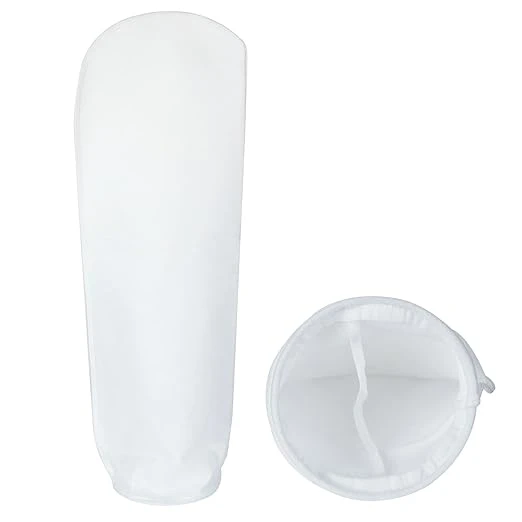
Common Configurations: Woven meshes in baskets or filter screens; mesh inserts in self-cleaning intake filters; nylon mesh bags or cloth filters; pre-filter screens; coarse or fine mesh depending on application.
Because of the fine weave, smooth surface, and sufficient strength, nylon mesh is used widely - especially in applications where clean or relatively clear water needs screening (for example suction intake filters, pump protection, or pre-treatment before finer filtration).
1.2 Why Nylon Is Attractive for Water Filtration
Key advantages of nylon mesh for water:
Strength & durability: Monofilament nylon mesh exhibits good tensile strength and abrasion resistance, making it capable of resisting wear, stretching, tearing - important in water flow with suspended particles, turbulence, or backwash cycles.
Smooth surface / non-snagging: The smoothness reduces the chance of organic matter (e.g. algae, plant fibers) snagging and accumulating on the mesh - facilitating self-cleaning and easier maintenance.
Flexibility in pore size / mesh aperture: Because nylon mesh can be woven at various mesh counts, operators can choose aperture sizes matching water quality - from coarse debris removal to relatively fine sediment screening.
Cost-effectiveness and ease of replacement: Compared to more sophisticated filter media (ceramic, specialty membranes), nylon mesh tends to be more affordable, easy to produce, and mesh inserts are replaceable - making recurring maintenance more economical.
These properties make nylon mesh especially popular for pre-filtration, pump suction intakes, simple water screening, or initial debris removal - often upstream of more fine filtration or treatment steps.
read more:Industrial Applications of NY Filters: How Nylon Filtration Enhances Performance Across Modern Manufacturing Sectors
2. What Nylon Does Well - Best Use Cases for Water Filtration
To evaluate whether nylon is good for filtering water, it's helpful to examine concrete use cases where it performs well.
2.1 Clean Water or Low-Particulate Water Screening
For water sources with low to moderate turbidity, few suspended solids, or pre-treated water - e.g. well water, municipal supply, borehole water, filtered reservoir water - nylon mesh provides an adequate first-line filter:
Removes larger debris (leaves, twigs, sediment lumps)
Protects pumps and downstream equipment
Preserves flow with minimal pressure drop
Requires only occasional mesh replacement or cleaning
Manufacturers themselves note that for "clean water applications," nylon mesh filters are "excellent."
This makes nylon a good first-stage filter before finer filters (cartridge, membrane) or UV/disinfection.
2.2 Pump Suction Intake Protection
In pump-based systems - irrigation pumps, water transfer, heat-pump water intakes - nylon mesh is popular for protecting the suction side. The low cost, replaceable inserts, and ability to handle clear water flow make nylon mesh suitable in many environments.
When water is relatively clean, and particulate load is low, nylon mesh screening helps avoid pump damage, sediment ingestion, or downstream clogging.
2.3 Pre-Filtration or Multi-Stage Treatment
In multi-stage filtration systems, nylon mesh often serves as the coarse pre-filter to remove larger particles, allowing downstream finer filters to focus on smaller particulates, turbidity, or biological contaminants.
This staged approach - coarse mesh → finer filters → treatment/disinfection - is cost-effective and extends the lifespan of expensive fine filters.
2.4 Situations Where Flow Rate Is Important
Because nylon mesh (if not overly fine) provides low pressure drop, it supports applications where high flow rate matters: irrigation, industrial cooling water, agricultural water supply, high-flow suction systems, etc.
In such scenarios, using a fine-membrane filter might restrict flow or require excessive pressure, but a well-selected nylon mesh balances flow and filtration.
3. Limitations and Risks: When Nylon May Not Be Suitable
Using nylon for water filtration is not universally appropriate. Several inherent limitations must be carefully weighed.
3.1 Limited Particle Retention and Pore Size Constraints
Even finely woven nylon mesh has physical limitations:
The smallest commonly available aperture (in some commercial meshes) may be ~ 60 microns.
That size cannot remove fine sediments, colloidal suspensions, microorganisms, bacteria, or turbidity - which often require sub-micron to a few micron filtration.
Thus, for drinking water purification, microbiological safety, turbidity removal, or high-clarity water, nylon mesh alone is insufficient.
3.2 Low Open Area / Flow Restriction Under Particulate Load
Nylon mesh, especially fine mesh, may have low open area ratio (mesh wires occupy a non-trivial proportion of cross-section), which reduces flow when solids accumulate. Over time:
Flow rate drops
Pump suction pressure increases
Risk of clogging rises
Rotorflush - a manufacturer that offers both nylon and stainless-steel mesh options - points out that nylon mesh can tear when exposed to even modest particulate loads, and requires regular replacement.
3.3 Durability, Wear, and Aging / Chemical Sensitivity
As a synthetic polymer, nylon has limitations:
Over time and exposure (sunlight, abrasion, chemical exposure) it may become brittle or lose strength.
Strong oxidants, acids, or aggressive chemicals in water may degrade nylon. Although nylon is generally compatible with many solvents and moderate chemicals, it is less resistant to strong acids or oxidizing agents than some alternatives.
High-temperature water or thermal cycling can accelerate aging or deformation. While nylon is more tolerant than some plastics, its thermal and chemical stability is still limited relative to metals or specialty membranes.
3.4 Maintenance Demand and Replaceable Nature
Because nylon mesh can clog, tear, or degrade, continuous or dirty-water systems will demand frequent maintenance, cleaning, or mesh replacement. Failure to maintain filter mesh can lead to filter bypass, pump damage, or contamination.
For heavy-duty, high-particulate, or turbulent water sources, more robust alternatives (e.g. stainless-steel mesh, sintered metal screens, or multi-layer filtration) may provide longer life and better reliability. Many providers of self-cleaning filters that offer nylon mesh also provide stainless-steel options for "dirty water" conditions.
4. Comparative Analysis: Nylon vs Other Filter Media for Water
To decide whether nylon is a good choice, it's helpful to compare it systematically with other common filter media used for water filtration.
Table 1 - Comparison of Common Filter Media for Water Filtration
|
Filter Medium |
Strengths |
Weaknesses / Limitations |
Best Use Cases |
|
Nylon Mesh |
Lightweight, flexible; fine aperture possible; smooth, wear-resistant; cheap; easy replacement |
Limited fine-particle removal; susceptible to tearing & aging; may clog; limited chemical/thermal durability |
Pre-filtration, pump suction protection, clean water screening, irrigation, coarse debris removal |
|
Polypropylene / Polyester Mesh or Felt |
Better chemical and acid/base resistance; lighter; less moisture absorption; moderate cost |
Less abrasion resistance; may have lower tensile strength; less fine-aperture mesh |
Acidic water, moderate filtration, coarse sediment removal |
|
Stainless Steel Mesh / Sintered Metal |
Excellent durability, high strength, thermal & pressure tolerant, long lifespan, resists abrasion and chemical exposure |
Higher initial cost; heavier; may require corrosion-resistant grade for some waters (e.g. chlorinated, salt water) |
Dirty water, heavy particulates, industrial intake, seawater, heat pump intake, long-term low-maintenance screening |
|
Cartridge / Membrane Filters (Ceramic, Polymeric) |
Capable of fine filtration (micron to sub-micron), microbial removal, high clarity |
Higher pressure drop; limited flow rate; regular replacement or cleaning; cost; may clog easily |
Drinking water treatment, potable water purification, microbiological safety, fine filtration stages |
|
Sand / Media Filters |
High dirt-holding capacity, good for very dirty or sediment-laden water |
Large footprint; requires regular backwash; not good for fine clarity or small particulates |
Pre-treatment of raw water, stormwater, surface water, wastewater |
Interpretation:
Nylon mesh excels when coarse filtration, debris screening, pump intake protection, or cost-effective pre-filtration are needed - but for fine filtration, drinking-water quality, microbiological safety, or harsh water conditions, more robust or fine media may be required.
5. Practical Guidelines: When to Use Nylon Mesh for Water - Decision Framework
To help you decide whether nylon mesh is appropriate for your water filtration need, here is a decision framework.
Table 2 - Nylon Mesh Suitability Decision Matrix
|
Question |
If answer is YES |
If answer is NO / Unsure |
|
Is source water relatively clean (low turbidity, low suspended solids)? |
Nylon mesh may suffice |
Consider sturdier or deeper filters (steel mesh, sand filter, cartridge) |
|
Is the target filtration size > 50–100 microns (e.g. leaves, debris, sediment lumps)? |
Nylon mesh works well |
For smaller particles or microbial safety, use finer filters |
|
Is high flow rate or low-pressure drop required (e.g. pump suction, irrigation)? |
Nylon mesh is advantageous |
Fine filters may cause pressure drop - use multi-stage system |
|
Is water chemistry benign (no strong acids/alkalis, low chlorination, no heavy solvents)? |
Nylon's chemical tolerance is adequate |
Use chemical-resistant mesh (metal or polymer) or specialized membranes |
|
Is maintenance feasible (regular cleaning, mesh inspection/replacement)? |
Nylon mesh cost-effective |
For low-maintenance, dirty water - consider metal mesh or depth filters |
|
Is cost a major factor, or budget limited? |
Nylon mesh is lower-cost and easy to replace |
For critical filtration, balance cost vs performance - consider long-term cost of replacements |
Using this matrix helps clarify whether nylon mesh is "good enough" or whether a different filter medium should be specified.
6. Best Practices for Using Nylon Mesh for Water Filtration
If you decide nylon mesh is suitable, following best practices will maximize performance and avoid common pitfalls.
6.1 Use Nylon as Pre-Filter or First Stage - Not Final Filtration
Use nylon mesh to remove coarse debris, leaves, large sediment, organic detritus.
Follow with finer filters (e.g. cartridge, membrane, sand filter) if water clarity, turbidity, or microbiological quality is required.
This staged filtration reduces load on fine filters and extends their lifespan.
6.2 Regular Inspection and Maintenance Schedule
Because nylon mesh can clog, tear, or degrade:
Inspect mesh visually every 500–1,000 operating hours (depending on water quality).
Replace nylon inserts if fraying, stiffness, or visible wear is detected.
In self-cleaning systems (with backwash), still perform manual checks periodically - rely on automatic backwash alone is insufficient.
6.3 Use Correct Aperture / Mesh Size for Water Quality
For relatively clean water: 60–115 micron mesh may suffice.
For water with larger debris: 200–500 micron (or larger) mesh reduces clogging, prolongs mesh life.
Avoid using finest nylon mesh (smallest micron rating) for heavily contaminated water - leads to rapid blockage.
6.4 Avoid Harsh Chemicals, High Heat, or Aggressive Environments
Nylon degrades under strong acids, strong oxidizers, or prolonged high-temperature exposure.
For water sources with chlorination, acid treatment, or industrial contaminants, consider stainless steel mesh or chemically resistant media.
6.5 Ensure Adequate Backwash or Debris Clearance Space
Especially for pump suction-intake filters or submersible intakes:
Provide space around the mesh to allow debris to disperse during backwash.
Design intake such that sediment or sludge buildup below the filter does not accumulate and re-enter the mesh during operation.
7. When Nylon Mesh Is Not Recommended - Alternative Approaches
There are specific scenarios in which nylon mesh should be avoided:
Drinking water filtration needing microbial safety - micron-level filtration required (membranes or cartridge filters).
Dirty or turbid water with heavy suspended solids (e.g. raw river water, dredged water, wastewater) - nylon will clog quickly and wear; consider metal mesh or sintered metal screens.
Water with aggressive chemical content or extremes of pH/temperature - nylon's chemical and thermal limits make it risky; stainless steel or specially coated filters are safer.
Low-maintenance systems where frequent filter replacement or cleaning is impractical - using more durable and long-life filter media may yield better overall lifecycle economics.
In many of these cases, a hybrid filtration strategy - nylon pre-filter + deeper filtration (sand, cartridge, membrane) - often delivers best trade-off between cost, performance, and maintenance.
8. Summary: Strengths, Weaknesses & Final Assessment
Table 3 - Pros and Cons of Using Nylon Mesh for Water Filtration
|
Pros |
Cons / Risks |
|
Lightweight, easy to handle and install |
Limited fine-particle or microbial removal |
|
Affordable filter media, low-cost replacement |
Clogs quickly in dirty water, requires frequent maintenance |
|
Smooth surface - resists organic snagging, aids self-cleaning |
Low open-area ratio - flow drop under load |
|
Flexible pore sizes and mesh apertures |
Prone to tear or abrasion under harsh conditions |
|
Good tensile strength and reasonable chemical/solvent compatibility |
Vulnerable to acids, oxidizers, high temperatures |
|
Well-suited for pre-filtration, pump intake protection, coarse debris removal |
Not suitable for final polishing or potable water treatment where high water quality needed |
Final Assessment
Nylon mesh can be a very good choice for water filtration - but only under the right conditions:
Source water is relatively clean or only moderately dirty
The filtration requirement is for coarse screening or debris removal rather than fine purification
Maintenance is feasible, and mesh inspection/replacement is acceptable
Water chemistry and temperature are within nylon's acceptable range
In contrast, for drinking water, microbiological safety, high turbidity water, or long-term low-maintenance systems, nylon mesh alone is not sufficient and may lead to failures or health risks.
Thus, nylon should often be considered as "first-stage / pre-filter / debris screen" - not as a one-stop filtration solution.
9. Practical Use-Case Scenarios & Recommendations
To illustrate where nylon works - and where it doesn't - here are some realistic scenarios:
Scenario A: Residential Well Water Supply (Low Sediment)
Water is clear, minimal sand or suspended solids
Desire: protect pump and fittings from occasional sand/dirt
Recommendation: Nylon mesh filter at pump suction (e.g. 60–115 µm), with periodic inspect/clean. Good cost-effectiveness and minimal maintenance.
Scenario B: Farm Irrigation with Moderate Sediment Load
Water drawn from shallow well subject to occasional silt
Need: consistent flow for drip and sprinkler systems
Recommendation: Use nylon mesh as first-stage pre-filter (e.g. 200–300 µm), followed by sand or media filter, then disc or screen filters as needed. Mix budget and filtration efficiency.
Scenario C: Small Aquaculture or Pond Water Intake
Water may carry organic debris, aquatic plants, algae
Need: filter out large debris without high maintenance burden
Recommendation: Nylon mesh intake filter or basket strainer; ensure easy backwash/disassembly. Change mesh periodically, monitor flow drop.
Scenario D: Drinking Water Treatment for Household
Need: removal of bacteria, fine particles, turbidity, chemical contaminants
Recommendation: Nylon mesh alone is insufficient. Use multi-stage: coarse pre-filter (nylon or metal mesh) → sediment filter → cartridge/membrane filter → disinfection (UV or chemical).
Scenario E: Industrial Cooling Water Intake (Dirty Source)
Water contains silt, sand, debris, possibly chemical contaminants
Recommendation: Avoid nylon for final intake mesh; use stainless steel or sintered stainless steel mesh for robust durability; use nylon only upstream where water is already pre-treated or low-turbidity.
10. Conclusion
So - is nylon good for filtering water?
Yes - but with caveats. Nylon mesh is excellent for certain water-filtration tasks: pre-filtration, pump protection, debris removal, and situations where water is already moderately clean. Its strengths lie in being lightweight, flexible, easy-to-replace, cost-effective, and sufficiently strong for many flow-through systems.
However, nylon is not a(universal) filter. Its limitations - in pore size, durability under heavy load or chemical exposure, maintenance requirements, and inability to remove fine or microbiological contaminants - mean it must be used as part of a holistic, staged filtration scheme, or be replaced by more robust media when water quality demands are high.
When selecting filtration media, engineers, homeowners, or system designers should carefully evaluate water source quality, contaminant type, required output quality, maintenance capacity, and long-term costs.
Nylon can - and often does - play a vital role in water filtration. But it works best when its strengths are used appropriately, and its weaknesses are mitigated by system design.