






In industrial filtration, micron rating and mesh count are two of the most critical technical specifications used to evaluate filter media performance. While they are often mentioned together, each parameter describes a different aspect of filtration behavior. Micron rating defines the particle size a filter can reliably capture, whereas mesh count describes the geometric structure of woven wire mesh. To make the right filtration decisions-whether in hydraulic systems, fuel purification, chemical processing, water treatment, or industrial manufacturing-engineers must fully understand how these two parameters influence pressure drop, contaminant retention, flow capacity, service life, and overall system efficiency. This expanded guide provides a detailed breakdown of these concepts and how they work together in real-world filtration systems.
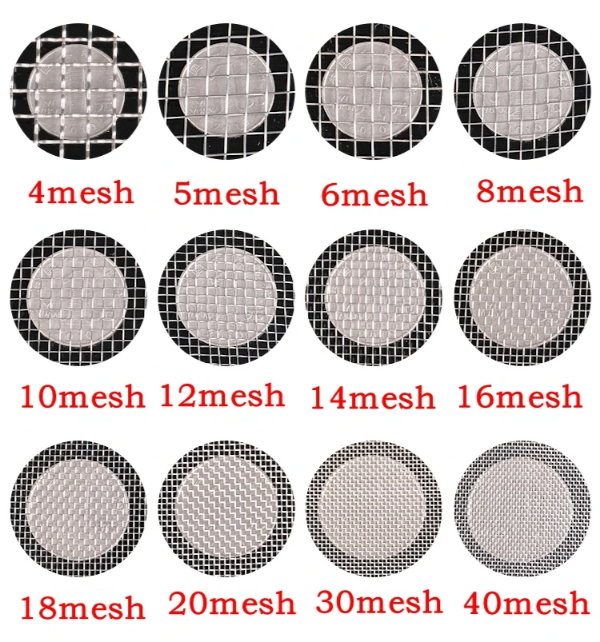
What Do Micron Rating and Mesh Count Actually Mean?
Understanding the Concept of Micron Rating
Micron rating defines the size of particles a filtration medium can remove, expressed in micrometers. A nominal micron rating means the filter removes a certain percentage-often 60% to 90%-of particles of the stated size. An absolute micron rating, by contrast, removes 98% to 99.9% of particles at the declared micron size, which is essential for critical applications such as hydraulic or fuel systems. The accuracy of micron rating affects system cleanliness, equipment longevity, and contamination control standards. Therefore, industries with strict cleanliness requirements typically rely on absolute-rated filtration media to ensure predictable performance across varying operational conditions.
What Mesh Count Really Indicates
Mesh count describes the number of openings per linear inch in woven wire mesh. A 100-mesh screen, for example, has 100 openings per inch both horizontally and vertically. However, the actual opening size also depends on wire diameter. Two meshes with the same mesh count can have different micron openings if one uses thicker wire. Mesh count is therefore a structural descriptor, not a performance indicator. It helps engineers compare mesh types and predict how strong or rigid the mesh will be, but it does not directly define the filtration accuracy. Opening size (in microns) must still be calculated or obtained from the supplier.
Differences in Measurement Standards
Micron rating is typically based on laboratory testing using standardized test dust under controlled conditions. Mesh count, on the other hand, follows industry standards such as ASTM E11 or ISO 3310, which define mesh tolerances, wire diameters, and weave styles. Because the two systems measure different characteristics, they cannot be directly converted without additional information. For example, a mesh count alone cannot determine whether the mesh is suitable for precision filtration unless the actual aperture size is known. Understanding these measurement frameworks helps engineers avoid misinterpreting mesh count as a filtration rating.
Why Both Are Needed in Filtration Design
Filtration performance is determined by both the structural geometry (mesh count) and the performance metric (micron rating). Micron rating defines the smallest particle that will be captured, while mesh count influences mechanical strength, flow distribution, and durability. In many applications, especially multilayer sintered mesh filters, the outer layers use low mesh count for strength and the inner layers use fine micron-rated mesh for actual filtration. Treating micron rating and mesh count as separate-but complementary-specifications ensures filters meet both performance and durability requirements in industrial environments.


How Micron Rating Impacts Filtration Efficiency
Effect on Contaminant Removal Precision
A lower micron rating corresponds to finer filtration capability, capturing more and smaller contaminants. This is crucial for systems where even small particles cause wear, corrosion, or system malfunction-such as hydraulic circuits or high-pressure lubrication systems. For example, shifting from 25 microns to 10 microns dramatically increases protection for pumps, valves, and actuators. The exact micron rating needed depends on the system's cleanliness code requirements, such as ISO 4406. Selecting too coarse a filter leads to insufficient contaminant removal, while selecting too fine a filter creates unnecessary restrictions.
Relationship with Flow Rate and Pressure Drop
Fine micron ratings create smaller pathways for fluid to pass through, which increases resistance and results in a higher pressure drop. This can reduce system efficiency, increase energy consumption, or cause cavitation in pumps. Engineers must balance filtration accuracy with flow requirements, especially in high-viscosity applications like oil filtration. Systems may require staged filtration, where coarse filters are used upstream to prevent premature clogging of fine filters, ensuring stable flow and consistent pressure.
Impact on Dirt-Holding Capacity
The smaller the micron rating, the faster contaminants accumulate in the filter media. This reduces dirt-holding capacity and shortens service intervals. While fine filters improve cleanliness, they may require more frequent replacement. To overcome this limitation, multi-layer structures or pleated elements are often used to increase surface area. Engineers must match micron rating with expected contamination loads to avoid operational downtime or premature clogging.
Application-Specific Micron Requirements
Different industries require different micron levels. Hydraulic systems often use 3–25 microns, fuel systems use 10–75 microns, and water filtration can range from 20 microns to several hundred microns depending on whether the application involves pre-filtration or polishing. Understanding the specific contamination profile-such as particle size distribution, fluid viscosity, and operating pressure-helps determine the optimal micron rating for reliable filtration performance.
How Mesh Count Affects Structural Strength and Flow Rate
Influence on Mechanical Strength
Mesh count directly impacts the strength of the wire mesh. Lower mesh counts typically use thicker wires, providing better resistance to deformation, pressure, and abrasion. This is essential in high-pressure systems, industrial filters, or environments with turbulent flow. Higher mesh counts use thinner wires, making them more susceptible to damage under mechanical stress. Therefore, mesh count selection must consider the mechanical demands of the application, especially when the filtration media is exposed to high load or backwashing processes.
Effect on Flow Distribution and Stability
Mesh count influences the uniformity of fluid flow. Low mesh counts allow high flow rates but may create uneven flow distribution, especially in systems where laminar flow is critical. Higher mesh counts help stabilize flow by distributing pressure more evenly across the surface. This helps prevent channeling-a phenomenon where fluid bypasses filtration due to uneven pressure distribution. For multi-layer filters, coarse mesh is often used as a support layer to maintain stability for finer filtration layers.
Interaction with Wire Diameter
Wire diameter plays a significant role in determining the actual opening size and mechanical strength. Two meshes with identical mesh counts can vary significantly in performance because of different wire diameters. Thicker wires reduce the open area, restrict flow, and increase durability. Thinner wires maximize open area but weaken structural stability. Therefore, mesh count must always be evaluated together with wire diameter when designing filtration systems.
Impact on Long-Term Durability
Higher mesh count screens with thin wires degrade faster under abrasive or high-pressure conditions. Lower mesh count screens are more durable but offer less filtration accuracy. Engineers must choose mesh count based not only on filtration needs but also on long-term maintenance strategy, expected service life, and cleaning methods such as backwashing or ultrasonic cleaning. Proper mesh count selection minimizes maintenance cost and extends operational lifespan.

How Micron Rating and Mesh Count Work Together in Real Filtration Systems
Combined Influence on Flow Resistance and Energy Consumption
In practical filtration systems, micron rating and mesh count interact to determine overall flow resistance and, consequently, energy consumption. A fine micron rating restricts passage of fluid by reducing available open area, while a high mesh count can either increase or decrease resistance depending on wire diameter and weave pattern. When both specifications trend toward finer filtration, the system requires more pumping power to maintain target flow rates, increasing energy usage and operational costs. Engineers must analyze this balance carefully, especially in high-viscosity applications such as lubricants, hydraulic oils, and polymer processing. Many industrial systems use staged or dual-layer configurations to optimize performance-coarse mesh layers minimize pressure drop while fine micron layers ensure contaminant removal. Understanding how these variables interact allows designers to avoid over-specification, reduce energy loss, and maintain performance stability.
Effect on Filtration Accuracy Across Multi-Layer Filter Structures
Modern industrial filters frequently use multi-layer structures, combining supportive coarse mesh with precision micron-rated layers. In these assemblies, mesh count affects mechanical rigidity and prevents deformation of the finer inner layers under pressure. If the support mesh has too low a mesh count or insufficient wire diameter, the fine filtration layer may stretch or collapse, compromising the intended micron rating. Conversely, if mesh count is too high, the additional layers may impair flow and reduce effective surface area. Multi-layer mesh filters used in hydraulic, aerospace, chemical, and polymer filtration rely on correct calibration of these two parameters. This prevents filter failure, ensures predictable contaminant retention, and prolongs service life. When properly engineered, mesh count ensures dimensional stability, while micron rating guarantees filtration precision-creating a balance essential for high-performance filtration systems.
Comparison of Micron Rating vs. Mesh Count in Real Filtration Design
| Parameter | Micron Rating | Mesh Count |
|---|---|---|
| Primary Function | Determines particle retention accuracy | Defines structure and number of openings per inch |
| Influences | Filtration precision, cleanliness level | Strength, rigidity, and flow distribution |
| Unit of Measure | Micrometers (µm) | Openings per linear inch |
| Effect on Pressure Drop | High impact-smaller microns increase resistance | Moderate impact depending on wire diameter |
| Role in Multi-Layer Filters | Inner functional filtration layer | Support, rigidity, or pre-filtration layer |
| Selection Basis | Contaminant size, system cleanliness code | Mechanical load, flow stability, durability requirements |
Conclusion
Micron rating and mesh count together form the foundation of accurate and reliable industrial filtration design. While micron rating determines contaminant retention efficiency, mesh count defines the structural characteristics that support flow distribution, stability, and long-term durability. When engineers understand how these specifications interact, they can better optimize pressure drop, dirt-holding capacity, and particle capture performance across a wide range of operating conditions. This ensures that filtration systems meet both process requirements and industry cleanliness standards without unnecessary energy loss or premature filter failure.
In real filtration applications, neither micron rating nor mesh count can be evaluated in isolation. Effective system design requires balancing filtration precision with mechanical strength and flow characteristics, especially in multi-layer structures used for hydraulic, fuel, chemical, and water treatment processes. By selecting the correct combination of micron rating and mesh geometry, industries can achieve higher operational efficiency, extended service life, and more consistent filtration results. Ultimately, mastering these two parameters leads to better control over contamination, improved equipment protection, and more reliable production performance.