






Sintered stainless steel and sintered glass filters serve as two of the most important porous filtration media in modern industry, scientific research, chemical production, and precision processing. Each material offers unique advantages and limitations based on its mechanical properties, chemical stability, thermal behavior, and durability. To make informed decisions, engineers and procurement teams must evaluate how each filter type behaves in real-world settings and which industries benefit most from their specific characteristics.
This sub-article provides a comprehensive, in-depth examination of practical applications, industry-specific performance expectations, and detailed selection guidelines, followed by real-world case analyses that illustrate how each material is used in industrial, laboratory, and high-purity environments.
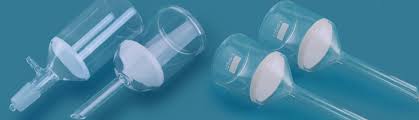
1. Industrial and Scientific Applications of Sintered Stainless Steel Filters
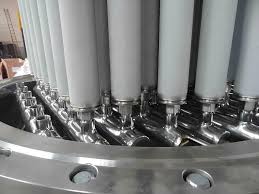
Sintered stainless steel filters are designed for exceptionally harsh conditions where high pressure, high temperature, and mechanical shock are routine. Their ductility, thermal shock resistance, and corrosion tolerance make them the leading material in heavy-duty industrial filtration.
Below are the primary industrial sectors where stainless steel sintered filters dominate.
1.1 Chemical and Petrochemical Processing
Why Stainless Steel is Preferred
Tolerates continuous operation up to 600–1000°C.
Withstands acidic or alkaline process fluids when appropriate alloys are used.
Resists abrasion caused by particulates in slurries and reaction mixtures.
Typical Applications
Polymer melt filtration
Catalyst recovery (e.g., Ni, Pd, Pt catalysts)
Filtration of corrosive reaction intermediates
Gas purification in petrochemical reactors
Steam and hot gas filtration in chemical loops
Industry Example
In polypropylene production, stainless steel filters maintain stable porosity while processing molten polymers under extreme temperatures and pressure fluctuations. Glass filters would fracture immediately in such an environment.
1.2 Oil, Gas, and Energy Industries
Where They Are Used
Natural gas filtration
Hydraulic fracturing fluid filtration
Compressor and turbine protection
Fuel gas polishing at wellheads
Stainless steel filters withstand the intense pressure cycles, constant vibration, and thermal changes inherent to energy production.
Case Example
A natural gas facility uses sintered stainless steel filters to remove particulates before entering compressors. Due to pressure shocks and heavy vibration, glass filters are entirely unsuitable.
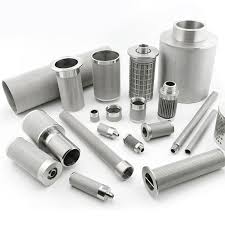
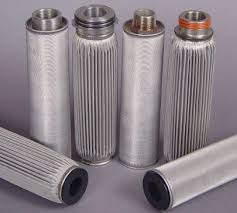
1.3 Food, Beverage, and Brewing Processes
Applications
Dairy and beverage sterilization
Steam filtration used in pasteurization
Oil purification in food processing
CO₂ polishing in breweries
Stainless steel's cleanability, long life, and high-temperature resistance ensure safe and hygienic filtering.
1.4 Pharmaceutical and Biotech Production
Used For
High-temperature steam sterilization (CIP/SIP systems)
Sterile air filtration
Filtration of solvents and organic liquids
Bioreactor gas inlet protection
Sintered stainless steel is preferred for industrial-scale pharmaceutical operations where mechanical durability and sterilization cycles are critical.
1.5 Water Treatment, Desalination, and Environmental Engineering
Strengths
Abrasion resistance for groundwater and wastewater
Excellent backwash capability
High flow rate under pressure
Applications
Reverse osmosis (RO) pre-filtration
Membrane protection
Sludge dewatering
Aeration systems
Because stainless steel filters can be regenerated repeatedly, they reduce long-term maintenance costs in continuous water systems.
1.6 Automotive, Aerospace, and Mechanical Engineering
Applications
Hydraulic fluid filtration
Gearbox oil filtration
Fuel line polishing
Turbocharger gas filtration
The filter's mechanical resilience ensures reliable performance under vibration and temperature cycling.
2. Industrial and Scientific Applications of Sintered Glass Filters
Sintered glass filters provide a level of chemical inertness and purity that stainless steel cannot match. They are indispensable in laboratory environments, analytical sciences, and specific production processes requiring absolute freedom from metal ion contamination.
2.1 Analytical and Laboratory Filtration
Why Sintered Glass is Essential
Chemically inert to most acids and solvents
Precise and uniform pore size
Eliminates metal contamination in sensitive analyses
Applications
Gravimetric analysis
Microbiological filtration
Sample preparation for spectroscopy
High-purity aqueous solution filtration
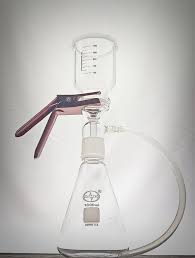
Laboratory vacuum filtration
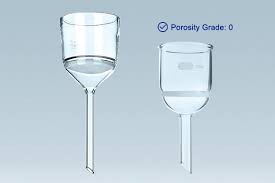
Glass frit filters (G1–G5) remain one of the most widely used filter types in chemical labs worldwide.
2.2 Pharmaceutical and Biochemical Research
Used For
Sterile sample preparation
Protein solution clarification
DNA/RNA buffer purification
Cell culture media filtration
Filtration of strong acids used in reagent preparation
Glass is preferred when chemical cleanliness outweighs the risk of breakage.
2.3 Semiconductor and Microelectronics Manufacturing
Importance in This Industry
No metal ion leaching
High compatibility with acids used in wafer processing (HF exceptions apply)
Suitable for ultrapure water (UPW) filtration in controlled flow applications
Glass maintains purity levels required in cutting-edge electronics

2.4 Specialty Chemical Production
Examples
High-purity silica sol production
Acid catalyst purification
Laboratory-scale organic synthesis
Sintered glass is ideal for reactions involving high-purity acids and volatile solvents.
2.5 Environmental Testing and Air Quality Monitoring
Applications
Aerosol sampling
Airborne particulate collection
VOC filtration (compatible solvents)
High-purity sampling for EPA and ISO environmental methods
Glass filters ensure chemically inert sample capture.
3. Selection Guidelines: Which Should You Choose?
Selecting between sintered stainless steel and sintered glass requires evaluating operating conditions, chemical environment, purity requirements, and mechanical constraints.
Below is a structured decision framework.
3.1 Select Sintered Stainless Steel When You Need:
High Pressure
Hydraulic systems
Natural gas and high-pressure air
Reactor and processing lines
High Temperature
Steam
Hot gases
Melt filtration
Mechanical Durability
Vibrations
Impact risk
High flow velocity
Thermal shock cycles
Long Lifespan & Reusability
Frequent backwashing
Harsh cleaning cycles
Chemical industry processes
Applications Best Suited
Petrochemical plants
Food and beverage sterilization
Power generation
Wastewater treatment
Industrial filtration lines
If strength and endurance are your priority, stainless steel is the clear winner.

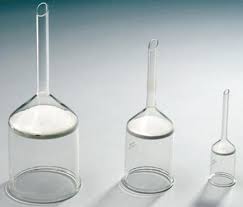
3.2 Select Sintered Glass When You Need:
Chemical Inertness
No metal ions
High-purity water systems
Acidic environments
Precise & Uniform Pore Structures
Gravimetric analysis
Micro-filtration
Analytical chemistry
Laboratory Use
Reagent filtration
Sample prep
Bench-top chemical reactions
High Purity Without Metallic Contamination
Pharmaceutical R&D
Semiconductor processes
Environmental sampling
Applications Best Suited
Analytical labs
Pharmaceutical research labs
Chemical reagent preparation
R&D environments
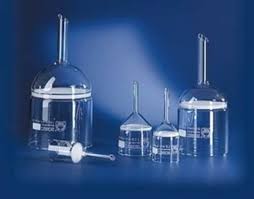
If purity and chemical neutrality matter the most, sintered glass is superior.
4. Side-by-Side Application Matrix
|
Application Area |
Sintered Stainless Steel |
Sintered Glass |
|
High-pressure gas or fluid filtration |
✔ Best choice |
✘ Not suitable |
|
High-temperature processing |
✔ Excellent |
✔ Good to 400–500°C |
|
Chemical laboratories |
✘ Not preferred |
✔ Ideal |
|
Ultrapure chemical processing |
✘ Possible but not optimal |
✔ Best choice |
|
Acidic environment |
✔ Good (depending on alloy) |
✔ Excellent |
|
Strong alkaline environment |
✔ Excellent |
✘ Poor |
|
Industrial durability |
✔ Very high |
✘ Low |
|
Semiconductor ultrapure processes |
✘ Risk of metal leaching |
✔ Ideal |
|
Large-scale continuous filtration |
✔ Industrial grade |
✘ Lab scale |
|
Frequent backwashing or regeneration |
✔ Excellent |
✘ Limited |
5. Real-World Case Studies
5.1 Case Study 1 - High-Pressure Natural Gas Compressor Station
Problem:
A gas station required a filter capable of withstanding 7 MPa pressure, vibration, and frequent backwashing.
Solution:
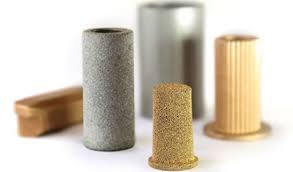
Sintered stainless steel cylindrical elements.
Reasoning:
Glass could not tolerate the pressure.
Steel maintained structural integrity for years with repeated cleaning.
Outcome:
Maintenance downtime dropped by 60%, operating cost significantly reduced.
5.2 Case Study 2 - Pharmaceutical Laboratory Sample Purification
Problem:
A pharmaceutical R&D lab required a filter with zero metal contamination for HPLC-grade sample preparation.
Solution:
Sintered glass frit filters (G3–G5).
Reasoning:
Acids and organics involved would corrode steel or cause ion leaching.
Glass offered inertness and consistent porosity.
Outcome:
Chromatographic reliability increased and metal contamination peaks were eliminated.
5.3 Case Study 3 - Brewery CO₂ Polishing and Sterile Filtration
Problem:
A brewery needed sterile gas filtration at elevated temperature and pressure.
Solution:
Sintered stainless steel disc filters.
Reasoning:
Reusable via steam sterilization
Resistant to pressure fluctuations
Durable in high-humidity, high-temperature environments
Outcome:
Reduced replacement frequency by 75% and improved product safety.
5.4 Case Study 4 - Semiconductor Wet Process Line
Problem:
High-purity acid used in etching required 100% inert filtration.
Solution:
Sintered glass filter holders.
Reasoning:
Glass remains stable in strong acids (except HF).
No risk of metal contamination in chips.
Outcome:
Achieved the required purity for 7 nm wafer production.

6. Final Practical Recommendations
Choose Sintered Stainless Steel When:
Pressure > 1 MPa
Temperature > 200°C
There is vibration or thermal cycling
You require long service life and frequent regeneration
You need filtration of viscous fluids or hot gases
Choose Sintered Glass When:
Working with strong acids (non-HF)
Chemical purity must be absolute
You are in a laboratory or small production setting
Avoiding metal contamination is essential

READ MORE:Performance Comparison: Mechanical, Thermal, and Chemical Behaviors of Sintered Stainless Steel vs. Sintered Glass Filters
7. Conclusion
Sintered stainless steel and sintered glass filters occupy distinct yet complementary roles in modern industry and scientific research. Stainless steel dominates industrial, heavy-duty, high-pressure, and high-temperature operations due to its durability and resilience. Sintered glass excels in laboratory, pharmaceutical, semiconductor, and high-purity chemical environments where chemical inertness and pore precision are paramount.
Understanding the strengths, weaknesses, and performance characteristics of each material allows engineers and decision-makers to implement filtration solutions that maximize efficiency, safety, and reliability.