






Hey there! As a supplier of 316L Stainless Steel Wire Mesh, I often get asked about the tensile strength of this amazing product. So, let's dive right in and break it down.
First off, what's 316L stainless steel wire mesh? Well, it's made from 316L stainless steel, which is a low-carbon variation of 316 stainless steel. This type of stainless steel is super popular because it's highly resistant to corrosion, especially in harsh environments like marine settings. The wire mesh is created by weaving or welding the stainless steel wires together to form a grid-like structure.
Now, let's talk about tensile strength. Tensile strength is basically the maximum amount of stress a material can handle before it breaks or starts to deform permanently when it's being pulled apart. For 316L stainless steel wire mesh, the tensile strength can vary depending on a few factors.
One of the main factors is the diameter of the wire. Generally speaking, the thicker the wire, the higher the tensile strength. For example, a 316L stainless steel wire mesh made with a thicker wire will be able to withstand more pulling force than one made with a thinner wire. This is because a thicker wire has more material to resist the applied stress.
Another factor is the mesh size. The mesh size refers to the number of openings per linear inch in the wire mesh. A finer mesh (with more openings per inch) may have a slightly different tensile strength compared to a coarser mesh. Finer meshes often have smaller wires, which can affect their overall strength.
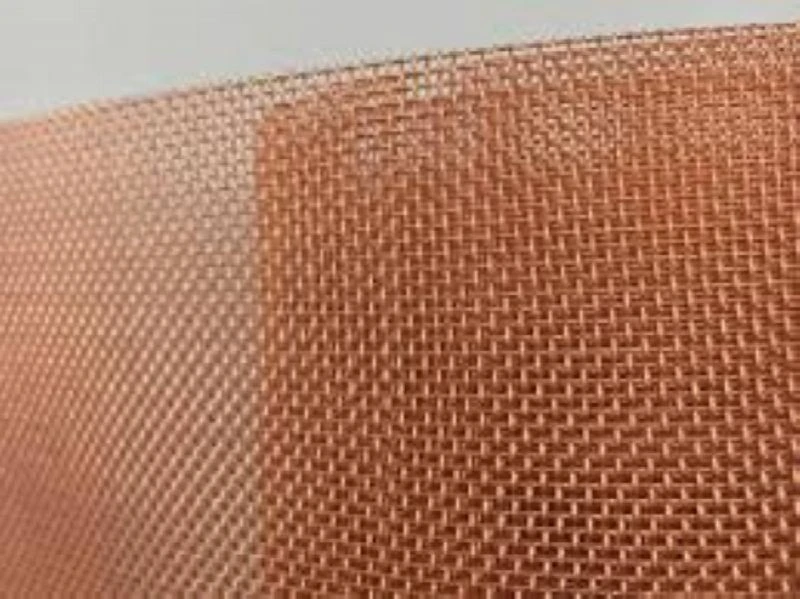
The manufacturing process also plays a role. Welded 316L stainless steel wire mesh may have different tensile properties compared to woven wire mesh. Welded mesh has the wires joined at the intersections by welding, which can create a strong bond. On the other hand, woven mesh relies on the interlocking of the wires, and its strength can be influenced by the weaving pattern.

Typically, the tensile strength of 316L stainless steel wire mesh can range from around 500 MPa (megapascals) to 700 MPa. But remember, this is just a general range, and the actual value can be different based on the factors we just discussed.
So, why is knowing the tensile strength of 316L stainless steel wire mesh important? Well, it's crucial for applications where the wire mesh will be subjected to pulling or stretching forces. For example, if you're using the wire mesh for a fencing application, you want to make sure it can withstand the forces that might be applied to it, like animals pushing against it or strong winds.
In the filtration industry, the tensile strength is also important. If the wire mesh is used for filtering liquids or gases, it needs to be strong enough to hold up under the pressure of the fluid flowing through it. That's why our SS Mesh for Palm Oil Filtration is designed to have the right balance of tensile strength and filtration efficiency.
Our 316L stainless steel wire mesh comes in different forms, like Stainless Steel Wire Mesh Rolls. These rolls are convenient for various applications, and we can customize the width and length according to your needs.
We also offer Phosphor Bronze Wire Mesh for those who have different requirements. Phosphor bronze wire mesh has its own unique properties, including good corrosion resistance and electrical conductivity.
If you're in the market for high-quality 316L stainless steel wire mesh or any of our other products, don't hesitate to get in touch. Whether you're a small business looking for a specific mesh for a project or a large corporation in need of bulk orders, we've got you covered. We can provide you with detailed technical specifications, samples, and competitive pricing. So, reach out to us today and let's start a conversation about your wire mesh needs.
References:
- ASM Handbook Volume 1: Properties and Selection: Irons, Steels, and High-Performance Alloys
- Stainless Steel: A Practical Guide by John R. Davis