






Hey there! As a supplier of copper wire mesh, I often get asked about the mesh count of copper wire mesh. So, I thought I'd write this blog to break it down for you in a simple way.
First off, let's understand what mesh count actually means. Mesh count refers to the number of openings per linear inch in a wire mesh. For example, if a copper wire mesh has a mesh count of 10, it means there are 10 openings in one inch of the mesh. This measurement is super important as it directly affects the performance and application of the wire mesh.
The mesh count of copper wire mesh can vary widely, from very coarse meshes with low counts to extremely fine meshes with high counts. Coarse meshes, say with a mesh count of 1 - 10, have larger openings. These are great for applications where you need to allow a lot of airflow or where you're dealing with larger particles. For instance, in some industrial filtration processes where you're separating big chunks of materials, a low - mesh - count copper wire mesh would be the go - to choice.
On the other hand, fine meshes with high mesh counts, like 100 or more, have tiny openings. These are used in applications that require precise filtration or screening. Think about the electronics industry, where you might need to filter out very small dust particles or in some scientific research where you're working with microscopic substances.
Now, why choose copper wire mesh specifically? Copper has some awesome properties. It's highly conductive, which makes it suitable for electrical shielding applications. If you're working on a project where you need to protect sensitive electronic equipment from electromagnetic interference, a copper wire mesh can do the job. It also has good corrosion resistance, especially in certain environments. This means it can last a long time without getting damaged easily.
When it comes to different mesh counts and their uses, here are some more examples. A mesh count of around 20 - 30 is commonly used in window screens. It's fine enough to keep out insects but still allows for good ventilation. If you're into gardening, a 30 - 40 mesh copper wire mesh can be used to create barriers to keep out small pests while still letting sunlight and water through.
For those in the food industry, a medium - high mesh count like 50 - 60 can be used for filtering liquids or separating solids from liquids during the production process. It ensures that any unwanted particles are removed while maintaining the quality of the food product.
Now, I also want to mention that we offer other types of wire meshes apart from copper. We have Nickle Wire Mesh, which is known for its high strength and excellent resistance to corrosion in harsh environments. It's often used in chemical processing and marine applications.
Then there's Phosphor Bronze Wire Mesh. Phosphor bronze has good elasticity and wear resistance. It's commonly used in musical instruments, electrical contacts, and some precision machinery parts.

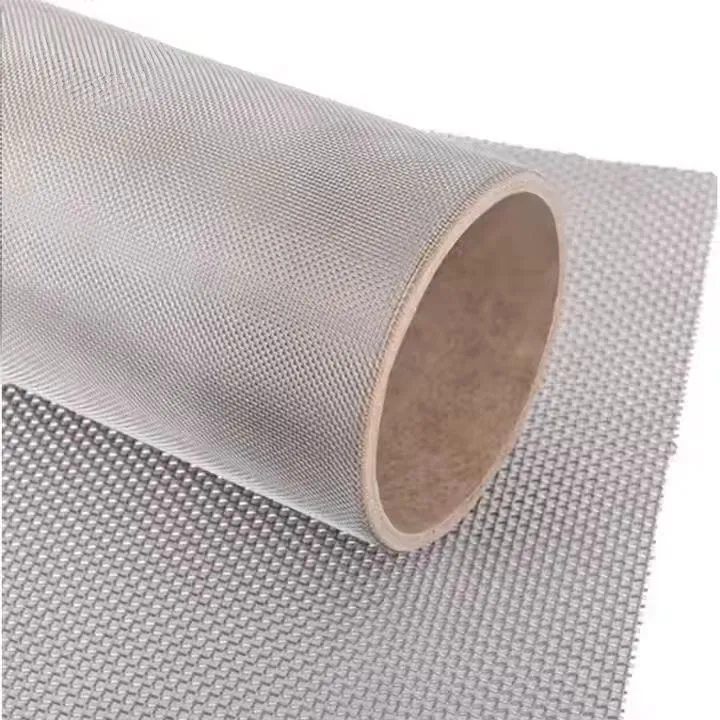
And of course, we have Brass Wire Mesh. Brass is a popular choice because of its attractive appearance and good machinability. It's used in decorative applications as well as in some industrial filtration processes.
When you're choosing the right mesh count for your project, there are a few things to consider. First, think about the size of the particles you need to filter or screen. If you're dealing with large particles, a low mesh count will be sufficient. But if it's small particles, you'll need a high mesh count.
The flow rate is also important. If you need a high flow rate of air or liquid through the mesh, a lower mesh count is better as it has larger openings. But if you need to slow down the flow and have more precise control, a higher mesh count would be appropriate.
Another factor is the strength required. Generally, coarser meshes with lower counts are stronger because they have thicker wires. If your application involves a lot of stress or pressure, you might want to go for a lower mesh count.
We at our company take pride in providing high - quality copper wire mesh and other wire meshes. Our products are made to meet different standards and requirements. We use advanced manufacturing techniques to ensure that the mesh counts are accurate and the quality is top - notch.
Whether you're a small - scale DIY enthusiast or a large - scale industrial manufacturer, we have the right wire mesh for you. We can customize the mesh count according to your specific needs. If you have a unique project that requires a special mesh count that's not commonly available, just let us know, and we'll do our best to make it happen.
If you're interested in learning more about our copper wire mesh or any of our other products, don't hesitate to reach out. We're always here to answer your questions and help you find the perfect solution for your project. Whether you need advice on choosing the right mesh count or want to place an order, we're just a message or a call away.
In conclusion, understanding the mesh count of copper wire mesh is crucial for getting the best results in your projects. It determines the functionality and performance of the wire mesh. With our wide range of options and expertise, we can help you make the right choice. So, if you're in the market for copper wire mesh or any of our other wire mesh products, contact us today and let's start working on your project together.
References
- "Wire Mesh Handbook" - A comprehensive guide on wire mesh properties and applications.
- Industry research reports on the use of copper wire mesh in different sectors.