






As a leading supplier of SS wire mesh, I'm excited to share detailed information about its specifications. SS wire mesh, short for stainless steel wire mesh, is a versatile and widely used product in various industries due to its excellent properties such as corrosion resistance, high strength, and durability. In this blog, we'll delve into the key specifications that define SS wire mesh.

Material Composition
The first and most fundamental specification of SS wire mesh is its material composition. Stainless steel is an alloy primarily composed of iron, chromium, and nickel, with other elements added in smaller quantities to enhance specific properties. The most common grades of stainless steel used in wire mesh production are 304 and 316L.
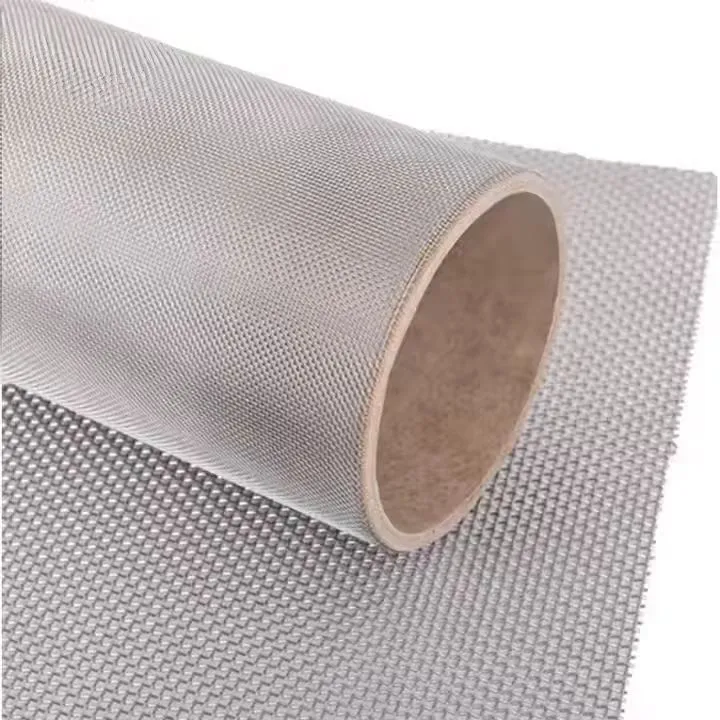
- 304 Stainless Steel: This grade contains approximately 18% chromium and 8% nickel. It offers good corrosion resistance in most environments, making it suitable for a wide range of applications, including general industrial use, filtration, and decorative purposes.
- 316L Stainless Steel Wire Mesh: With a higher nickel content (around 10%) and the addition of molybdenum (about 2 - 3%), 316L stainless steel provides superior corrosion resistance, especially in harsh environments such as marine applications and chemical processing. The "L" in 316L indicates low carbon content, which reduces the risk of carbide precipitation during welding, ensuring better corrosion resistance in welded areas.
Wire Diameter
Wire diameter is another crucial specification that significantly affects the performance and characteristics of SS wire mesh. It is typically measured in millimeters (mm) or inches. The wire diameter determines the strength, openness, and filtration efficiency of the mesh.
- Fine Wire Diameters: Meshes with fine wire diameters (e.g., 0.05 - 0.2 mm) are often used for applications requiring high precision filtration, such as in the pharmaceutical and food industries. These meshes have smaller openings, allowing for the separation of fine particles.
- Coarse Wire Diameters: On the other hand, meshes with coarse wire diameters (e.g., 1 - 5 mm) are suitable for applications where strength and durability are more important than fine filtration. They are commonly used in industrial fencing, reinforcement, and architectural applications.
Mesh Size
Mesh size refers to the number of openings per linear inch (or per centimeter in the metric system). It is a measure of the spacing between the wires in the mesh. Mesh size is typically expressed as a number, such as 10 mesh, 20 mesh, etc.
- Small Mesh Sizes: Meshes with small mesh sizes (e.g., 100 mesh or higher) have a large number of openings per inch, resulting in smaller openings. These meshes are used for fine filtration, such as in air and water purification systems.
- Large Mesh Sizes: Meshes with large mesh sizes (e.g., 1 - 10 mesh) have fewer openings per inch and larger openings. They are suitable for applications where larger particles need to be retained or where ventilation and visibility are important, such as in window screens and safety barriers.
Weave Type
The weave type of SS wire mesh also plays an important role in determining its properties and applications. There are several common weave types, each with its own unique characteristics.

- Plain Weave: This is the simplest and most common weave type. In a plain weave, the wires are woven over and under each other in a regular pattern. Plain weave meshes have a uniform appearance and are suitable for general filtration and screening applications.
- Twilled Weave: In a twilled weave, the wires are woven in a diagonal pattern, creating a more open and flexible mesh compared to plain weave. Twilled weave meshes are often used in applications where higher strength and flexibility are required, such as in conveyor belts and sieves.
- Dutch Weave: Dutch weave meshes are characterized by a combination of fine warp wires and coarse weft wires. This results in a mesh with very small openings in one direction and larger openings in the other direction, making it ideal for high-precision filtration applications, such as in the chemical and pharmaceutical industries.
Width and Length
The width and length of SS wire mesh are important specifications that need to be considered based on the specific application requirements. SS wire mesh is available in a wide range of standard widths and lengths, and custom sizes can also be manufactured upon request.
- Standard Sizes: Common standard widths range from 0.5 to 2 meters, and standard lengths can be up to 30 meters or more. These standard sizes are suitable for most general applications and are readily available in the market.
- Custom Sizes: For applications with specific dimensional requirements, custom-sized SS wire mesh can be produced. This allows for a perfect fit and optimal performance in various industrial and architectural projects.
Surface Finish
The surface finish of SS wire mesh can affect its appearance, corrosion resistance, and ease of cleaning. There are several common surface finishes available for SS wire mesh.
- Bright Finish: A bright finish gives the mesh a smooth and shiny appearance. It is often used in decorative applications where aesthetics are important, such as in architectural facades and interior design elements.
- Dull Finish: A dull finish has a more matte appearance and is less reflective. It is commonly used in industrial applications where a non-reflective surface is required, such as in filtration systems and machinery guards.
- Passivated Finish: Passivation is a chemical treatment process that enhances the corrosion resistance of stainless steel. A passivated finish provides an extra layer of protection against rust and corrosion, making it suitable for applications in harsh environments.
Applications of SS Wire Mesh
SS wire mesh is used in a wide variety of applications across different industries due to its unique combination of properties. Some of the common applications include:
- Filtration: SS wire mesh is widely used in filtration applications, such as in water treatment plants, oil and gas refineries, and food processing facilities. It can effectively separate solid particles from liquids or gases based on the mesh size and weave type.
- Screening: In industries such as mining, agriculture, and construction, SS wire mesh is used for screening purposes. It can be used to separate different sizes of materials, such as rocks, grains, and minerals.
- Reinforcement: SS wire mesh is often used as a reinforcement material in concrete structures, such as bridges, buildings, and pavements. It enhances the strength and durability of the concrete by providing additional support and preventing cracking.
- Decorative Purposes: With its attractive appearance and various surface finishes, SS wire mesh is also used for decorative purposes in architecture and interior design. It can be used to create partitions, screens, and decorative panels.
Other Related Products
In addition to SS wire mesh, we also offer other related products such as Copper Wire Mesh and Nickle Wire Mesh.
- Copper Wire Mesh: Copper wire mesh is known for its excellent electrical conductivity, thermal conductivity, and corrosion resistance. It is commonly used in electrical applications, electromagnetic shielding, and decorative purposes.
- Nickle Wire Mesh: Nickle wire mesh offers high strength, good corrosion resistance, and excellent heat resistance. It is used in applications such as chemical processing, high-temperature filtration, and battery manufacturing.
Contact Us for Procurement
If you're interested in purchasing SS wire mesh or any of our other products, we'd love to hear from you. Our team of experts can provide you with detailed product information, help you select the right specifications for your application, and offer competitive pricing. Whether you need a small quantity for a prototype or a large order for a major project, we have the capacity to meet your needs. Please feel free to reach out to us to start a procurement discussion.
References
- ASM Handbook Committee. (2004). ASM Handbook Volume 13A: Corrosion: Fundamentals, Testing, and Protection. ASM International.
- Metals Handbook Committee. (1990). Metals Handbook Desk Edition. ASM International.
- Perry, R. H., & Green, D. W. (1997). Perry's Chemical Engineers' Handbook. McGraw-Hill.