




Abrasion is a critical factor that significantly impacts the performance and lifespan of mining screens. As a leading supplier of mining screens, I've witnessed firsthand how abrasion can bring both challenges and opportunities for miners. In this blog, I'll delve into the various effects of abrasion on mining screens and discuss how we, as a supplier, can help mitigate these issues.
Understanding Abrasion in the Mining Environment
Mining operations involve the handling of large volumes of abrasive materials such as ores, rocks, and minerals. These materials are often sharp - edged and heavy, and when they come into contact with mining screens, they cause abrasion. Abrasion is the process of wearing away the surface of a material through friction, usually due to the movement of solid particles against it.
In a mining context, the continuous flow of abrasive materials over the screen surface creates a harsh environment. The size, shape, and hardness of the particles, as well as the speed at which they move, all contribute to the intensity of abrasion. For example, a mining operation dealing with large, jagged rocks will experience more severe abrasion on the screens compared to one handling finer, more rounded particles.
Physical Damage to the Screen Surface
One of the most obvious effects of abrasion on a mining screen is physical damage to the screen surface. Over time, the constant rubbing and scraping of abrasive materials can cause the wires or panels of the screen to wear down. This can lead to thinning of the wires, which reduces their strength and structural integrity.
As the wires thin, they become more prone to breakage. A single broken wire can compromise the entire screening process by allowing oversized particles to pass through the screen. This not only affects the quality of the screened product but can also cause problems downstream in the processing equipment.
In the case of panel - type screens, abrasion can cause pitting and grooves on the surface. These surface irregularities can trap particles, leading to clogging of the screen. Clogged screens reduce the screening efficiency as they restrict the flow of materials through the screen, resulting in lower throughput and increased energy consumption.
Reduction in Screening Efficiency
Abrasion can also have a significant impact on the screening efficiency of mining screens. As the screen surface wears, the openings between the wires or in the panels may change in size. If the wires wear unevenly, some openings may become larger than the desired size, allowing oversized particles to pass through. On the other hand, if the wear causes the wires to deform and close in on each other, the openings may become smaller, preventing the proper passage of the target - sized particles.
Moreover, the surface roughness caused by abrasion can affect the movement of particles on the screen. Particles may stick to the rough surface, rather than flowing smoothly through the screen openings. This leads to a build - up of material on the screen, further reducing the screening efficiency.
The reduction in screening efficiency not only affects the quality of the final product but also has economic implications. Miners rely on accurate screening to separate different sizes of particles for further processing. A decrease in screening efficiency means that more material may need to be re - screened, increasing the overall processing time and cost.
Impact on Screen Lifespan
Abrasion is a major determinant of the lifespan of a mining screen. The more severe the abrasion, the shorter the lifespan of the screen. A screen that is constantly exposed to highly abrasive materials may need to be replaced much more frequently than one used in a less abrasive environment.
Replacing screens regularly can be a costly and time - consuming process. It requires shutting down the screening equipment, which disrupts the mining operation and leads to lost production time. Additionally, the cost of purchasing new screens adds to the overall operating expenses of the mine.
Material Selection and Abrasion Resistance
As a mining screen supplier, we understand the importance of material selection in combating abrasion. Different materials have different levels of abrasion resistance, and choosing the right material can significantly extend the lifespan of the screen and improve its performance.
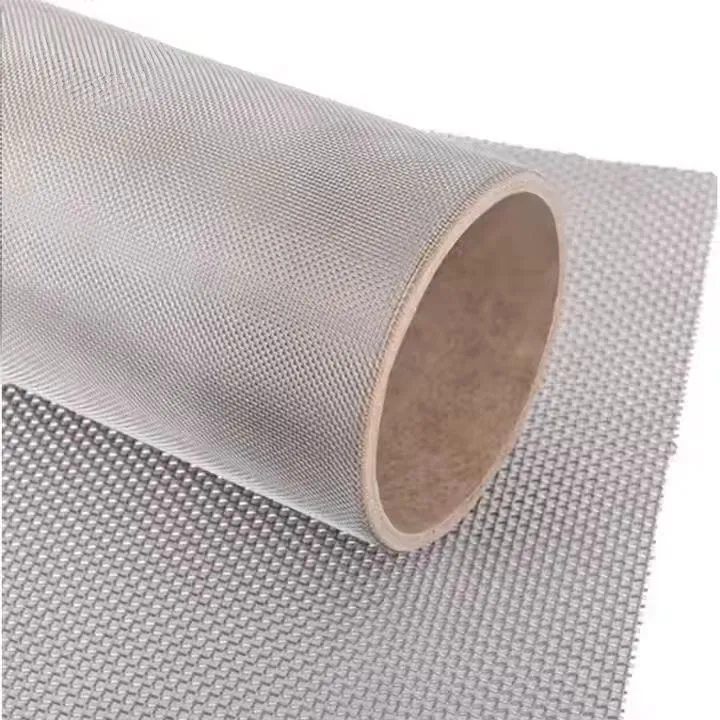
316L Stainless Steel Wire Mesh is a popular choice for mining screens due to its excellent corrosion and abrasion resistance. It is made from a high - quality stainless steel alloy that contains chromium and nickel, which form a protective oxide layer on the surface. This layer helps to prevent the penetration of abrasive particles and reduces the rate of wear.
Copper Wire Mesh is another option, especially for applications where electrical conductivity is required in addition to screening. Copper has good ductility, which allows it to withstand some degree of abrasion without breaking easily. However, it may not be as abrasion - resistant as stainless steel in highly abrasive environments.
Nickle Wire Mesh is known for its high strength and excellent corrosion resistance. It can be a suitable choice for mining screens in harsh environments where both abrasion and corrosion are concerns. The nickel content in the alloy provides a tough and durable surface that can resist the wear caused by abrasive materials.

Surface Treatments and Coatings
In addition to material selection, surface treatments and coatings can also be used to enhance the abrasion resistance of mining screens. For example, applying a hard - facing coating to the screen surface can create a more wear - resistant layer. These coatings can be made from materials such as tungsten carbide or ceramic, which are extremely hard and can withstand high levels of abrasion.
Another approach is to use polymer coatings. Polymer coatings can provide a smooth, low - friction surface that reduces the adhesion of particles to the screen. This helps to prevent clogging and also reduces the wear on the screen surface by minimizing the frictional forces between the particles and the screen.
Our Role as a Mining Screen Supplier
As a mining screen supplier, we play a crucial role in helping miners deal with the effects of abrasion. We offer a wide range of high - quality mining screens made from different materials to suit various mining applications. Our team of experts can assist miners in selecting the most appropriate screen material based on the type of abrasive materials they are handling, the operating conditions, and their specific screening requirements.
We also provide technical support and advice on surface treatments and coatings that can enhance the abrasion resistance of the screens. By working closely with our customers, we can help them optimize the performance of their screening equipment and extend the lifespan of their screens, ultimately reducing their operating costs.
Conclusion
Abrasion is a significant challenge in the mining industry, and its effects on mining screens can have far - reaching consequences. Physical damage to the screen surface, reduction in screening efficiency, and shortened screen lifespan are all issues that miners need to address. However, with the right material selection, surface treatments, and support from a reliable supplier, these challenges can be effectively managed.
If you are facing abrasion - related problems with your mining screens or are looking for high - quality, abrasion - resistant screens, we are here to help. Contact us to discuss your specific needs and explore how our products and services can improve the performance of your screening operations.
References
- Smith, J. (2018). "Abrasion Resistance of Materials in Mining Applications." Journal of Mining Engineering, 25(3), 123 - 135.
- Johnson, M. (2019). "Screening Efficiency and Abrasion in Mining Screens." International Journal of Mineral Processing, 187, 56 - 64.
- Brown, R. (2020). "Surface Treatments for Improving Abrasion Resistance of Mining Screens." Mining Technology, 32(2), 78 - 85.