






As a supplier of SS (Stainless Steel) wire mesh, I often encounter inquiries from customers about whether SS wire mesh can be welded. This is a crucial question, as welding can significantly expand the applications of wire mesh in various industries. In this blog post, I'll delve into the details of welding SS wire mesh, exploring its feasibility, methods, advantages, and limitations.
Feasibility of Welding SS Wire Mesh
The short answer is yes, SS wire mesh can be welded. Stainless steel is a popular material for wire mesh due to its excellent corrosion resistance, strength, and durability. These properties also make it suitable for welding. However, the success of the welding process depends on several factors, including the type of stainless steel, wire diameter, mesh size, and the welding method used.
There are different grades of stainless steel, such as 304, 316, and 430. Each grade has its own chemical composition and physical properties, which can affect the welding process. For example, austenitic stainless steels like 304 and 316 are generally more weldable than ferritic stainless steels like 430. Austenitic stainless steels have better ductility and toughness, which helps prevent cracking during welding.
Welding Methods for SS Wire Mesh
Resistance Welding
Resistance welding is one of the most common methods used for welding SS wire mesh. It involves passing an electric current through the wire mesh at the point of contact between the wires. The resistance to the current flow generates heat, which melts the wires and fuses them together. Resistance welding is fast, efficient, and produces a strong bond. There are two main types of resistance welding used for wire mesh: spot welding and seam welding.
- Spot Welding: In spot welding, the electrodes apply pressure to the wire mesh at specific points, and a short burst of electric current is passed through the electrodes. This creates a series of welded spots along the mesh, joining the wires together. Spot welding is suitable for applications where a strong, localized bond is required, such as in the construction of wire mesh panels.
- Seam Welding: Seam welding is similar to spot welding, but instead of creating individual spots, a continuous seam is formed along the mesh. This is achieved by using rotating electrodes that apply pressure and current as they move along the mesh. Seam welding is commonly used for manufacturing tubular wire mesh products, such as filters and screens.
TIG Welding
Tungsten Inert Gas (TIG) welding is another popular method for welding SS wire mesh. It uses a non-consumable tungsten electrode to create an arc between the electrode and the wire mesh. The arc melts the wire mesh, and a filler metal can be added to the weld pool to strengthen the bond. TIG welding provides precise control over the welding process, allowing for high-quality welds with minimal distortion. It is suitable for welding thin wire mesh and for applications where a clean, aesthetically pleasing weld is required.
MIG Welding
Metal Inert Gas (MIG) welding is a semi-automatic or automatic welding process that uses a consumable wire electrode and an inert gas shield to protect the weld from oxidation. MIG welding is faster than TIG welding and can be used for welding thicker wire mesh. However, it requires more skill and experience to achieve high-quality welds, as the welding parameters need to be carefully adjusted to prevent spatter and porosity.
Advantages of Welding SS Wire Mesh
Enhanced Strength and Durability
Welding SS wire mesh creates a strong, permanent bond between the wires, increasing the overall strength and durability of the mesh. This makes it suitable for applications where the mesh will be subjected to high stress or heavy loads, such as in industrial fencing, conveyor belts, and mining screens.
Customization
Welding allows for the customization of SS wire mesh products. It enables the joining of different mesh sizes, wire diameters, and shapes to create unique designs and configurations. This flexibility makes it possible to meet the specific requirements of various industries and applications.
Improved Aesthetics
Welded SS wire mesh can have a more uniform and professional appearance compared to non-welded mesh. The smooth, continuous welds enhance the visual appeal of the mesh, making it suitable for architectural and decorative applications, such as interior partitions, facades, and furniture.
Limitations of Welding SS Wire Mesh
Heat Affected Zone (HAZ)
During the welding process, the heat generated can cause changes in the microstructure of the stainless steel in the area around the weld. This is known as the heat affected zone (HAZ). The HAZ may have reduced corrosion resistance and mechanical properties compared to the base metal. To minimize the effects of the HAZ, proper welding techniques and post-weld treatments, such as annealing, may be required.
Distortion
Welding can cause distortion of the wire mesh, especially if the welding process is not carefully controlled. The heat generated during welding can cause the wires to expand and contract, leading to warping and misalignment of the mesh. To prevent distortion, it is important to use appropriate welding parameters, fixtures, and clamping techniques.
Applications of Welded SS Wire Mesh
Welded SS wire mesh has a wide range of applications in various industries, including:
- Construction: Welded SS wire mesh is used in the construction of buildings, bridges, and other structures for reinforcement, fencing, and safety purposes.
- Industrial: It is used in industrial applications such as filtration, screening, and conveying. Welded wire mesh screens are commonly used in the mining, chemical, and food processing industries.
- Agriculture: Welded SS wire mesh is used in agriculture for animal fencing, poultry cages, and crop protection.
- Decorative: Welded SS wire mesh is used in architectural and decorative applications, such as interior design, furniture, and art installations.
Other Types of Wire Mesh for Comparison
In addition to SS wire mesh, there are other types of wire mesh available in the market, such as Nickle Wire Mesh, Brass Wire Mesh, and Copper Wire Mesh. Each type of wire mesh has its own unique properties and applications.
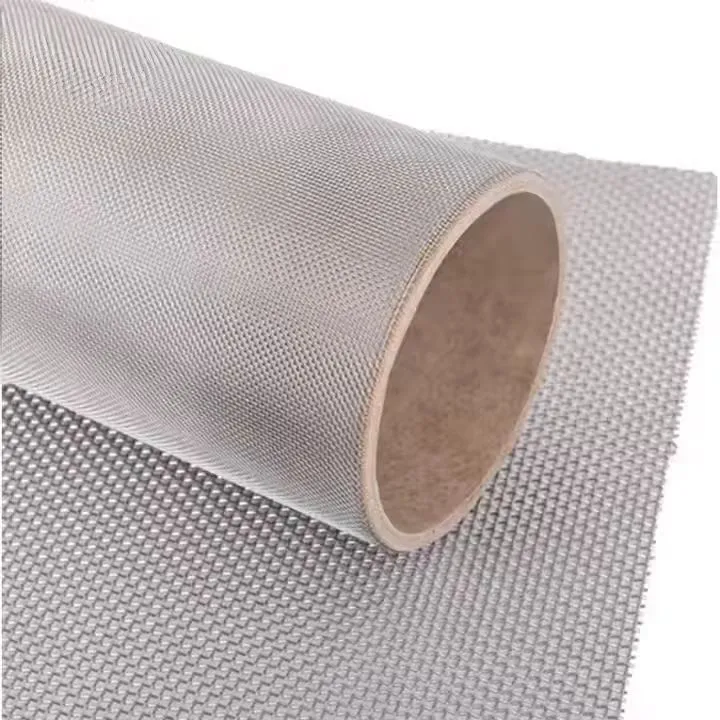

- Nickle Wire Mesh: Nickel wire mesh is known for its high corrosion resistance, heat resistance, and electrical conductivity. It is commonly used in chemical processing, electronics, and aerospace applications.
- Brass Wire Mesh: Brass wire mesh is a popular choice for decorative applications due to its attractive golden color. It also has good corrosion resistance and is used in applications such as window screens, filters, and jewelry.
- Copper Wire Mesh: Copper wire mesh is highly conductive and has excellent thermal conductivity. It is used in electrical applications, such as grounding grids and electromagnetic shielding, as well as in filtration and screening applications.
Conclusion
In conclusion, SS wire mesh can be successfully welded using various methods, each with its own advantages and limitations. Welding SS wire mesh offers enhanced strength, durability, customization, and aesthetics, making it suitable for a wide range of applications in different industries. However, it is important to consider the factors that can affect the welding process, such as the type of stainless steel, wire diameter, mesh size, and welding method, to ensure high-quality welds.
If you are interested in purchasing SS wire mesh or have any questions about welding SS wire mesh, please feel free to contact us for more information and to discuss your specific requirements. We are a reliable supplier of SS wire mesh and can provide you with high-quality products and professional advice.
References
- ASM Handbook, Volume 6: Welding, Brazing, and Soldering. ASM International.
- Welding Metallurgy and Weldability of Stainless Steels. John C. Lippold and David J. Kotecki. Wiley.
- The Welding Institute (TWI) - Technical Information Service.