






Can perforated tubes be used in pharmaceutical manufacturing?
In the highly regulated and precision - driven field of pharmaceutical manufacturing, every component and material used must meet strict quality, safety, and performance standards. As a perforated tube supplier, I am often asked whether perforated tubes can be used in this critical industry. In this blog, we will explore the potential applications, advantages, and considerations of using perforated tubes in pharmaceutical manufacturing.
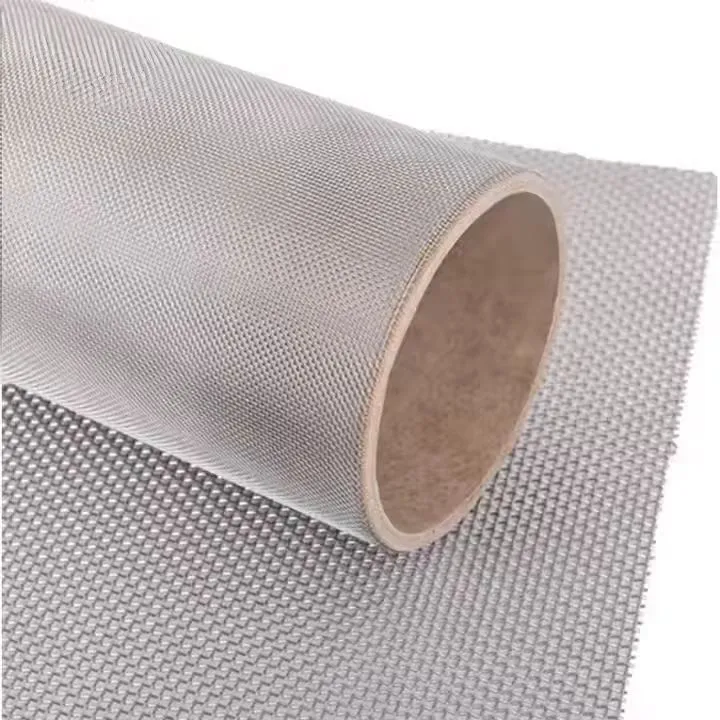

Potential Applications of Perforated Tubes in Pharmaceutical Manufacturing
Filtration Processes
Filtration is a fundamental step in pharmaceutical manufacturing, used to separate impurities, particles, and unwanted substances from liquids or gases. Perforated tubes can serve as an integral part of filtration systems. For example, they can be used as a support structure for filter media. The holes in the perforated tube allow the fluid to pass through while providing mechanical support to the filter material, ensuring its stability during the filtration process. This is similar to the use of SS Mesh for Palm Oil Filtration, where a mesh structure is used to separate components in the palm oil industry. In pharmaceuticals, this can help in the purification of raw materials, intermediate products, and final drug formulations.
Drying and Evaporation
In the drying and evaporation stages of pharmaceutical manufacturing, perforated tubes can be used to enhance the efficiency of the process. They can be designed to allow hot air or other drying agents to pass through the product, increasing the surface area exposed to the drying medium. This promotes faster and more uniform drying, which is crucial for maintaining the quality and stability of pharmaceutical products. For instance, in the production of solid dosage forms like tablets and capsules, proper drying can prevent issues such as caking and degradation of the active ingredients.
Mixing and Blending
Perforated tubes can also play a role in mixing and blending operations. When used in a mixing vessel, they can help in the distribution of fluids, gases, or powders. The holes in the tube allow for a controlled release of substances, ensuring a more homogeneous mixture. This is particularly important in pharmaceutical manufacturing, where precise mixing of active pharmaceutical ingredients (APIs) and excipients is essential for the efficacy and consistency of the final product.
Advantages of Using Perforated Tubes in Pharmaceutical Manufacturing
Customizability
One of the significant advantages of perforated tubes is their high degree of customizability. We can manufacture perforated tubes with different hole sizes, patterns, and tube diameters to meet the specific requirements of pharmaceutical processes. For example, in a filtration application, a smaller hole size can be used to capture finer particles, while a larger hole size may be suitable for applications where a higher flow rate is needed. This flexibility allows pharmaceutical manufacturers to optimize their processes according to the characteristics of the products they are producing.
Material Compatibility
Perforated tubes can be made from a variety of materials, including stainless steel, nickel, and other alloys. Stainless steel, such as 304L Stainless Steel Wire Mesh, is a popular choice in pharmaceutical manufacturing due to its excellent corrosion resistance, strength, and hygienic properties. It can withstand the harsh chemical environments and cleaning procedures commonly used in pharmaceutical facilities. Nickel wire mesh, like Nickle Wire Mesh, also offers good corrosion resistance and can be used in specific applications where its unique properties are beneficial.
Hygiene and Cleanability
Maintaining a high level of hygiene is of utmost importance in pharmaceutical manufacturing. Perforated tubes can be designed with smooth surfaces and rounded edges, which are easy to clean and sterilize. This helps in preventing the accumulation of contaminants and microorganisms, ensuring the purity and safety of pharmaceutical products. Additionally, the open structure of perforated tubes allows for thorough cleaning, reducing the risk of cross - contamination between different batches of products.
Considerations When Using Perforated Tubes in Pharmaceutical Manufacturing
Regulatory Compliance
The pharmaceutical industry is subject to strict regulations and standards, such as Good Manufacturing Practices (GMP). When using perforated tubes, it is essential to ensure that they comply with all relevant regulatory requirements. This includes using materials that are approved for pharmaceutical use, ensuring proper manufacturing processes, and providing documentation for traceability and quality control.
Particle Release
There is a risk of particle release from perforated tubes, especially during the manufacturing process or due to wear and tear. These particles can contaminate the pharmaceutical products and pose a risk to patient safety. Therefore, it is crucial to select high - quality materials and manufacturing processes that minimize particle generation. Regular inspection and maintenance of the perforated tubes can also help in detecting and preventing particle release issues.
Compatibility with Other Components
Perforated tubes are often used in conjunction with other components in pharmaceutical manufacturing equipment. It is important to ensure that they are compatible with these components in terms of materials, dimensions, and operating conditions. For example, the connection between the perforated tube and the filter media or the mixing vessel should be secure and leak - proof to prevent any loss of product or contamination.
Conclusion
In conclusion, perforated tubes have significant potential for use in pharmaceutical manufacturing. Their applications in filtration, drying, mixing, and other processes can improve the efficiency and quality of pharmaceutical production. The advantages of customizability, material compatibility, and hygiene make them an attractive option for pharmaceutical manufacturers. However, it is essential to carefully consider the regulatory compliance, particle release, and compatibility issues when using perforated tubes.
If you are involved in pharmaceutical manufacturing and are interested in exploring the use of perforated tubes in your processes, I encourage you to reach out for a detailed discussion. We have the expertise and experience to provide you with high - quality perforated tubes that meet your specific requirements. Let's work together to enhance the efficiency and quality of your pharmaceutical manufacturing operations.
References
- Good Manufacturing Practices (GMP) for Pharmaceuticals, International Council for Harmonisation of Technical Requirements for Pharmaceuticals for Human Use (ICH).
- Pharmaceutical Engineering: Principles and Practices, Second Edition, edited by S. K. Upadhyay and S. K. Jain.
- Handbook of Pharmaceutical Excipients, Sixth Edition, edited by Raymond C. Rowe, Paul J. Sheskey, and Marian E. Quinn.