






1. Introduction
Selecting the correct mesh type-woven wire mesh or welded wire mesh-is one of the most important early decisions in engineering design, infrastructure planning, industrial processing, architectural development, and agricultural installation. The right choice can dramatically improve long-term durability, mechanical performance, operational cost, safety, and even regulatory compliance. But when the wrong mesh type is selected, the results can include premature wear, corrosion failures, incorrect filtration results, structural failures, or excessive lifetime costs.
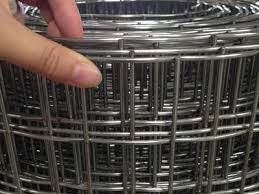
While woven and welded meshes may look similar from a distance-both being networks of wires arranged in some form of grid-the internal mechanics and performance characteristics differ profoundly. These differences affect:
Strength & rigidity
Flexibility & formability
Precision of apertures
Corrosion resistance behavior
Mechanical stability under load
Installation method & maintenance requirements
Long-term lifecycle costs
This chapter synthesizes the technical content from the earlier chapters and guides you through a systematic decision-making process. The goal is not simply to compare the two mesh types, but to teach you how to evaluate your project requirements and select the best option-whether for filtration, fencing, architectural panels, reinforcement, food processing, laboratory work, or industrial safety.
2. High-Level Comparison: Woven vs Welded Wire Mesh
Before diving into detailed analysis, here is a high-level comparison:
|
Feature |
||
|
Construction |
Wires interlaced on loom |
Wires welded at every intersection |
|
Rigidity |
Flexible |
Very rigid |
|
Aperture precision |
Extremely precise |
Moderate |
|
Fine mesh availability |
Micron-level |
Limited |
|
Shape stability |
Good, but can deform |
Excellent |
|
Load capacity |
Medium |
High |
|
Edge stability |
May unravel |
Stable |
|
Panel flatness |
Moderate |
Excellent |
|
Formability |
Can wrap curves |
Stays flat |
|
Best for |
Filtration, fine screening |
Structural, security, fencing |
This overview sets the stage for deeper technical comparison.
read more:Understanding Welded Wire Mesh: Construction, Strength, Structural Performance & Industrial Application
3. Mechanical Performance Comparison
3.1 Rigidity & Flexibility
Woven Mesh
Behaves like a metallic fabric
Flexible across both directions
Can wrap around cylinders, corners, and curved panels
Not ideal for unsupported spans or structural loads
Welded Mesh
Rigid due to fused joints
Excellent for flat panels
Maintains straight, geometric alignment
Cannot adapt to complex, curved forms
|
Property |
Woven Mesh |
Welded Mesh |
|
Flexibility |
★★★★★ |
★☆☆☆☆ |
|
Structural stiffness |
★★☆☆☆ |
★★★★★ |
|
Ability to form complex shapes |
High |
Low |
3.2 Tensile Strength & Load Behavior
Although both mesh types use the same wire material, welded mesh generally offers superior load-bearing performance due to fused intersections.
Load Behaviors
Woven: wires slip slightly under load; mesh distributes tension across weave
Welded: load travels through rigid grid; joints maintain geometry under stress
|
Load Type |
Best Mesh Type |
Reason |
|
Dead loads (vertical forces) |
Welded |
Rigid structure |
|
Impact load (shock/vibration) |
Welded (thick gauge) |
High joint strength |
|
Distributed pressure |
Welded or Woven (Dutch) |
Depends on application |
|
Fine particle pressure |
Woven Dutch |
High aperture control |

3.3 Aperture Precision & Filtration Capability
Woven mesh is unbeatable for filtration.
Apertures can reach micron levels
Weave determines flow rate & separation accuracy
Stable under fine particle classification
Welded mesh is limited:
Minimum aperture typically ~1/4" to ~1/16"
Small-welded openings cause wire deformation
Not suitable for precision filtration
|
Filtration Level |
Required Mesh Type |
|
Coarse (10–25 mm openings) |
Welded |
|
Medium (2–10 mm openings) |
Woven |
|
Fine (0.5–2 mm) |
Woven |
|
Micron (<0.5 mm) |
Dutch Woven |
4. Environmental & Corrosion Performance Comparison
4.1 Corrosion Risks in Both Mesh Types
Even when made of the same alloy (e.g., stainless steel):
Woven mesh
Has no weld heat-affected zones → more uniform corrosion behavior
Welded mesh
Weld spots may suffer:
Sensitization
Pitting
Crevice corrosion
Early rust if poorly passivated
This is especially true in coastal, marine, or chemical environments.
4.2 Material Behavior vs Environment
|
Environment |
Woven Mesh Performance |
Welded Mesh Performance |
Notes |
|
Indoor dry |
Excellent |
Excellent |
Both suitable |
|
Outdoor mild |
Very Good |
Very Good |
Consider coating |
|
Coastal |
Excellent (SS316) |
Moderate–Excellent (316 welded) |
Welds must be protected |
|
Chemical plants |
Excellent (316 Dutch) |
Good–Excellent (316) |
Welds carry risk |
|
Food processing |
Excellent |
Excellent |
Depends on design |
|
High humidity |
Excellent |
Very Good |
Weld points need passivation |
Important Note: For welded stainless mesh, passivation after welding is essential for corrosion resistance.

5. Application Suitability: Which Mesh Fits Which Project?
5.1 Woven Mesh - Best for Precision, Flexibility & Fine Filtration
Industries & Applications:
Filtration (water, oil, chemical, hydraulic)
Air and gas separation
Pharmaceutical sieving
Laboratory sieve standards
Food screening (flour, grains, powders)
Insect screens
EMI shielding
Acoustic control mesh
Decorative woven facades (curved)
Aerospace filtration elements
Why Woven Mesh?
✅ Micron accuracy
✅ Flexible
✅ Many weave types
✅ Excellent flow control
✅ Ideal for curved or shaped surfaces
5.2 Welded Mesh - Best for Strength, Security & Structural Stability
Industries & Applications:
Fencing & perimeter protection
Security mesh (anti-climb, anti-cut)
Machinery & conveyor guards
Concrete reinforcement (slabs, floors)
Architectural paneling
Material handling cages and racks
Agriculture & livestock systems
Greenhouse structures
Heavy-duty screens
Why Welded Mesh?
✅ Strong & rigid
✅ Predictable geometry
✅ Resistant to deformation
✅ Ideal for heavy wire gauges
✅ Excellent for flat panel systems
6. Cost Considerations: Upfront, Installation & Lifecycle
6.1 Upfront Material Cost
|
Factor |
Woven Mesh |
Welded Mesh |
|
Fine mesh (high mesh count) |
Higher cost |
Not available |
|
Heavy-duty structural |
Moderate |
Higher (due to thicker wires) |
|
Stainless steel materials |
Similar |
Similar |
|
Coatings (galv/PVC) |
Less common |
Very common |
6.2 Installation Cost
Woven mesh installation complexity tends to be higher:
Requires framing or edging
Risk of unraveling
Harder to keep flat
Welded mesh is simpler:
Panels come flat
Easy to mount
Minimal edge treatment
|
Step |
Woven Mesh Complexity |
Welded Mesh Complexity |
|
Cutting |
Moderate-High |
Low |
|
Edge securing |
Required |
Not required |
|
Framing |
Often required |
Often optional |
|
Mounting |
Precise tensioning needed |
Simple screw/bolt/clip |


6.3 Lifecycle Cost
Woven Mesh
Pros:
High corrosion resistance
Fewer structural failure risks
Long-lasting in filtration and light structural contexts
Cons:
Edge unraveling may require maintenance
Can deform under repeated load
Welded Mesh
Pros:
Long life in structural use
Resistant to deformation
Cons:
Welds can corrode if unprotected
Stainless versions need post-weld treatment
read more:Understanding Woven Wire Mesh: Construction, Characteristics & Best Applications
7. Selection Framework: How to Choose the Right Mesh
7.1 Step 1 - Define Core Project Requirements
Ask the following:
Is strength or flexibility more important?
Do you need precise apertures or structural rigidity?
Indoor or outdoor?
Exposure to corrosion?
Load requirements?
Flat panels or curved surfaces?
Budget constraints?
7.2 Selection Matrix
|
Requirement |
Best Choice |
Reason |
|
Micron-level filtration |
Woven |
Precise apertures |
|
Curved surfaces (pipes, cylinders) |
Woven |
Flexible |
|
Structural load-bearing panel |
Welded |
Rigid |
|
Anti-climb security fence |
Welded |
Strong welded joints |
|
Architectural curved façade |
Woven |
Formable |
|
Concrete reinforcement |
Welded |
Industry standard |
|
Animal cages & pens |
Welded |
Impact resistance |
|
Laboratory sieving |
Woven |
Standardized precision |
|
Vibration environments |
Woven (twill) |
Absorbs vibration |
|
Corrosive environment |
Both (SS316) |
Depends on stress/load |
7.3 Decision Flowchart
Is precise aperture control required?
|
|-- Yes → Choose WOVEN mesh.
|
|-- No → Continue:
Is structural rigidity required?
|
|-- Yes → Choose WELDED mesh.
|
|-- No → Continue:
Do you need curved or formable mesh?
|
|-- Yes → Choose WOVEN mesh.
|
|-- No → Choose WELDED mesh.

8. Detailed Side-by-Side Comparison Table
|
Attribute |
Woven Wire Mesh |
Welded Wire Mesh |
|
Manufacturing |
Woven on looms |
Resistance welded |
|
Precision |
Extremely high |
Moderate |
|
Rigidity |
Low-Medium |
High |
|
Flexibility |
High |
Low |
|
Loadbearing |
Medium |
High |
|
Min aperture |
Micron |
~1/16" |
|
Unraveling risk |
Moderate |
None |
|
Corrosion at intersection |
Uniform |
Welds sensitive |
|
Best for |
Filtration, sieving, airflow |
Fencing, security, structural |
|
Cost (overall) |
Lower for light-duty |
Lower for heavy-duty |
|
Installation |
Requires care |
Simple |
9. Real-World Case Studies
9.1 Case Study 1: Anti-Climb Security Mesh
A customs facility required fencing that would resist cutting, prying, and deformation.
Woven mesh: failed under prying force
Welded mesh: remained intact
Chosen mesh: 4mm welded anti-climb
Result: 12+ years with zero structural failures
9.2 Case Study 2: High-Precision Flour Sieving
A bakery needed consistent 250-micron separation.
Welded mesh: openings inconsistent
Woven Dutch weave: perfect repeatability
Result: Increased product quality + reduced waste
9.3 Case Study 3: Decorative Architectural Facade
Architect required mesh capable of wrapping curved structures.
Welded mesh: lacked formability
Woven stainless decorative mesh: flexible, visually appealing
Result: Award-winning curved façade installation

10. Recommendations for Common Scenarios
|
Scenario |
Recommended Mesh |
Reason |
|
Marine outdoor fencing |
SS316 Welded |
Strength + corrosion resistance |
|
Cyclone/Impact barrier |
Heavy Welded |
Structural rigidity |
|
HVAC filtration |
Woven |
Precise airflow control |
|
Grain, flour, powder screening |
Woven |
Fine apertures |
|
Laboratory particle testing |
Calibrated Woven |
ISO/ASTM standard |
|
Warehouse partitions |
Welded |
Rigid & secure |
|
Greenhouse plant protection |
Welded (PVC) |
Corrosion-resistant & strong |
11. Conclusion
The choice between woven and welded mesh ultimately comes down to precision vs structure:
✅ Choose woven wire mesh if you need:
Fine filtration
Precise, consistent apertures
Curved surface conformity
Lightweight mesh with flexibility
Micron-level separation
✅ Choose welded wire mesh if you need:
Structural rigidity
High load-bearing capacity
Flat, stable panels
Impact resistance
Security or fencing systems
Both mesh types have their strengths, but your application requirements-mechanical loads, environmental exposure, cost, installation constraints, and safety needs-should guide the decision.
This chapter has provided a complete comparison framework, giving you the tools, tables, and decision matrices needed to make an informed and technically sound mesh selection.