






Concrete is one of the most widely used construction materials worldwide, known for its compressive strength, durability, and versatility. However, concrete is inherently weak in tension - meaning it can crack or deform under tensile stress. To overcome this limitation, reinforcement materials like wire mesh and fiber mesh are commonly used.
Both methods aim to enhance the tensile capacity, crack resistance, and long-term performance of concrete, but they do so in very different ways. Wire mesh provides structural reinforcement through embedded steel grids, while fiber mesh works by distributing small synthetic or steel fibers uniformly throughout the concrete mix.
This article provides an in-depth comparison between wire mesh and fiber mesh in concrete applications, exploring their material composition, mechanical performance, installation process, cost, and best-use scenarios. Understanding the advantages and trade-offs between these two reinforcement types can help engineers, contractors, and homeowners choose the most suitable solution for their projects.

What Is Wire Mesh Reinforcement?
Wire mesh (also called welded wire fabric, WWF) is a steel grid made by welding intersecting wires at consistent spacing. It reinforces concrete slabs and structural elements by providing tensile support where the concrete is weakest.
Structure and Material Composition
| Parameter | Specification Range | Description |
|---|---|---|
| Wire Diameter | 2.5 – 10 mm | Determines strength and stiffness |
| Mesh Opening | 50 × 50 mm – 200 × 200 mm | Influences crack spacing and bonding |
| Material Options | Carbon Steel, SS304, SS316 | Different corrosion resistance levels |
| Surface Finish | Galvanized, Epoxy-Coated | Improves adhesion and rust prevention |
Advantages of Wire Mesh
● High tensile and flexural strength
● Uniform reinforcement across concrete slab
● Effective for controlling large cracks (>0.3 mm)
● Corrosion-resistant when galvanized or epoxy-coated
● Long service life in load-bearing applications
Common Applications
Wire mesh is widely used in:
● Roadways and industrial floors
● Driveways and garage slabs
● Reinforced retaining walls
● Concrete pipes and precast panels
Beyond the basic composition and sizing, practical performance of welded wire mesh in concrete depends heavily on detailing and quality control at the jobsite. For example, correct placement relative to the slab neutral axis determines how effectively the mesh resists tensile stresses; if mesh is inadvertently left too low or rests on the subgrade, the reinforcement benefit can be lost. Therefore, specifying and using proper concrete chairs, spacer blocks or mesh chairs is essential-these small accessories maintain consistent cover and avoid accidental embedment near the surface. Another practical consideration is thermal compatibility: steel mesh and concrete have similar coefficients of thermal expansion, but when panels or slabs are large, thermal movement joints must be designed to avoid restraint-induced cracking.
On the material side, manufacturing tolerance is critical. Wire diameter variance, weld integrity, and coating consistency (in galvanized/epoxy meshes) should be verified with mill test certificates and random field checks. Welded meshes intended for heavy-duty floors or pavements should be prequalified for weld shear strength and elongation. For exposed applications, specifying a duplex system (hot-dip galvanize plus polymer/topcoat) significantly extends life and improves resistance to abrasion and ultraviolet degradation. Finally, integrating mesh with other reinforcement types-such as conventional rebar at concentrated load points, welded inserts for embedments, or distributed fibers-yields a more resilient composite. When designed and installed correctly, welded wire mesh not only controls crack widths but also improves post-crack load redistribution and extends service life with predictable performance and lower whole-life cost.
What Is Fiber Mesh Reinforcement?
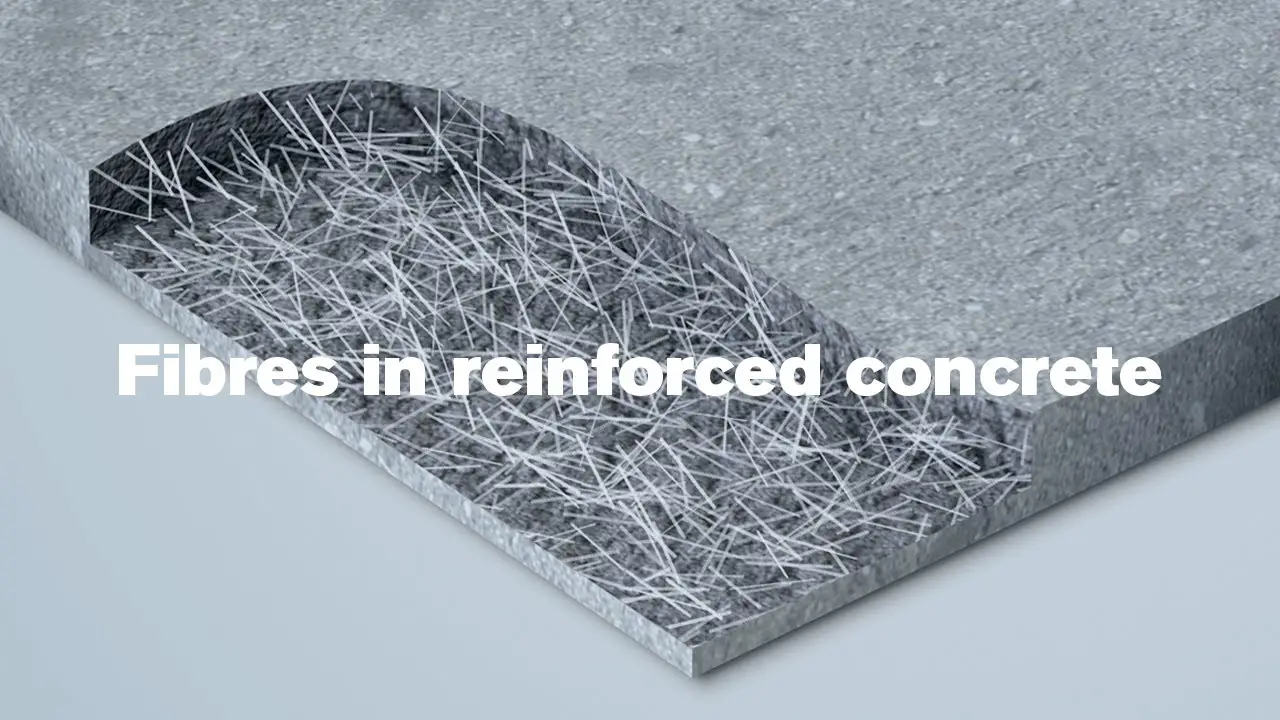
Fiber mesh consists of small fibers mixed directly into wet concrete. These fibers disperse evenly, giving multi-directional reinforcement throughout the mix rather than localized support.
Types of Fiber Mesh
| Type | Material | Key Properties | Best Application |
|---|---|---|---|
| Synthetic Fiber Mesh | Polypropylene / Nylon | Shrinkage control | Sidewalks, driveways |
| Steel Fiber Mesh | Carbon or Stainless Steel | Tensile and impact resistance | Heavy-duty floors |
| Glass Fiber Mesh | Alkali-resistant glass | Surface reinforcement | Decorative panels |
| Cellulose Fiber Mesh | Plant-based fibers | Eco-friendly & lightweight | Sustainable projects |
Advantages of Fiber Mesh
● Reduces microcracks during early curing
● Simple mixing-no need for mesh placement
● Lower labor costs and installation time
● Improves surface durability and impact strength
● Ideal for complex or curved structures
Typical Usage Scenarios
Fiber mesh is preferred for:
● Residential slabs and pavements
● Shotcrete and tunnel lining
● Overlay and patch repair work
● Lightweight or decorative concrete
Although fiber mesh appears simple-dropping fibers into a mix-its effective use requires understanding fiber geometry, dosage, and interaction with fresh concrete rheology. Fibers vary in length, aspect ratio, tensile strength and surface treatment; these factors affect how they bridge microcracks and transfer stresses. Polypropylene fibers, commonly used to control plastic shrinkage, function primarily by limiting early-age cracking rather than contributing significant residual strength. Steel fibers, however, can substantially increase post-crack toughness and flexural capacity when used at higher dosages and with proper fiber distribution. Dosages for steel fibers typically range from 20 to 60 kg/m³ for structural applications, while synthetic fibers are typically 0.9–2.0 kg/m³ for shrinkage control.
Mix design adjustments are often needed: fibers can change workability and pumpability, so admixture dosages (plasticizers, superplasticizers) should be tuned to maintain slump and finishability. During finishing, surface manifestation of fibers (fiber bloom) must be managed by using proper finishing techniques and, if necessary, an additional thin skim coat. Quality control includes checking for fiber balling (poor dispersion), conducting slump-flow tests, and performing dispersal observation. In sprayed concrete (shotcrete), fibers improve adhesion and reduce rebound when sprayed at the correct velocity. Lastly, designers should be mindful of long-term creep and durability interactions-synthetic fibers resist corrosion but have limited high-temperature performance; steel fibers add durability but may require corrosion protection in aggressive environments. Proper specification-matching fiber type and dosage to function (shrinkage control vs. structural toughness)-is key to obtaining consistent and beneficial outcomes.
Mechanical Performance Comparison
Concrete reinforcement performance depends on tensile, flexural, and impact strength. Wire mesh and fiber mesh each perform differently under stress.
Performance Comparison Table
| Performance Factor | Wire Mesh | Fiber Mesh |
|---|---|---|
| Tensile Strength | High (400–600 MPa) | Moderate (depends on fiber dosage) |
| Crack Control | Excellent for wide cracks | Excellent for microcracks |
| Flexural Strength | High | Moderate |
| Impact Resistance | Moderate | High (especially steel fibers) |
| Fatigue Resistance | Excellent | Good |
| Load Distribution | Localized reinforcement | Uniform within mix |
Detailed Explanation
Wire mesh strengthens concrete primarily in one plane (bottom of slab), absorbing tensile loads and preventing major cracking.
Fiber mesh distributes reinforcement three-dimensionally, reducing early-age shrinkage and microcracks.
In high-stress structures, wire mesh is irreplaceable. But in non-structural slabs, fiber mesh provides sufficient durability with faster installation.
Hybrid Reinforcement, combining both meshes, is increasingly popular - wire mesh for structural capacity and fiber mesh for shrinkage control.
When interpreting mechanical test data for mesh-reinforced systems, it is important to consider not only peak strengths but also post-crack behavior and energy absorption capacity. Standard tensile or flexural tests provide single-value metrics (e.g., modulus of rupture, ultimate tensile strength), yet in-situ performance is often governed by residual toughness and crack-width control. For instance, wire mesh typically increases first-crack load and limits crack widths because the grid concentrates reinforcement where tensile stresses develop; however, once a macro-crack forms, load redistribution depends on mesh anchorage, overlap quality, and bond with the concrete matrix. Conversely, fiber-reinforced concrete displays strain-hardening behavior (in engineered fiber systems) or increased post-crack ductility, where multiple microcracks form instead of one dominant crack-this improves toughness and resistance to impact and cyclic loading.
For design engineers, performance indices such as residual flexural strength (measured by beam tests according to standards like ASTM C1609 for fiber-reinforced concrete) and crack-width control criteria (based on serviceability limits) are more meaningful than ultimate compressive strength alone. Also, fatigue life under repeated loads can differ significantly: wire mesh maintains geometry and load paths under large, slow-moving loads (e.g., forklifts), while fibers better absorb high-frequency impact and improve wear resistance. Hybrid reinforcement systems can be tailored: low-percentage steel fibers combined with a welded mesh can provide a composite response-microcrack control from fibers delaying onset of larger cracks, and the mesh carrying tensile loads post-cracking. Ultimately, choosing between systems means matching the mechanical response profile to service demands-static loads, dynamic impacts, environmental exposure, and targeted service life.
For a deeper technical understanding of how reinforcement materials influence concrete strength, read our related article
- "Reinforcement Techniques in Modern Concrete Construction."
It explores advanced mechanical principles, testing standards, and case studies of load distribution performance under varying conditions.
Installation Process
Proper installation determines the reinforcement's effectiveness. Wire mesh and fiber mesh differ greatly in setup time and technique.
Installing Wire Mesh
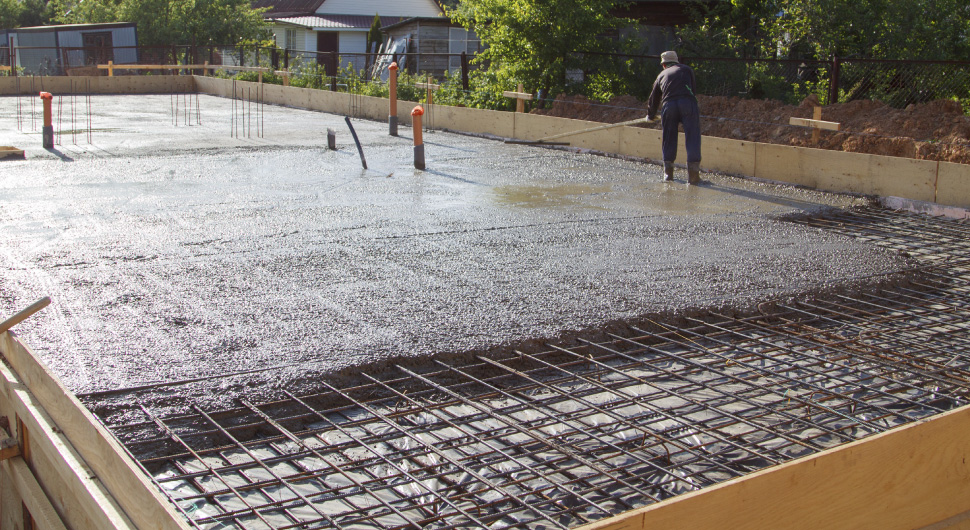
1. Level and compact the sub-base.
2. Place wire mesh sheets with minimum overlap (≥150 mm).
3. Secure overlaps using wire ties.
4. Use spacers to lift mesh above base.
5. Pour and vibrate concrete carefully.
| Aspect | Wire Mesh Requirement |
|---|---|
| Placement | Mid-depth or bottom layer |
| Overlap | 150–200 mm |
| Tools | Wire ties, mesh chairs |
| Labor Intensity | High |
Key Benefit: Controlled reinforcement placement.
Drawback: Time-consuming and requires manual setup.
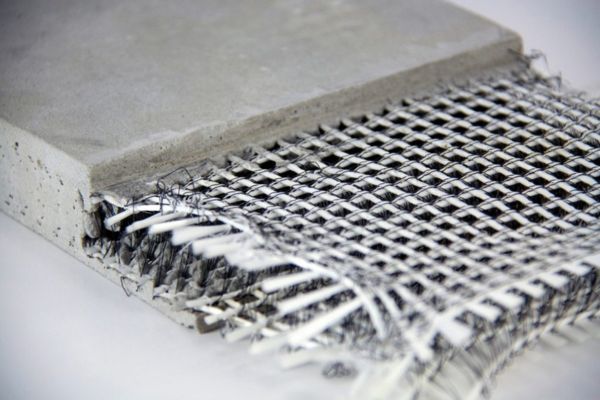
Applying Fiber Mesh
1. Add fibers directly into concrete mix.
2. Mix uniformly for even fiber dispersion.
3. Pour and finish as normal.
| Aspect | Fiber Mesh Process |
|---|---|
| Dosage | 0.9 – 1.8 kg/m³ (typical) |
| Distribution | Uniform throughout mix |
| Workability | Slightly reduced at high dosage |
| Labor Intensity | Low |
Key Benefit: Fast application, no positioning needed.
Drawback: May show surface fibers if overused.
Field installation nuances greatly influence achieved performance. For welded wire mesh, proper handling during transport and deck placement prevents kinking or local deformations that can create stress concentrators. Workers should unroll and lay mesh sheets gently; cut edges must be deburred and tied to adjacent sheets to avoid sharp protrusions. Where irregular slab geometry exists (columns, penetrations), mesh must be neatly cut and lapped, maintaining minimum overlap per design-commonly one grid spacing or a specified millimeter overlap. Chairs and spacers should be selected per exposure class and load to ensure the mesh stays at the designed mid-depth during concrete placement and vibration. Overly aggressive vibration can displace mesh; hence monitoring mesh position during pouring is a simple but crucial QA step.
For fiber-reinforced mixes, the batching plant must be calibrated to add fibers consistently; field batching without controlled dosing can produce variability. Pumping fiber mixes requires selecting proper pump types and ensuring wear parts resist fiber abrasion. At very high fiber dosages, slump loss may be significant-contractors compensate by adjusting mixing sequence and admixture regime. Curing also plays a major role: fibers reduce early cracking but do not eliminate the need for adequate curing regimes (membrane curing, wet curing) to attain desired strength and durability. Importantly, inspectors should perform random core sampling and non-destructive testing (e.g., cover meter for wire placement, ultrasound for void detection) to validate reinforcement position and consolidated concrete quality. Implementing clear installation protocols and QA checklists reduces variability and ensures the theoretical advantages of either reinforcement system translate into field performance.
Durability and Cost Comparison
Durability Table
| Property | Wire Mesh | Fiber Mesh |
|---|---|---|
| Corrosion Resistance | Excellent (galvanized/stainless) | Excellent (synthetic fibers) |
| Moisture Resistance | High | Very High |
| Crack Resistance | Major cracks | Microcracks |
| Longevity | 30–50 years | 15–30 years |
| Maintenance | Minimal | None |
Cost Analysis
| Factor | Wire Mesh | Fiber Mesh |
|---|---|---|
| Material Cost | Moderate to High | Low |
| Installation Labor | High | Minimal |
| Transport & Handling | Bulky | Compact |
| Lifecycle Cost | Lower (structural) | Lower (light-duty) |
Wire mesh costs more initially but offers long-term savings for heavy-duty projects. Fiber mesh reduces upfront and labor expenses, making it suitable for fast-paced or smaller jobs.
Durability assessment should include environmental exposure, anticipated loading regime and maintenance strategy. For wire mesh, corrosion risk is a primary determinant of lifecycle cost. In aggressive environments-marine, deicing salts, sewage-specifying stainless steel (e.g., 304 for moderate, 316/316L for high-chloride exposures) or epoxy-coated/galvanized meshes is prudent. Coating selection must consider abrasive wear (industrial floors) where polymer topcoats can offer sacrificial protection. Additionally, the ability to inspect and repair embedded reinforcement is limited; therefore, conservative cover and protective detailing are cost-effective. In contrast, fiber-reinforced concrete removes many corrosion concerns (synthetic fibers are non-metallic) but may present other maintenance aspects: surface abrasion over time can expose fibers, and very high-temperature exposure (e.g., near fire sources) can degrade polymeric fibers. Steel fibers face similar corrosion considerations as wire mesh though their distributed nature can make cathodic protection and patch repair more complex.
From a cost perspective, initial material outlay for wire mesh and installation labor often exceeds that for fiber additions, but for heavy-duty, load-bearing structures the avoided early repairs and superior long-term performance normally justify the investment. Conversely, for slabs-in-grade, overlays and speedy repair works, fiber reinforcement frequently delivers superior overall value by lowering labor-intensive mesh handling costs. Whole-life cost modeling-factoring in materials, installation, downtime, maintenance frequency, and expected service life-will deliver the most objective comparison for decision-makers. Incorporating performance warranties and supplier data on long-term degradation under local conditions further reduces risk in procurement.
Environmental and Practical Considerations
Sustainability Overview
| Aspect | Wire Mesh | Fiber Mesh |
|---|---|---|
| Recyclability | 100% recyclable steel | Partially recyclable (synthetic) |
| Carbon Footprint | Higher (steel production) | Lower (less transport weight) |
| Reusability | Possible for precast work | Not reusable |
| Energy Efficiency | Moderate | Excellent (low handling energy) |
Environmental Discussion
Wire mesh offers long-term sustainability through recyclability.
Fiber mesh, particularly made from recycled polymers, reduces CO₂ emissions during manufacturing and transportation.
In green construction, the choice depends on balancing durability vs. embodied carbon.
Sustainability choices must consider both embodied carbon and end-of-life scenarios. Steel wire mesh manufacturing carries a higher carbon intensity per kilogram than many synthetic fibers; however, steel's high durability and full recyclability often offset its initial footprint over longer service lives. Regions with established steel recycling streams benefit from reusing demolition-grade steel, reducing net embodied carbon. On the other hand, synthetic fibers produced from recycled plastics present lower upfront emissions and reduce landfill reliance-yet the composite nature of fiber-reinforced concrete complicates recycling at demolition because separating fibers from aggregate is not practical. For circular economy-minded projects, designers may prefer steel meshes in elements expected to be reclaimed, while using recycled-content synthetic fibers in temporary works or overlays.
Practical logistics also play a role: wire mesh transport is bulky and requires more storage space, while fiber packaging is compact, enabling lower transportation emissions for remote sites. Safety considerations differ too-steel handling requires cut protection and ergonomics for workers; fibers introduce dust concerns during handling and mixing, so appropriate PPE and dust-control measures should be employed. In summary, sustainable selection is context-dependent and should be informed by lifecycle assessment (LCA) results, local recycling infrastructure, and intended service life.
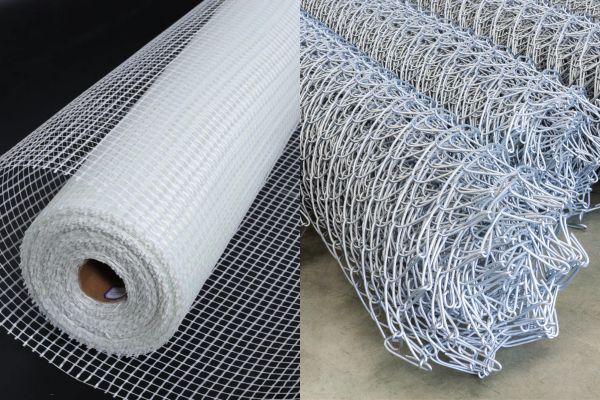
Explore More:
To compare practical applications, installation procedures, and real-world performance between these two reinforcement types, check out our in-depth comparative analysis -
This piece expands on testing data, mechanical benchmarks, and performance optimization strategies across different environments.
Choosing Between Wire Mesh and Fiber Mesh
Selection Guide Table
| Application Type | Preferred Mesh | Reason |
|---|---|---|
| Residential Floor / Sidewalk | Fiber Mesh | Easy installation and microcrack control |
| Industrial Warehouse | Wire Mesh | Structural load capacity |
| Decorative Concrete | Fiber Mesh | Smooth surface, fewer visible joints |
| Heavy-Duty Pavement | Wire Mesh | High tensile reinforcement |
| Shotcrete / Tunnel | Fiber Mesh | Excellent bonding and impact absorption |
Expert Recommendation
For load-bearing concrete, wire mesh remains essential.
For fast, economical crack control, fiber mesh is ideal.
Modern engineers often use a hybrid combination - adding fibers to reduce shrinkage and steel mesh to ensure tensile strength.
A practical decision framework helps translate technical trade-offs into procurement choices. First, classify the structural category: is the element load-bearing, wear-intensive, or mainly serviceability-driven? For structural slabs supporting machinery, heavy vehicular loads, or storage racks, wire mesh (often combined with rebar) remains the default due to predictable tensile capacity and anchorage at concentrated loads. For fast-track residential slabs, overlay repairs, sidewalks, and decorative surfaces where early shrinkage cracking is the primary concern, fiber mesh offers speed and cost advantages. Second, consider exposure conditions: if chloride exposure, aggressive chemicals or freeze-thaw are expected, favor stainless or coated wire mesh or pair fibers with protective surface systems. Third, installation constraints-skilled labor availability, site access, and schedule-often tip the balance; fiber-reinforced mixes reduce labor and simplify logistics.
Finally, evaluate hybrid solutions: a typical modern approach uses low-volume macro-synthetic or steel fibers to minimize plastic shrinkage and improve toughness, with a welded mesh mat or rebar providing ultimate tensile resistance. Specifiers should require supplier test certificates, field trial pours, and trial panels to confirm finishability, pumpability, and surface appearance. Including performance-based specifications-e.g., maximum allowable crack width under service loads, residual flexural toughness, or required deflection limits-enables bidders to propose material and method combinations that meet project performance rather than prescribing a single material.
As construction methods evolve, understanding the most effective reinforcement techniques is critical.
For a comprehensive guide on modern approaches to wire and fiber mesh reinforcement, see:
👉 Reinforcement Techniques in Modern Concrete Construction
Conclusion
Both wire mesh and fiber mesh are crucial technologies for improving concrete's performance and lifespan.
● Wire Mesh: Best suited for structural reinforcement, driveways, and industrial floors.
● Fiber Mesh: Perfect for residential slabs, overlays, and surfaces needing shrinkage control.
While wire mesh provides tensile and structural strength, fiber mesh offers crack resistance, flexibility, and cost efficiency.
In sustainable construction, a hybrid solution can combine their advantages - strong, crack-free, and environmentally responsible concrete.
Ultimately, the choice depends on your project size, load requirement, and budget priorities. Understanding their distinctions allows you to design concrete systems that are durable, economical, and future-ready.
In practice, the choice between wire mesh and fiber mesh is rarely binary. Both systems bring complementary benefits and, when specified intelligently, their combined use can produce concrete elements that are both strong and durable while reducing the risk of early-age cracking and improving impact resistance. Project teams should adopt a holistic approach-integrating structural requirements, exposure conditions, lifecycle costing, and constructability-when selecting reinforcement. Early collaboration among designers, material suppliers, and contractors to perform mock-ups and pre-pour verification will minimize surprises in the field and ensure the finished structure performs as intended. With proper detailing, quality control, and maintenance planning, modern reinforcement strategies using wire mesh, fiber mesh, or both can significantly extend service life, reduce maintenance costs, and support more sustainable construction practices.
Learn More:
For projects requiring both structural strength and fine crack control, consider hybrid reinforcement approaches.
Our guide - "Hybrid Reinforcement Strategies Using Wire Mesh and Fiber Mesh"
- explains how combining these two materials provides a balance of macro and micro-level durability, installation efficiency, and cost optimization for industrial, commercial, and residential applications.