






Concrete is one of the most widely used construction materials, known for its high compressive strength and versatility. However, it is inherently weak in tension and prone to cracking under tensile or flexural loads. This limitation has led to the continuous evolution of reinforcement techniques, where materials like wire mesh, fiber mesh, steel rebar, and composite reinforcements are integrated into concrete to enhance its performance.
Modern construction practices rely not only on traditional steel reinforcement but also on advanced alternatives designed to improve ductility, reduce crack width, and extend the lifespan of structures. From small-scale residential projects to large-scale industrial applications, reinforcement technology has become the backbone of concrete innovation.
:max_bytes(150000):strip_icc()/GettyImages-941748918-5c7f3654c9e77c00012f82f6.jpg "info-1-1")
Evolution of Concrete Reinforcement
The journey of concrete reinforcement dates back more than a century. Initially, steel bars (rebar) were the sole reinforcement material, providing necessary tensile strength for beams and columns. However, as architectural designs became more complex, engineers began exploring mesh-based and fiber-based systems to achieve more uniform reinforcement.
1. Early Development: Reinforced Concrete
The early 1900s saw the widespread use of mild steel bars embedded in concrete. This combination significantly increased concrete's tensile capacity, paving the way for modern reinforced concrete (RC) design principles.
2. Introduction of Wire Mesh Reinforcement
By the mid-20th century, welded wire mesh (WWM) became common for slab reinforcement. It provided distributed tensile strength, controlled shrinkage cracks, and simplified installation compared to individual rebars. This development revolutionized flooring, pavement, and prefabricated concrete production.
3. The Era of Fiber Reinforcement
In the late 20th century, synthetic and natural fibers such as polypropylene, glass, basalt, and steel fibers were added directly into concrete mixtures. This technique helped control microcracks, increased impact resistance, and improved post-crack performance-especially for thin overlays and shotcrete.
4. Modern Composite Reinforcement
Today, carbon fiber, glass fiber-reinforced polymer (GFRP), and hybrid mesh systems have become essential in advanced construction. They provide high strength-to-weight ratios and superior corrosion resistance, making them ideal for marine and infrastructure applications.
Comparative Overview of Reinforcement Materials
Different reinforcement materials serve specific functions depending on structural requirements and environmental conditions. The table below highlights their comparative advantages:
| Reinforcement Type | Tensile Strength (MPa) | Corrosion Resistance | Key Benefits | Common Applications |
|---|---|---|---|---|
| Wire Mesh (Steel or Stainless) | 400–700 | Moderate to High | Excellent crack control, uniform reinforcement | Slabs, pavements, walls |
| Fiber Mesh (Synthetic or Glass) | 300–500 | Very High | Reduces microcracks, improves durability | Overlays, shotcrete, residential floors |
| Steel Rebar | 500–650 | Moderate | High load-bearing capacity | Beams, columns, heavy foundations |
| Composite Mesh (GFRP/Carbon) | 800–1200 | Excellent | Lightweight, corrosion-proof | Bridges, tunnels, marine structures |
Key Takeaways
● Wire mesh remains dominant in structural and load-bearing applications.
● Fiber mesh complements traditional reinforcement for crack control.
● Composite materials are the future for lightweight and corrosion-sensitive projects.
Modern Applications of Reinforcement
The versatility of reinforcement techniques allows them to be applied across diverse project types, from industrial slabs to decorative architecture.
1. Slabs and Pavements
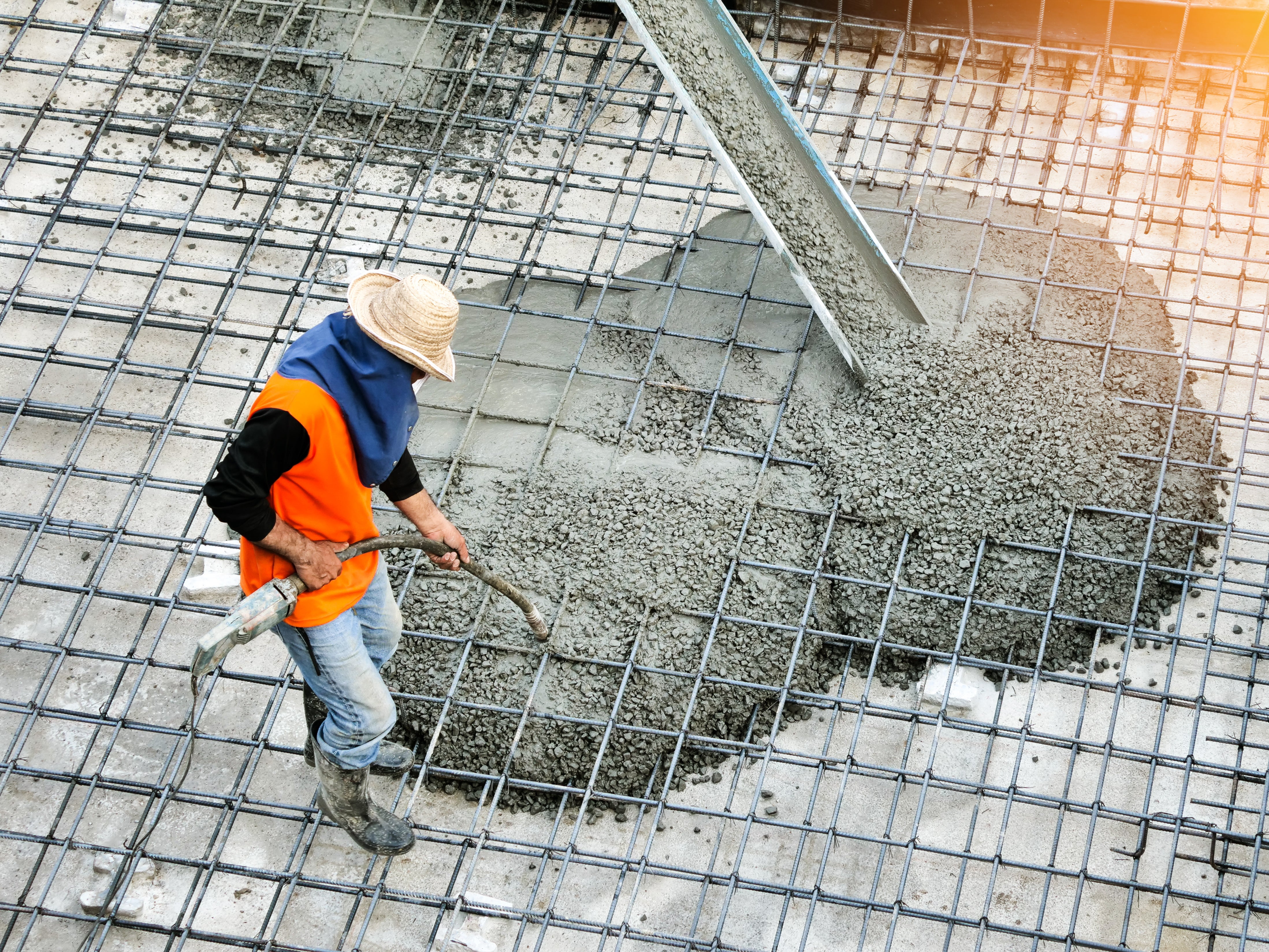
Wire mesh provides a distributed reinforcement network that minimizes surface cracking caused by shrinkage or thermal expansion. Fiber mesh, often mixed directly into the concrete, helps prevent microcracks before they develop into visible fractures. Together, they enhance slab durability and reduce maintenance needs.
2. Walls and Panels
In prefabricated walls or concrete panels, welded wire mesh ensures dimensional stability, while fiber mesh adds flexibility and impact resistance. These combined systems prevent delamination and improve panel longevity.
3. Industrial and High-Load Floors
For warehouses, factories, and logistics centers, the combination of high-tensile wire mesh with steel fibers delivers excellent load distribution and abrasion resistance.
4. Infrastructure and Marine Structures
316L stainless steel wire mesh is increasingly used in bridge decks, tunnels, and coastal projects due to its superior corrosion resistance in chloride environments.
Sustainability and Recyclability
In an era emphasizing green construction, the sustainability of reinforcement materials is a growing concern.
● Wire Mesh Sustainability:
Steel and stainless-steel meshes are fully recyclable, maintaining material integrity without losing strength during reprocessing.
● Fiber Mesh Sustainability:
Synthetic fibers reduce concrete consumption by allowing thinner sections, but recycling remains a challenge due to polymer composition.
● Composite Reinforcements:
Lightweight GFRP and carbon meshes reduce transportation costs and CO₂ emissions, aligning with modern sustainability goals.
A life-cycle analysis shows that while fiber mesh is environmentally friendly during installation, wire mesh offers a longer service life and higher recyclability-often balancing its higher initial carbon footprint.
Beyond material reuse, another critical sustainability factor lies in energy efficiency during production and installation. Traditional welded wire mesh requires energy-intensive manufacturing, but modern factories have adopted automated welding lines and low-emission annealing furnaces, which significantly reduce CO₂ output. Fiber mesh, meanwhile, offers reduced transportation and placement costs because it eliminates the need for handling large reinforcement mats.
On construction sites, using prefabricated wire mesh panels minimizes cutting waste and enhances labor efficiency, lowering the project's environmental impact. Moreover, stainless-steel variants, particularly 304 and 316L meshes, demonstrate exceptional durability, reducing the need for repair or replacement. This longevity often offsets their higher embodied energy during production.
In recent sustainability assessments, combining recycled steel wire with biodegradable polymer fibers has shown promising results. Such hybrid systems reduce reliance on virgin materials while maintaining high tensile performance. The continued research into green reinforcement composites-using bamboo fibers, basalt mesh, and recycled PET-points toward a future where structural strength and eco-responsibility can coexist seamlessly in the construction industry.
Overall, the sustainability profile of reinforcement materials depends not only on recyclability but also on lifespan, maintenance frequency, and embodied carbon. Among all available options, wire mesh remains one of the most circular materials, aligning perfectly with the construction sector's movement toward a closed-loop economy.

Advancements in Reinforcement Technology
Recent innovations have transformed the way concrete reinforcement is manufactured and applied:
● 3D Printed Mesh Grids: Automated production improves dimensional precision and reduces waste.
● Epoxy-Coated Wire Mesh: Enhances corrosion resistance, widely used in coastal and chemical plants.
● Smart Reinforcements: Embedded sensors within mesh grids now monitor structural stress, moisture, and corrosion in real time.
These advancements bridge the gap between traditional construction and smart infrastructure, making reinforced concrete more durable, efficient, and sustainable than ever.
One of the most exciting breakthroughs in reinforcement technology is the integration of artificial intelligence and data monitoring systems into concrete structures. Smart meshes embedded with strain gauges and fiber-optic sensors can now measure stress distribution, detect early cracks, and send real-time alerts to maintenance systems. These innovations reduce inspection costs and improve the safety of large infrastructures like bridges, tunnels, and skyscrapers.
Another advancement is the use of nano-coatings and graphene-based treatments for wire mesh. These ultra-thin protective layers enhance corrosion resistance by creating a molecular barrier that prevents oxidation, even in extreme marine or chemical environments. Combined with epoxy coatings, they extend mesh life by decades, ensuring low maintenance and high performance.
Furthermore, 3D-printed reinforcement grids are redefining construction flexibility. By digitally fabricating custom-shaped meshes, engineers can design irregular or curved concrete structures that were once difficult to reinforce using traditional steel bars. This technique not only saves material but also accelerates installation and minimizes waste.
As the construction industry embraces sustainability and digitalization, wire mesh continues to evolve into a smart, adaptive, and eco-efficient reinforcement solution-bridging the gap between conventional strength and modern intelligence.
Challenges and Considerations
Despite its benefits, reinforcement selection must consider cost, structural requirements, and exposure conditions.
● Wire mesh requires careful placement to avoid improper concrete coverage.
● Fiber mesh may not provide sufficient macro reinforcement for high-load structures.
● Hybrid systems can address both macro and micro cracking but demand precise mix design and quality control.
Another key consideration is cost efficiency and project scalability. While wire mesh remains affordable for large slab or pavement applications, fiber mesh often becomes more economical for smaller-scale projects due to easier handling and reduced labor costs. However, inconsistent fiber dispersion can cause localized weaknesses in concrete, requiring precise mixing methods and strict quality control.
Environmental conditions also pose significant challenges. In high-humidity or marine environments, standard carbon steel wire mesh can corrode if not properly coated. Therefore, 316L stainless steel or epoxy-coated variants are preferred for coastal or chemical plant projects. For hot climates, synthetic fiber mesh may degrade under UV exposure, which necessitates using UV-stabilized polypropylene fibers.
Structural engineers must also balance load requirements with sustainability goals. Over-reinforcement increases cost and carbon footprint, while under-reinforcement compromises safety. Advanced modeling software now helps determine the optimal ratio of wire or fiber mesh, ensuring strength without material excess.
Lastly, workforce training remains a practical challenge. Despite technological progress, many construction teams still rely on outdated reinforcement practices. Promoting education and standardized installation guidelines will be essential to fully unlock the performance potential of modern reinforcement systems.
Conclusion
Reinforcement techniques are at the heart of modern concrete engineering. From early steel rebar to advanced fiber and composite meshes, each material contributes unique mechanical and structural benefits.
Wire mesh remains indispensable for structural applications due to its balance between strength, cost, and recyclability. Fiber mesh continues to dominate in lightweight, cost-sensitive, or decorative applications. Meanwhile, the future points toward hybrid reinforcement systems that combine the strengths of multiple materials for optimal durability and performance.
Ultimately, the choice of reinforcement technique must align with the project's load requirements, environmental exposure, and sustainability objectives-ensuring that modern concrete not only stands strong but also lasts longer and performs smarter.