





In the vast landscape of industrial engineering, filtration is the silent sentinel that protects equipment, ensures product purity, and manages environmental compliance. Whether it is the microscopic separation required in a semiconductor cleanroom or the massive fluid processing found in a municipal water plant, the fundamental physics remains consistent: the removal of unwanted particles from a carrier fluid. However, the methods used to achieve this separation are incredibly diverse.
Engineers generally categorize filtration into four primary types based on their operational logic and the physical nature of the filter media: Surface Filters, Depth Filters, Membrane Filters, and Specialized/Active Filters (such as Magnetic or Electrostatic). Each of these types has a unique pressure profile, dirt-holding capacity, and specific alloy or polymer requirement. Understanding these four categories is not merely an academic exercise; it is a critical skill for any professional tasked with optimizing system performance and minimizing operational costs. This 3,000-word guide explores the intricate details of these four filtration types, providing a roadmap for selection, maintenance, and industrial integration.

Surface Filtration: The Precision Barrier
The Mechanism of Direct Interception
Surface filtration is the most intuitive form of separation, where particles are captured on a two-dimensional plane. This mechanism relies on "direct interception," where any particle larger than the physical opening (the aperture) of the filter media is mechanically blocked. In the world of stainless steel wire mesh, this is achieved through high-precision weaving. The "goodness" of a surface filter is measured by its geometric accuracy; if a 100-micron screen has even a few 120-micron holes, the integrity of the entire system is compromised. Surface filters are ideal for applications where the contaminant size is relatively uniform and where the filtered material needs to be recovered, as the particles sit on top of the media rather than getting trapped inside.
The Advantage of Cleanability and Reusability
One of the defining characteristics of surface filters, particularly those made from stainless steel 316L, is their capacity for total restoration. Unlike depth filters, which eventually become "clogged" internally and must be discarded, surface filters can be cleaned via back-washing or ultrasonic baths. Because the contaminants are restricted to the exterior surface, they can be easily dislodged by reversing the flow or applying high-frequency sound waves. This makes surface filters the preferred choice for long-term industrial installations where the cost of replacement filters would be prohibitive. In this section, we analyze why the "initial cost" of a stainless steel surface filter is offset by its "lifecycle value" across thousands of cleaning cycles.
| Metric | Specification Detail | Operational Impact |
| Pore Geometry | Defined Square/Dutch Weave | Predictable particle cutoff |
| Pressure Drop | Low Initial $\Delta P$ | Lower pump energy requirements |
| Material Strength | High (Stainless Steel) | Resists deformation under surge |
| Cleaning Method | Backwash / Ultrasonic | Rapid recovery of flow rate |
| Best Application | Large Particle Removal | Protects downstream membranes |
Depth Filtration: Maximizing Dirt-Holding Capacity
The Tortuous Path and Internal Entrapment
Depth filtration works on a fundamentally different principle than surface filtration. Instead of a single barrier, depth filters consist of a thick, porous matrix-often made of sintered metal fibers, felt, or multi-layered mesh. As the fluid travels through this "tortuous path," particles are trapped throughout the entire thickness of the media. This occurs through a combination of physical impingement and "adsorption," where particles cling to the fibers of the filter. This type of filtration is "good" for fluids with a wide range of particle sizes or high concentrations of contaminants, as it can hold a massive amount of "dirt" before the pressure drop reaches a critical level.
Sintered Metal Felt: The High-Performance Depth Media
In extreme industrial environments, traditional depth filters like sand or cartridge string fail. Here, engineers turn to Sintered Metal Felt. This media is created by compressing stainless steel fibers into a dense mat and then bonding them in a vacuum furnace. This creates a depth filter that possesses the high dirt-holding capacity of a fiber mat but the chemical and thermal resistance of solid steel. We explore how these depth filters are used in the polymer extrusion industry, where they must catch microscopic "gels" and degraded polymers that would easily slide through a single-layer surface filter. The depth of the media provides multiple "chances" to catch a particle, ensuring a much higher "Beta Ratio" or filtration efficiency.
| Feature | Surface (Mesh) | Depth (Sintered Felt) |
| Filtration Logic | 2D Mechanical Blocking | 3D Tortuous Path |
| Dirt Capacity | Low (Surface limited) | High (Volume limited) |
| Cleanability | Excellent | Difficult (Often one-time use) |
| Pressure Profile | Sudden spike when full | Gradual increase over time |
| Typical Micron Range | 10µm - 2000µm | 1µm - 100µm |

Membrane Filtration: The Ultra-Fine Frontier
Molecular Separation and Cross-Flow Dynamics
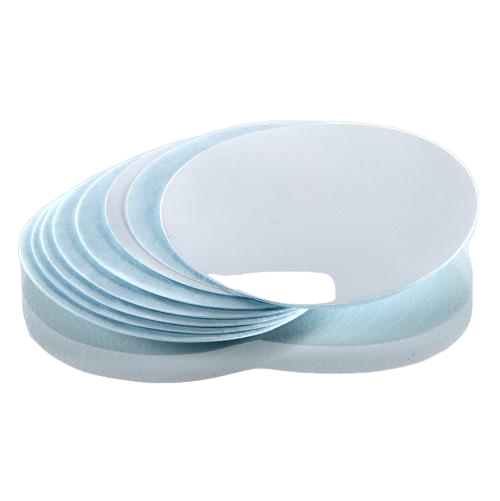
Membrane filtration is the most specialized form of separation, often used for "Micro-filtration," "Ultra-filtration," and "Reverse Osmosis." These filters are typically made of thin, polymer-based sheets or high-precision ceramic/sintered stainless steel powders. Unlike traditional filters that catch visible debris, membranes can separate dissolved ions, bacteria, and viruses from a solution. Most membrane systems operate on "Cross-Flow" logic, where the fluid moves parallel to the filter surface. This prevents the rapid buildup of a "filter cake," allowing the system to run continuously. This section details the critical role of stainless steel support meshes that provide the structural backbone for these fragile membranes in high-pressure desalination and biotech reactors.
Bio-compatibility and Sterile Processing
In the pharmaceutical and beverage industries, membrane filters are the primary tool for achieving "Sterile Grade" liquids. To be considered a sterilizing filter, the membrane must consistently remove 100% of a specific bacteria (such as Brevundimonas diminuta). Because these filters are so fine, they are extremely sensitive to clogging. Therefore, they are almost always used in conjunction with "Pre-filters"-which are typically the surface or depth filters discussed in previous sections. We analyze the "Multi-stage Filtration" strategy, where a stainless steel mesh (Surface) protects a sintered felt (Depth), which finally protects the delicate membrane, ensuring a cost-effective and safe production line.
The Role of Sintered Powder Metal Membranes
For applications involving hot gases or aggressive solvents that would melt a polymer membrane, engineers utilize Sintered Powder Metal. This is made by compacting fine stainless steel or titanium powders into a thin, porous plate. These metal membranes are "good" because they offer the sub-micron precision of a polymer membrane but can be sterilized with high-pressure steam or cleaned with aggressive acids. We explore how these metal membranes are used in the semiconductor industry to filter ultra-high-purity (UHP) gases, where even a single particle of dust could ruin a silicon wafer.


Specialized and Active Filtration: Beyond Mechanical Barriers
Magnetic Filtration: Attracting Metallic Contaminants
Specialized filters utilize forces other than simple physical blocking to clean a fluid. Magnetic Filtration is a prime example, where high-intensity neodymium magnets are used to pull ferrous (iron-based) particles out of a stream. This is incredibly "good" for machining coolant or hydraulic systems where wear and tear create constant "metal flour." A traditional mesh filter might miss these microscopic iron particles, but a magnetic filter captures them with nearly 100% efficiency. This section describes how magnetic filters are often paired with stainless steel screens (which are non-magnetic) to provide a "dual-defense" system that catches both metallic and non-metallic debris.
Electrostatic and Centrifugal Separation
In air filtration and heavy oil processing, "Active" filters like Electrostatic Precipitators and Centrifugal Separators are used. Electrostatic filters charge incoming particles with electricity, forcing them to cling to oppositely charged plates. Centrifugal separators use high-speed rotation to "spin" heavy particles toward the outer wall of a chamber. We discuss how these systems often serve as the first stage of a massive filtration plant. By removing the "heavy lifting" (the largest 90% of contaminants), they allow the downstream stainless steel depth and surface filters to operate much longer between cleanings, significantly optimizing the total energy consumption of the facility.
Coalescing Filters: Separating Immiscible Liquids
The final specialized type is the Coalescing Filter, used to separate oil from water or water from fuel. These filters use a combination of depth media and specialized surface coatings (often PTFE-coated stainless steel mesh) to encourage tiny droplets of liquid to join together into larger drops. Once the drops are large enough, gravity pulls them to the bottom of the filter housing for easy removal. This is a critical safety feature in the aviation industry; if water is present in jet fuel, it can freeze at high altitudes and block the engine's fuel lines. We analyze the "Hydrophobic" vs. "Hydrophilic" properties that make these specialized screens so effective.
Selection Logic: Matching the Filter to the Fluid
Analyzing Particle Size Distribution (PSD)
To choose the "good" filter, one must first understand the "dirt." A Particle Size Distribution (PSD) analysis identifies the percentage of particles at various micron levels. If the PSD shows a very narrow range of large particles, a Surface Filter is the most economical. If the PSD shows a wide range of microscopic fines, a Depth Filter or a multi-stage Membrane system is required. We discuss how engineers use "Beta Ratios" to describe the efficiency of these filters, providing a mathematical way to compare a 10-micron surface mesh to a 10-micron depth felt.
Chemical and Thermal Compatibility
A filter is only "good" if it can survive the fluid. This section revisits the importance of alloy selection-such as using Grade 904L for acidic streams or Inconel for high-heat gases. We also discuss "Gasket Compatibility," as the seals in a filter housing are often the first part to fail when exposed to aggressive solvents. Using a high-end stainless steel screen with a low-end rubber gasket is a common "false economy" that leads to bypass and system failure.
Advanced Pressure Drop Modeling and Flow Dynamics
Understanding Clean vs. Dirty Differential Pressure
When evaluating the "goodness" of any of the four filter types, an engineer must first model the pressure drop ($\Delta P$). The Initial Pressure Drop (Clean $\Delta P$) is a function of the filter's open area and the fluid's viscosity. However, as the filter begins its service life, the "Dirty $\Delta P$" becomes the dominant metric. In surface filters, the pressure remains relatively stable until the surface is almost entirely covered, at which point it spikes exponentially. In contrast, depth filters exhibit a more linear increase in pressure as the internal voids are gradually filled. This section explores why a system designed without a "Terminal Pressure Drop" limit is a safety hazard, as excessive pressure can cause "media migration," where parts of the filter itself break off and contaminate the downstream fluid.
The Impact of Fluid Viscosity and Temperature on Permeability
Temperature is often a forgotten variable in filtration logic. As temperature increases, the viscosity of most liquids decreases, which significantly reduces the resistance to flow through the filter media. For high-viscosity fluids like polymers or heavy crude oil, "good" filtration often requires heating the fluid to a specific "processing window." However, this heat also causes the stainless steel wires of the filter to expand. We analyze the relationship between the Coefficient of Thermal Expansion and the effective pore size. If a 20-micron screen is heated from $20^{\circ} \mathrm{C}$ to $300^{\circ} \mathrm{C}$, the expansion of the metal can increase the aperture size by several microns, potentially allowing larger particles to pass through than originally intended.
Laminar vs. Turbulent Flow through Micro-Pores
The nature of the flow-whether it is smooth (Laminar) or chaotic (Turbulent)-changes how particles interact with the filter. In the ultra-fine pores of a membrane or a Dutch weave surface filter, the flow is almost always laminar. This means particles follow specific "streamlines." If a particle is smaller than the pore but is traveling on a streamline that leads directly to a wire, it may still be captured through "interception." However, at higher velocities, turbulent eddies can form behind the wires, which can actually "shake" trapped particles loose and push them through the filter. This section explains why maintaining a constant, controlled flow velocity is critical for ensuring the "Absolute Rating" of a filter remains valid during operation.
Multi-Stage Filtration Strategy and System Integration
The Protective Role of Pre-Filtration
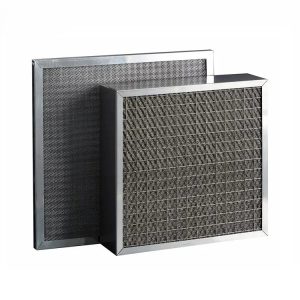
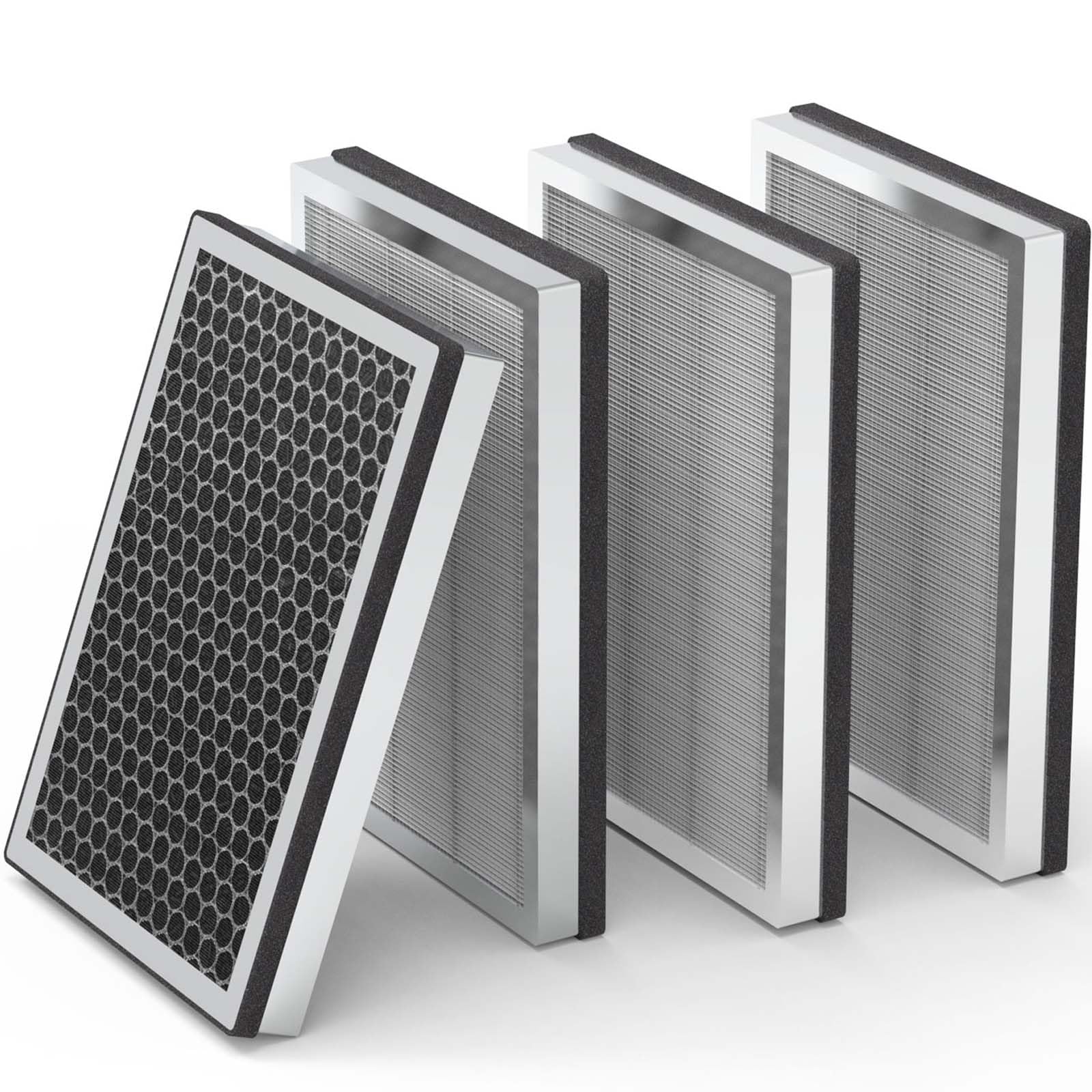
No high-precision filter should ever operate alone. The most efficient industrial systems utilize a "Graduated Filtration" strategy. For example, a massive water desalination plant will use a coarse Surface Filter (Stage 1) to remove seaweed and shells, followed by a Depth Filter (Stage 2) to remove silt and sand, and finally a Membrane Filter (Stage 3) for molecular salt removal. This section discusses the "Economic Protection" offered by pre-filters. By spending a small amount on a cleanable stainless steel surface screen, you protect a membrane that may cost ten times as much. We analyze how the "Silt Density Index" (SDI) is used to determine if the pre-filtration stages are performing their job effectively.
Automatic Self-Cleaning Systems in Continuous Processes
In many 24/7 manufacturing environments, stopping the process to change a filter is not an option. This has led to the development of Automatic Self-Cleaning Surface Filters. These systems use internal scrapers or "back-flush arms" that sense when the pressure drop has reached a specific limit. Once triggered, the system cleans the mesh surface while the fluid continues to flow. This section explores the mechanical engineering of these systems, focusing on the "Wedge Wire" and "Reverse Dutch Weave" screens that are strong enough to withstand the mechanical scraping action. We discuss why these systems are the "gold standard" for cooling water loops in power plants and paper mills, where manual cleaning would be a logistical nightmare.
Housing Design and Seal Integrity
A filter is only as good as the housing that holds it. Even the most perfect 1-micron membrane will fail if the fluid can "bypass" the filter through a leaky seal. This section explores the importance of O-ring selection and "Sealing Surfaces." In high-pressure applications, the housing must be designed to prevent "bypass flow," where the fluid takes the path of least resistance around the edges of the filter element. We discuss the use of "Knife-edge seals" and "Compression gaskets" in stainless steel housings. Furthermore, we analyze why the internal volume of the housing (the "Hold-up Volume") must be minimized in industries like pharmaceuticals to prevent the loss of expensive liquid products during filter changes.
| Specification Component | Engineering Requirement | Importance Level |
| Housing Material | SS316L / Carbon Steel | Essential for chemical compatibility |
| Seal Type | Viton / EPDM / PTFE | Prevents bypass leakage |
| Vent & Drain Ports | Manual or Automatic | Required for safe air removal |
| $\Delta P$ Monitoring | Differential Pressure Gauges | Critical for maintenance timing |
| ASME Code Stamping | Pressure Vessel Compliance | Legal safety requirement |
Failure Analysis and Quality Assurance Standards
Identifying Media Migration and Fiber Shedding
One of the most dangerous failure modes in depth and membrane filtration is Media Migration. This occurs when the pressure becomes so high that the fibers of the filter itself break loose and travel downstream. In a food or medical application, this is a catastrophic failure. This section discusses how stainless steel filters, particularly Sintered Fiber Felt, are engineered to prevent this. Because the fibers are fused together at a molecular level in a vacuum furnace, they cannot "shed" like synthetic or fiberglass filters. We explore the "Bubble Point Test," a non-destructive quality control method used to verify that no fibers have moved and that the maximum pore size is still within specification.
The Impact of Pulsating Loads on Filter Fatigue
In systems with reciprocating pumps, the filter is subjected to constant "pressure pulses." This creates a mechanical "flexing" of the mesh or membrane. Over millions of cycles, this can lead to Metal Fatigue, where the wires of a surface filter begin to crack at the points where they cross. This section analyzes the "Mechanical Endurance" of stainless steel alloys. We discuss why a "Twill Weave" is often "good" for pulsating loads because it is more flexible than a "Plain Weave." Furthermore, we explore the use of "Support Shrouds"-perforated metal tubes that fit over the filter element to provide the extra structural rigidity needed to survive these intense hydraulic shocks.
Decoding the "Beta Ratio" ($\beta$) and Efficiency Ratings
To compare the effectiveness of the four filter types, engineers use the Beta Ratio. Unlike a simple percentage, the Beta Ratio compares the number of particles before the filter to the number after the filter at a specific micron size. For example, a $\beta_{10} = 1000$ means that for every 1000 particles of 10-microns that enter, only 1 passes through. This section explains why a "Nominal" rating (often found on cheap filters) is misleading, as it only suggests an "average" capture rate. We discuss why high-stakes industries like aerospace demand "Absolute" ratings backed by ISO 16889 testing, ensuring that the filter's performance is a mathematical certainty rather than a marketing claim.
| Failure Mode | Root Cause | Prevention Strategy |
| Bypass Flow | Damaged seals or improper seating | Use high-quality O-rings; check housing |
| Media Migration | Excessive $\Delta P$ or poor bonding | Use sintered metal; monitor pressure |
| Chemical Attack | Incompatible alloy/polymer | Perform pH and chemical compatibility audit |
| Fatigue Cracking | Hydraulic pulses/vibration | Use support shrouds; choose flexible weaves |
| Premature Clogging | Undersized filter/Poor pre-filtration | Implement multi-stage filtration strategy |
Conclusion: The Strategic Integration of Filtration Types
The selection of an industrial filtration system is not a binary choice but a sophisticated strategic integration of different mechanical and physical separation principles. As we have explored, the four types of filters-Surface, Depth, Membrane, and Specialized-each serve a unique and indispensable role in the modern manufacturing ecosystem. A "good" engineering solution rarely relies on a single filter type. Instead, it utilizes the precision of Surface Filtration to manage bulk debris, the massive holding capacity of Depth Filtration to protect the process, the molecular accuracy of Membranes to ensure purity, and the active power of Specialized Filters to target specific contaminants like magnetic iron. When these technologies are layered in a multi-stage configuration, they create a robust defense that can handle the most unpredictable fluid streams while maintaining a low operational cost.
In the final analysis, the longevity and efficiency of a filtration system are determined by how well the designer understands the relationship between particle size distribution, fluid chemistry, and mechanical stress. The transition from reactive maintenance to a predictive, lifecycle-managed approach is what separates world-class facilities from average ones. By utilizing high-performance materials like Stainless Steel 316L and Sintered Fiber Felt, and by adhering to international certification standards like ISO 16889 and ASTM E11, organizations can ensure that their filtration assets are not just "expenses," but strategic tools for process optimization. As industrial requirements push further into the sub-micron realm, the ability to balance the "Beta Ratio" of a filter against its "Energy Signature" (pressure drop) will remain the hallmark of successful fluid engineering.
Ultimately, the goal of filtration is to create a "controlled environment" within a fluid system. Whether you are protecting a high-pressure hydraulic pump from abrasive wear, ensuring the sterile quality of a life-saving pharmaceutical, or reclaiming expensive catalysts in a refinery, the choice of filter type is the foundation of your success. By moving beyond the generic classification of "filters" and applying the specific logic of surface interception, internal entrapment, and molecular diffusion, you can build a system that is resilient, cleanable, and highly efficient. The future of global industry depends on this clarity of separation, and mastering these four filtration types is the first step toward achieving that engineering excellence.