






The debate between surface and depth filtration is one of the most fundamental discussions in fluid mechanics and industrial process design. While both methods share the ultimate goal of removing contaminants from a carrier fluid, their operational logic, physical structures, and economic footprints are diametrically opposed. Choosing between a surface filter, such as a high-precision stainless steel wire mesh, and a depth filter, like a thick mat of sintered metal fibers, requires a deep understanding of the particle size distribution and the specific mechanical stresses of the application.
In this 1,500-word comparative analysis, we strip away the marketing jargon to focus on the core engineering differences that dictate performance. We will explore the physics of "Direct Interception" versus "Tortuous Path Entrapment," the lifecycle cost implications of cleanability versus dirt-holding capacity, and the strategic scenarios where one technology clearly outperforms the other. By the end of this guide, you will have a professional framework for deciding which filtration logic is "good" for your specific industrial environment.

The Physics of Separation: Mechanism and Logic
Surface Filtration: The Two-Dimensional Barrier
Surface filtration operates on the principle of mechanical exclusion on a single geometric plane. Imagine a high-precision stainless steel screen with square apertures of exactly 50 microns. In this scenario, any particle larger than 50 microns is physically prevented from passing through the mesh. This is known as "Direct Interception." The efficiency of a surface filter is almost entirely dependent on the consistency of the weave. Because the particles are stopped at the leading edge of the media, they begin to form what is known as a "filter cake." This cake itself can actually increase the filtration efficiency over time, but it also leads to a rapid increase in resistance. This makes surface filtration the "good" choice for systems where you need a sharp, absolute cutoff point and where the contaminants are relatively large and uniform in shape.
Depth Filtration: The Three-Dimensional Matrix
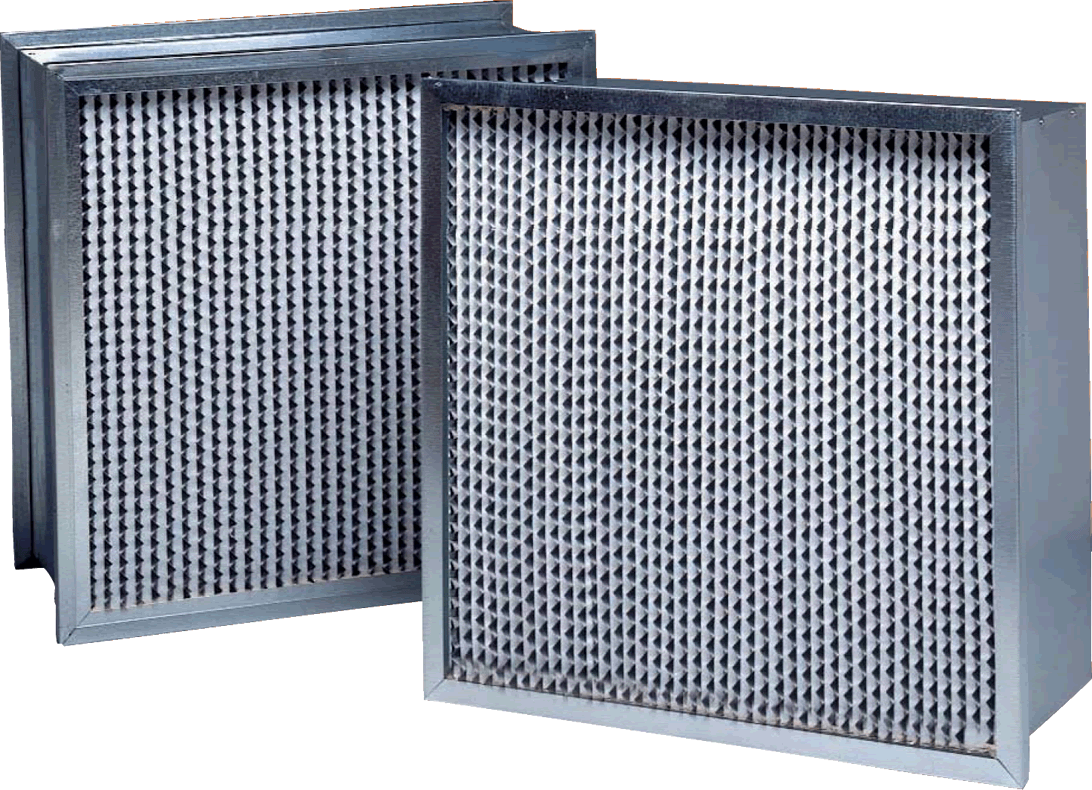
Depth filtration, by contrast, utilizes the entire volume of the filter media to capture debris. Rather than a thin screen, a depth filter is a thick, porous structure-often several millimeters thick-consisting of a random arrangement of fibers or bonded grains. As fluid travels through this "tortuous path," particles are not just blocked on the surface but are trapped deep within the internal voids. This happens through impingement, where a particle's inertia carries it into a fiber, or through adsorption, where microscopic forces pull the particle toward the media wall. This "three-dimensional" approach allows the filter to handle a much higher volume of "dirt" before it becomes fully saturated. This makes depth filtration the premier choice for fluids containing "slimy" or deformable particles that would quickly coat and blind a surface filter.
Capacity, Pressure, and Flow Dynamics
Dirt-Holding Capacity (DHC) and Service Life
The most significant operational difference between these two technologies is their Dirt-Holding Capacity (DHC). A surface filter has a limited "loading area"; once the surface is covered with a layer of particles, the flow is effectively blocked. Consequently, surface filters require frequent cleaning or replacement if the fluid is heavily contaminated. A depth filter, however, has a much higher "void volume." It can store a massive amount of particulate matter throughout its internal structure. This leads to a significantly longer service life in "dirty" applications. When an engineer specifies a depth filter, they are prioritizing the time between maintenance cycles (Mean Time Between Failures), making it "good" for 24/7 continuous processes where downtime is the most expensive variable in the budget.
Pressure Drop and Loading Comparison
| Performance Metric | Surface Filter (Mesh) | Depth Filter (Sintered Felt) |
| Initial Pressure Drop | Very Low (High Open Area) | Moderate (Higher Resistance) |
| Pressure Loading Curve | Sudden "Spike" at saturation | Gradual, linear increase |
| Dirt-Holding Volume | Limited to surface area | Distributed through media volume |
| Flow Rate Capability | High (Ideal for high-velocity) | Lower (Requires thicker media) |
| Absolute vs. Nominal | Typically Absolute | Typically Nominal to Semi-Absolute |
Cleanability and Material Sustainability
The Reusability of Surface Mesh
From a sustainability and long-term economic perspective, surface filters made of stainless steel are nearly unbeatable. Because the contaminants are trapped on the exterior, they can be easily removed through back-pulsing, chemical soaking, or ultrasonic cleaning. In many industrial plants, a single stainless steel surface filter can remain in service for over a decade, being cleaned hundreds of times without losing its filtration accuracy. This "good" reusability makes it a favorite for the circular economy. The ability to return the filter to a "near-zero" pressure drop state after every cleaning cycle provides a level of operational predictability that disposable depth filters simply cannot match.
The Challenges of Cleaning Depth Media
While depth filters are excellent at catching dirt, they are notoriously difficult to clean. Because the particles are embedded deep within the fiber matrix, reversing the flow (back-washing) often fails to dislodge all the trapped material. Over time, "residual loading" builds up inside the depth filter, leading to a permanent increase in the base pressure drop. While some high-end sintered metal depth filters can be cleaned using aggressive chemical furnace treatments, most depth filters (especially polymer or fiberglass versions) are considered disposable "consumables." This section explains why depth filters often represent a higher "recurring cost" compared to the "capital investment" required for a high-quality surface filtration system.

Strategic Application and Selection Framework
When Surface Filtration is the "Good" Choice
Surface filtration is the preferred technology in scenarios requiring absolute precision and high flow rates. For example, in the protection of high-pressure nozzles or sensitive valves, you need to be 100% certain that no particle larger than the nozzle orifice passes through. Because surface filters offer an "absolute rating," they provide this peace of mind. They are also the standard for "Scalp Filtration," where the goal is to remove a small amount of large debris from a mostly clean liquid. In the food and beverage industry, stainless steel surface mesh is utilized to ensure that no foreign objects-such as fragments of equipment or packaging-make it into the final product, providing a hygienic and cleanable barrier that meets FDA standards.
When Depth Filtration is Mandatory
Depth filtration becomes mandatory when the fluid contains a high concentration of "fines" or "deformable solids" like gels and waxes. In polymer extrusion or oil refining, these contaminants would "blind" a surface screen in seconds. The depth media provides the necessary "residence time" for these particles to become trapped. It is also the superior choice for "Polishing" applications, where the goal is to remove a wide spectrum of particle sizes to achieve a high degree of visual clarity in the liquid. If your goal is to extend the life of an expensive downstream membrane, a depth filter is the "good" choice for a pre-filter because it will catch the bulk of the contaminants that would otherwise prematurely foul the membrane surface.
| Industry Application | Recommended Filter Type | Engineering Reasoning |
| Hydraulic Systems | Surface (Mesh) | Protects valves with absolute cutoff |
| Polymer Extrusion | Depth (Sintered) | Captures gels and degraded polymer |
| Water Pre-treatment | Surface (Wedge Wire) | Removes bulk solids; easily back-washed |
| Bio-Pharmaceutical | Depth (Felt/Fiber) | High efficiency for microscopic cells |
| Fuel Filtration | Surface (Coalescing) | Separates water and solid debris |
Conclusion: The Hybrid Filtration Approach
In the complex world of industrial separation, the most successful systems rarely rely on a single technology. The "good" engineering solution is often a hybrid approach that leverages the strengths of both surface and depth filtration. By placing a durable, cleanable surface filter upstream of a high-capacity depth filter, an operator can protect the more expensive depth media from large debris, thereby significantly extending its service life and reducing the frequency of replacement.
Ultimately, the choice between surface and depth filtration is a balance of precision, capacity, and cost. If your application demands an absolute barrier and long-term reusability, surface mesh is your best asset. If your process involves high contaminant loads and requires long run-times between maintenance, depth media is the superior choice. Understanding this comparative logic allows you to design a filtration system that is not only effective at cleaning the fluid but also optimized for the economic realities of modern manufacturing.
To see how surface and depth filtration fit into the broader landscape of industrial separation, return to our master technical manual:
[What are the 4 Types of Filters?]