






Dryers are among the most used home appliances. Every time clothes are tumbled and heated, they generate lint - tiny fibers, dust particles, and debris released from fabrics. If unmanaged, this lint accumulates inside the dryer, on the heating elements, in vents, and can significantly reduce efficiency, increase energy consumption, shorten dryer lifespan, or even lead to fire hazards. A key component in preventing such issues is the dryer's lint filter. In many modern dryers the lint filter is made from woven or pressed wire mesh-a durable, heat-resistant, cleanable material that stands up to the rigorous conditions inside a dryer.
In this article we'll explore:
1.The primary functions of a wire mesh dryer lint filter
2.The design, material, and operational mechanics of wire mesh filters in dryers
3.The maintenance, real-world performance, cost & safety implications of using wire mesh dryer lint filters
Each section will be rich in detail, technical explanation, application examples, and practical advice, to give you a full understanding of why wire mesh lint filters matter in dryer design and operation.

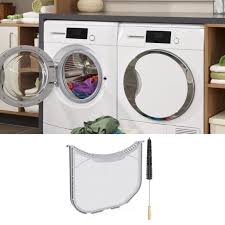
1. Functions of a Wire Mesh Dryer Lint Filter
The lint filter in a clothes dryer is deceptively simple in concept but critical in function. When the dryer operates, warm air moves through the drum, removing moisture. Simultaneously, as fabrics dry, they release fibers (lint), dust, small debris from pockets, and sometimes loose items (thread ends, fluff). Without an effective lint filter, these particles can circulate inside the dryer drum, reach the heating element, accumulate in ducts, reduce airflow, increase drying time, raise energy consumption, and pose fire risk. A filter made of wire mesh serves multiple functions:
1.1 Primary Airflow & Filtration Function
At its core, the lint filter must allow air to pass through the dryer while simultaneously trapping lint particles. The balance is key: the mesh must have openings large enough to permit adequate airflow, but fine enough to trap the majority of lint particles.
1.2 Protection of Internal Components & Safety
Another vital function is protection. The lint filter prevents lint from reaching critical components of the dryer, such as the burner or heating element, thermostats, and internal ducts. If lint accumulates around the heating element, it can act as an insulator or combustible layer, raising the risk of overheating and fire.
1.3 Efficiency & Performance Optimization
By maintaining good airflow and preventing lint accumulation in the duct and internal system, a wire mesh lint filter ensures the dryer operates at its designed efficiency. Some of the performance benefits:
Shorter drying times: With clean filter and good airflow, moisture is removed faster.
Lower energy consumption: Motor and heater run less time, reducing electricity usage.
Longer component life: Blower motors, heating elements, and ductwork operate under less strain and heat, extending service life.
1.4 Ease of Maintenance & Reusability
A wire mesh lint filter also provides a function of maintainability: it is reusable (vs. a disposable paper screen). Because wire mesh (often stainless steel or heat-resistant alloy) can be cleaned (brushed, washed, rinsed), the filter element can be used for many cycles.
1.5 Heat & Environmental Resilience
Dryer environments are demanding: high temperature, cycling heating and cooling, potentially abrasive lint, and continuous airflow. A wire mesh lint filter performs the function of resilience: it must withstand the temperature, mechanical stress, cleaning operations, and vibration.
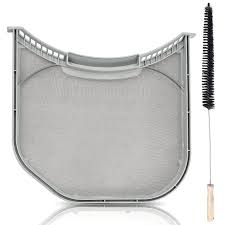
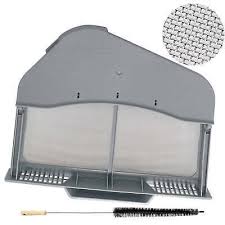
1.6 Summary Table of Filter Functions
|
Function |
Description |
Outcome/Benefit |
|
Airflow & Filtration |
Allows air passage, traps lint particles |
Maintains dryer efficiency, shorter drying time |
|
Component Protection & Safety |
Prevents lint reaching heating element, ducts |
Reduces fire risk and internal damage |
|
Efficiency Optimization |
Ensures designed airflow and heater performance |
Lower energy costs, longer dryer life |
|
Maintenance & Reusability |
Cleanable wire mesh filter element |
Lower lifetime cost, less downtime |
|
Heat & Environmental Resilience |
Withstands high temperature and cycles |
Long-term reliability in harsh conditions |
1.7 Why Wire Mesh Specifically is Chosen
While lint filters may be made of plastic screens, fabric, or polymer mesh, the wire mesh option offers superior function in the dryer's environment. Key reasons:
Durability: Stainless steel wire mesh resists wear, deformation and tearing better than plastic or fabric. The blog: "While the lint and fabric fibers being filtered aren't the most abrasive material… dryer lint filters are constantly being used, removed, cleaned, and reinstalled… woven wire mesh … provides peak durability."
Heat resistance: As above, temperatures inside dryers can be very high; wire mesh outperforms polymers under heat.
Cleanability: The solid metal structure allows repeated cleaning (washing, brushing) without losing integrity.
Thus the functions of airflow maintenance, protection, efficiency, maintenance ease, and resilience are all enhanced by using wire mesh.
In sum, the lint filter in a dryer, especially when made of wire mesh, performs multiple critical functions-from air filtration and safety to performance optimization and long-term serviceability.
2. Design, Material & Operational Mechanics of Wire Mesh Dryer Lint Filters
Having explored what a wire mesh dryer lint filter does, this section addresses how it is designed, what materials are used, how the operational mechanics work inside a dryer, and how manufacturers and users must consider design factors.
2.1 Material & Construction of Wire Mesh Lint Filters
2.1.1 Material Choice
Wire mesh lint filters are typically made from stainless steel or other heat/ corrosion-resistant alloys. Woven wire mesh is metallic cloth… the mesh is widely known for its ability to be customized… parameters such as wire diameter, alloy, openings size, mesh count, etc. can be altered based on your needs.
Choosing the correct alloy is key because the dryer environment imposes heat, moisture, chemical exposure (detergent residues, lint). Stainless steel (300 series) is common because of its balance of corrosion resistance and cost.
2.1.2 Mesh Parameters & Pore Structure
Important design parameters:
Wire diameter: The thickness of each wire in the weave.
Mesh count (openings per inch): Defines how many pores exist per length and thus influences airflow and particle capture.
Opening size: The actual pore size determines which lint/fiber particles can pass through vs. be trapped.
Weave type: Plain weave, twill, Dutch weave, etc. In dryer lint filters the design is chosen to optimise airflow while trapping lint.
Manufacturers specify these to meet airflow resistance, durability, and filtration performance targets.

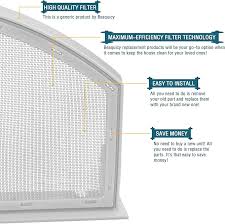
2.1.3 Framing and Housing
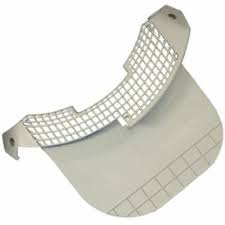
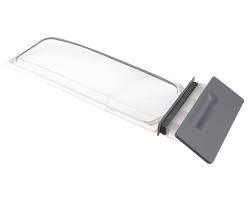
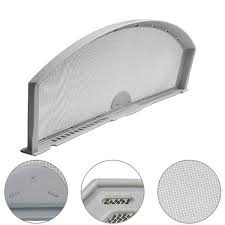
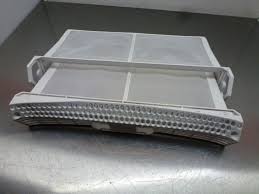
The wire mesh element must be mounted into a frame or housing that fits into the dryer's lint trap slot. The frame may be plastic, metal, or a combination. A typical dryer lint filter consists of the filter media as well as some sort of casing, usually made from plastic or metal. This housing serves two purposes: a supportive element to increase the stability of the lint filter as well as a guide for seamless installation and removal of the filter.
Thus the structural design ensures the mesh remains properly tensioned and inserted, while also allowing user removal and cleaning.
2.2 Operational Mechanics in the Dryer
2.2.1 Airflow Path & Lint Capture
Drying cycle mechanics: The dryer draws in ambient air (or recirculates), passes it over a heating element, then circulates the hot air through the drum, extracting moisture from clothes. The outgoing air carrying moisture and lint passes through the lint filter before being blown out or exhausted. At this point:
Lint particles are entrained in the hot air.
As air passes through the mesh, fibers larger than the pore openings are trapped on the surface or within the weave.
Clean air passes onward, maintaining proper exhaust and airflow.
This design ensures that before lint can enter the dryer's internal ducts or heating region, it is captured.
2.2.2 Pressure Drop & Airflow Resistance
Any filter introduces some resistance to airflow (pressure drop). In dryers, it is critical that this drop be low enough to maintain good airflow and thus efficient drying. The design of the wire mesh must balance fine filtration (which tends to reduce pore size and increase resistance) with minimal pressure drop. Designers calculate allowable pressure drop based on blower capacity, duct length, exhaust path, and drying time targets. One reason wire mesh is selected is its relatively low resistance for a given filtration compared to denser media.
2.2.3 Heat, Moisture, and Mechanical Loads
Inside the dryer, the lint filter sees:
Elevated temperatures (from hot air, heating element proximity)
Moist, lint-laden air (which may condense)
Repeated removal/installation by the user (mechanical load)
Cleaning operations (scrubbing, washing)
Therefore, the mesh must retain its dimensional stability, resist corrosion, and maintain integrity under repeated cycles. The blog claims the mesh can withstand temperatures up to 1700 °F in extreme cases. Though dryers don't reach such extremes, this highlights robustness of the material.
2.2.4 Lint Build-Up and Filter Efficiency
Over time, as lint accumulates on the mesh, the effective pore openings shrink, airflow resistance increases, and drying performance drops. The filter element must be designed to hold a reasonable volume of lint while remaining effective. However, it's not designed for indefinite accumulation; periodic cleaning is required. If left unchecked, the build-up causes:
Higher drying times
Increased energy consumption
Overheating risk (due to restricted airflow)
Potential fire hazard due to lint igniting near the heating element
Thus the design must consider ease of lint removal and safe reuse.
2.3 Design Considerations for Manufacturers & Users
Manufacturers and designers of dryers (and aftermarket filter suppliers) must keep in mind multiple design criteria:
2.3.1 Filter Dimension & Fit
The filter must fit snugly into its slot so that all air passing through must pass the mesh, with no bypass (air leaking around filter). A good fit prevents unfiltered air (and lint) reaching internal components.
2.3.2 Mesh Opening Size vs. Lint Particle Distribution
Designers must analyse typical lint/fiber size distribution for clothes being dried (which varies by fabric type, load size, detergents used, wear etc.). The mesh opening size must be small enough to trap most lint but not so small it restricts airflow significantly.
2.3.3 Easy Remove & Clean Feature
Since maintenance is needed regularly, the filter should be easy for the user to remove, clean (brush off lint, rinse), and reinstall. The choice of frame, handle, latch etc matter. The blog implies wire mesh filters allow repeated cleaning, which reduces lifecycle cost.
2.3.4 Heat Tolerance & Material Durability
Because the dryer environment is demanding, materials must be selected to avoid warping, corrosion (due to moist hot air and lint plus residue from detergents/softeners). Stainless steel wire mesh is a good choice because of corrosion resistance and strength.
2.3.5 Cost-Effectiveness & Lifecycle Cost
While material costs may be higher for stainless steel vs plastic, the longer life, re-usability, and better performance often justify the cost. This is a design trade-off for both manufacturers and aftermarket parts. The blog mentions cost factors in wire mesh selection.
2.3.6 Safety Compliance
Given dryer fire risk due to lint, design must comply with relevant safety standards (domestic appliance regulations, fire safety codes). The filter must reliably capture lint and sustain the environment for years without degradation.
2.4 Example of Typical Technical Specifications
Here is a hypothetical specification table for a wire mesh dryer lint filter used in domestic front-loading dryer:
|
Parameter |
Typical Value |
Notes |
|
Mesh material |
304 stainless steel |
Good balance of cost/performance |
|
Mesh count |
40 mesh (approx 40 wires/inch) |
Determines pore size |
|
Opening size |
~0.4 mm (400 µm) |
Suitable for typical lint fiber size |
|
Frame dimension |
300 mm × 250 mm × 10 mm |
Fits standard dryer slot |
|
Airflow resistance |
< 20 Pa @ rated airflow |
Ensures low pressure drop |
|
Max operating temp |
150 °C (continuous) |
Dryer internal temps often under this |
|
Cleaning interval |
After every load (user brushing) |
Prevents excessive build-up |
|
Service life |
~5,000 cycles (≈5-10 years) |
Based on durability and cleaning |
These specifications illustrate how designers select mesh and frame to balance filtration ability with airflow and serviceability.
2.5 Integration with Dryer System & Real-World Operation
In practice, the lint filter is typically located in front of the dryer door (top panel or front opening), or in some designs inside the ductwork as a secondary lint trap (especially when vent runs are long). For instance, one external lint trap assembly (for inline dryer vent) emphasises the need for a separate screen to catch remaining lint after the internal filter.
In real-world operation:
When the user starts the dryer, airflow begins.
Lint starts to accumulate on the mesh via surface capture.
The user should remove the filter after each load and remove the lint.
If the filter is clogged (not cleaned), drying time increases, airflow reduces, energy usage rises.
Some models monitor differential pressure or exhaust temperature to alert user to filter blockage.
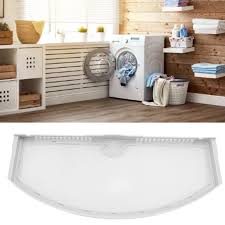
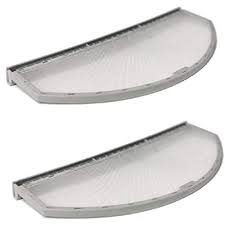
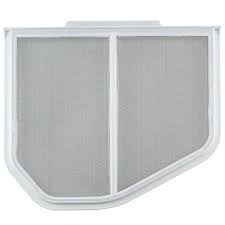
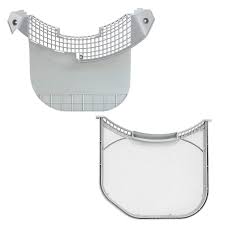
Over time, the mesh may need full cleaning (wash, rinse) or replacement if damaged (e.g., torn mesh, frame warpage). Part numbers and replacements (e.g., ADQ56656401 stainless steel mesh lint filter) are available for many dryer models.
2.6 Advantages of Wire Mesh in Operation & Design
Some of the key advantages in this context:
High Heat Tolerance: Withstand heating cycles without deformation.
Long Life & Reusable: Can be cleaned many times, less frequent replacement.
Stable Airflow: Because the mesh is rigid and dimensionally stable, it maintains pore structure better than flexible fabric.
Ease of Manufacture & Customization: Mesh count, opening size, wire diameter, alloy can be adjusted to suit specific dryer models. The blog emphasises customizability of wire mesh for industrial uses.
2.7 Limitations & Design Challenges
Of course, no design is perfect. Some challenges with wire mesh lint filters include:
Lint Adhesion: Over time, lint may partially embed in the mesh or bind with fabric softener residue, reducing effective pore size more rapidly.
Cleaning Habit Dependence: The performance depends on the user removing lint regularly. If the user neglects cleaning, the system suffers.
Mesh Damage: Users might bend or warp the frame, tear mesh accidentally, reducing efficiency.
Initial Cost: Compared with simple plastic screens, stainless wire mesh may cost more, though lifecycle cost is often lower. The blog mentions cost factors controlling price of wire mesh.
Designers must mitigate these via ease of cleaning, robust construction, user education, and monitoring (e.g., alerting user when lint load is high).
2.8 Summary of Design & Mechanics
In essence, the design and operational mechanics of wire mesh dryer lint filters revolve around providing a durable, heat-resistant, low-resistance airflow path that effectively traps lint, protects internal dryer components, maintains efficiency, and is easy for the user to maintain. The mesh's material choice, pore structure, frame design and user removal/cleaning cycle are all central to its successful function in the dryer.
3. Maintenance, Real-World Performance, Cost & Safety Implications of Wire Mesh Dryer Lint Filters
This final section looks at how the lint filter performs in the real world, how maintenance impacts its function, the cost implications of wire mesh filters versus alternatives, and the critical safety implications tied to lint accumulation.
3.1 User Maintenance & Cleaning Practices
Even the best lint filter will fail to provide full benefit if not maintained correctly. Some best practices:
Clean after every load: The trap should be emptied of lint after each drying cycle. Many home-owner advice sources emphasise this.
Periodic thorough cleaning: The wire mesh may be removed and rinsed with water or mild detergent to remove residue from fabric softeners or oils that cause lint to cling.
Inspect for damage: Check for tears, bent frame, missing mesh, warpage. A compromised mesh means lint bypass and reduced filtration.
Check exhaust path: Beyond the lint filter, the dryer vent and exhaust duct need cleaning (especially in long runs). A clean filter helps but cannot compensate for blocked ductwork.
Replace when necessary: If the filter becomes warped, corroded, or damaged, replacement is more cost-effective than suffering inefficiency. The part store example shows replacement mesh parts available.
3.2 Impact on Dryer Performance & Lifetime
Studies and user reports show that poor lint filter maintenance leads to:
Increased drying time (sometimes double)
Higher energy usage (blower and heater run longer)
Overheating of components (heater element or blower)
Higher repair and replacement rates for blower motors, heating coils
In contrast, well-maintained filters contribute to:
Shorter cycles (energy savings)
Better fabric care (less overheating, fewer hot spots)
Longer appliance lifespan
The blog underscores that the wire mesh lint filter "allows manufacturers to ensure this lint is filtered … while maintaining sustainable airflow."
3.3 Cost Implications and Lifecycle Considerations
From a cost perspective:
Initial cost: Wire mesh lint filters may cost more than simple plastic or fabric screens. The blog notes several cost factors (mesh specification, value‐added services, filter components).
Lifecycle cost: However, because the filter is reusable, durable, and performs reliably, the long-term cost per load is lower. Fewer replacements, less downtime, fewer repairs to dryer components.
Energy cost savings: Better airflow means shorter drying cycles and lower power consumption-effectively reducing household utility bills.
Safety cost avoidance: A clogged lint filter or blocked vent can lead to dryer fire, resulting in significant cost (repair, property damage, possible injury). Investing in good filter maintenance is cheaper than the risk of failure.
Thus when evaluating cost, one must factor in: filter replacement cost + dryer repair cost + energy cost + downtime risk. Wire mesh filters often deliver superior total cost of ownership.
3.4 Safety & Fire Prevention
Lint accumulation is one of the major causes of dryer‐related fires. According to home‐owner safety information:
"Dryer lint is very flammable and can accumulate inside a vent pipe fairly quickly."
The lint filter plays a frontline role in mitigating this riskby preventing lint from migrating into ductwork or around the heater. Some safety points:
Regular cleaning of lint filter reduces fire hazard significantly.
Filter design must ensure no bypass (unfiltered airflow) of lint.
Secondary lint traps may be added in long or complex vent runs for added safety (as referenced in the inline lint trap article).
Actor: Many dryer‐fire claims begin with blocked lint or vent-maintaining the filter plus vent path is key to prevention.
3.5 Real-World Case Example & Data
Consider a typical homeowner scenario: A front-loading dryer in an apartment uses a wire mesh lint filter. Initially, the drying time is 45 minutes. After six months of neglecting cleaning the lint filter, drying time climbs to 80 minutes, energy consumption increases, and the heater element overheats and fails prematurely. After replacing the mesh filter, cleaning it after each load, the user reduces cycle time to 40 minutes and sees no further issues for two years.
This anecdotal case reflects data from manufacturers: regular lint filter cleaning restores dryer efficiency.
Manufacturers of wire mesh systems note their mesh's ability to be cleaned and reused removes the need for frequent replacements and helps avoid performance degradation.
3.6 Environmental & Sustainability Considerations
Using durable, reusable wire mesh lint filters supports sustainability in several ways:
Less frequent disposable filter replacements (reducing waste)
Lower energy consumption through betterdryer efficiency
Longer dryer lifespan, reducing appliance replacement rate
Potential for materials recycling (stainless steel mesh) at end of life
Therefore, a wire mesh lint filter contributes not just to performance and safety but to more sustainable household appliance use.
3.7 Emerging Trends and Aftermarket Considerations
In the aftermarket and newer appliance designs:
Some filters are marketed as high-efficiency stainless mesh replacements (better capture, longer life)
Some homeowners or multi-unit housing properties install secondary inline lint traps (metal housing with mesh screen) to capture leftover lint downstream of the primary filter, especially where vent runs are long or shared.
Smart dryers now monitor pressure drop across the lint filter or exhaust temperature rise to alert users when cleaning is required-this supports the maintenance cycle and safeguards efficiency and safety.
Alternative media (advanced mesh alloys, coated mesh to reduce lint adhesion) may become more common in premium dryers to further reduce cleaning frequency and improve service life.
Users can consider upgrading to such aftermarket wire mesh filters to improve dryer performance, especially in high-use settings (multi-family housing, laundrettes, hotels).
3.8 Summary & Best Practices for Users
To get the most out of a wire mesh dryer lint filter:
Clean the filter every load – don't skip.
Wash the mesh element periodically (every 1-3 months) to remove curling lint and softener residue.
Inspect the frame and mesh for cracks or deformities; replace if damaged.
For long vent runs (>20 ft or many bends), consider adding a secondary inline mesh lint trap in the ductwork.
Ensure the exhaust path (vent, duct) is cleaned yearly-filter can only do so much if duct is blocked.
Consider upgrading to high-quality stainless mesh replacement if your dryer is used heavily or inefficient.
By following these practices, you ensure the function of the filter (airflow, protection, efficiency, safety) is maintained.
learn more:Design, Materials & Engineering Principles Behind Wire Mesh Dryer Lint Filters
Conclusion
A wire mesh dryer lint filter may look like a simple screen, but its roles are vital: maintaining airflow, protecting components, enhancing performance, enabling maintenance, and safeguarding safety. Its design and material (stainless steel mesh) ensure it can operate reliably under high-temperature, moisture-laden, and mechanically stressed conditions. When properly maintained, it significantly improves dryer efficiency, reduces energy costs, and helps prevent fire hazards.
For manufacturers, understanding mesh parameters, frame design, airflow resistance, heat resistance, and user maintenance needs is key to specifying the right lint filter. For users, regular cleaning, inspection, and possible upgrade of the mesh element ensure the dryer continues to operate effectively and safely.