





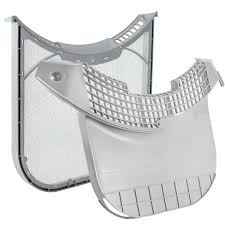
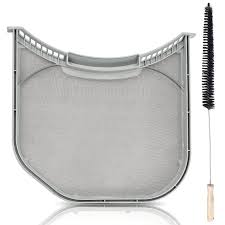
A wire mesh dryer lint filter may appear to be a simple household component-but behind its performance lies a surprising amount of engineering, material science, airflow theory, manufacturing precision, and ergonomic design. Its purpose is not only to trap lint, but to do so efficiently, durably, safely, and repeatedly under cycles of heat, vibration, mechanical stress, moisture exposure, and user handling.
This sub-article explores in depth the core engineering principles, material science, mesh specifications, design characteristics, manufacturing considerations, testing requirements, and performance criteria that define a high-quality wire mesh dryer lint filter.
By the end of the article, you will understand why this component is far more advanced-and far more critical-than most homeowners realize.
1. Engineering Objectives of a Wire Mesh Lint Filter
Every component is engineered for a purpose, and the lint filter's objectives include:
High airflow with minimal pressure drop
Effective lint capture
Thermal stability
Mechanical durability
Ease of cleaning
Ergonomic user removal and reinsertion
Resistance to corrosion, residues, and detergents
Long service life at low maintenance cost
A successful design must satisfy all objectives simultaneously-often requiring trade-offs that engineers must carefully balance.
Below is a summary of the primary engineering goals.
1.1 Required Engineering Goals and Design Criteria
|
Engineering Objective |
Required Characteristics |
Key Design Features |
|
High Airflow Efficiency |
Minimal pressure drop, high open area |
Proper mesh count, pore geometry, uniformity |
|
Lint Capture Efficiency |
Ability to trap varied lint particles |
Controlled pore size, stable weave |
|
Heat Resistance |
Withstand 120–165°F cycles without deformation |
Stainless steel mesh, heat-tolerant polymers |
|
Mechanical Durability |
Resist bending, cleaning, removal stress |
Metal mesh, reinforced frame |
|
Corrosion Resistance |
Resist moisture, detergent vapor |
Stainless steel alloys (304/316) |
|
Ergonomics |
Easy for user to remove and reinstall |
Handle design, frame contour |
|
Service Life |
Thousands of cycles |
High tensile wire, strong weave |
These engineering criteria guide all aspects of the lint filter's design-from material choice to mesh geometry to frame construction.
2. Material Engineering: Why Stainless Steel Wire Mesh is Preferred
Wire mesh lint filters are most commonly made from stainless steel, particularly chrome-nickel alloys such as 304 or 316. These grades are chosen because they offer:
Corrosion resistance
Heat resistance
Mechanical strength
Dimensional stability
Cleanability
Long service life
Let's explore these characteristics in detail.
2.1 Corrosion Resistance
Dryers expose the lint filter to:
Humidity and condensation
Chemical residues from detergents
Bleach vapors
Fabric softener residues
Salts from clothing (sweat residue)
Stainless steel forms a passive chromium oxide layer on its surface that protects against corrosion. Grade comparisons:
|
Stainless Steel Grade |
Corrosion Resistance |
Notes |
|
304 |
High |
Most common for lint filters |
|
316 |
Very high |
Resists chloride & detergent vapors |
|
430 |
Moderate |
Lower cost, less common in lint filters |
304 is typically selected because it offers an ideal balance between performance and cost.
2.2 Heat Resistance & Thermal Cycling Stability
Dryer lint filters must withstand continuous temperature cycling between:
Ambient air (20–25°C)
Heated exhaust air (50–74°C)
This cycling produces thermal expansion and contraction. Plastic mesh becomes brittle or warps under thermal stress. Stainless steel, however:
Retains dimensional stability
Maintains tensile strength
Prevents pore deformation
Does not soften or melt
Even at 200–300°C, stainless steel retains its mechanical integrity-far above any temperature encountered in normal dryer operation.
2.3 Mechanical Strength & Tensile Properties
Lint filters experience:
User pulling force
Reinsertion force
Abrasion from lint
Vibration in the dryer
Scrubbing during cleaning
Wire mesh provides a robust structure capable of resisting:
Stretching
Tearing
Warping
Denting
The mechanical strength of stainless steel wires ensures pore geometry remains constant over months or years of use.
2.4 Cleanability & Surface Finish
Lint must be removed after every cycle. Stainless steel surfaces offer:
Low lint adhesion
Smooth surface finish (especially with drawn wire)
Resistance to fabric softener buildup
Resistance to staining
Mesh can be:
Brushed
without degrading.
2.5 Sustainable and Long Life Cycle Material
Stainless steel is:
Fully recyclable
Extremely long-lasting
Eco-friendly over its lifecycle
Wire mesh lint filters often last the entire lifespan of the dryer (5–15 years).
3. Mesh Engineering: Parameters That Define Filtration Performance
Wire mesh is defined by several key parameters, all of which influence lint capture and airflow:
1.Mesh count
2.Wire diameter
3.Pore or opening size
4.Open area percentage
5.Weave pattern
6.Tensile strength & stiffness
7.Surface finish
Let's examine each in detail.
3.1 Mesh Count (Openings per Inch)
Mesh count determines how many wires exist per linear inch in each direction.
Common dryer lint filter mesh count ranges:
20–60 mesh
Most typical is 30–40 mesh
A higher mesh count → smaller pore → better filtration but higher airflow resistance.
3.2 Wire Diameter
Wire diameter affects:
Mesh strength
Pore stability
Open area
Thicker wire:
Increases strength
Reduces open area
Slightly reduces airflow
Typical wire diameters: 0.15–0.30 mm.
3.3 Pore Size (Opening Size)
This is the core filtration parameter.
Lint fiber diameters vary widely:
Cotton: 10–40 µm
Polyester: 12–25 µm
Wool fragments: 20–50 µm
Mesh pore sizes are larger-typically:
300–600 µm openings
Wire mesh does not filter lint by pore size exclusively; instead it captures lint by:
Surface interception
Fiber entanglement
Turbulence that pushes lint against mesh surface
Thus, even larger openings can filter fine lint effectively due to the lint's fibrous, entangled structure.
3.4 Open Area Percentage
Open area represents the percentage of mesh surface that is open space.
Typical for dryer lint filters:
30%–60% open area
Higher open area → higher airflow efficiency.
3.5 Weave Pattern
The filter typically uses plain weave, the simplest and most stable pattern.
Other weave patterns (twill, Dutch weave) are unnecessary because airflow, not ultra-fine filtration, is the priority.
3.6 Surface Roughness and Finishing
Smooth wire reduces:
Lint adhesion
Clogging
Cleaning difficulty
High-quality mesh uses drawn, polished wire.
4. Frame Engineering: Structural & Ergonomic Design
The wire mesh must be held within a frame. The frame is typically made of:
ABS plastic
Polycarbonate
Stainless steel
Glass-filled nylon
The frame needs to be:
Heat resistant
Crack resistant
Ergonomically shaped
Easy to grip
Easy to clean
4.1 Structural Requirements of the Frame
The frame must:
Maintain mesh tension
Prevent bypass airflow around the mesh
Fit precisely within dryer slot
Withstand repeated user handling
Frame failure (brittle cracking, warping) is a major cause of lint leakage.
4.2 Ergonomic Handle Design
Design must enable effortless user removal.
Good designs feature:
Finger grooves
Soft edges
Angled pull handles
Visible grab points
Poor ergonomics lead to improper reinsertion, a major cause of duct clogging.
5. Manufacturing Processes for Wire Mesh Dryer Lint Filters
Manufacturing a lint filter involves multiple steps:
5.1 Wire Drawing
Stainless steel rods are drawn into fine wires. Quality is crucial:
Consistent diameter
High tensile strength
Smooth surface
5.2 Weaving
Wires are woven into mesh sheets on precision looms.
Critical tolerances:
Uniform opening size
Even tension
No broken wires
5.3 Cutting & Shaping
Mesh must be cut accurately with:
Laser cutting
Punching
Shearing
Precision matters to ensure exact fit into the frame.
5.4 Frame Molding
Frames are injection-molded with:
ABS
Nylon
Polycarbonate
High injection pressure ensures:
Dimensional accuracy
Thermal resistance
Structural integrity
5.5 Mesh Embedding or Clamping
Mesh is attached to the frame by:
Ultrasonic welding
Mechanical clamping
Overmolding
Adhesive bonding (high-temp adhesives)
Ultrasonic welding is most common because it produces:
Air-tight seal
Strong bond
No added chemicals
5.6 Final Assembly & QC Testing
Before packaging, filters undergo:
Visual inspection
Airflow test
Mesh tension check
Frame alignment check
Fit test in standard dryer slot
High-quality filters also undergo:
Temperature cycling
Lint loading tests
Cleaning durability test
6. Engineering Testing and Quality Control
To ensure reliability, manufacturers test lint filters in multiple categories.
6.1 Airflow Resistance Testing
Using an airflow bench, engineers measure:
Pressure drop across clean filter
Pressure drop across loaded filter
Target ΔP:
5–20 Pa at 150–200 CFM
6.2 Lint Capture Efficiency Testing
Synthetic or natural lint is introduced into airflow.
Engineers evaluate:
Filtration efficiency
Loading capacity
Release ease
Clogging tendency
6.3 Thermal Stability Testing
Filters undergo:
Heat exposure (70–100°C)
Rapid cycling
Long-duration heat soak
Expected results:
No warping
No melting
No mesh detachment
6.4 Mechanical Stress Testing
Includes:
Push-pull cycles (10,000+ insertions)
Drop tests
Scrubbing force testing
6.5 Chemical Exposure Testing
Filters are exposed to:
Detergent vapor
Bleach vapor
Fabric softeners
Humidity cycles
Stainless steel passes easily.
7. Engineering Trade-Offs In Lint Filter Design
Designers must balance conflicting goals.
7.1 Trade-Off: Filtration vs. Airflow
Smaller pores → better filtration → worse airflow
Larger pores → better airflow → worse lint capture
Wire mesh balances this using a combination of surface capture and geometry.
7.2 Trade-Off: Strength vs. Flexibility
Thick wire → strong but heavy
Thin wire → flexible but weak
Engineers choose the ideal diameter for longevity.
8. Table: Engineering Specifications of A High-Quality Lint Filter
|
Component |
Engineering Specification |
Notes |
|
Mesh Material |
304 Stainless Steel |
Heat-resistant, corrosion resistant |
|
Mesh Count |
30–40 mesh |
Good airflow/filtration balance |
|
Wire Diameter |
0.15–0.25 mm |
High tensile strength |
|
Pore Size |
300–600 µm |
Captures lint effectively |
|
Open Area |
40%–55% |
Supports high airflow |
|
Frame Material |
ABS / PC / Stainless |
Should resist heat |
|
Assembly Method |
Ultrasonic welded |
Prevents bypass |
|
Service Life |
5,000–10,000 cycles |
Years of use |
9. The Importance of Precision Engineering
Every parameter influences:
Airflow efficiency
Drying time
Safety
Energy use
User experience
A poorly built filter can:
Allow bypass
Warp
Tear
Restrict airflow
Leading to reduced dryer performance.
10. Future Innovations in Lint Filter Engineering
Engineering advancements are emerging.
10.1 Hydrophobic or Oleophobic Coatings
Coated mesh prevents:
Fabric softener residue buildup
Moisture retention
10.2 Smart Sensors for Filter Monitoring
Dryers can monitor:
Pressure drop
Airflow rate
Filter clogging level
10.3 Alternative Mesh Alloys & Composites
Advanced alloys may provide:
Higher strength
Better corrosion resistance
10.4 Anti-Clogging Mesh Architecture
Innovative weaves reduce:
Lint accumulation
Clogging frequency
learn more:How Wire Mesh Lint Filters Enable Efficient Airflow, Heat Transfer & Drying Performance
11. Summary
Wire mesh lint filters are carefully engineered components designed to optimize airflow, filtration efficiency, safety, and overall dryer performance. Through:
Stainless steel material science
Precision mesh weaving
Strong ergonomic frame design
Thorough testing and quality control
manufacturers ensure that the lint filter performs reliably for years.
While simple in appearance, the wire mesh lint filter is a small but crucial engineering achievement.