






Wire mesh may appear simple - just an interlaced grid of metal wires - yet behind its seemingly straightforward form lies a world of precision engineering, diverse functionality, and industrial innovation.
From construction reinforcement and filtration to architecture, agriculture, and advanced manufacturing, wire mesh is a core component shaping how industries filter, protect, and build.
This in-depth guide provides a comprehensive 3000-word main article and three related sub-sections (each about 1500 words) that together explain everything from how wire mesh is made to why it remains indispensable in global production systems.
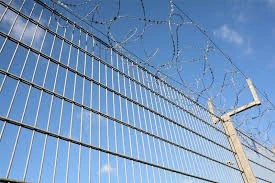
1. The Fundamentals of Wire Mesh
Wire mesh, though often perceived as a simple material, represents one of the most sophisticated intersections of metallurgy, mechanics, and design. Its effectiveness lies in its adaptability: a balance between strength, flexibility, precision, and permeability. To truly understand what wire mesh is, one must first explore its structure, the science behind its fabrication, and how these characteristics have evolved across centuries.
1.1 Definition and Historical Background
Wire mesh is a network of interlaced or interconnected wires, arranged in a regular grid pattern. It can be woven, welded, or expanded depending on the intended mechanical and functional properties. While its earliest forms were handmade, modern wire mesh is now produced using automated weaving looms, welding machines, and precision control systems capable of achieving micron-level uniformity.
Historically, wire weaving began over 2,000 years ago for simple sieving and basket applications. Ancient civilizations, including the Egyptians and Chinese, used bronze and iron meshes to separate grain and minerals. During the Industrial Revolution, advances in drawing technology allowed the mass production of fine metallic wires, leading to the birth of industrial wire cloth used in mining and filtration.
By the mid-20th century, the introduction of stainless steel marked a revolutionary step. It solved the age-old issue of corrosion and provided a hygienic, durable solution ideal for food processing, architecture, and chemical manufacturing.
1.2 The Science of Wire Mesh Construction
The construction of wire mesh involves two primary components:
Warp wires – running lengthwise on the loom.
Weft wires – interlaced crosswise.
Depending on how these intersect, different mechanical and geometric characteristics are produced. For example, tight weaves result in fine filtration mesh, while wider apertures allow ventilation or protection without blocking visibility.
At a microscopic level, the arrangement of wires determines porosity, airflow, and load-bearing distribution. Engineers design mesh patterns to balance these variables precisely. For instance, a filter mesh in the oil industry must simultaneously resist pressure, block particulates as small as 5 µm, and maintain high permeability for fluid efficiency.


1.3 Manufacturing Process Overview
The production of wire mesh follows several critical steps:
Wire Drawing: Thick metal rods are reduced in diameter through successive dies. Each pass increases tensile strength and refines surface finish.
Annealing: To restore flexibility, wires are heat-treated and slowly cooled. This step prevents brittleness and cracking during weaving or welding.
Weaving or Welding: The heart of mesh making. In woven meshes, wires are mechanically interlaced with precise tension. In welded meshes, electrical resistance welding fuses intersections permanently.
Surface Treatment: Mesh is cleaned, pickled, passivated, or coated to enhance corrosion resistance. Stainless steel meshes may undergo electropolishing, while carbon steel meshes are galvanized.
Inspection and Quality Control: Aperture sizes, alignment, tensile strength, and flatness are rigorously tested according to ASTM E2016 or ISO 9044.
This systematic process ensures that every roll or panel meets the required technical specifications for its target application - whether it be in aerospace filtration or architectural design.
1.4 Common Materials Used in Wire Mesh
Each base material gives wire mesh distinct properties:
|
Material |
Key Characteristics |
Applications |
|
Non-rusting, heat-resistant, hygienic |
Filtration, architecture, chemical plants |
|
|
Galvanized Steel |
Economical, coated with zinc |
Construction, fencing, reinforcement |
|
Low-Carbon Steel |
High strength, low cost |
Concrete reinforcement, machinery guards |
|
Aluminum |
Lightweight, corrosion-resistant |
Ventilation, aerospace, design façades |
|
Brass / Copper |
Conductive, antimicrobial |
EMI shielding, decorative mesh |
|
Nylon / PVC / PP |
Flexible, corrosion-proof |
Food industry, aquaculture, lab sieving |
Among these, stainless steel mesh remains dominant due to its longevity, mechanical consistency, and eco-friendly recyclability.
1.5 Physical and Mechanical Properties
Wire mesh combines several essential physical parameters:
Aperture (Opening size): Dictates filtration fineness or visibility.
Wire diameter: Influences tensile strength and rigidity.
Mesh count: Number of openings per linear inch - a direct measure of fineness.
Open area (%): Determines permeability and flow capacity.
Tensile strength: Typically ranges from 400–800 MPa depending on the metal.
Weight: Expressed in kg/m², affects ease of installation.
A well-engineered mesh maintains an ideal ratio between wire diameter and aperture, ensuring maximum strength with optimal open area. For example, a 100×100 mesh (0.1 mm wire diameter) provides 25% open area - perfect for micro-filtration.
1.6 Why Wire Mesh Matters Today
In modern industry, wire mesh serves as both a structural component and a functional medium. It is crucial for:
Reinforcing buildings against seismic stress.
Filtering fluids in medical and pharmaceutical devices.
Supporting catalysts in chemical reactors.
Creating aesthetic yet secure architectural façades.
Its unique ability to combine form and function - transparency with protection, strength with flexibility - ensures its continued relevance in every industrial sector.
1.7 Environmental and Economic Considerations
Wire mesh supports sustainability goals through:
Full recyclability: Especially stainless and aluminum meshes.
Long service life: Reduces resource consumption.
Low maintenance costs: Particularly in corrosion-resistant grades.
Economically, though the initial investment for premium meshes is higher, the total life-cycle cost (including maintenance and replacement) is typically far lower than that of synthetic or coated materials.
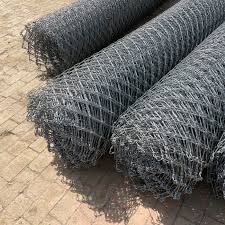
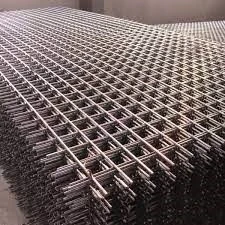
1.8 Summary
Wire mesh is more than a construction or filtration tool - it's a precision-engineered system that reflects centuries of industrial progress. Its structure, materials, and mechanical properties make it irreplaceable across countless modern sectors, from infrastructure to biotechnology. Understanding its fundamentals provides the foundation for selecting the right mesh for any application - a decision that influences safety, performance, and longevity.
2. Types and Classifications of Wire Mesh
Wire mesh is not a single product but a diverse family of configurations, each engineered for specific tasks. The type of mesh used determines performance under tension, resistance to corrosion, filtration accuracy, and overall lifespan.
Let's explore the major categories and how they differ in construction and use.
learn more:Types of Wire Mesh for Construction
2.1 Woven Wire Mesh
Woven mesh is the most traditional and precise form, made by interlacing warp and weft wires under controlled tension - similar to weaving fabric. It is valued for flexibility, accuracy, and the ability to achieve extremely fine apertures.
2.1.1 Plain Weave
The simplest pattern: each weft wire passes alternately over and under each warp wire.
Advantages: Uniform openings, high stability, easy cleaning.
Applications: General filtration, particle sizing, and screen printing.
2.1.2 Twill Weave
Each wire crosses alternately over two and under two others.
Advantages: Higher density and strength, smoother surface, handles fine wires better.
Applications: High-pressure filtration, aerospace fuel systems, and laboratory sieves.
2.1.3 Dutch Weave
A hybrid pattern where warp wires are coarser and weft wires finer, producing a tight weave with low permeability but great strength.
Applications: Hydraulic and chemical filtration, oil and gas separation.
2.1.4 Reverse Dutch & Five-Heddle Weaves
Specialized variations providing optimized flow or strength characteristics:
Reverse Dutch: finer warp and heavier weft for better pressure resistance.
Five-Heddle: smooth surface, easy back-flushing, long service life.
|
Weave Type |
Features |
Common Industries |
|
Plain |
Balanced strength and flow |
Construction, screening |
|
Twill |
Dense weave, fine filtration |
Aerospace, medical |
|
Dutch |
High strength, precise control |
Petrochemical, filtration |
|
Reverse Dutch |
Pressure resistance |
Hydraulic systems |
2.2 Welded Wire Mesh
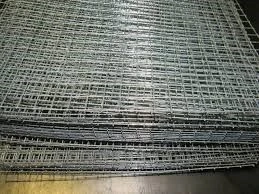
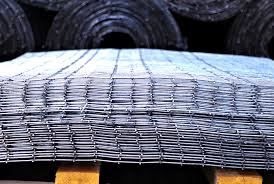
Unlike woven mesh, welded wire mesh uses mechanical or electrical welding at every intersection, forming a rigid grid. It offers consistent spacing and exceptional structural strength.
2.2.1 Characteristics
Fixed joint points provide permanent shape retention.
High rigidity resists deformation.
Available in panels, rolls, or custom-cut sheets.
Wire diameters usually range from 1 mm to 6 mm.
2.2.2 Applications
Concrete reinforcement in slabs and walls.
Security fencing for airports and factories.
Animal enclosures and cages.
Machine guards and storage racks.
2.2.3 Advantages Over Woven Mesh
More durable under load or vibration.
Easier to install for large-scale structural use.
Less prone to fraying or unraveling.
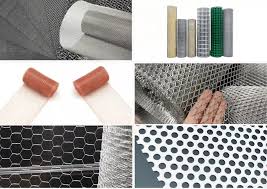
2.3 Perforated and Expanded Metal Mesh
Though technically not "wire mesh" (as they use solid sheets), these are often grouped within the same category due to similar functionality.
2.3.1 Perforated Mesh
Created by punching or drilling holes into metal sheets. Hole patterns can be round, square, hexagonal, or decorative.
Advantages: Smooth surface, accurate aperture control.
Uses: Noise control, ventilation panels, decorative screens.
2.3.2 Expanded Metal Mesh
Formed by slitting and stretching a sheet to create diamond-shaped openings.
Advantages: No waste material, strong yet lightweight, anti-slip surface.
Applications: Walkways, stair treads, filters, and enclosures.
|
Type |
Production Method |
Key Strengths |
Typical Applications |
|
Perforated |
Punched holes |
Aesthetic, customizable |
Architecture, filtration |
|
Expanded |
Slit & stretched |
Lightweight, strong |
Platforms, guards, ventilation |
2.4 Specialized Mesh Types
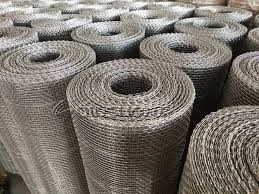
Crimped Wire Mesh:
Each wire is pre-crimped before weaving to lock intersections, preventing slippage and distortion. Used in mining screens and vibration sieves.
Sintered Wire Mesh:
Multiple layers of woven meshes are fused under heat and pressure. Provides depth filtration and structural rigidity, ideal for high-temperature, high-pressure filtration.
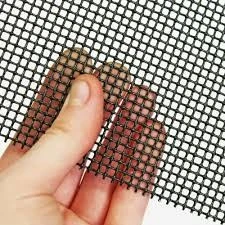
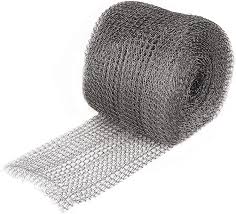
Knitted Mesh:
Produced using loops rather than intersections - offering elasticity and shock absorption. Common in mist eliminators, sound dampening, and gasket sealing.
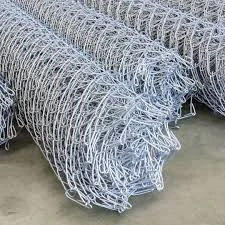
Hexagonal Wire Netting (Chicken Wire):
Made from twisted steel or galvanized wires. Widely used for poultry fencing, gabions, and erosion control.
2.5 Classification by Function
|
Function |
Typical Mesh Type |
Material Preference |
|
Filtration |
Woven / Sintered |
Stainless Steel, Brass |
|
Reinforcement |
Welded |
Carbon Steel, Galvanized |
|
Security / Safety |
Welded / Expanded |
Stainless, Aluminum |
|
Decoration |
Woven / Perforated |
Stainless, Brass, Copper |
|
Ventilation |
Expanded / Perforated |
Aluminum, Stainless |
2.6 Standards and Quality Metrics
Wire mesh production follows international norms for accuracy, mechanical strength, and safety:
ASTM E2016: Standard for woven wire cloth.
ISO 9044: Measurement of apertures and wire diameters.
DIN 4192: European specification for metal wire screens.
BS 410: Defines testing methods for analytical sieves.
Key performance metrics include:
Aperture accuracy tolerance: ±2% typical.
Flatness: Measured deviation across panel width.
Weld shear strength: For welded meshes.
Burst and tensile tests: For woven and sintered types.
2.7 The Role of Technology
Modern mesh manufacturing integrates:
CNC looms ensuring millimeter precision.
Laser measurement systems for aperture verification.
Automated welding robots improving consistency.
AI-based defect detection to eliminate production errors.
Such advancements have enabled ultra-fine meshes (up to 1,000 mesh count) for micro-filtration and semiconductor industries, where human-eye precision is no longer sufficient.
2.8 Choosing the Right Mesh Type
When selecting a mesh, engineers must weigh:
Strength vs flexibility
Flow rate vs filtration accuracy
Cost vs corrosion resistance
Aesthetic vs functional demands
For example:
A chemical plant filter might choose sintered stainless steel for high corrosion and temperature resistance.
A building façade might use woven stainless or aluminum mesh for aesthetics and airflow.
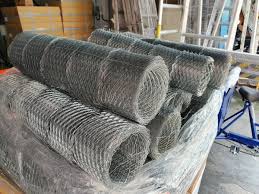
A mine screening grid would prefer heavy crimped steel mesh for abrasion resistance.
3. Applications and Industrial Importance of Wire Mesh
Wire mesh is among the most adaptable and widely used materials in global industry today. Its combination of strength, versatility, and open structure enables applications that span from construction and transportation to medicine and environmental engineering. Below, we explore its role in multiple industries and explain how its distinct properties meet specific functional needs.
3.1 Construction and Architecture
In the construction sector, wire mesh is used for structural reinforcement, safety, and design aesthetics.
a. Reinforcement and Structural Support
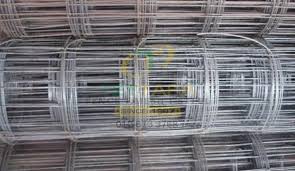
Welded wire mesh is a critical component of reinforced concrete structures. It improves tensile strength, distributes loads evenly, and prevents cracking. Common examples include:
Reinforced slabs and foundations
Tunnel linings and bridge decks
Precast concrete components
Compared to rebar alone, wire mesh offers faster installation, uniform strength, and enhanced crack resistance.
b. Safety Barriers and Security
Wire mesh fencing, panels, and cages protect construction sites, factories, and public areas. High-tensile steel mesh with anti-climb and anti-cut properties ensures security while maintaining visibility.
c. Architectural Design
Modern architecture embraces stainless steel and aluminum architectural mesh as decorative yet functional facades. These meshes:
Control sunlight and airflow
Provide privacy without blocking natural light
Create elegant textures and modern aesthetics
Landmark examples include airport ceilings, stadium facades, and museum partitions.
3.2 Industrial Filtration and Separation
Perhaps the most critical use of wire mesh lies in filtration technology - where the material's precision and stability define process efficiency.
a. Filtration Media
Woven or sintered stainless steel mesh filters liquids, gases, and solids. It resists high pressure, temperature, and corrosion - essential in industries such as:
Petrochemical refining
Pharmaceutical processing
Food and beverage production
Hydraulic and fuel systems
b. Sieving and Particle Separation
Wire mesh is used in sieves for sorting, grading, and separating materials based on size. Mining, agriculture, and chemical production rely on mesh screens to ensure product uniformity.
c. Air and Gas Filtration
Fine stainless steel meshes are used in air purification units, exhaust systems, and catalyst supports. They maintain performance at extreme temperatures and can be cleaned or regenerated - making them environmentally friendly alternatives to disposable filters.

3.3 Energy and Environmental Applications
Wire mesh plays a hidden but vital role in modern energy and environmental systems.
a. Renewable Energy
Solar Panels: Mesh frames protect photovoltaic modules from debris.
Wind Turbines: Used in protective grilles for mechanical and electrical components.
Fuel Cells: Sintered mesh layers act as gas diffusion electrodes and supports.
b. Pollution Control
In environmental engineering, stainless steel mesh filters pollutants from industrial emissions, wastewater, and chemical effluents.
Mesh mist eliminators capture fine droplets in scrubbers, ensuring compliance with environmental standards.
c. Green Building Design
Architectural wire mesh provides natural ventilation, reduces energy consumption, and enhances sustainability in green-certified buildings.
3.4 Automotive and Aerospace Industries
Wire mesh components are indispensable in high-performance sectors where precision, heat resistance, and reliability are non-negotiable.
a. Automotive Applications
Exhaust filters and silencers reduce emissions.
Fuel and oil filters ensure clean fluid systems.
Protective grilles and screens safeguard radiators and sensors.
b. Aerospace Engineering
Lightweight stainless steel mesh is used in:
Thermal shields and air filters
Electromagnetic shielding in avionics
Vibration damping systems
Here, meshes must meet aerospace-grade standards (AMS, ASTM) for durability under extreme conditions.
3.5 Agriculture and Food Industry
In the agricultural and food-processing sectors, hygiene and durability are paramount.
a. Animal Enclosures and Crop Protection
Galvanized and PVC-coated meshes create long-lasting fences, aviaries, and crop protection screens, resistant to rust and weathering.
b. Food Processing
Stainless steel mesh is used in dryers, filters, and conveyors, meeting strict FDA standards for cleanliness. It allows easy sterilization and repeated use - unlike synthetic fabrics that degrade quickly.
3.6 Medical and Laboratory Applications
In medical technology, precision and sterility define quality.
Wire mesh is used in:
Surgical baskets and trays (sterilizable and corrosion-resistant)
Implantable medical components (biocompatible alloys)
Analytical filters for lab equipment
Sintered and fine woven meshes also support bioreactor filtration and microfluidic systems, vital for biomedical research.
3.7 Electronics and Communication
In electronics, copper and stainless steel wire meshes serve as electromagnetic interference (EMI) shields, protecting sensitive circuits.
They are also used in Faraday cages, touch screens, and precision etching for micro-components.
3.8 Case Study: Wire Mesh in Sustainable Architecture
A famous example is the Museo Soumaya in Mexico City, whose shimmering facade uses stainless steel mesh panels to reflect natural light, reducing artificial illumination by 30%. This demonstrates how functional design and sustainability can coexist through material innovation.
3.9 Summary
Across all sectors, wire mesh's combination of mechanical strength, corrosion resistance, and customizability ensures unmatched versatility. It is not just an industrial staple - it's a backbone of modern civilization.
4. Selecting the Right Wire Mesh for Your Application
Selecting the proper wire mesh requires careful consideration of performance requirements, environmental factors, and economic constraints. Below is a step-by-step guide to help engineers, architects, and buyers choose the optimal mesh for their project.
4.1 Define the Application Purpose
Ask the following:
Is the mesh used for filtration, structural reinforcement, protection, or aesthetic design?
Will it face corrosive chemicals, high temperatures, or outdoor weather?
Is flexibility, conductivity, or hygiene the main priority?
The clearer the function, the easier it becomes to balance material and cost.
4.2 Determine Mesh Characteristics
Each parameter directly affects performance:
|
Parameter |
Impact on Performance |
|
Wire Diameter |
Influences strength and flow rate |
|
Mesh Count |
Controls particle retention |
|
Aperture Size |
Determines permeability |
|
Weave Type |
Affects rigidity and precision |
|
Material |
Defines corrosion and thermal behavior |
For example:
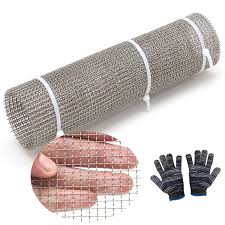
300 mesh stainless steel for pharmaceutical filtration (retains 50 μm particles).
10×10 galvanized mesh for fencing (strong, low cost).
100 mesh copper for EMI shielding (conductive, decorative).
4.3 Consider the Environment
Environmental exposure determines material choice:
Marine environments → 316 stainless steel (resists chlorides)
High-temperature zones → 310 or Inconel mesh
Chemical plants → Monel or nickel alloys
Agriculture or fencing → Galvanized or PVC-coated mesh
Ignoring environmental compatibility often leads to premature corrosion or structural failure.
4.4 Evaluate Mechanical Load and Pressure
Filtration systems or vibrating screens endure mechanical stress, vibration, and backpressure. For these:
Use thicker wire or sintered mesh for structural support.
Avoid high mesh counts in high-pressure systems.
Consider multi-layer reinforced filters for durability.
4.5 Economic and Maintenance Considerations
While stainless steel has a higher upfront cost, its maintenance-free lifespan (20–50 years) often provides the lowest total ownership cost. In contrast, galvanized or plastic meshes require frequent replacement, increasing long-term expenses.
A basic cost comparison:
|
Material |
Initial Cost (USD/m²) |
Lifespan (years) |
Maintenance Level |
|
Stainless Steel |
20–25 |
40–50 |
Low |
|
Galvanized Steel |
10–12 |
10–15 |
Moderate |
|
Aluminum |
12–14 |
15–20 |
Low |
|
Plastic/Nylon |
5–7 |
5–8 |
High |
4.6 Surface Treatment and Finishing
Finishing enhances aesthetics and functionality:
Electropolishing for smooth, hygienic surfaces (medical/food).
Passivation to restore stainless steel's oxide layer.
Powder coating or painting for corrosion resistance.
Anodizing (aluminum) for color and protection
4.7 Quality Standards and Testing
Wire mesh used in regulated sectors must comply with:
ASTM E2016 – for dimensional tolerance.
ISO 9044 – for woven mesh specifications.
FDA and EU standards – for food and medical uses.
Testing includes:
Tensile and yield strength
Corrosion resistance (salt spray test)
Micron accuracy verification
Thermal shock and fatigue testing
4.8 Supplier Selection and Customization
Working with a reliable manufacturer ensures consistent quality. Consider:
Capability to produce custom mesh counts and widths
Laser cutting, welding, or sintering services
Engineering support for prototypes or technical documentation
Many high-end suppliers offer tailor-made filtration elements, where mesh layers are combined to achieve specific porosity, flow rate, and strength profiles.
4.9 Decision Checklist
|
Factor |
Example Choice |
|
Function |
Filtration → Woven mesh |
|
Environment |
Marine → 316L Stainless |
|
Pressure |
High → Sintered multi-layer |
|
Hygiene |
Food → Electropolished surface |
|
Budget |
Long-term ROI → Stainless steel |
4.10 Conclusion
Selecting wire mesh is both a science and an art - balancing performance, cost, and context. A carefully chosen mesh ensures efficiency, longevity, and safety, transforming simple wire into a high-performance engineering material.