






The transition from a standard woven mesh to a sintered metal structure represents one of the most significant leaps in filtration engineering. While traditional wire cloth is held together by the mechanical tension of the loom, sintering uses thermal energy to fuse wires at their microscopic contact points. This process transforms a flexible, potentially fragile textile into a monolithic "structural filter" that combines the precision of sub-micron apertures with the mechanical strength of a solid steel plate. As industrial processes move toward higher pressures, more aggressive cleaning cycles, and zero-tolerance policies for media migration, sintering has emerged as the definitive solution for high-value process lines.
In this 1,500-word technical analysis, we explore the science of vacuum sintering and its impact on the physical properties of stainless steel mesh. We will examine the multi-layer lamination process, the delamination resistance of fused structures, and the rigorous testing methods-such as bubble point and burst pressure analysis-that verify the integrity of these advanced filters. By understanding the capabilities of sintered technology, engineers can design filtration systems that are not just "disposable consumables," but permanent, high-performance assets in the industrial ecosystem.
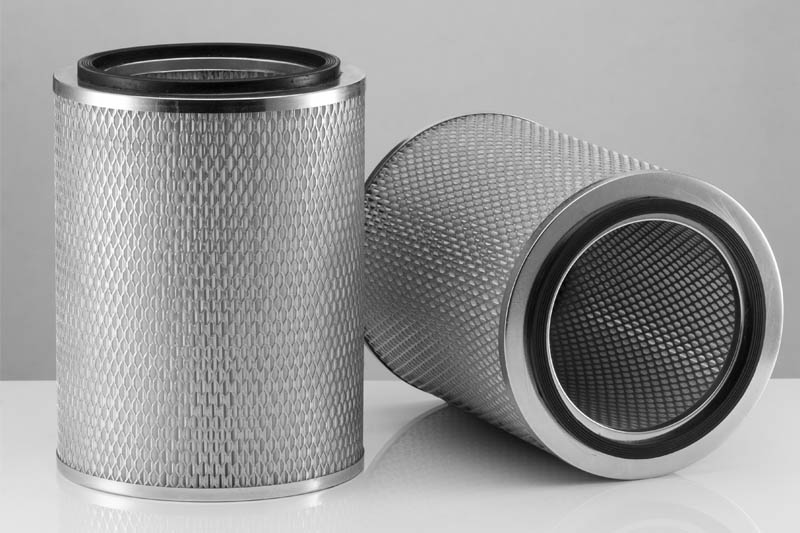

The Science of Vacuum Sintering and Molecular Bonding
The Sintering Furnace: Heat, Vacuum, and Time
Sintering is a solid-state diffusion process. It involves placing layers of stainless steel mesh into a high-vacuum furnace and heating them to temperatures just below their melting point-typically between 1100℃ and 1300℃ for 316L stainless steel. Under these extreme conditions, the atoms at the contact points of the overlapping wires begin to migrate across the grain boundaries. This creates a "neck" or a permanent molecular bridge between the wires. Because this happens in a vacuum or a hydrogen-reducing atmosphere, there is no oxidation, ensuring that the finished product maintains the full corrosion resistance of the original alloy.
The "goodness" of a sintered product is determined by the precision of the furnace cycle. If the temperature is too low, the bonds will be weak, leading to structural failure. If it is too high, the delicate wires may begin to melt, closing off the apertures and ruining the filtration accuracy. When performed correctly, sintering eliminates the "looseness" inherent in woven mesh. The result is a media that cannot unravel, where the pore size is fixed permanently in space. This stability is critical for applications like "Aeration" or "Gas Sparging," where consistent bubble size depends on the geometric uniformity of the mesh pores.
Eliminating Media Migration and Contamination Risk
One of the primary failure modes of standard woven mesh in high-vibration environments is "media migration." As the filter is subjected to hydraulic pulses or mechanical shaking, the wires rub against one another. Over thousands of hours, this friction wears down the metal, eventually causing individual wires to snap and travel downstream into the process fluid. In industries like pharmaceutical manufacturing or semiconductor production, this type of metallic contamination can result in the loss of an entire production batch. Sintering provides a "good" insurance policy against this risk by fusing the wires into a single, immovable unit.
By eliminating wire movement, sintering also ensures that the "Micron Rating" of the filter remains constant throughout its service life. In a non-sintered mesh, a high-pressure surge can physically push the wires apart, effectively enlarging the holes and allowing oversized particles to pass through. A sintered laminate resists this deformation, maintaining its "Absolute" rating even when subjected to pressures that would cause a standard screen to "bow" or tear. This section explains why sintering is the mandatory standard for any mission-critical filtration task where the purity of the downstream fluid is a non-negotiable requirement.

Multi-Layer Lamination: Engineering the Structural Filter
The 5-Layer Standard: Drainage, Filter, and Support
The most common application of sintering technology is the creation of multi-layer laminates. The "5-Layer Sintered Mesh" is the industry benchmark for high-pressure filtration. It consists of a central "Fine Filtration Layer" protected on both sides by a "Protective Layer," and then further reinforced by two "Support/Drainage Layers" made of coarse, heavy-duty mesh. In the sintering furnace, these five distinct layers are fused into a single 1.7mm to 3.5mm thick plate. This "sandwich" construction allows the filter to achieve the precision of a 2-micron weave while possessing the structural rigidity to span large diameters without a support grid.
From a physics perspective, the multi-layer design is "good" because it separates the functional task of the mesh (filtering) from the mechanical task (resisting pressure). The coarse outer layers act as a "distributor," ensuring that the fluid hits the fine inner layer evenly, which prevents localized "hot spots" of high velocity that can lead to premature clogging. This depth-like structure also provides a significant increase in "Dirt Holding Capacity" (DHC) compared to a single-layer screen. We analyze the delamination resistance of these layers, which is tested by bending the plate 180 degrees; a high-quality sinter will show no separation between the mesh layers, proving a total molecular bond.
Sintered Metal Fiber Felt: The Depth Filtration Hybrid
While laminates use woven mesh, Sintered Metal Fiber Felt uses non-woven technology. It is produced by sintering a random mat of fine stainless steel fibers (typically 2 to 50 microns in diameter). This creates a highly porous (up to 80% open) depth media. The "goodness" of fiber felt lies in its "Tortuous Path." Unlike a woven mesh where a particle only has one chance to be caught on the surface, fiber felt traps particles throughout its entire thickness. This makes it the premier choice for fluids containing "gels" or deformable particles, such as in polymer extrusion or heavy oil refining.
Sintered fiber felt offers a much lower initial pressure drop ($\Delta P$) than woven laminates because of its high porosity. However, because the fibers are sintered at every intersection, the felt remains incredibly strong. It can be pleated into cartridges, increasing the total filtration surface area by up to 300% compared to a flat cylinder. This section explores the balance between the "High Permeability" of fiber felt and its "High Capture Efficiency," illustrating why it has become the standard for "Polishing" applications where the goal is to achieve sub-micron clarity in large-volume liquid streams.
Sintered vs. Non-Sintered Performance Comparison
| Performance Metric | Standard Woven Mesh | 5-Layer Sintered Laminate | Sintered Fiber Felt |
| Media Migration | Possible (Wire break) | None (Fused) | None (Fused) |
| Burst Pressure | Moderate | Exceptional | High (when pleated) |
| Pore Stability | Variable under load | Permanent | Permanent |
| Filtration Logic | Surface (2D) | Surface/Support (Hybrid) | Depth (3D) |
| Cleanability | Good | Excellent (Back-wash) | Fair (Chemical/Furnace) |
Validation and Lifecycle Management
Bubble Point Testing and Absolute Rating Verification
To ensure that a sintered filter meets its specified micron rating, it must undergo "Bubble Point Testing" (ISO 4003). The filter is submerged in a liquid (usually isopropyl alcohol) and air pressure is slowly increased on the inside. The pressure at which the first bubble appears from the largest pore is used to calculate the "Absolute Micron Rating." For sintered products, this test is a "good" indicator of the quality of the sintering process itself. If the bubble point is lower than expected, it suggests that the wires have not fused properly or that the mesh was damaged during lamination.
Absolute ratings are the hallmark of sintered technology. In industries like aerospace, where a 5-micron particle can jam a hydraulic valve and lead to a catastrophic failure, "Nominal" ratings are unacceptable. Sintering provides the mathematical certainty required for these high-stakes environments. This section details the relationship between the "Air Permeability" of the sintered plate and its "Bubble Point," providing a framework for engineers to verify that they are receiving a product that performs to the highest international standards of filtration accuracy.
Cleaning, Regeneration, and Economic Value
The most compelling argument for sintering is its cleanability. Because the structure is so rigid, sintered filters can be cleaned using aggressive methods that would destroy a standard mesh. This includes high-pressure back-pulsing with steam, ultrasonic cleaning, and "Furnace Cleaning," where the filter is heated to $400^{\circ} \mathrm{C}$ to burn off organic contaminants (pyrolysis). This ability to regenerate the filter to "near-zero" pressure drop makes it a "permanent" part of the machine.
While the initial cost of a sintered filter may be five to ten times higher than a standard mesh cartridge, its "Lifecycle Cost" is often much lower. A standard cartridge might be replaced and discarded every month, whereas a sintered filter can remain in service for over a decade. We analyze the "Total Cost of Ownership" (TCO), factoring in the labor of replacement, the cost of disposal, and the loss of production during downtime. For 24/7 continuous industrial processes, the durability and reusability of sintered technology make it the most economically logical choice for fluid management.
Sintered Filter Cleaning Methods
| Cleaning Method | Best For... | Advantage | Risk |
| Back-washing | Surface particles | Fast, on-line process | Incomplete for depth felt |
| Ultrasonic | Fine, embedded debris | Deep cleaning of pores | Needs removal from line |
| Chemical Soaking | Scaling, oils, polymers | Dissolves contaminants | Chemical compatibility |
| Pyrolysis (Furnace) | Hardened resins, gels | Burns away all organics | May affect temper if $>500^{\circ} \mathrm{C}$ |
| High-Pressure Jet | Large, exterior debris | Effective for "cake" | May damage very fine mesh |
Conclusion
Sintering technology has fundamentally redefined the limits of metal filtration. By leveraging the principles of solid-state diffusion, engineers can create filters that are as precise as a laboratory membrane but as rugged as a structural plate. Whether through the multi-layer strength of a 5-layer laminate or the high dirt-holding capacity of a sintered fiber felt, this technology provides the durability and reliability demanded by modern high-pressure, high-purity processes. As the industry continues to push toward more sustainable, permanent filtration solutions, the adoption of sintered metal structures remains the clear path toward achieving engineering excellence and operational efficiency.
This concludes our look at sintered technology. To explore other manufacturing methods, return to the main guide:
[What are the different types of stainless steel mesh?]