






In today's food processing industry, where hygiene, durability, traceability and regulatory compliance are non-negotiable, material choice for equipment and infrastructure plays a critical role. Among these material choices, stainless steel welded wire mesh has emerged as a key component across many stages of food handling, preparation and packaging. Its strengths - corrosion resistance, cleanability, mechanical strength and ability to integrate into equipment - make it more than just a structural or filtration component: it becomes a hygiene enabler, an efficiency multiplier and a long-term asset.
In this article, we explore the use of stainless steel welded wire mesh in food processing through three major lenses:
1.Benefits and material performance - why this mesh is chosen.
2.Applications and real-world uses - where and how it's applied in the food chain.
3.Selection, specification and installation considerations - how to select the right mesh and integrate it properly.
Each section is expanded with technical detail and practical guidance so that engineers, hygienists, equipment purchasers and plant operators can understand not only what to use but why and how.
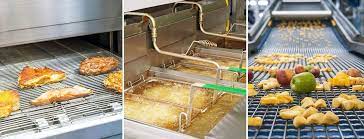
1. Benefits and Material Performance of Stainless Steel Welded Wire Mesh
Why this mesh is ideally suited for food processing environments
1.1 Corrosion Resistance & Hygienic Surface
Food processing environments expose materials to water spray, cleaning chemicals (alkaline or acidic detergents), steam, high humidity, salt (in seafood or brine) and mechanical abrasion. A material that fails will corrode, pit or lose integrity, potentially becoming a contamination source.
Stainless steel welded wire mesh (typically grades 304 or 316) provides an excellent barrier: the chromium alloy forms a self-repairing passive oxide film which effectively protects the bulk metal from corrosion. The welded junctions mean the mesh grid is rigid and durable, resisting deformation or breakage under cleaning cycles.
This means that in practical terms:
Mesh remains dimensionally stable even after repeated CIP (clean-in-place) cycles.
The surfaces can be polished or passivated, making them non-porous and less likely to trap food particles or microorganisms.
Unlike coated or painted materials, stainless steel does not delaminate, flake or lose protective layers under heat or abrasion.
1.2 Mechanical Strength & Durability
Welded mesh is inherently stronger than woven mesh in many structural uses because each wire intersection is fused. In food processing, it may be used not only for sieving or filtering but also as conveyor surfaces, drying racks, support grids, safety barriers or partitions. The mechanical demands can include high loads, rapid cycles, vibration, thermal shock and impact from dropping products or trays.
The benefits include:
Wire diameters can be tailored to required load.
Mesh opening sizes can be consistent and accurately manufactured.
Weld strength ensures that joints do not become weak points under fatigue or cleaning stress.
All of this means lower risk of failure, reduced downtime for repairs, and cost-effectiveness over longer plant lifetimes.
1.3 Temperature and Chemical Resistance
Food processing often involves extreme temperature changes - e.g., high-temperature ovens, sterilisation, freezing - and aggressive cleaning chemicals. Stainless steel welded wire mesh is well-suited: it retains its structural integrity across wide temperature ranges, resists acids/alkalis, and is compatible with steam, CIP systems and hot water.
Thus:
In ovens or dryers, the mesh does not warp or lose shape.
In freezing or blast-freeze zones, it remains dimensionally stable and does not become brittle.
In brining or pickling operations, the salt exposure is handled without accelerated corrosion (especially if grade 316 is chosen).
All of these contribute to overall reliability and hygiene compliance.
1.4 Ease of Cleaning, Sanitation and Regulatory Compliance
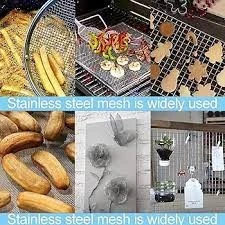
In food-grade environments, every surface must be cleanable, accessible, and free from niches where bacteria can harbour. Welded wire mesh offers a grid with open spaces for airflow and drainage, yet the individual wires are smooth and continuous, so there are no hidden crevices.
Combined with stainless steel's non-porous nature, the result is a mesh that:
Is compatible with CIP, washing down, steam cleaning and sanitisation.
Minimises retention of product residues, reducing risk of microbial contamination.
Makes audit trails and hygiene verification easier (swab tests, etc.).
From a regulatory perspective (e.g., FDA, USDA, EU food hygiene standards), using materials that meet definitions of "food-grade stainless steel" and that can be sanitized is critical. The choice of welded wire mesh helps fulfil these requirements.
1.5 Versatility and Customisation
One of the lesser-emphasised advantages is how welded wire mesh can be customised for specific food processing uses. Variables include:
Wire diameter (to adjust strength and rigidity)
Mesh opening size (to adjust product flow, drainage and visibility)
Panel size and shape (for retrofit or custom equipment)
Surface finish (e.g., electropolished, passivated, brushed)
Material grade (304, 316, 316L etc) depending on environment
Because of this flexibility, the same mesh technology can be used in vastly different parts of a plant - from fine filtration edges to heavy support structures.
1.6 Summary Table of Material Performance
|
Property |
Typical Performance for Food Processing Use |
Key Benefit |
|
Corrosion resistance (304) |
Good |
Suitable for most wash-down, humid conditions |
|
Corrosion resistance (316) |
Excellent (includes Mo addition) |
For brine, seafood, aggressive acids |
|
Weld strength |
High |
Structural integrity under load and cleaning cycles |
|
Temperature stability |
− 40 °C to + 600 °C (depending on grade) |
Suitable for freezing and high-temp ovens |
|
Surface hygiene |
Non-porous finish achievable |
Reduces microbial risk, easy cleaning |
|
Drainage/airflow |
Open grid pattern possible |
Supports drying, sizing, air-knife systems |
The table summarises why stainless steel welded wire mesh is a high-performance material in food processing.
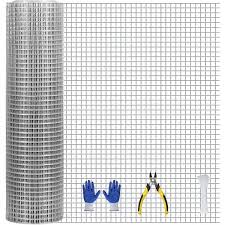
2. Applications & Real-World Uses of Stainless Steel Welded Wire Mesh in Food Processing
From screening to conveyor support - where welded mesh fits in
2.1 Screening, Conveying and Sorting
In many food processing plants, bulk products need to be conveyed, screened, sorted or graded. Welded wire mesh is used to build conveyor belts, sorting tables, screening decks and grading grids. Because the mesh is rigid and sized precisely, it supports fast throughput, reduces product buildup and enables visual inspection.
For example:
Vegetable or fruit lines where items roll or slide across the mesh;
Seafood processing where shells or waste must drop through while product travels over mesh;
Bakery cooling lines where trays slide over welded mesh to allow airflow underneath.
In each case, the mesh's stability and hygiene make a difference.
2.2 Drying, Cooling and Heated Zones
Food items often pass through drying or cooling zones where airflow comes from underneath or above. Welded wire mesh is excellent for supporting product while permitting airflow and drainage. It also withstands the temperature changes. Applications include:
Drying of coated snacks, dried fruits, pasta lines
Cooling tunnels for baked goods or frozen items
Heated ovens where mesh supports product yet allows heat from below to reach product evenly
The open structure ensures uniform exposure and reduces hot or cold spots.
2.3 Filtration, Basket & Handling Equipment
While woven wire mesh is more typical for fine filtration, welded wire mesh plays a role in basket structures, cradles, handling racks and even shallow filtration panels. Typical uses in food processing:
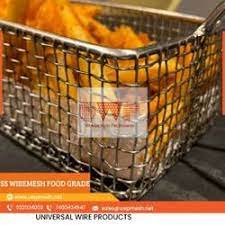
Fryer baskets made of welded wire mesh: the rigid grid holds heavy loads, supports draining of oil, and withstands thermal shock.
Storage racks for stainless containers or trays: welded mesh bottoms allow drainage and cleaning underneath.
Enclosures (machinery guards) adjacent to food zones: welded mesh provides safety while maintaining hygiene.
In each case the welded mesh supports both mechanical function and hygiene requirement.
2.4 Protective Barriers and Partitioning
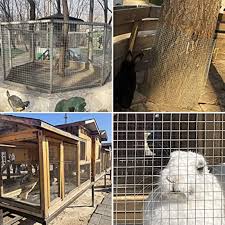
Food processing plants must segregate zones (raw, cooked, packaging) and protect equipment. Welded wire mesh is used in making partitions, guards for moving parts, and barriers preventing cross-contamination. Advantages include visibility (open mesh allows inspection), ease of cleaning (open grid) and corrosion resistance (stainless steel).
For example:
Machine guards around slicing or dicing equipment;
Roasting or frying zone guards to prevent access to hot surfaces;
Hygienic corridors where partitions separate different processing zones while still allowing airflow.
This application often goes under the banner of hygienic design requiring materials that can be frequently cleaned and do not trap moisture or food residues.
2.5 Packaging and Handling Systems
In packaging zones where finished food products move from production to packaging, welded wire mesh supports frames, rollers, diverters and inspection stands. Because the material is stable and corrosion-resistant, it holds up under ramped cleaning cycles and high throughput.
In many plants, retrofits are done where older carbon steel mesh failed due to rust or food contact issues - replacing with stainless welded mesh reduces maintenance significantly.
2.6 Case Study Summary
Although individual plant details are often proprietary, manufacturer literature (e.g., from the supplied link) emphasises sectors like juice filtration (mesh used to remove pulp/seeds), dairy (separation of curds), bakery (cooling lines), seafood (grading and draining) and general structural uses in food & beverage plants.
These real-life uses illustrate the breadth of welded wire mesh roles in modern food processing.
2.7 Table: Application Examples and Key Mesh Parameters
|
Application Area |
Typical Mesh Spec |
Key Requirement |
|
Fryer basket (snacks) |
Wire: Ø 2.0 mm, opening: 25 × 25 mm, Grade 316 |
Oil drainage, steam cleaning, thermal cycling |
|
Drying conveyor (dried fruit) |
Wire: Ø 1.2 mm, opening: 12 × 12 mm, Grade 304 |
Airflow, minimal distortion at 200 °C |
|
Sorting grid (vegetables) |
Wire: Ø 2.5 mm, opening: 30 × 30 mm, Grade 304 |
Impact resistance, quick wash-down |
|
Seafood grading mesh (shells) |
Wire: Ø 1.6 mm, opening: 40 × 40 mm, Grade 316 |
Salt corrosion resistance, open drainage |
|
Safety guard partition |
Wire: Ø 3.0 mm, opening: 50 × 50 mm, Grade 304 |
Visibility, cleaning access, durability |
This table gives a sense of how mesh parameters are set to meet different functions within a food plant.
2.8 Summary
Stainless steel welded wire mesh is a versatile tool in the food processing arsenal. From conveyors to filters to structural supports and hygiene partitions, its combination of mechanical stability, cleanliness and food-grade compliance make it a preferred choice for modern, efficient plants.
3. Selection, Specification & Installation Considerations
Getting the right welded wire mesh into the right place, and ensuring it delivers
3.1 Choice of Material Grade
The food processing environment dictates the grade of stainless steel:
Grade 304: Suitable for most general environments - washdown, ambient temperatures, non-seafood or mild conditions.
Grade 316 (or 316L): Necessary where salt, brines, seafood, acid spraying or marine plant exposures are present - molybdenum addition gives higher pitting resistance.
Surface finish: Choose finish based on hygiene and cleaning frequency. E.g., electropolished or mirror finish for high-hygiene zones; brushed finish for general utility areas.
3.2 Mesh Specification: Wire Diameter, Opening Size, Panel Size
Selecting the correct dimensions ensures functionality and longevity:
Wire diameter influences load-bearing vs weight vs open area. Thicker wires = stronger but less open space.
Opening size controls product flow, drainage, visibility, airflow or retention of debris. A fine opening may hamper drainage; a coarse opening may allow unwanted pieces to pass.
Panel size and attachment: Panels must fit equipment, be accessible for cleaning and avoid excessive weld count (which can create cleaning challenges).
Key trade-offs: more open area (better airflow/drainage) vs structural strength (thicker wires) vs cost (material and fabrication).
3.3 Fabrication and Weld Quality
High quality welded wire mesh is only as good as its welds. Points to check:
Welds evenly fused, no cracks, consistent size.
Panel flatness: if mesh sags or warps over time, hygiene and mechanical risk increase.
Accuracy of openings and alignment: ensures consistent performance in conveyors or filtration.
Edge treatment: trimmed cleanly, no burrs which may trap food debris or make cleaning harder.
3.4 Installation and Environment Fit-Up
When installing mesh in food processing plants, considerations include:
Secure attachment with hygienic fasteners (e.g., stainless screws, clamps) that also permit removal for cleaning.
Avoid trapped pockets or corners behind mesh that cannot be drained or washed.
Ensure mesh lies flat, tensioned if applicable, to prevent sagging or accumulation of food particles.
Compatibility with cleaning systems: if CIP or foam cleaning is used, panels must be compatible with chemical exposure and high-pressure spray.
Avoid mixing metals: joining stainless mesh to carbon steel frames can cause galvanic corrosion.
3.5 Maintenance and Cleaning Compatibility
Even the best mesh demands consideration for cleaning and maintenance:
Choose surface finish and grade compatible with cleaning chemistry (e.g., strong alkali, bleach, acid).
Plan for regular inspection: check for weld cracks, wire fatigue, corrosion around edges or supports.
Accessibility: panels should be removable or liftable for inspection under equipment or for full sanitation.
Replacement planning: although stainless is long-lasting, heavy duty use may still require periodic replacement – specifying mesh with modular panels avoids full system downtime.
3.6 Regulatory Compliance and Traceability
Because food processing is highly regulated, mesh specification must align with standards:
Use food-grade stainless steel - commonly designated as "food safe" in local regulation (e.g., FDA compliant).
Keep traceability records: material batch, manufacturer, weld method, surface finish, cleaning history.
Consider audits: design materials that permit cleaning verification (swab tests, visual inspections) and documentation.
Material compatibility: ensure mesh does not impart off-flavours or leaching. Stainless steel is preferred for this reason.
3.7 Cost-Benefit and Lifecycle Perspective
While stainless steel welded wire mesh may cost more upfront compared to cheaper coatings or alloy alternatives, the lifecycle benefits (durability, lower downtime, fewer replacements, fewer hygiene issues) often justify the investment.
Consider:
Reduced maintenance and cleaning time
Fewer replacements due to corrosion or breakage
Less risk of contamination lead-offs and recalls
Longer plant uptime and reduced downtime during sanitation cycles
Thus, the specification process should include total cost of ownership, not just initial cost.
3.8 Checklist for Specification
Define environment (moisture, salt, chemicals, temperature).
Choose the stainless grade (304, 316, etc).
Determine required mechanical loads to size wire diameter and opening.
Specify panel sizes, wire direction, mounting method.
Define surface finish and hygiene requirements.
Ensure weld specification and inspection procedures.
Integrate cleaning and maintenance access into design.
Keep documentation and traceability for regulatory audits.
3.9 Summary
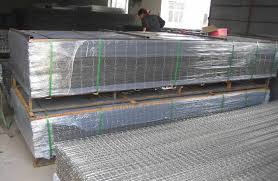
Getting the right stainless steel welded wire mesh into the right place requires more than ordering off the shelf. It demands a holistic approach: material, fabrication, installation, cleaning and lifecycle planning. When done correctly, the result is a hygienic, durable, high-performing mesh component that supports food-safe operations for years.
learn more:Applications of Stainless Steel Welded Wire Mesh in Food Processing Facilities
Conclusion
In the highly demanding world of food processing, stainless steel welded wire mesh is not just a material choice - it's a strategic decision that impacts hygiene, productivity, maintenance and compliance. From the corrosion-resistant alloy through to the welded grid structure and the finished installation, every detail matters.
By understanding the benefits, recognising the specific applications and following proper specification and installation practices, food processors can ensure that this mesh performs reliably, supports sanitation protocols and enables efficient production for the long term.
From screening and drying to structural support and hygiene zoning, stainless steel welded wire mesh is a versatile asset in modern food processing - one that helps manufacturers meet today's rigorous demands and future-proof their operations.