






Introduction
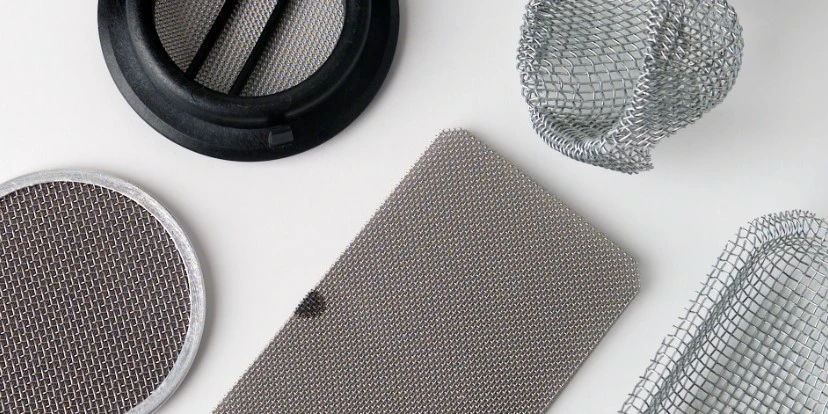
Wire mesh filters are central to industrial, commercial, and scientific filtration processes because they offer a tunable combination of mechanical strength, chemical resistance, thermal stability, and particle separation precision. Among the many design parameters that influence the performance of wire mesh filters-wire diameter, weave type, alloy grade, and surface finish-mesh density stands as the most influential. It dictates filtration efficiency, clogging behavior, flow rate, structural characteristics, and long-term maintenance requirements.
Understanding how mesh density governs filtration outcomes enables engineers and designers to build systems that meet increasingly strict regulatory standards in sectors such as food, pharmaceuticals, water treatment, petrochemicals, clean energy, and microelectronics. This extended article explores essential engineering principles behind filtration performance and provides actionable strategies for selecting and integrating mesh densities in both single-layer and multi-layer filter designs.
1. The Engineering Role of Mesh Density in Filtration
1.1 Mesh Density as a Filtration Determinant
Mesh density (or mesh count) refers to the number of openings per linear inch. It defines:
aperture size
particle retention capacity
flow resistance
structural rigidity
surface area
Higher-density meshes have smaller openings, providing finer filtration performance but greater resistance to flow. Lower-density meshes offer high throughput but poor fine-particle retention.
1.2 Filtration Modes Influenced by Mesh Density
Wire mesh filtration relies on several particle capture mechanisms. Mesh density influences each differently.
1. Mechanical Sieving
Direct size exclusion.
Higher density = smaller pores = smaller retained particles.
2. Interception
Particles following flow streamlines contact the wire surface.
Higher density increases contact likelihood.
3. Inertial Impaction
Particles deviate from streamlines and collide with mesh.
More effective at moderate densities with moderate velocities.
4. Diffusion
Ultrafine particles (<0.5 µm) wander due to Brownian motion.
High mesh density increases interaction opportunities.
5. Adsorption / Electrostatic Interaction
Surface charge promotes particle attachment.
Effective when combined with high-density meshes.
1.3 Interaction Between Mesh Density and Wire Diameter
For the same density, wire diameters determine:
open area
mechanical strength
clogging behavior
backwash efficiency
Example: Two 100-mesh screens may have drastically different performance if wire diameters differ (e.g., 0.1 mm vs. 0.05 mm).
Table 1 - Mesh Density vs. Typical Opening Sizes
|
Mesh Density |
Wire Diameter (mm) |
Opening Size (µm) |
Filtration Range |
|
10 mesh |
0.6 |
1900–2000 µm |
Large debris |
|
20 mesh |
0.4 |
850–950 µm |
Coarse |
|
40 mesh |
0.22 |
400–450 µm |
Medium |
|
60 mesh |
0.15 |
240–300 µm |
Fine |
|
100 mesh |
0.1 |
120–150 µm |
Very fine |
|
200 mesh |
0.05 |
70–85 µm |
Ultra-fine |
2. Filtration Performance Across Mesh Density Types
2.1 Low-Density Mesh (10–30 mesh)
Filtration Characteristics
large aperture sizes
high throughput
minimal pressure drop
poor fine-particle retention
Used for:
pre-screening
insect screens
large particulate separation
Strengths
excellent airflow/waterflow
easy cleaning
highly durable
Weaknesses
does not filter fine particles
prone to letting sub-critical contamination through
2.2 Medium-Density Mesh (30–80 mesh)
Filtration Characteristics
versatile
balanced flow vs. filtration
suitable for powders, dusts, and general process filtration
Used for:
plastic industry filtration
chemical processing
industrial dust collection
Strengths
stable flow
good mechanical impact resistance
moderate clogging tendency
2.3 High-Density Mesh (80–250 mesh)
Filtration Characteristics
extremely fine openings
strong capillary and surface interactions
highest retention efficiency
Used for:
pharmaceutical filtration
fuel filtration
aerosol control
precision powder segregation
Weaknesses
easily clogged
creates high pressure drop
requires robust flow design
3. The Relationship Between Mesh Density, Pressure Drop & Flow Rate
3.1 How Mesh Density Reduces Flow Rate
Flow rates drop as mesh density increases due to:
1.Reduced open area
2.Increased friction from more wire contacts
3.Higher likelihood of turbulence
4.Greater particle–wire collision frequency
3.2 Pressure Drop Variations Across Mesh Densities
Table 2 - Estimated Pressure Drop Comparison (300 ft/min Airflow)
|
Mesh Count |
Pressure Drop (Pa) |
Flow Behavior |
|
10 mesh |
8–12 |
Free flow |
|
20 mesh |
18–25 |
Light resistance |
|
40 mesh |
55–85 |
Moderate |
|
60 mesh |
120–180 |
Increasingly restrictive |
|
100 mesh |
200–320 |
High resistance |
|
200 mesh |
380–600 |
Very high resistance |
The relationship is nonlinear-each doubling of mesh density often generates a more-than-double increase in pressure drop.
3.3 Fluid Type Matters
Mesh density influences filtration differently for:
air (low viscosity)
water (high viscosity compared to air)
oil (very high viscosity)
gases under pressure
Fine meshes become significantly more restrictive in viscous or compressed media.
4. Multi-Layer Mesh Design: A Tool for Advanced Filtration
4.1 Why Multilayer Mesh Is Superior
Single-layer mesh forces engineers to compromise between:
flow rate
retention capability
structural strength
Multi-layer mesh systems (such as sintered mesh filters) eliminate many trade-offs.
4.2 Benefits of Multi-Layer Combinations
1. Enhanced strength
Cross-weaving layers improve mechanical resistance.
2. Gradual pore-size reduction
Allows staged particle capture.
3. Reduced clogging
Coarse outer layers protect inner fine layers.
4. Greater stability under high pressure
Sintering creates bonded structures that resist deformation.
5. Better backwash efficiency
The layered structure distributes contaminants evenly.

4.3 Typical Multi-Layer Mesh Configurations
A. 2-Layer System
outer layer: coarse
inner layer: fine
Function: first layer stops large particles, second handles fine ones.
B. 3-Layer System
Often structured as:
|
Layer |
Function |
|
1 - Protection (coarse) |
Blocks large debris |
|
2 - Support |
Adds structure |
|
3 - Fine filtration |
Performs critical separation |
C. 5-Layer Sintered Mesh (Industry Standard)
|
Layer |
Description |
|
1 |
Protective mesh |
|
2 |
Control mesh |
|
3 |
Precision filtration mesh |
|
4 |
Support mesh |
|
5 |
Reinforcement mesh |
This design provides unmatched dimensional accuracy.
5. Material Considerations for Different Mesh Densities
Mesh density must be matched with the appropriate wire material.
5.1 Stainless Steel Mesh (304, 316, 316L)
high corrosion resistance
suitable for high density
strong under pressure
ideal for water, oil, food, pharma
5.2 Brass and Copper Mesh
used for EMI shielding
moderate-density applications
corrosion-sensitive
5.3 Nickel, Monel, Inconel
exceptional high-temp performance
good for high-density meshes in harsh conditions
5.4 Polyester / Nylon / Polymers
not suitable for ultra-high-density woven wire
used in sub-200 mesh count applications
excellent flexibility
6. Mesh Density, Clogging Behavior & Cleaning
6.1 Why Fine Mesh Clogs Faster
High-density mesh:
retains finer particles
creates more boundary interaction surfaces
generates capillary effects increasing particle attachment
has greater surface energy
6.2 Predicting Clogging
Clogging is influenced by:
particle concentration
particle stickiness
mesh density
flow velocity
humidity and temperature
6.3 Cleaning Methods
A. Backwashing
Ideal for multi-layer or sintered meshes.
B. Ultrasonic Cleaning
Removes deep-seated particles in ultrafine mesh.
C. Chemical Cleaning
Dissolves oils, organics, or minerals.
D. Mechanical Shaking / Vibration
Best for coarse meshes.
6.4 Mesh Density vs. Ease of Cleaning
|
Mesh Density |
Cleaning Difficulty |
Notes |
|
10–20 mesh |
Very easy |
Large pores |
|
20–60 mesh |
Moderate |
Requires brushing or backwash |
|
60–120 mesh |
Difficult |
Ultrasonic recommended |
|
150–250 mesh |
Very difficult |
Strong tendency to embed particles |
7. Optimizing Mesh Density for Specific Applications
7.1 Food & Beverage Processing
Applications:
sugar refining
beer filtration
milk powder screening
Recommended density: 40–80 mesh
Balances:
hygiene
flow rate
retention
7.2 Pharmaceutical Filtration
Requirements:
sterile environments
micron-level particle capture
stable at high temperatures/pressure
Recommended density: 100–250 mesh
Prefer 316L sintered mesh.
7.3 Water Treatment & Desalination
Stages:
Pre-screening → 10–30 mesh
Sand removal → 30–60 mesh
Micro-filtration prep → 60–80 mesh
7.4 Petrochemical & Fuel Systems
Requires:
high-pressure resistance
chemical resistance
fine particle removal
Optimal density: 100–200 mesh
7.5 Powder Processing (Metals, Plastics)
Plastic extrusion and metal powders require:
consistent aperture uniformity
stable filtration at high temperatures
Ideal density: 40–120 mesh depending on powder size.
8. Designing Custom Filters with Optimal Mesh Density
8.1 Key Engineering Considerations
1. Particle Size Distribution
Analyze using:
laser diffraction
sieving
microscopy
Mesh density should capture 95%+ of targeted particles.
2. Flow Rate Requirements
Population-specific engineering models:
Darcy's Law for laminar flow
Forchheimer equation for nonlinear flow
3. Allowable Pressure Drop
Industrial systems usually aim for:
<50 Pa (coarse filtration)
50–200 Pa (fine filtration)
200 Pa requires specialized design
4. Environmental Factors
High humidity increases clogging.
High temperature weakens polymer mesh.
Chemical exposure requires SS316L or Inconel.
8.2 Trade-Off Analysis
Lower Mesh Density
Pros: high flow rate, easy cleaning
Cons: poor fine-particle control
Higher Mesh Density
Pros: improved filtration precision
Cons: high energy cost, rapid clogging
9. Future Trends in Wire Mesh Filtration Technology
9.1 Advanced Sintered Mesh Structures
Next-gen multilayer designs allow:
directional flow channels
gradient porosity
engineered turbulence reduction
9.2 Surface Nanocoatings
Includes:
hydrophobic layers
oleophobic coatings
anti-fouling nanoparticles
These significantly reduce clogging in dense meshes.
9.3 Hybrid Metal-Polymer Mesh Systems
Combine:
polymer flexibility
metal strength
Useful for dynamic filtration with variable flow.
9.4 AI-Optimized Mesh Density Selection
Machine learning models predict:
optimal density
clogging probability
expected lifespan
optimal backwash intervals
Expect adoption in large-scale water and petrochemical plants.

READ MORE:
10. Conclusion
Mesh density profoundly shapes filtration performance across mechanical sieving, interception, diffusion, and impaction mechanisms. Selecting the correct mesh density is essential for balancing:
particle retention
flow rate
pressure drop
structural stability
clogging behavior
energy efficiency
Low-density meshes provide high throughput and durability, while high-density meshes deliver precision filtration at the cost of increased resistance. Multi-layer sintered designs bridge this gap by combining various densities to deliver superior strength, consistency, and performance.
Understanding mesh density enables manufacturers, engineers, and system designers to precisely tailor filtration systems to meet the needs of complex industrial, scientific, and manufacturing applications. With rapid advancements in materials science, nanocoatings, and AI-driven optimization, wire mesh filtration technology is entering a new era of efficiency, customizability, and sustainability.