





In industrial process facilities utilizing vertical and horizontal pressure leaf filters, maintaining continuous filtration throughput depends heavily on the condition of the outer woven wire cloth. Over prolonged filtration cycles, active filtration screens experience severe operational stress from abrasive solid particles, chemical attack, high differential pressures ($\Delta P$), and repetitive pneumatic vibration during cake discharge.
When outer wire screens suffer localized damage or permanent pore blinding, plant managers face a choice: replace the entire structural filter leaf assembly or refurbish the existing leaf panel by installing a new Leaf Filter Mesh Pack.
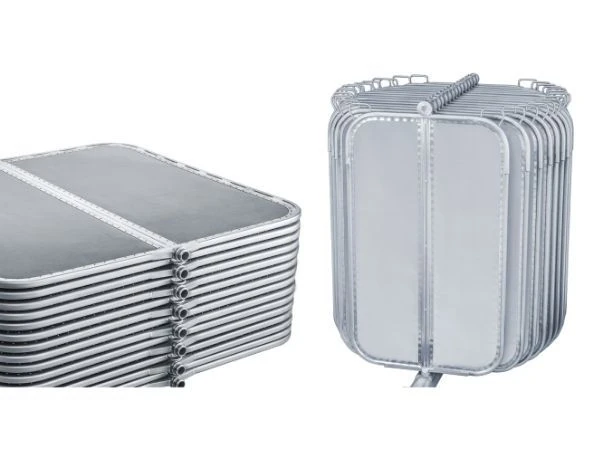
A Leaf Filter Mesh Pack is an engineered, multi-layer set of pre-cut woven wire mesh sheets designed to replace worn outer screens while reusing the undamaged inner heavy drainage core and outer C-channel frame. Installing high-precision, pre-assembled mesh packs offers a highly cost-effective maintenance strategy, cutting refurbishment costs by up to 60% compared to purchasing brand-new leaf assemblies.
This technical article provides an in-depth engineering analysis of leaf filter mesh packs, examining multi-layer mesh stack dynamics, pore geometry stabilization under hydraulic pressure, calendered surface mechanics, and step-by-step field re-meshing procedures for plant maintenance engineers.
To explore foundational metallurgy, weave structures, and primary filtration mechanics across our complete product family, visit our core [Stainless Steel Filter Leaf] pillar page.
Multi-Layer Mesh Stack Architecture and Inter-Layer Dynamics
A professional leaf filter mesh pack is not merely a piece of single wire cloth wrapped around a frame; it is a carefully calculated multi-layer system engineered to optimize fluid flow and protect delicate filtration wires.
Functional Breakdown of the Layer Stack
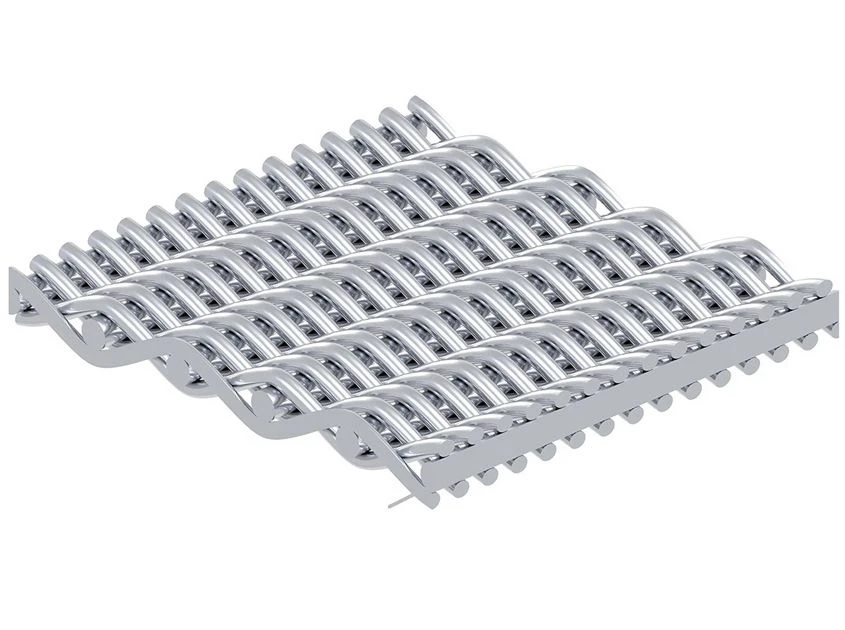
Active Outer Filtration Layers: Constructed from Plain Dutch Weave (PDW) or Twill Dutch Weave (TDW) wire cloth ($10\,\mu\text{m} - 150\,\mu\text{m}$). These screens provide precise micron ratings, trapping suspended solids on the surface while allowing clear liquid to enter the interior.
Intermediate Cushion Mesh Layers: Positioned directly between the fine outer screen and the coarse central core, these fine square woven mesh layers ($20\text{ mesh} - 40\text{ mesh}$) act as a mechanical buffer. They prevent the thin outer wires from sinking into the wide apertures of the central grid under high differential pressures, eliminating point-contact friction and wire fretting.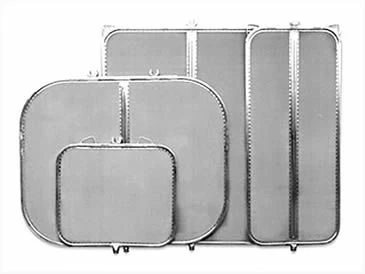
Pore Geometry Stabilization and Calendered Surface Mechanics
Under continuous pump pressure, un-tensioned or low-quality wire mesh flexes and expands. This flexing distorts the triangular fluid apertures of Dutch weave cloth, causing particle bypass or forcing fine solids deep into the mesh weave.
Engineering Advantages of Precision Mesh Processing
Secondary Calendering Treatment: Active outer screens undergo mechanical calendering-passing the woven wire cloth through heavy precision rollers. This flattens the knuckles of the intersecting wires, creating a smooth, planar surface that enhances pre-coat bed stability and allows dry filter cake to discharge cleanly without sticking.
Material Selection and Alloy Metallurgy
Selecting the correct alloy for a replacement mesh pack is critical to preventing premature chemical degradation, pitting corrosion, or stress corrosion cracking along wire knuckles.
| Alloy Material | Metallurgical Profile | Ideal Operational Environment |
| Stainless Steel 316L | Low-carbon Cr-Ni-Mo stainless steel | Edible oils, sugar syrup, general aqueous liquids |
| Alloy 20 (UNS N08020) | High nickel ($35\%$) and copper content | Sulfuric acid traces, acidic brine, severe chemical processing |
| Hastelloy C276 | High molybdenum ($16\%$) & chromium | Sour gas liquids, wet chlorine, high-temperature crude sulfur |
Field Re-Meshing Protocols and Assembly Steps
Refurbishing damaged filter leaves in the field using pre-cut mesh packs requires strict adherence to assembly procedures to prevent edge bypass and ensure long service life:
Frame Disassembly & Core Inspection: Remove the outer C-channel frame clamps and strip away damaged outer screens. Inspect the internal heavy drainage core for structural bowing or broken grid wires; straighten or repair if necessary.
Core Cleaning & Degreasing: Clean the internal drainage core thoroughly using solvent or steam washing to remove residual process solids, dried cake, or scale.
Layer Stacking & Alignment: Lay the pre-cut intermediate cushion mesh and active outer Dutch weave screens evenly onto both sides of the central core. Ensure laser-cut alignment notches line up perfectly with the spigot neck.
Perimeter Clamping & Spot-Welding: Apply pneumatic perimeter clamps to compress the multi-layer mesh stack around the core edge. Spot-weld or TIG-weld the C-channel frame clamps continuously along the perimeter to lock the mesh under tension.
Leak & Dimensional Inspection: Verify that no wire strands protrude beyond the frame edge and conduct a visual light inspection to confirm zero gaps between the mesh margin and the spigot connection.
Conclusion
Leaf Filter Mesh Packs provide an engineered, cost-effective solution for refurbishing damaged pressure leaf filter elements. Featuring pre-tensioned multi-layer mesh stacks, calendered surface finishes, and laser-cut tolerances, high-quality replacement mesh packs eliminate fluid bypass, restore original hydraulic flux, and extend total equipment service life while drastically reducing maintenance overhead.
To review general vertical pressure leaf designs and bottom spigot fluidics, read our technical article on [Vertical Leaf Filter Elements: Bottom-Discharge Fluidics, Vessel Manifold Sealing, and Array Alignment Stability], or contact our spare parts engineering team for custom mesh pack CAD templates and alloy consultations.