






1. Introduction
Stainless steel welded wire mesh occupies a uniquely important position in modern food processing facilities. As food manufacturing becomes increasingly automated, regulated, and globalized, the materials used in the processing environment must satisfy high standards of hygiene, traceability, corrosion resistance, structural reliability, and long-term cost efficiency.
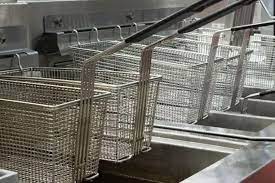
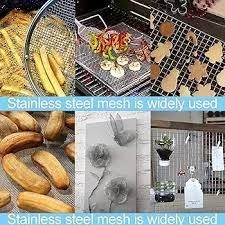
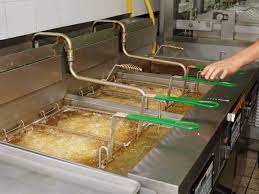
Welded wire mesh, with its rigid grid pattern and durable stainless steel composition, provides a balanced combination of strength, cleanability, thermal stability, and customization options. It is used in hundreds of applications including conveyor belts, drying racks, screening platforms, fryer baskets, filtration supports, handling equipment, protective barriers, and hygienic zoning structures.
This expanded article analyzes stainless steel welded wire mesh from a detailed materials engineering and food-safety performance perspective. It explores alloy composition, microstructural behavior, sanitation performance, mechanical loading characteristics, environmental resistance, chemical compatibility, and long-term lifecycle considerations.
2. Metallurgical Foundations of Stainless Steel for Food Processing
The exceptional performance of stainless steel welded wire mesh starts with metallurgy. Stainless steel is not a single metal but a family of iron-based alloys engineered to resist corrosion, maintain mechanical strength, and allow hygienic finishing.
2.1 Key Alloying Elements
|
Element |
Typical % |
Functional Role |
|
Chromium (Cr) |
16–20% |
Forms passive oxide film preventing rust |
|
Nickel (Ni) |
8–12% |
Stabilizes austenitic structure, improves ductility |
|
Molybdenum (Mo) |
2–3% (316 grade) |
Enhances pitting & chloride resistance |
|
Carbon (C) |
0.03–0.08% |
Strengthens alloy; lower C improves weldability |
|
Manganese (Mn) |
1–2% |
Enhances hot workability |
|
Silicon (Si) |
0.5–1% |
Improves oxidation resistance |
Food processors prefer 304, 304L, 316, 316L stainless steels due to their corrosion performance and international recognition as food-grade materials.
2.2 Microstructure and Passive Layer
Austenitic grades (304, 316) have a Face-Centered Cubic (FCC) crystal structure providing:
High toughness
Excellent ductility
Superior corrosion resistance
Stability during welding and forming
The chromium in the alloy forms a self-healing passive film of Cr₂O₃, only a few nanometers thick. This passive layer is essential in food environments because:
It resists acids from citrus, vinegar, tomatoes
It blocks chlorides in seafood brine
It prevents oxidation during steam cleaning
It re-forms instantly if scratched or abraded
This is the foundation of stainless steel's non-porous nature, stopping bacteria or moisture from penetrating microscopic layers.
3. Mechanical Strength & Weld Integrity
Stainless steel welded wire mesh is produced by resistance welding, fusing each wire intersection under heat and pressure. This creates a rigid structure superior to woven mesh in applications that experience:
Vibration
Repeated impact
High load pressure
Cyclic thermal expansion
Automated, high-speed handling
3.1 Performance Characteristics by Wire Diameter
|
Diameter |
Load Rating |
Applications |
|
1.0–1.2 mm |
Light |
Drying trays, low-load conveyors |
|
1.5–2.0 mm |
Medium |
Sorting tables, wash conveyors |
|
2.5–3.0 mm |
Heavy |
Fryer baskets, freezer conveyors |
|
3.0–5.0 mm |
Structural |
Machine guards, shelving, carts |
Manufacturers often test welded mesh using:
Tensile load testing
Bend/flex fatigue testing
Salt spray corrosion testing
Thermal cycle resistance measurement
These tests ensure weld strength exceeds minimum thresholds required for food plant operations.
3.2 Welded vs. Woven Mesh: Performance Comparison
|
Property |
Welded Mesh |
Woven Mesh |
|
Dimensional stability |
Excellent |
Moderate |
|
Resistance to deformation |
High |
Lower |
|
Weld joint strength |
Very high |
Not welded |
|
Use in high-temperature zones |
Ideal |
Limited |
|
Suitability for heavy load |
Excellent |
Lower |
|
Cleanability |
Very good |
Gaps may trap residue |
Thus, welded mesh is preferred where structural integrity and hygiene are critical.

4. Hygiene & Cleaning Performance
The most important requirement in food processing is hygiene. Stainless steel welded mesh aligns perfectly with global food safety standards (FDA, EU 1935/2004, NSF, ISO 22000).
4.1 Cleanability Characteristics
Smooth, non-porous surface
No coatings to peel or flake
Open grid allows easy spray coverage
Compatible with CIP (Clean-in-Place)
Resists microbial adhesion better than plastics or mild steel
4.2 Why Welded Mesh Is Easy to Sanitize
No micro-crevices: welded intersections eliminate movement and hidden spaces.
Detergent penetration: open grids allow full exposure to sanitizers.
Fast drying: reduces risk of bacterial growth.
Thermal shock resistance: safe for hot water or steam sterilization.
5. Corrosion Resistance in Food Environments
Corrosion is a major concern in food plants, where salts, acids, fats, and cleaning chemicals are common.
5.1 Food Processing Corrosion Risks
|
Food Area |
Common Corrosive Agents |
|
Seafood processing |
Salt, brine, marine bacteria |
|
Bakery |
Moisture, acidic dough residues |
|
Meat & poultry |
Blood salts, fats |
|
Dairy |
Lactic acid |
|
Beverage |
Citrus acids, CO₂ |
5.2 Grade Selection for Corrosion Protection
304: general use
316: brine, seafood, acids
316L: improved weld corrosion resistance
The molybdenum in 316 dramatically increases resistance to pitting corrosion.
6. Temperature Resistance
Stainless steel welded mesh operates safely between:
–196°C (liquid nitrogen tunnels)
600°C (dryers, ovens)
Most materials fail in such extreme transitions.

7. Chemical Resistance & Cleaning Agents
Stainless steel withstands:
Sodium hydroxide
Potassium hydroxide
Citric acid
Acetic acid
Quaternary ammonium compounds
Steam sterilization
This chemical compatibility extends mesh lifespan significantly.
8. Material Performance Summary
|
Factor |
Performance Level |
Impact on Food Processing |
|
Weld joint strength |
Very high |
Supports mechanical shock |
|
Heat tolerance |
Excellent |
Oven, fryer compatible |
|
Cold brittleness |
None |
Cryogenic use |
|
Acid resistance |
Good–excellent |
Fruit, beverage plants |
|
Chloride resistance |
Excellent (316) |
Seafood facilities |
|
Weight-to-strength ratio |
High |
Efficient structural design |
9. Conclusion
Stainless steel welded wire mesh remains one of the most reliable and indispensable materials for food processing plants. Its metallurgical composition, passive corrosion-resistant surface, structural stability, customizability, and cleanability make it ideal for environments ranging from seafood to bakery to beverage processing lines.
With increasing regulatory scrutiny, automation, and hygiene demands, stainless steel welded mesh not only meets modern standards-it sets the standard.